
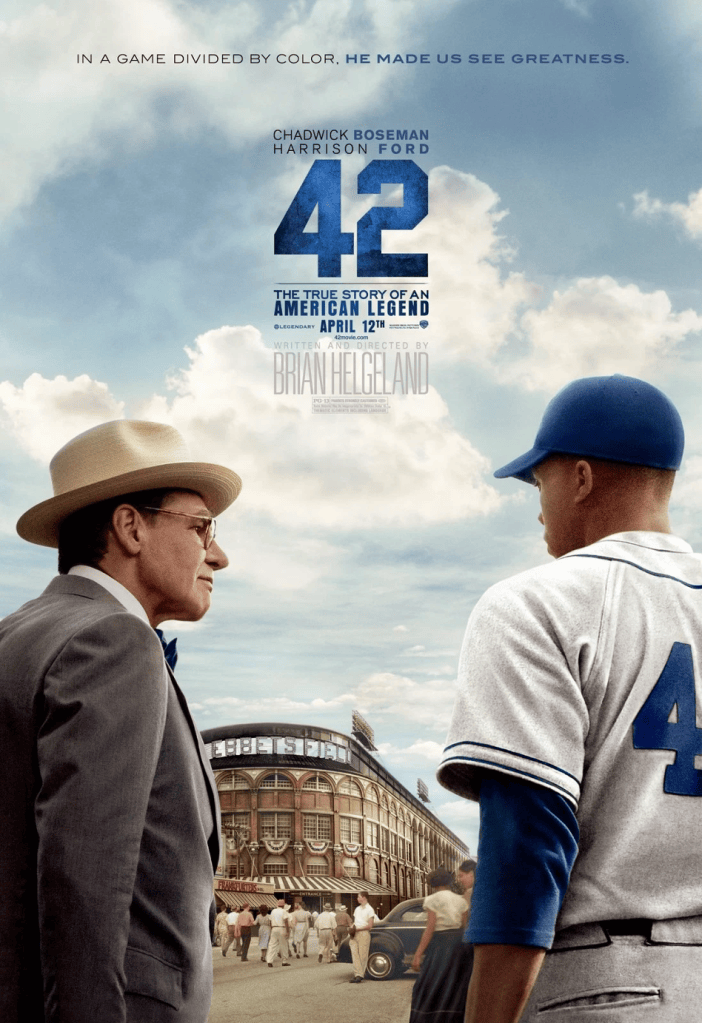
Starring: Chadwick Boseman &
Harrison Ford (2013)


REVIEWED BY MARK A. LARSON
Editor & Publisher
During Jackie Robinson’s first face-to-face with Brooklyn Dodgers owner Branch Rickey:
ROBINSON: “You want a player who doesn’t have the guts to fight back?”
RICKEY: “No. I want a player who’s got the guts NOT to fight back.”
That, in a nutshell, forms the basis for the movie “42” (Robinson’s uniform number) starring Chadwick Boseman as Jackie Robinson and Harrison Ford as Branch Rickey.
Most people know at least the general outline of Robinson’s story as the first Black man to play major league baseball in the 20th century. What makes this movie great is not only the excellent storytelling – focusing on the period from 1945-47 — but the performances by all involved.
The film begins in 1945 with Rickey deciding he wanted to go way outside baseball – and society’s – norms and traditions by integrating the sport. But he had to find just right person to do it: A fairly young Black man with exceptional baseball skills and the right temperament to stand firm, but stay calm against the expected mountains of the worst racial abuse ever heaped upon a ballplayer. Rickey settles on Robinson, who is playing with the Negro League’s Kansas City Monarchs. During that first interview, he signs him to a contract and Robinson begins his journey to the big leagues by playing the 1946 season with the Dodgers’ Montreal Royals farm club. Next stop: Brooklyn in April 1947.
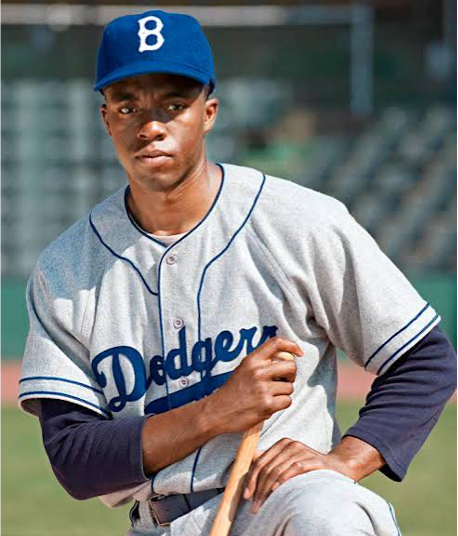
CHADWICK BOSEMAN as
JACKIE ROBINSON
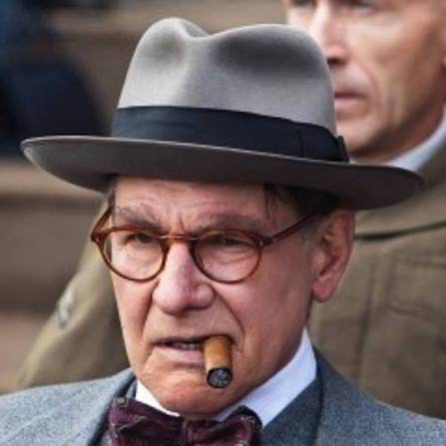
HARRISON FORD as
BRANCH RICKEY
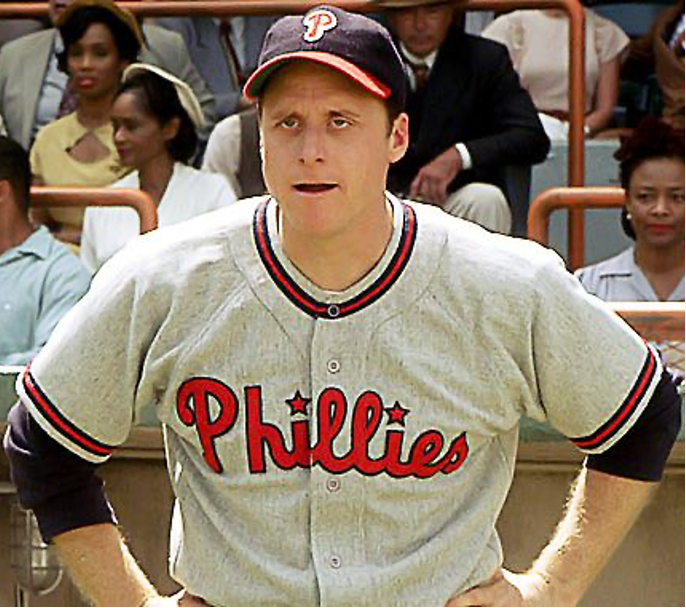
ALAN TUDYK as
BEN CHAPMAN
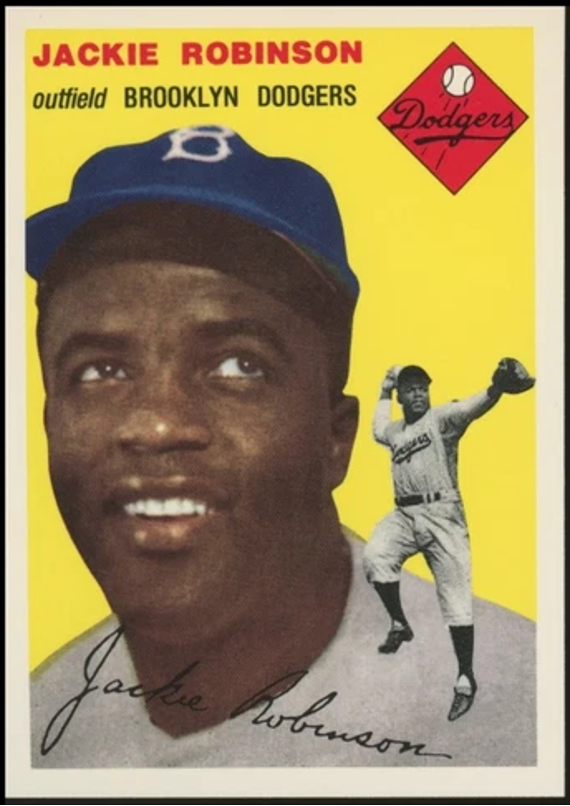
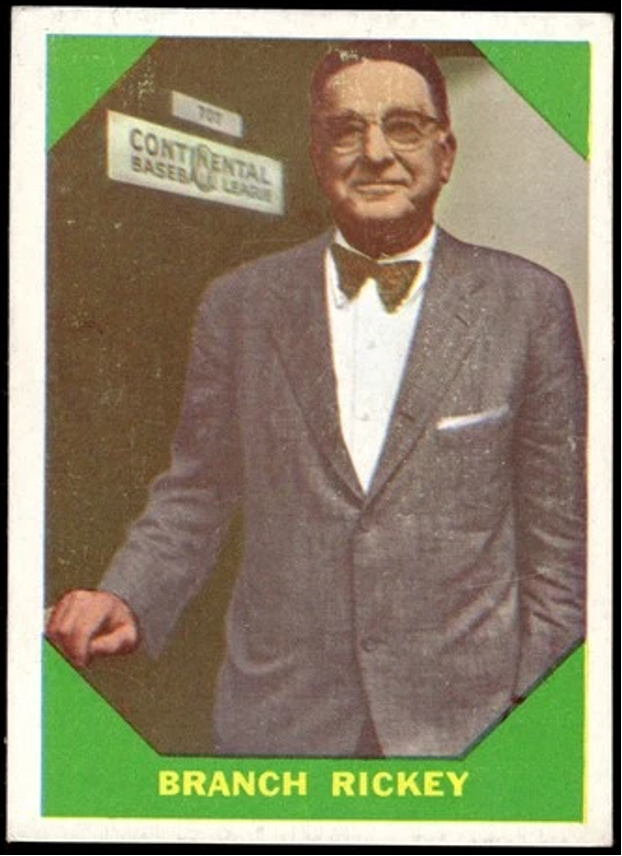
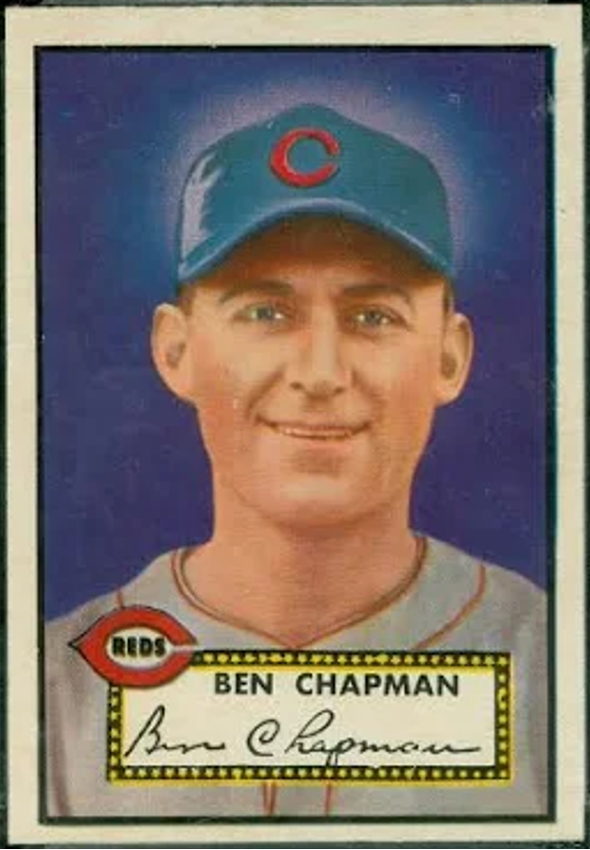
The abuse, which Robinson has endured since first taking the field during spring training with the Royals in ‘46, now intensifies exponentially. The scenes on the field in one game over the course of three Robinson plate appearances are excruciating and gut-wrenching to watch. But they show the audience the intensity of the hatred being spewed. Phillies’ manager Ben Chapman eggs on Robinson loudly and constantly, trying to get him to react. The “N” word was just a part of a torrent of taunts. … Here’s a small slice of the vitriol:
CHAPMAN: “N*****, n*****, n*****, n*****, n***** …”
CHAPMAN: “Hey, n*****, you like white women? Huh? Which one of these Dodgers’ wives are you climbin’ on tonight?
(Chapman then yells toward southerner Dixie Walker in the Brooklyn dugout.)
CHAPMAN: “Sorry, Dixie. I hate to be the one to tell ya. I saw her walkin’ earlier with a little bit of a bow in her step …”
Although the constant verbal abuse takes its toll, ultimately Robinson doesn’t break in public. In fact, it was so bad that Chapman’s nasty, sleazy insults actually encouraged the Dodgers’ players to begin to unite behind their teammate.
As disgusting as the Chapman scene was, perhaps the saddest scene in “42” is when a father takes his son to a Brooklyn game and they’re sitting in the stands. Both are white. As soon as the Dodgers take the field, the dad stands up – along with others in the crowd – and starts yelling “N*****, n*****, n***** …” The young boy, who is obviously a big baseball fan, is sitting quietly. The boy may or may not have even understood it all, but literally looking up at his dad and wanting to emulate him, he stands up and joins in: “N*****, n*****, n***** …”

The story is presented in a fairly straight-forward manner without being boring and enough characterizations to keep the audience interested. Unfortunately, the film did not receive any Academy Award nominations, which was a shame since the acting was so good.
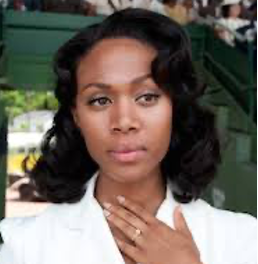
Rachel Robinson
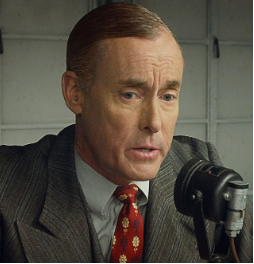
Red Barber
◼︎ 42 ◼︎
Chadwick Boseman fills the bill perfectly as Jackie Robinson as does Nicole Beharie as his wife, Rachel. Harrison Ford’s portrayal of Branch Rickey is spot on. You know the actor is particularly effective when you quickly forget you’re watching THE Harrison Ford.
◼︎ 42 ◼︎
Perhaps the best performance may have been Alan Tudyk as the vile and disgusting Philadelphia Phillies manager Ben Chapman. Tydyk was just enough to be creepy, but not so over-the-top to be cartoonish. (Tydyk himself admitted the villainous role took an emotional toll on him.)
◼︎ 42 ◼︎
John C. McGinley also did a great job as legendary Brooklyn announcer Red Barber. The inclusion of Barber added insight and kept the film moving through the on-field baseball scenes. Actors in more minor roles portraying Dodgers Eddie Stanky, Pee Wee Reese, Ralph Branca and manager Burt Shottin also did a great job.
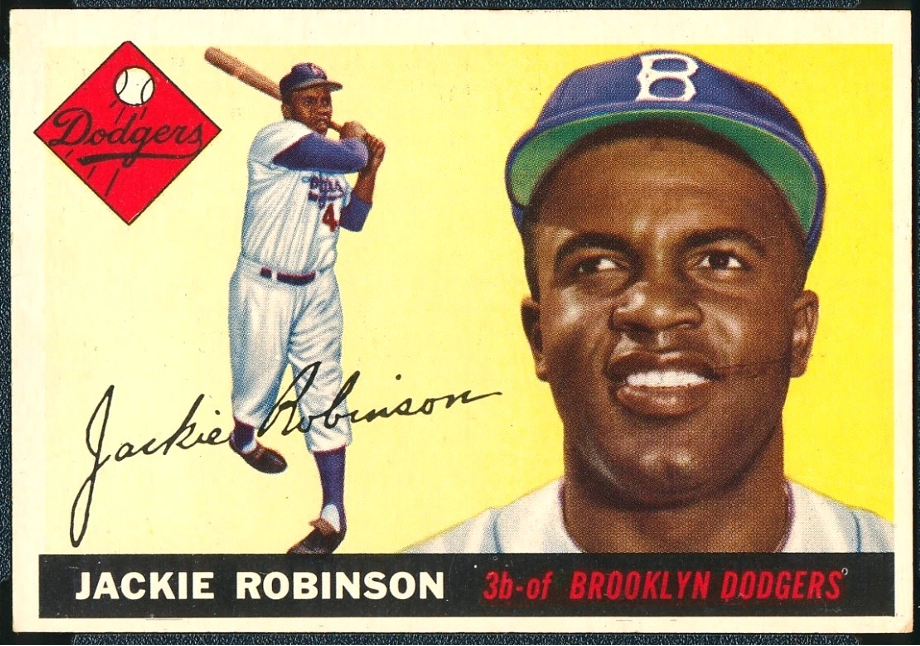
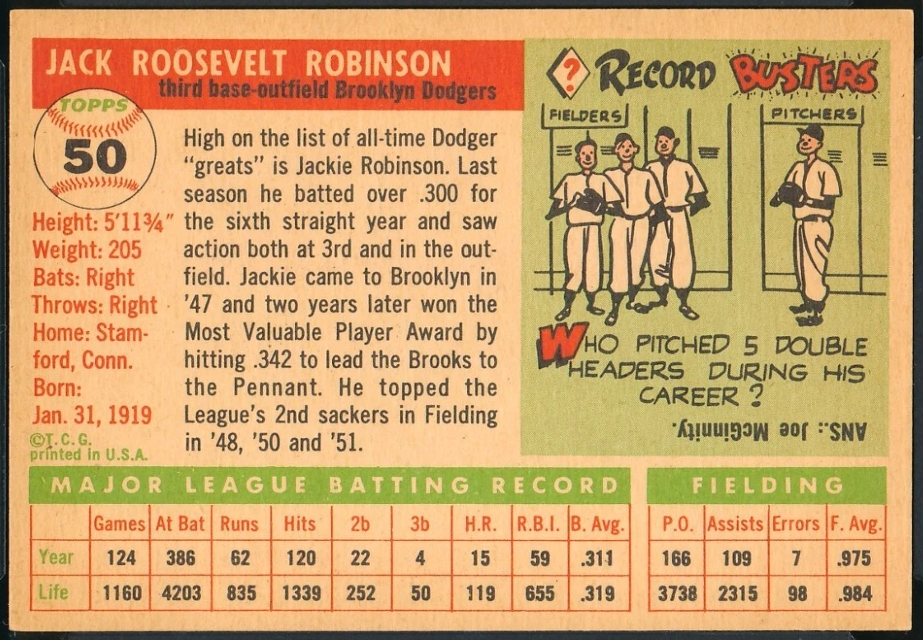
1955 Topps
◼︎ 42 ◼︎
Three months after Robinson appeared in his first National League game, Cleveland – under owner Bill Veeck – became the first A.L. team to integrate. Outfielder Larry Doby took the field for the Indians in July 1947. By the end of the season, five Blacks had made their major league debut. However, some teams resisted integration for years. Case in point: The Boston Red Sox did not have a Black player on their roster until 1959 … 12 years after Robinson became a big leaguer.
◼︎ 42 ◼︎
Robinson played major league ball for 10 years – all with Brooklyn. He was named National League “Rookie of the Year” in 1947 and the league’s MVP in 1949. During his decade with the Dodgers he was a six-time All-Star and appeared in 38 World Series games. He led the league in WAR (Wins Against Replacement) three times, won a batting title and hit .313 for his career. Robinson was elected to baseball’s Hall of Fame in 1962.
◼︎ 42 ◼︎
Many things changed over the next 25 years in baseball and society – partly because of Jackie Robinson. Yet, some things remained the same. Just as Branch Rickey showed a stack of hate mail and told of numerous death threats to Robinson in the film, Hank Aaron also received volumes of hate mail and threats to his life as he pursued Babe Ruth’s all-time home run record in 1974.
“The Jackie Robinson Story” (1950)
“42” wasn’t the first Jackie Robinson biographical movie. In 1950 – three years after he hit the majors – Robinson played himself in “The Jackie Robinson Story.”
In a way it was surprising this movie was made at all. Although it was a very, very sanitized version of Robinson’s life story, it has to be remembered that America was still a segregated nation in many places in 1950 and Blacks were often treated unfairly and unwelcome elsewhere. The “N” word is only heard once in the film and no real major leaguers were mentioned by name. Even the opposing big league teams wore generic uniforms without logos or any team affiliation showing. Abuse and discrimination is shown, but muted. There is no Ben Chapman-type scene.
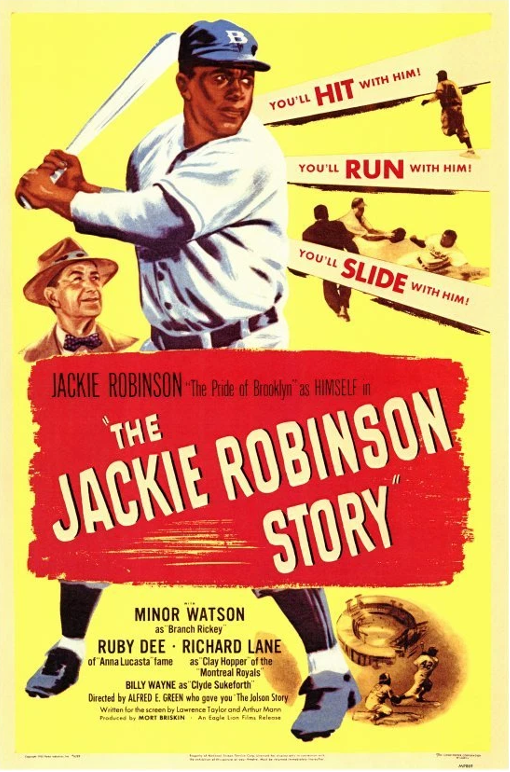
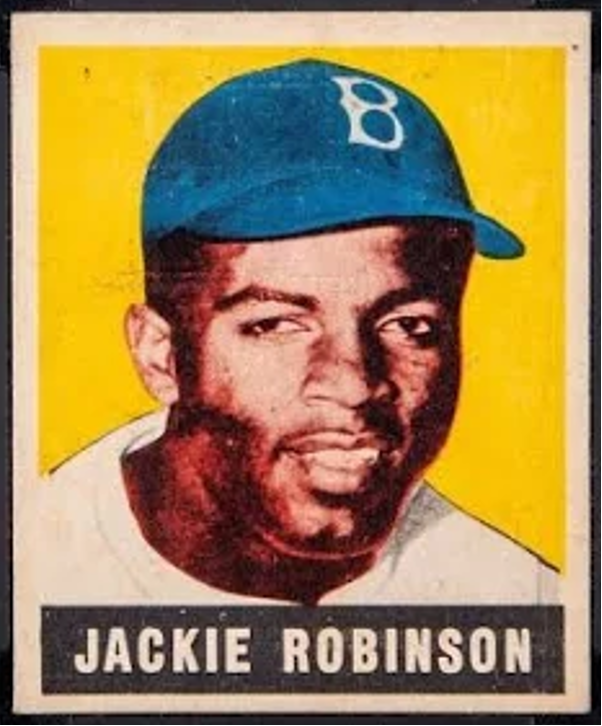
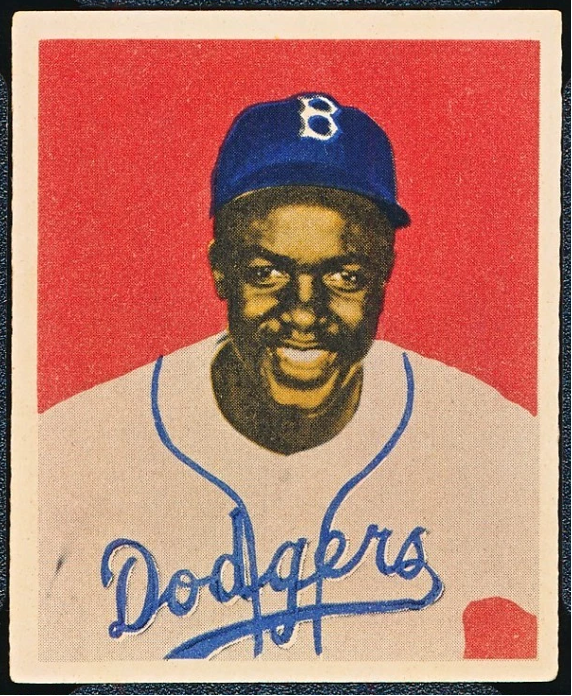
Whereas “42” focused mainly on Brooklyn’s 1947 season, The Jackie Robinson Story covers his early life in the sandlots and college in California and spends way more time on his year in Montreal. At just 77 minutes, it is considerably shorter than “42’s” 128-minute length.
As a non-actor, Robinson doesn’t appear awkward at all. And character actor Minor Watson portrays Branch Rickey with flair and believability. … Look for future major leaguer and Hall-of-Fame manager Dick Williams in brief scenes when Montreal plays Jersey City. (Williams was a Brooklyn farmhand who debuted with the Dodgers a year later.)
• • • • • •
THIS ARTICLE WAS WRITTEN
EXCLUSIVELY FOR BaseballCardFun.com
• • •
Text Copyright © 2026 by BaseballCardFun.com / Mark A. Larson
No article appearing on this website may be reproduced without written consent of the Editor/Publisher
To keep up-to-date on additions to BaseballCardFun.com, subscribe below*
* Your email address will never be shared and is only used to announce new articles

