
— 75 Years Ago —
BY MARK A. LARSON
Editor & Publisher
Aug. 19, 1951 – St. Louis, MO – Warm and sunny – Sportsman’s Park – Home of the American League St. Louis Browns – 18,369 fans in attendance – Second game of a Sunday afternoon doubleheader against Detroit – Bottom of the first inning – Scoreless game – St. Louis sends in a pinch-hitter for their leadoff man – A Browns player wearing the number 1/8 steps up to the plate – History is about to be made — Baseball would never be the same.

After dropping the first game of the twin bill that day, the hapless cellar-dwelling Browns were just 36-78. But at least the second contest would provide a big surprise.
With attendance abysmal (averaging about 4,000 per game) and always looking for new ways to entertain fans, Browns owner Bill Veeck came up with an idea to get more publicity for the team. Having promised fans big surprises that day, between-game festivities included a little person in a baseball uniform popping out of a cake. The “surprises” weren’t earth-shattering and some were disappointed. What those at Sportsman’s Park didn’t realize was the little person Veeck hired (3-foot, 7-inch 26-year old Eddie Gaedel) wasn’t just an entertainer, but an actual major league player.
Veeck knew if Gaedel came up to the plate and had a crouching stance, the strike zone would be almost non-existent. He would draw four balls for a walk – an automatic base runner. In the process, the new player would become the shortest man to ever appear in a major league game.
Sure enough, in the bottom of the first inning Gaedel was immediately announced as a pinch hitter for the first man due up (weak-hitting right fielder Frank Saucier). He came out of the dugout and was swining three tiny toy bats to warm up. The crowd gasped, the opposing Tigers protested and startled home plate umpire Ed Hurley was aghast. Immediately, he questioned whether Gaedel was an actual player.
Soon Browns manager Zack Taylor was out of the dugout and produced a copy of an official contract that had been sent to the American League. Hurley examined it and astonishingly Gaedel was allowed to bat.After dropping the first game of the twin bill that day, the hapless cellar-dwelling Browns were just 36-78. But at least the second contest would provide something to remember.
With attendance abysmal (averaging about 4,000 per game) and always looking for new ways to entertain fans, Browns owner Bill Veeck came up with an idea to get more publicity for the team. Having promised big surprises that day, between-game festivities included a little person in a baseball uniform popping out of a cake. The “surprises” weren’t earth-shattering and some were disappointed. What those at Sportsman’s Park didn’t realize was the little person Veeck hired (3-foot, 7-inch tall 26-year old Eddie Gaedel) wasn’t just an entertainer, but had been signed as an actual major league player.
Veeck knew if Gaedel came to the plate and had a crouching stance, the strike zone would be miniscule. He would draw four balls for a walk – an automatic baserunner. In the process, the new player would draw publicity and become the shortest man to ever appear in a major league game.
Sure enough, in the bottom of the first inning Gaedel was immediately announced as a pinch hitter for the first man due up (weak-hitting right fielder Frank Saucier). He emerged from the dugout swinging three tiny toy bats to warm up. The crowd gasped, the opposing Tigers protested and startled home plate umpire Ed Hurley was aghast. Immediately, he questioned whether Gaedel was an actual player.
Soon Browns manager Zack Taylor was out of the dugout and produced a copy of an official contract and paperwork that had been sent to the American League. Hurley examined it and feeling he had no choice, Gaedel was allowed to bat.
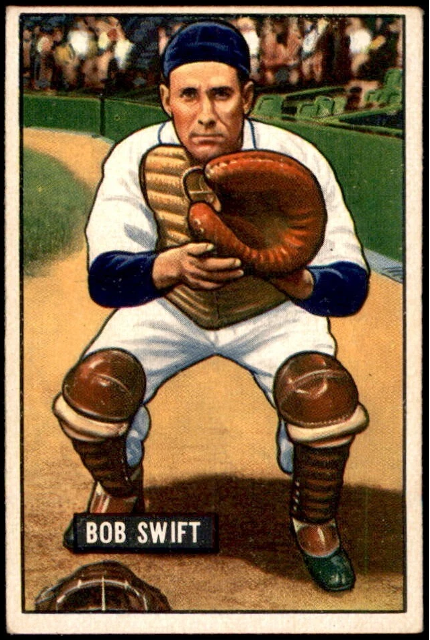
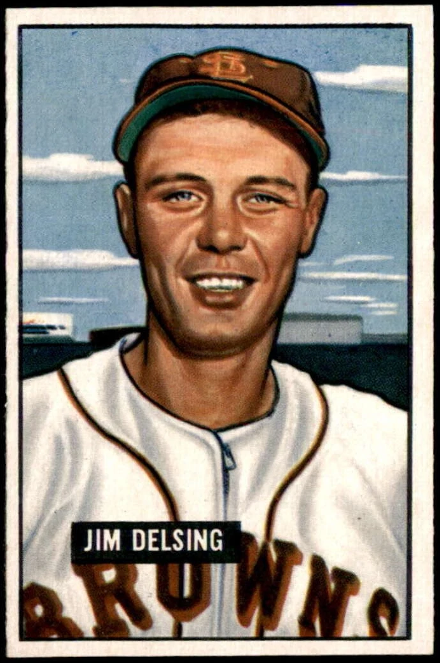
Tigers hurler Bob Cain was on the mound laughing … not believing what he was seeing. Sure enough, he threw four high ones in a row to catcher Bob Swift — who was also cracking up. Gaedel walked and took first base alongside Tigers first sacker Dick Kryhoski. No sooner had Gaedel reached base when the Browns announced pinch runner Jim Delsing would be replacing him on the basepaths. With Gadel’s task completed, the stunt definitely lived up to the promise of a “big surprise.”
The outcome of the game was not affected, as the Browns failed to score in the bottom of the first inning – eventually losing the game 6-2. But Veeck’s promise of surprises did attract a crowd of 18,000-plus. That was about four times the average of all the Browns’ other home games (they were last in the majors in attendance.) The team finished at the bottom of the American League standings in 1951 with a record of 52-102.
American League President William Harridge was not amused and quickly voided Gaedel’s contract, considering it a stunt that was detrimental to the game. From then on, all player contracts had to be approved by the Commissioner’s office … affectively barring a repeat of the incident. Gaedel’s major career was history.
On his way back to the dugout from first base on that Sunday afternoon, Gaedel hammed it up a bit and tipped his cap to the roaring crowd. He had his “15 minutes” of fame and, boy, was it memorable. Although his baseball career began and ended on that day in August 75 years ago, it has not been forgotten.
— Careers & Cards —
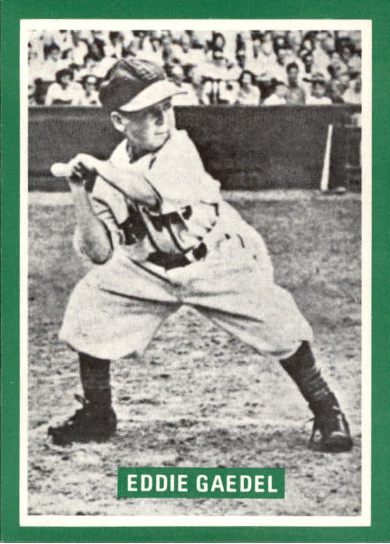
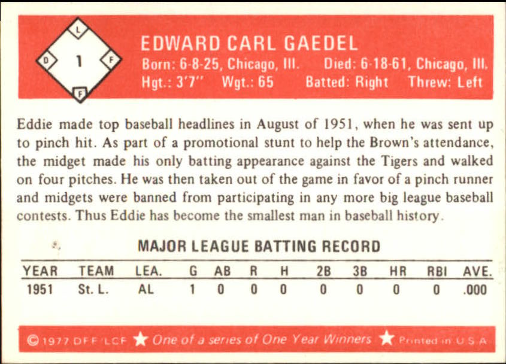
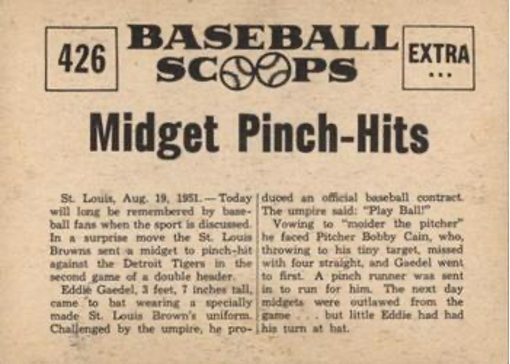
◼️ GAEDEL’S BASEBALL CAREER ◼️
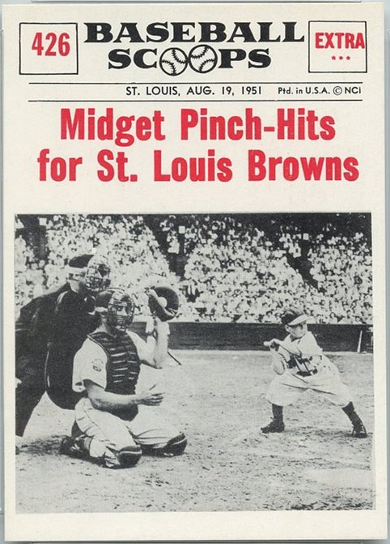
When Gaedel came to the plate on Aug. 19, 1951, crouched, took four pitches for a walk and trotted to first base, he entered baseball’s record books. Official statistics show one plate appearance with a 1.000 On-Base Percentage. And, of course, no fielding or baserunning stats.
◼️◼️ HIS CARDS ◼️◼️
Not surprisingly, no cards of Gaedel were issued by Topps or Bowman in the early ‘50s … since his career was but a fleeting moment. (Not like today when Topps can issue a timely “Now” card almost immediately after an event.)
However, a decade later, in 1961, a company called Nu Card issued a set called “Baseball Scoops.” Cards were designed like a newspaper and highlighted significant baseball events of the past. Even though there were only 80 cards in the set, for some reason they were numbered 401-480. Gaedel’s plate appearance is shown on card #426. (Beware of counterfeits — one telltale sign is a murky, blurry photo.)
In 1977, long-time card dealer Larry Fritsch put out the first of three series of “One Year Winners.” The set focused on players who had very brief major league careers and never appeared in a mainstream set. The ‘77 series included 18 cards and led off with Gaedel. A second series of 36 cards was issued in 1979 and a third — and final — 54-card series came out in 1983.
(Incidentally, authentic Eddie Gaedel autographs are extremely rare and valuable, but often forged.)



Frank Saucier
Browns Right Fielder
◼️ SAUCIER’S BASEBALL CAREER ◼️
Saucier only had a short-lived big league career of 18 games – all for the Browns in 1951. He was hitting just .111 when he was pulled for Gaedel. In total, he only went 1-for-14 that season for a .074 lifetime average. After the season, injuries, military service and business ventures pulled him away from baseball for good. Yet, he had quite the story to tell. Turns out, Saucier ended up being the last living player on the Browns’ roster from that fateful day. He died in 2025 at the age of 98.
◼️◼️ HIS CARDS ◼️◼️
Unfortunately, due to Saucier’s short stint in the majors, no baseball cards were produced of him.
1951 Bowman
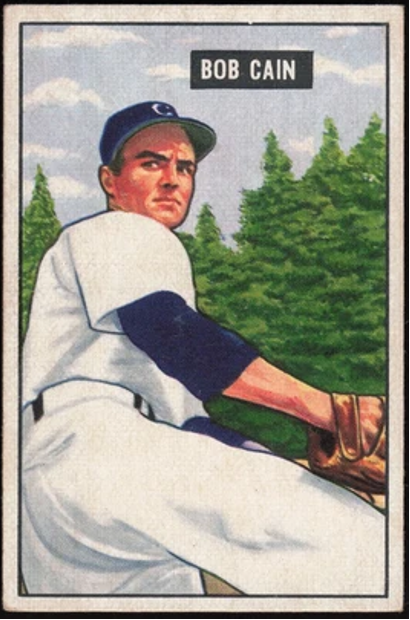
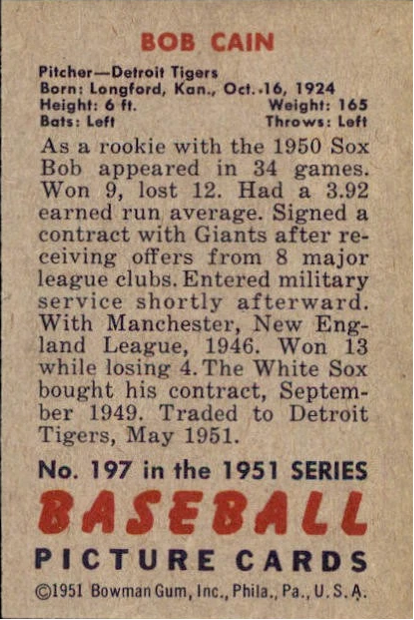
Bob Cain, Tigers Pitcher
◼️ CAIN’S BASEBALL CAREER ◼️
The southpaw took the mound for the White Sox, Tigers and Browns over the course of a five-year major league career (1949-53). He saw action in 140 games, starting 89. Overall, Cain went 37-44, with a lifetime ERA of 4.50. His back-to-back seasons of 12 wins each in 1951-52 were his best. He went 8 and 1/3 innings in the Gaedel game, giving up just two unearned runs. It was his 10th win of the 1951 season.
◼️◼️ HIS CARDS ◼️◼️
Bob Cain had a total of eight Topps and Bowman cards. The pitcher’s rookie card appeared in Bowman’s 1950 set. He then had four additional Bowmans (1951-54) and three Topps cards (1952-54).
1951 Bowman
Bob Swift, Tigers Catcher
◼️ SWIFT’S BASEBALL CAREER ◼️
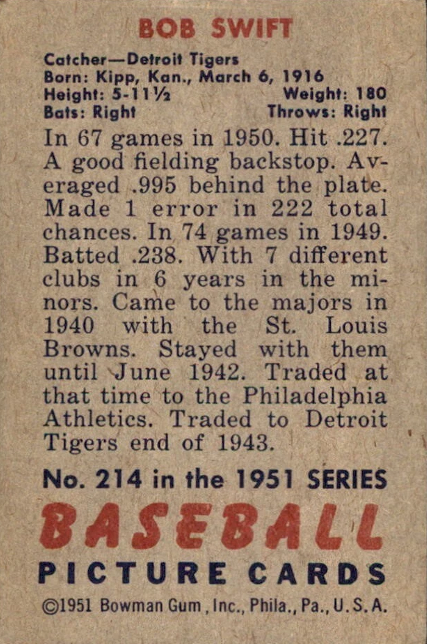
Between 1940-53, Swift played mostly as a backup backstop for the Browns, A’s and Tigers. He appeared in just over 1,000 games, with only two seasons of 100 or more. During his time in the majors, he hit .231 with 14 homers. As a big league coach, he managed on an interim basis three times (1959-66) ending up with an excellent record of 69-45.
◼️◼️ HIS CARDS ◼️◼️
Swift’s initial card appearance was in the Tip Top bread issue of 1947. Later, he was included in four Bowman sets from 1949-52. The catcher was also in the 1952 and ’54 Topps sets – skipping 1953. After a six-year hiatus, he popped up on Topps’ Washington Senators Coaches card in 1960.

1950 Bowman
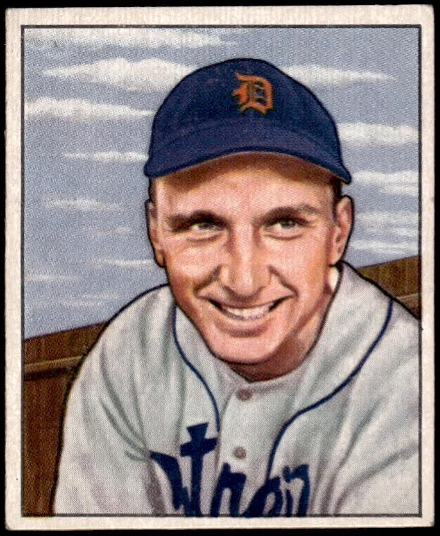
Dick Kryhoski, Tigers First Baseman
◼️ KRYHOSKI’S BASEBALL CAREER ◼️
Left-handed first baseman Dick Kryhoski had a seven-year major league career from 1949-55. In 569 games with four teams, he hit .265, with 45 home runs, 231 RBIs, plus 85 doubles. He was enjoying his best season when Gaedel appeared on the scene. That year Kryhoski belted 12 homers, with 57 RBIs and batted .287 for Detroit.
◼️◼️ HIS CARDS ◼️◼️
Bowman’s 1949 baseball issue included Kryhoski’s first baseball card in a national set. He appeared again in 1950, skipped the ’51 Bowman, and was back in the company’s set from 1952-54. His Topps debut was in the famous ’52 set and then two years later he showed up again in the ’54 offering.
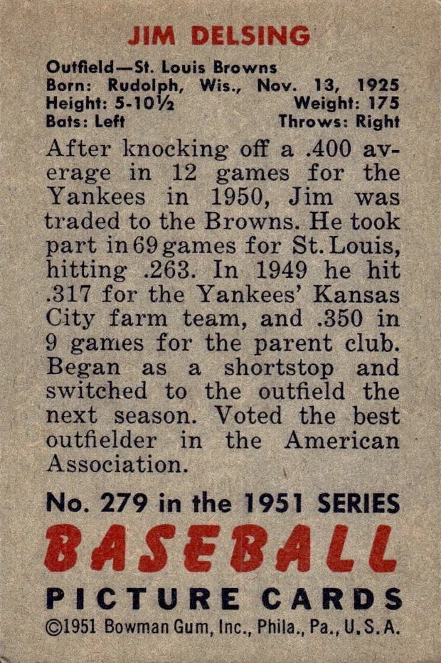
1951 Bowman
Jim Delsing, Browns Pinch-Runner
◼️ DELSING’S BASEBALL CAREER ◼️
Delsing was an outfielder who preferred playing center field. His best year was in 1953 with the Tigers. That season, he played in 138 games, putting 11 over the fence, drove in 62 runs, had 26 doubles, scored 77 runs, while batting .288. He appeared in 822 big league contests for five teams between 1948-60, but mostly from ’48 to ’56. Delsing played three full seasons at the AAA minor league level from 1957-59 and returned for a brief major league swan song in 1960.
◼️◼️ HIS CARDS ◼️◼️
Compared to the previous five players mentioned, Delsing’s card history ran slightly longer. The outfielder started off in the 1951 Bowman set (shown above). This was followed by inclusion in the ’52 Bowman set, the 1953 Bowman Black & White set, and finally in the 1954-55 Bowmans. Delsing had a run of five consecutive Topps sets from 1952-56, plus the 1959 set. Although Delsing appeared on his ’59 Topps card with the Washington Senators, he never played a game with the team. (He was absent from both the ’57 and ’58 Topps sets.) … In addition, Delsing was included in the 1954 Red Man tobacco set.
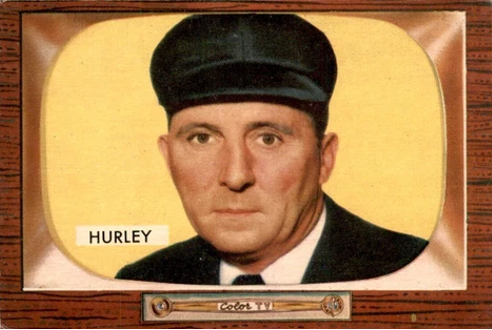
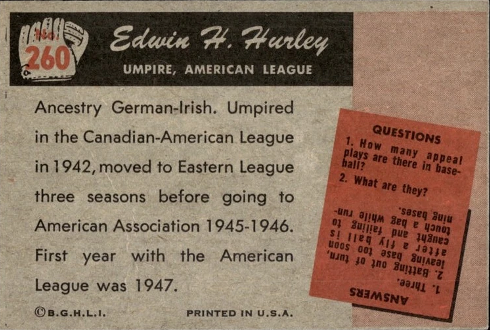
1955 Bowman
Ed Hurley, Home Plate Umpire
◼️ HURLEY’S BASEBALL CAREER ◼️
Between 1947-65, Hurley umpired in 2,826 American League games. His last major league game was at Metropolitan Stadium in Bloomington, Minnesota in 1965. He called balls and strikes in the seventh – and deciding — game of that year’s World Series when the Dodgers defeated the Twins. After that, he was forced to retire at age 55. He unsuccessfully fought the then mandatory retirement age for umpires.
◼️◼️ HIS CARDS ◼️◼️
Hurley was one of the 31 umpires included in the 1955 Bowman baseball set – the last one issued before the company was bought by Topps in early 1956. It was his only card appearance.
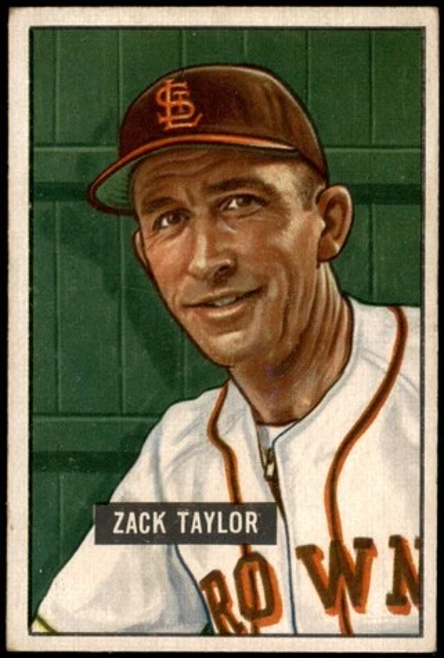
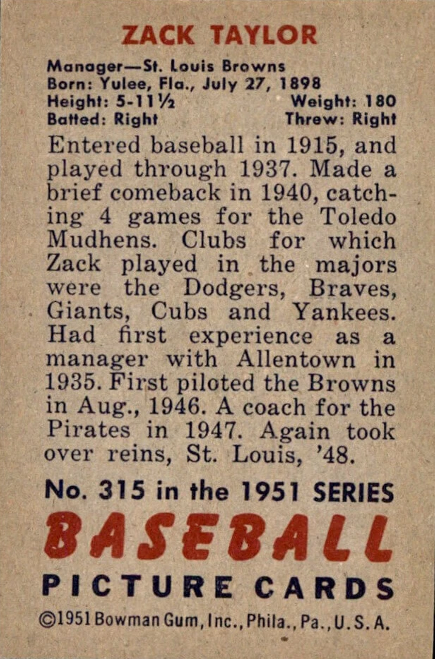
1951 Bowman
Zack Taylor, Browns Manager
◼️ TAYLOR’S BASEBALL CAREER ◼️
Taylor had a 16-year big league career as a catcher from 1920-35. Playing for five National League teams, in 918 games he hit .261, with nine homers and 311 RBIs. He was known as a great defensive backstop who was excellent at cutting down baserunners. … After filling in on an interim basis in 1946, Taylor managed the Browns full-time for four seasons (1948-51). During that four-year period, St. Louis had a dreadful average seasonal record of 56-98.
◼️◼️ HIS CARDS ◼️◼️
The Browns’ field boss was included as a player in the 1933 Goudey set and is shown as a Cubs catcher. His only other major card is the 1951 Bowman (shown above). … When Megacards issued their “Conlon Collection” set in 1991, they included a card of Taylor – using a photo from his playing days.
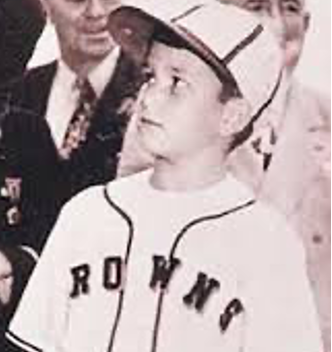

Bill DeWitt Jr.
Browns Batboy
◼️ DeWITT’S BASEBALL CAREER ◼️
Browns batboy Bill Dewitt, Jr. was just two weeks shy of his 10th birthday when he became part of the Eddie Gaedel story. The newest member of the Browns needed a small uniform so they turned to their batboy, DeWitt. The number on the back of his jersey was altered and voila, Gaedel was set for the game. … DeWitt was the son of Browns’ executive Bill DeWitt, Sr. (For over 60 years, DeWitt, Sr. was a part of major league baseball, including being the owner or an executive with the Browns, Yankees, Reds, White Sox and Tigers.)
As for young DeWitt, he eventually followed in his father’s footsteps as a baseball executive. Since 1995, he has been the owner of the St. Louis Cardinals. After right fielder Frank Saucier passed away in 2025, DeWitt, now 84, became the last living person of those mentioned in this article.
◼️◼️ HIS CARDS ◼️◼️
Having never played minor or major league ball, DeWitt, was not included in any regular baseball card set.
— Always the Master Showman —

Hall of Fame Postcard
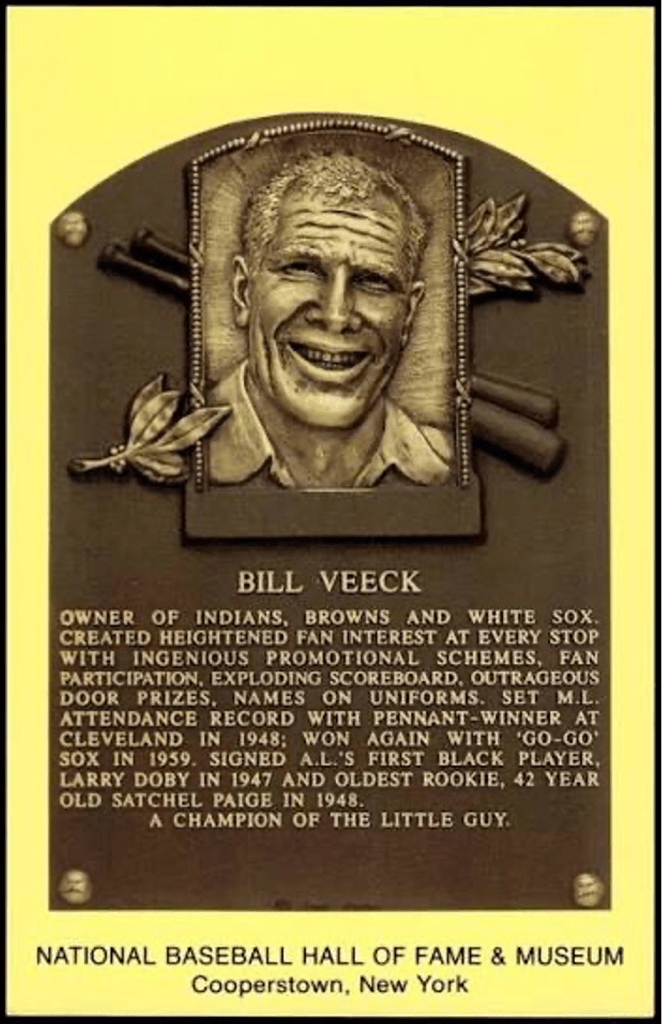
Plaque Postcard
Bill Veeck, Browns Owner
◼️ VEECK’S BASEBALL CAREER ◼️
As an innovator and unconventional baseball personality, over the course of four decades Veeck owned and operated four major league teams: The Cleveland Indians (1946-49); the St. Louis Browns (1951-53); and the Chicago White Sox twice (1959-61 and 1975-81).
Three months after Jackie Robinson broke baseball’s color line in the National League, Veeck added Larry Doby to the Indians’ roster … making him the first Black player in the American League. The next year, he signed all-time great Negro League pitcher Satchell Paige.
Two ingenious ideas marked his time with the White Sox in the late ‘50s and early ‘60s. The exploding scoreboard was introduced — to be activated when a Sox player hit a home run. In addition, players’ names were added to the back of uniforms for the first time under Veeck.
In 1979, during his second stint as owner of the White Sox, he and his son, Mike, promoted the infamous “Disco Demolition Night” at Comiskey Park. The festivities got out of control and an unexpectedly large crowd stormed the field, resulting in a forfeit of the game by Chicago.
Attendance often jumped significantly after Veeck purchased a team. Besides stunts and innovations, on-field success helped. The Indians became World Champions in 1948 — the first time in 28 years they finished atop the A.L. standings. In addition, in 1959 the White Sox won their first pennant in 40 years while Veeck was owner.
◼️◼️ HIS CARDS ◼️◼️
Being a team executive, Veeck was not in a regular card set. However, five years after his death in 1986, Veeck was chosen for Baseball’s Hall of Fame. Consequently, there’s a Hall of Fame plaque postcard featuring Veeck and a Perez-Steele Galleries postcard-size card (issued as part of their Hall-of-Fame series).
— August 19, 1951 —
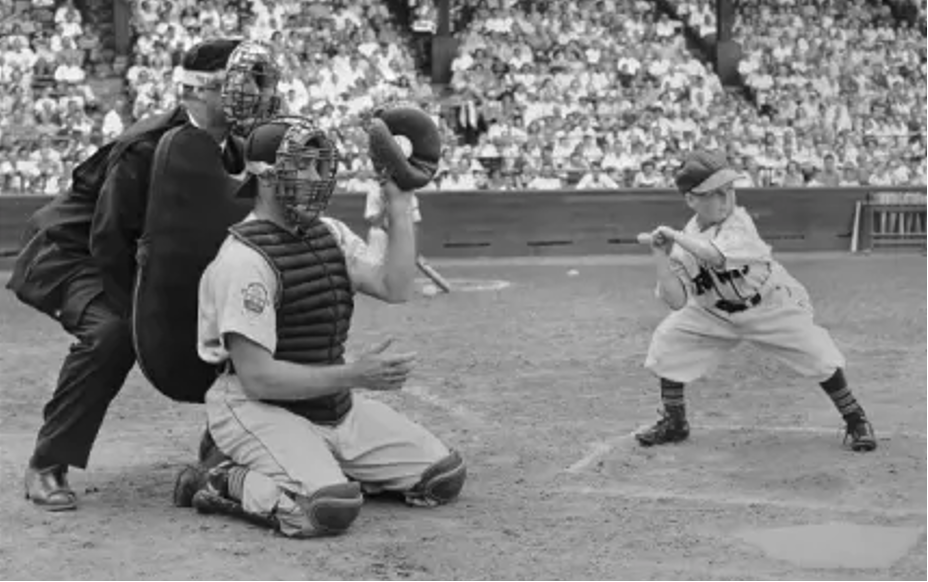
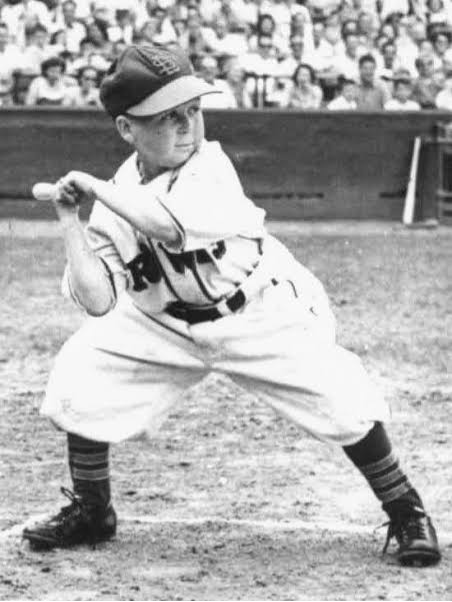
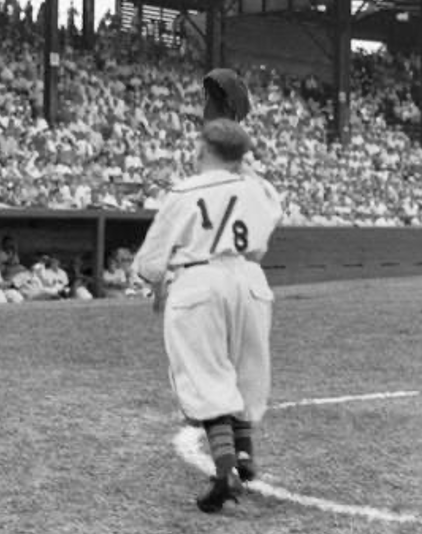
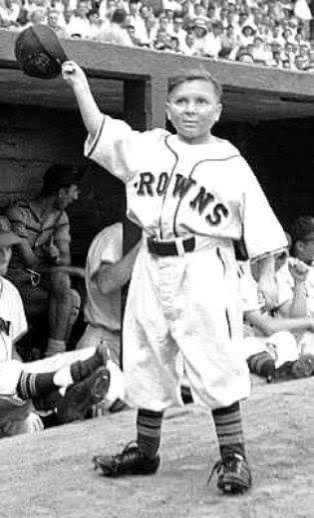
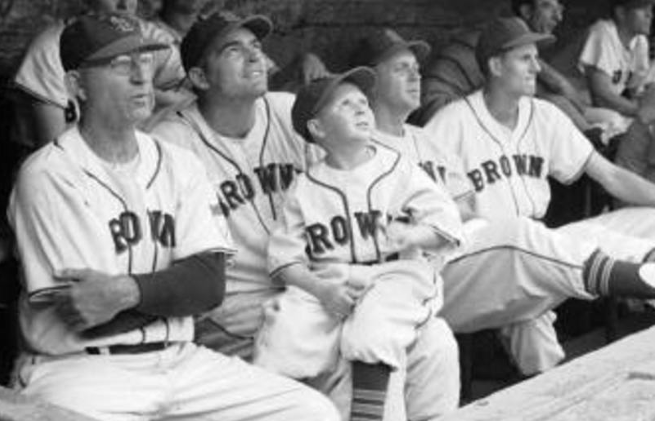
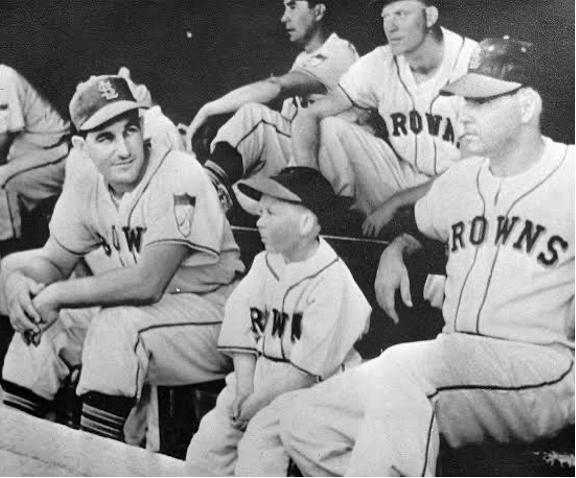
Eddie Gaedel at the plate (top row); tipping his cap to
St. Louis fans (center); in the dugout with teammates (bottom)

THIS ARTICLE WAS WRITTEN
EXCLUSIVELY FOR BaseballCardFun.com
• • •
Text Copyright © 2026 by BaseballCardFun.com / Mark A. Larson
No article appearing on this website may be reproduced without written consent of the Editor/Publisher
To keep up-to-date on additions to BaseballCardFun.com, subscribe below*
* Your email address will never be shared and is only used to announce new articles

