
BY MARK A. LARSON
Editor & Publisher
— San Francisco Giants —
Giant confusion … Frisco fiasco … whatever you want to call it …
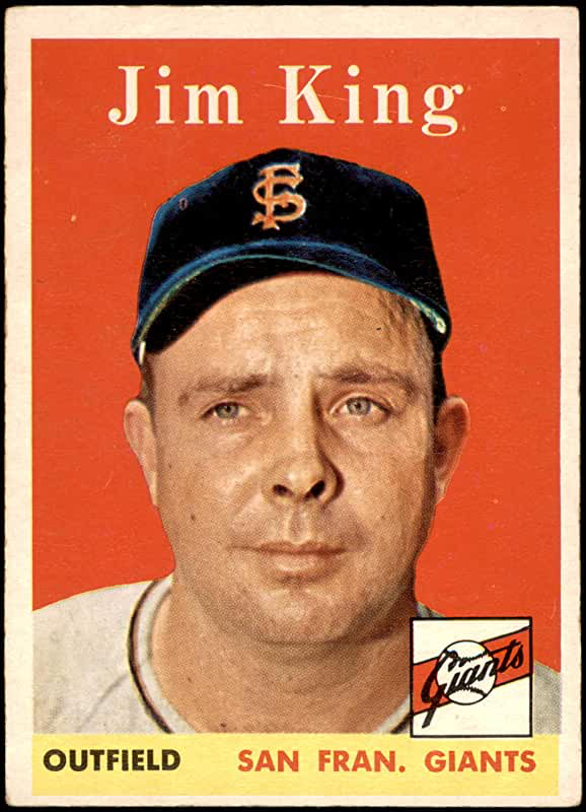
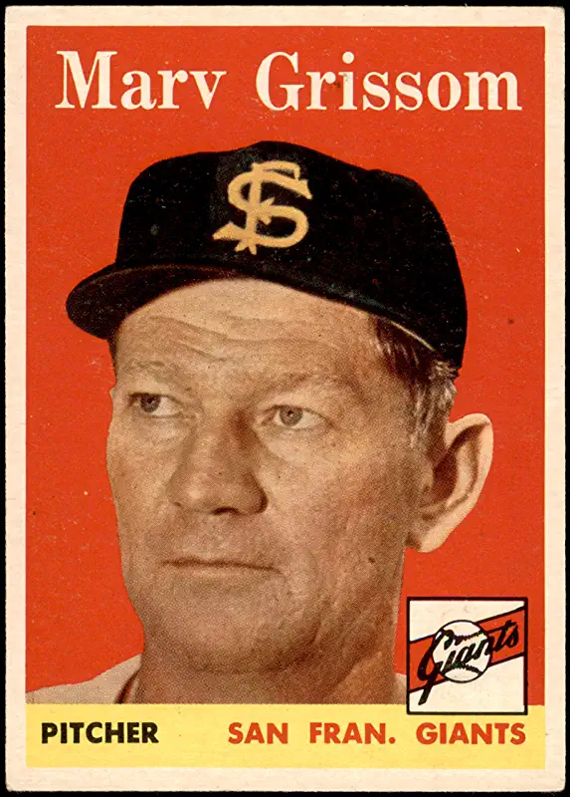
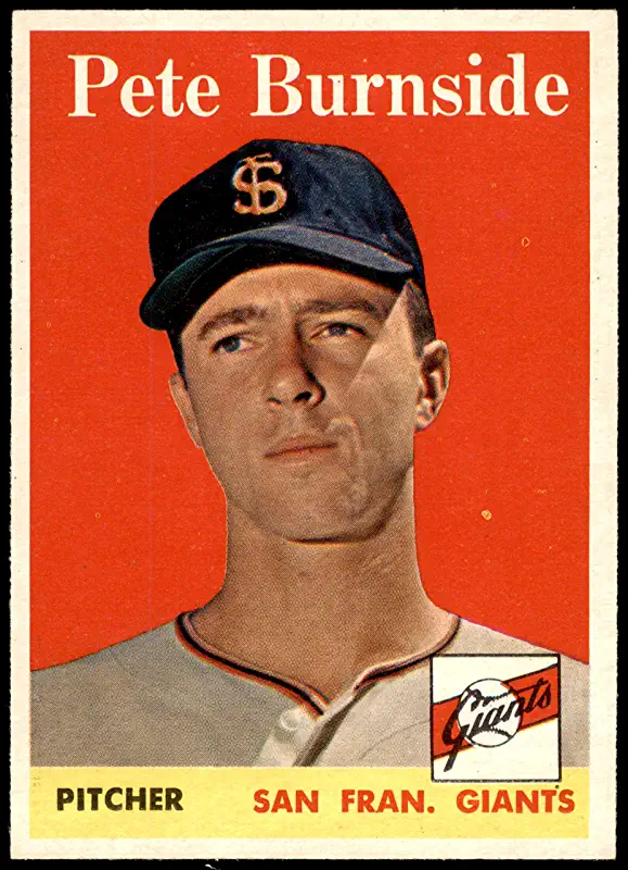
When the Giants moved west from New York after the 1957 season, Topps seemed to face a dilemma on how to handle their new cap logo for the 1958 set.
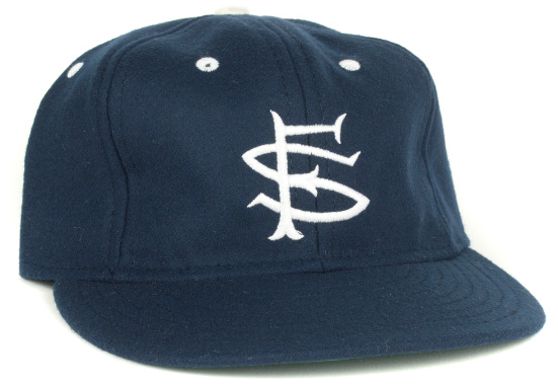
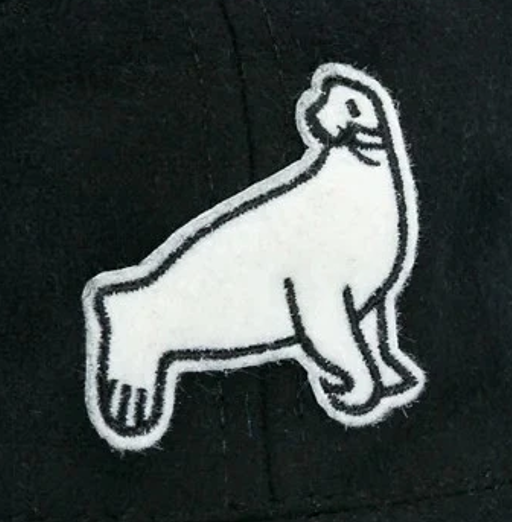
Apparently, they assumed the Giants would adopt the style of the old San Francisco Seals Pacific Coast League (PCL) team. So Topps put their airbrush “artists” to work … with less-than-outstanding results. Pete Burnside, for instance, appears to be wearing a cap more $uitable for working in a bank.
The Giants, of course, went with the more straight-forward – and now familiar – block-style “SF” on their caps.

— San Francisco Seals —
For 55 years (1903-1957), the San Francisco Seals were the city’s entry in the Pacific Coast League. Except for six seasons during that period, the team operated independent of the major leagues. Their last affiliation was with the Boston Red Sox in 1956-57.
From 1931 on, the team played at Seals Stadium in San Francisco.
When the Giants relocated from New York to the west coast’s Bay Area following the ’57 season, the Seals were displaced and moved to Phoenix. However, while the Giants awaited the completion of their new stadium – Candlestick Park – an expanded Seals Stadium served as their home in 1958-59. (It was demolished after the ’59 season.)
In the first big league game ever played on the west coast, the Giants’ Darryl Spencer hit the first major league home run at Seals Stadium on April 15, 1958. Hall-of-Famer Orlando Cepeda slammed the first of his 379 major league homers in the same game, as San Francisco trounced the Dodgers 8-0.
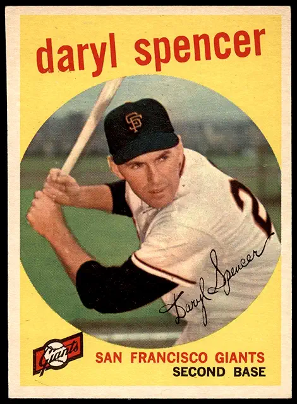
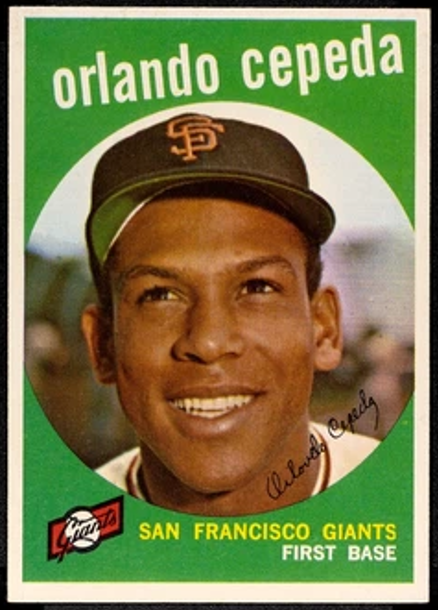
— Both cards: 1959 Topps —
Back in the 1930s, all three DiMaggio brothers – Vince, Joe and Dom – played in the outfield for the Seals. They were natives of the San Francisco area and for most of the decade there was a DiMaggio in the team’s lineup.
At age 17, Joe began a four-year stint with the Seals (1932-35). During that period, he hit .361 with 74 home runs in 463 games. While with San Francisco, Joltin’ Joe had a 61-game hitting streak in 1933 – eight years before his major league record 56-game streak. After the ’35 season, if the question “Where have you gone, Joe DiMaggio?” was asked, the answer was … on to the Yankees and baseball immortality.
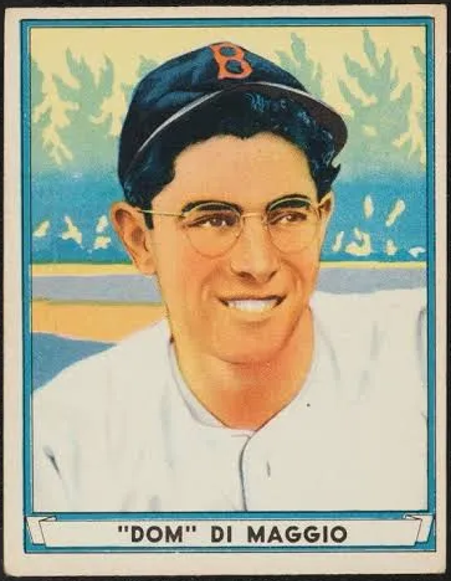
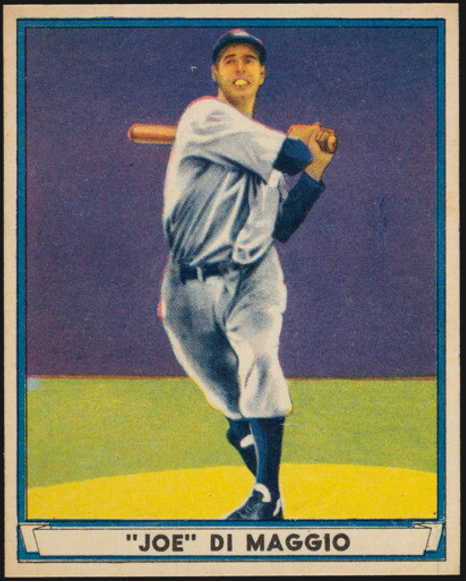
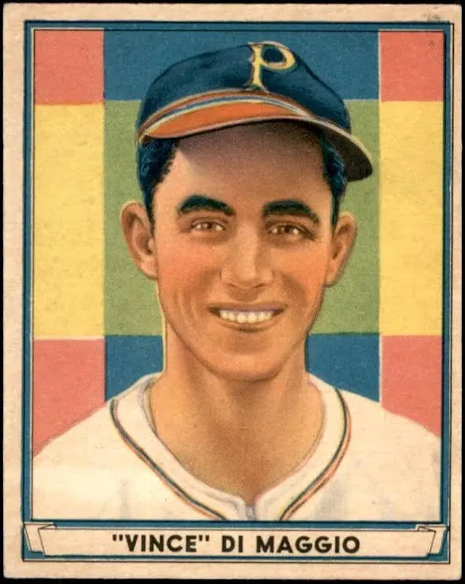
— All three DiMaggio brothers appeared as major leaguers in the 1941 Play Ball set —
Brothers Vince and Dom sported Seals uniforms in 1932-33 and 1937-39 respectively. Each later played a full decade in the majors. During 10 years in the bigs, Vince, the oldest of the three brothers, appeared in over 1,100 games and belted 125 homers. Even though his lifetime average was only .249, he was a two-time All-Star. Dom, the youngest, had a very productive 11-year career with the Red Sox. He was a seven-time All-Star and smashed 300+ doubles, while compiling a .298 lifetime average.
The Seals won 14 championships during their five and a half decades in the PCL, including their last season in San Francisco in 1957.
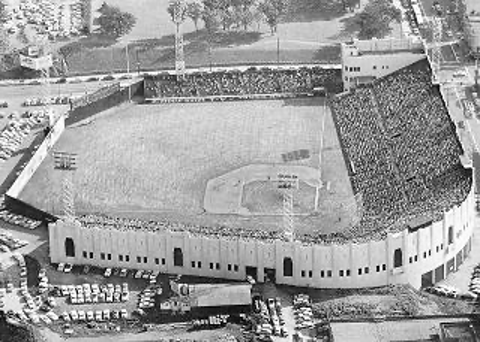
(Photo/Wikipedia)
• • • • • •
THIS ARTICLE WAS WRITTEN
EXCLUSIVELY FOR BaseballCardFun.com
• • •
Text Copyright © 2025 by BaseballCardFun.com / Mark A. Larson
No article appearing on this website may be reproduced without written consent of the Editor/Publisher
To keep up-to-date on additions to this
website, subscribe at bottom of this page*
* Your email address will never be shared and is only used to announce new articles
 BaseballCardFun.com