
BY MARK A. LARSON
Editor & Publisher
“If you can’t beat ’em, join ’em.”
“In every dark cloud, there’s a silver lining.”
“If life throws you a lemon, make lemonade.”
In other words, take a negative and turn it into a positive. They’re old sayings, but an appropriate description of something that happened during the 1989 National Convention in Chicago.
Three of my friends – Pete, Frank and Dan – and I all lived in the Minneapolis-St. Paul (MN) area and decided to drive the 400 miles to the National in the Windy City. Although it was the 10th Annual National Convention, it was the first for all of us. We stayed at the downtown Hyatt Regency Hotel which was where the show was held.
However, after a couple of days of making the rounds at the show, perusing dealers’ tables and purchasing items, we were getting kind of burnt out. Then something reignited our interest: The brand-new 1989 Bowman baseball cards were hitting the showroom floor. Each of us decided to buy a box or two.

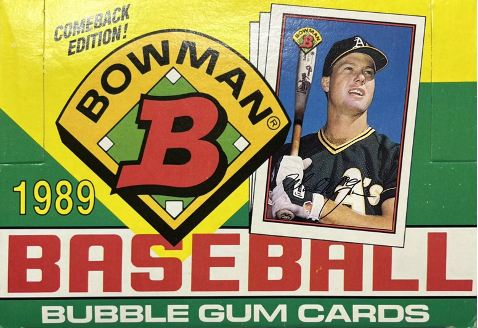
It was kind of exciting as this was the first time the Bowman name would be associated with baseball cards since 1955. After a hard-fought, five-year battle, Topps had purchased its competitor in early 1956 and essentially buried the name. In reviving the Bowman brand, Topps – to some extent – tried to emulate the original cards.
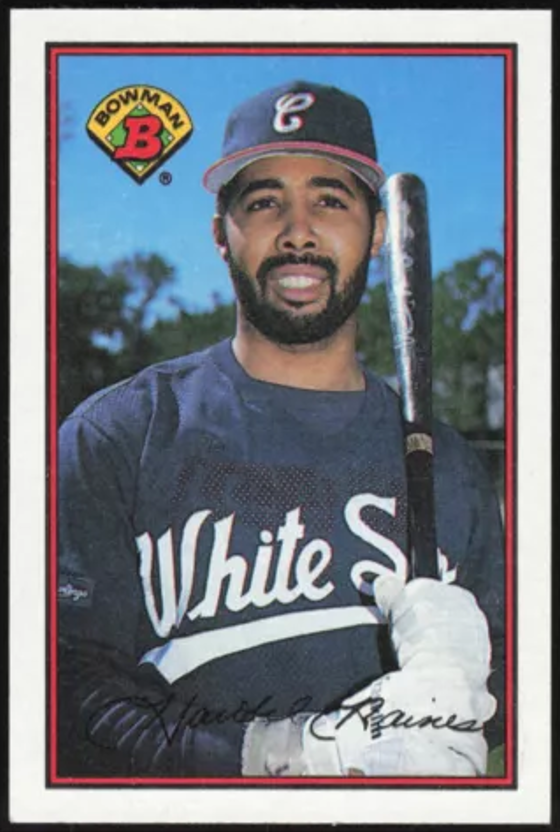
Like the Bowmans from the 1950s, the new cards were a bit larger than the Topps standard card size of 2 1/2 by 3 1/2 inches. Except for a brand logo and facsimile autograph, cards only included a photo of the player on fronts. This “plain” design was likely meant to replicate the photo-only format of the 1953 Bowman set (which had been popular with old-time hobbyists since its premiere 36 years earlier).
Topps’ 1989 Bowman set contained 484 cards in one series. Its backs were red on gray cardboard and to distinguish itself from other current sets, contained unique statistics … a player’s numbers vs. each opposing team during the previous season. Wax boxes contained 36 packs, with a dozen cards per pack and, of course, a pink slab of “oh-so-not-delicious” bubblegum.
When ripping open our packs – and gnawing on some gum – it soon became apparent that one card per pack had wax stains on the back. Some stains were rather light and nearly unnoticeable, but many were pretty dark. Obviously, this problem wasn’t new. When wax packs were still mostly the norm in the baseball card collecting hobby, wax on a card – especially on the back – was a big negative. It basically meant one card per pack was crummy.
(Historically, Topps, Fleer and Donruss had packs made of wax paper that were sealed with hot wax – hence, the name “wax pack.” The hot wax is what often spilled onto a card in the pack.)
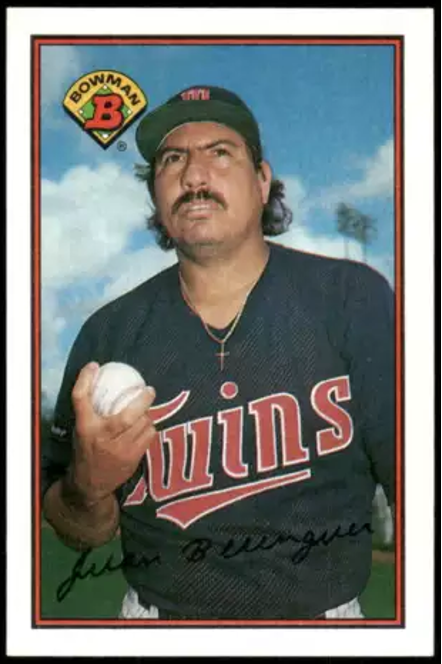
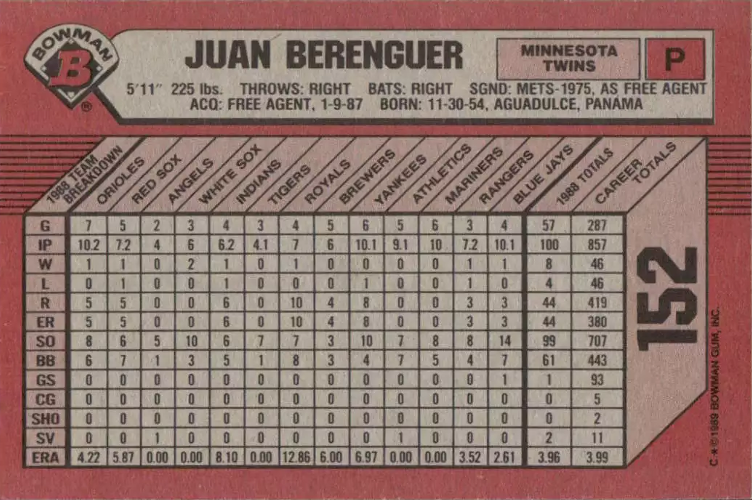
1989 Bowman — “clean” with no wax stains on back
There are several methods to successfully remove wax from the glossier fronts of vintage cards. (Wax on, wax off?) However, getting rid of it completely from card backs (at least back in the 1980s) was a different proposition altogether as it could actually soak a bit into the non-glossy cardboard then used.
The solution to our collecting dilemma at the National? Well, here’s where those old sayings came into play. So, as mentioned earlier, “If life throws you a lemon, make lemonade.” At least that’s the way my friend Dan looked at the situation. Dan was sometimes (how should I say it?) a bit “out-there” … a little eccentric so to speak. He decided to do something positive and unique – if rather peculiar – with the cards that had wax-stained backs: Put together a complete set of 1989 Bowman that only had noticeable wax residue on the reverse side. Yup, a full set of 484 wax-stained cards.
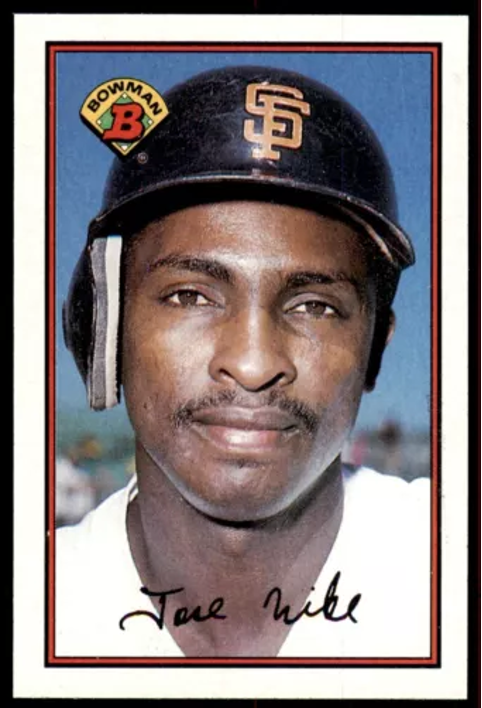
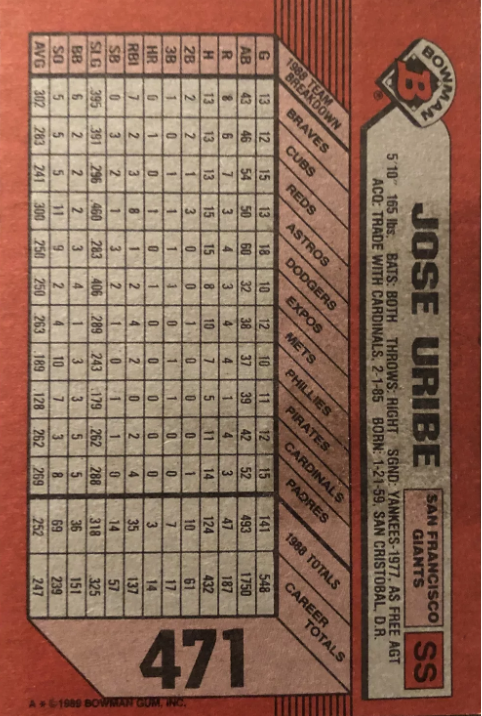

1989 Bowman heavily stained (above); lightly stained (below)

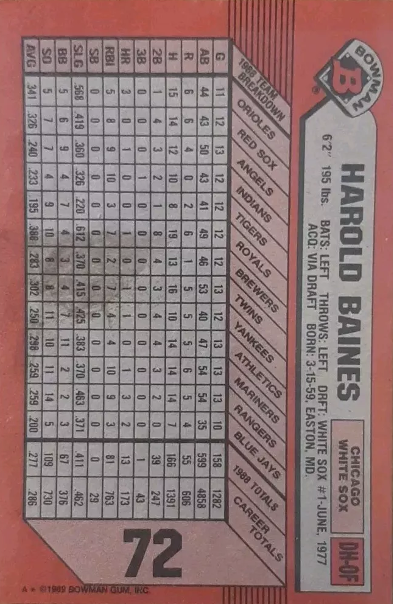
The rest of us skeptically thought “OK … that’s interesting.” But it actually solved a problem. Dan would trade us non-waxed cards on our want-lists in exchange for our waxy cards. Voila: Better for us and better for his new-found approach to card collecting. Because we bought several boxes, Dan left Chicago with about 200 different cards with wax-stained backs – a pretty good start.
Having lost touch with Dan, I don’t know if he ever went any further with this particular collection. He would have needed to find many more traders and/or purchase a lot more boxes. In any case, the end result would be quite an accomplishment and a distinctive set, but, unfortunately, worth little. Yet, the whole situation involving opening packs and trading the just-released 1989 Bowman set resulted in some additional fun for all of us at our first National. Plus, it also reminded us that there are countless ways to collect baseball cards … whether valuable or just for fun.
• • • • • • • • • • • • • • • • • •
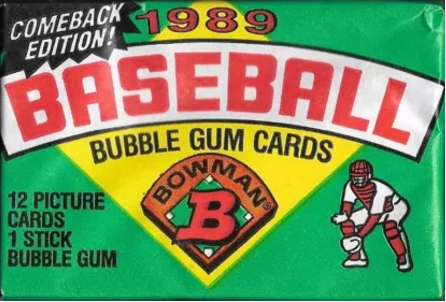
Long-term interest in the 1989 Bowman set waned a bit because the cards were a little odd, being slightly oversized at 2 1/2 by 3 3/4 inches. Storage in boxes and plastic sheets presented a challenge to hobbyists. In fact, for a time, the demand for 8-pocket plastic sheets skyrocketed as the ’89s did not fit into the standard 9-pocket version.
Starting the next year — in 1990 — Bowman cards were produced in the standard size format and have remained so ever since. Bowman later became noteworthy for the plethora of rookie cards included in its annual sets. Like other cards of the era, the ’89 Bowmans were produced in mass quantities and can still be easily found today.
The good news was, by 1989 sealing packs with hot wax was on the way out. The year before, Score entered the baseball card field and used a light plastic wrap that did not involve wax or harm the cards. Then the same year the Bowmans were released, Upper Deck’s initial set introduced the foil pack — tamper-resistant and most importantly, no wax. It took time, but eventually Topps would follow suit.
• • • • • • • • • • • • • • • • • •
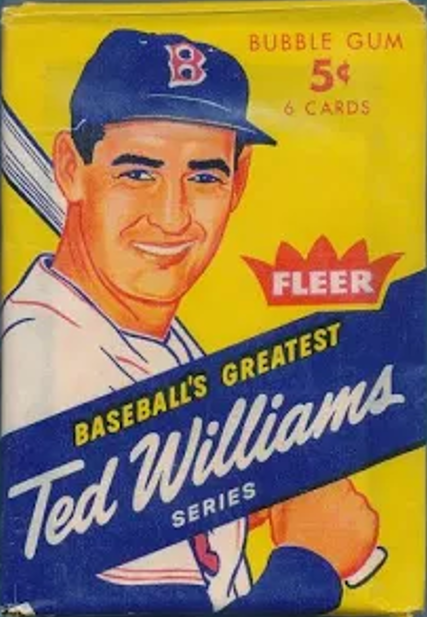
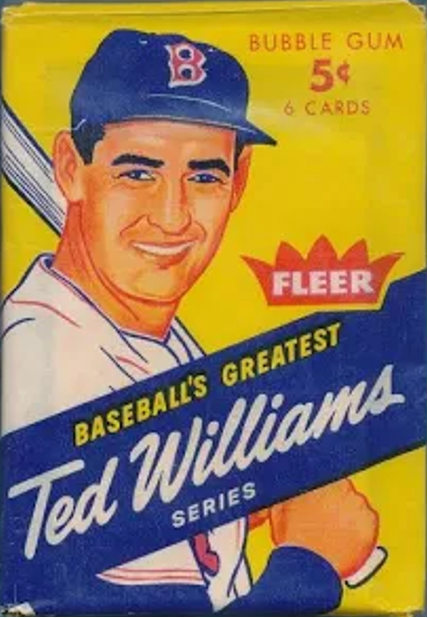
WAXING NOSTALGIC: Hall-of-Famer Ted Williams’ last Topps card as an active player appeared in the company’s 1958 set. Soon he signed an exclusive contract with Fleer, Topps’ rival. Fleer wasted no time in trying to capitalize on their new relationship with The Splendid Splinter. They issued an 80-card set in 1959 devoted exclusively to Williams’ life and career.
However, the ’59 Fleer effort proved to be too much Ted – 80 cards featuring just one player was excessive. The set wasn’t that popular and some sources even suggest it was a flop. A handful of cards looked nice, but many were rather ugly or covered topics or events that weren’t that interesting to collectors.
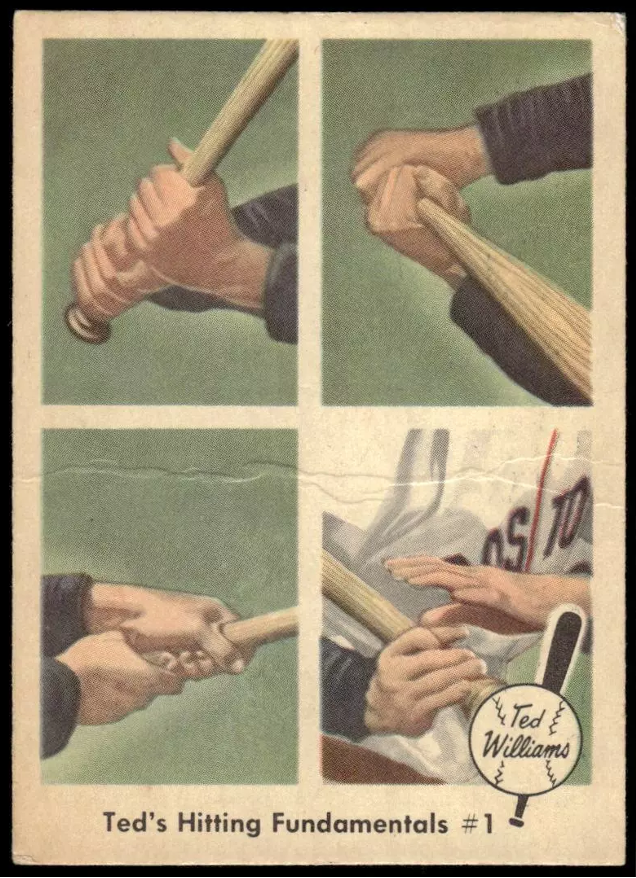
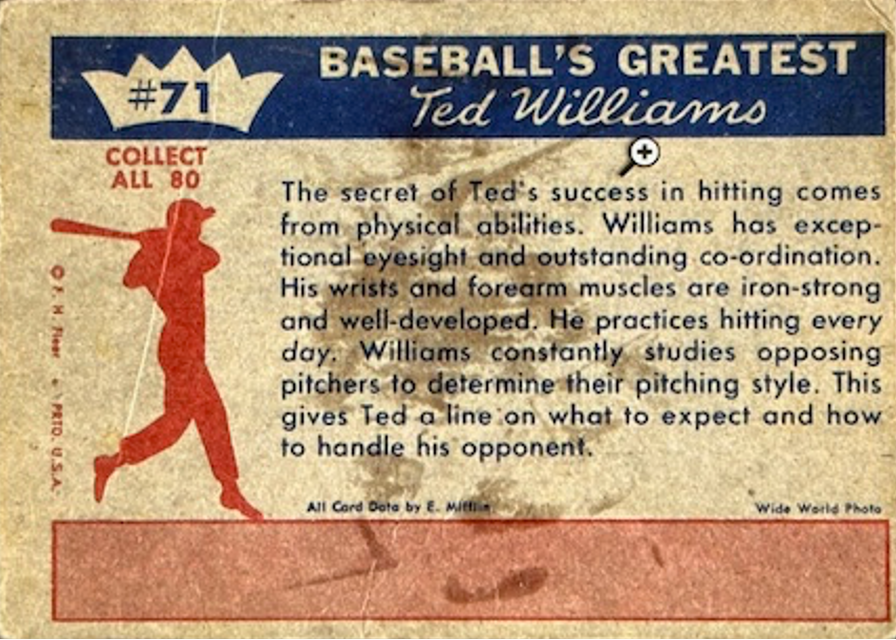
The reason the 1959 Fleer set is mentioned here is that its gray card backs contained some of the worst wax stains of all time. They were dark and usually covered a large area. Even fans of the Ted Williams set had to be disillusioned with the unsightly irreversible wax damage they encountered on the reverse of the cards. … So much for Fleer’s first attempt at producing baseball cards.
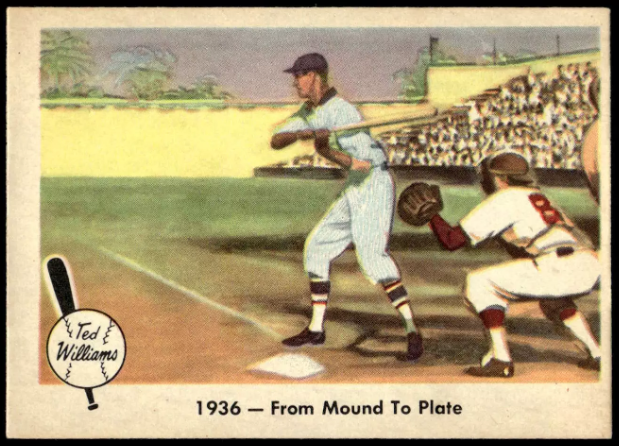

Two examples (above and below) of the horrible wax stains on the backs of Fleer’s 1959 Ted Williams set
• • • • • •
THIS ARTICLE WAS WRITTEN
EXCLUSIVELY FOR BaseballCardFun.com
• • •
Text Copyright © 2025 by BaseballCardFun.com / Mark A. Larson
No article appearing on this website may be reproduced without written consent of the Editor/Publisher
To keep up-to-date on additions to BaseballCardFun.com, subscribe below*
* Your email address will never be shared and is only used to announce new articles
 BaseballCardFun.com