
Episode: “In the Big Inning” (1975)
REVIEWED BY MARK A. LARSON
Editor & Publisher
It’s about 1880 in western Minnesota and the question is: Can Walnut Grove – the town where this show is set – finally beat rival Slick McBurney and his Sleepy Eye Green Stockings this year in the annual ballgame between the two towns?
That’s the burning question on this episode of “Little House on the Prairie.” The previous year, the Green Stockings walloped the locals 36-0 … partly due to Walnut Grove’s lack of a decent pitcher. McBurney (played by Gregory Walcott) is the cigar-chomping, beer-guzzling, hard-throwing pitcher – and leader – of the Sleepy Eye team. There’s nothing like a good, old-fashioned townball game to bring out the competitive spirit of the citizenry.
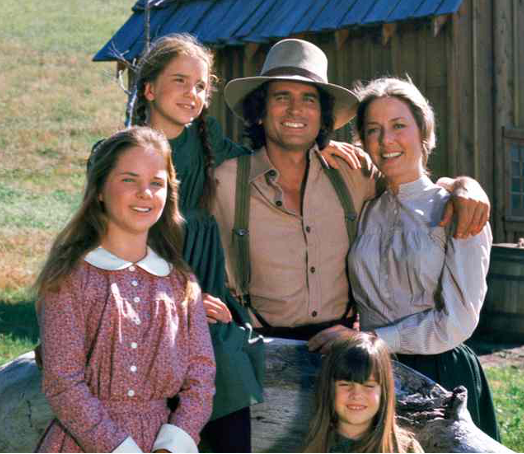
Charles Ingalls (Michael Landon) is on the lookout for a new pitcher for Walnut Grove and unexpectantly finds one in the form of fellow farmer Jebediah Mumfort (Karl Lukas). And, can he ever hurl heat. Charles happened to observe him throwing a rock at a hawk that was going after his chickens and was amazed at his speed and accuracy. Jebediah gets a tryout and burns it in there like the future Nolan Ryan. (The Mumfort Express?) Walnut Grove now has the pitcher they need. But wait. There’s a snag.

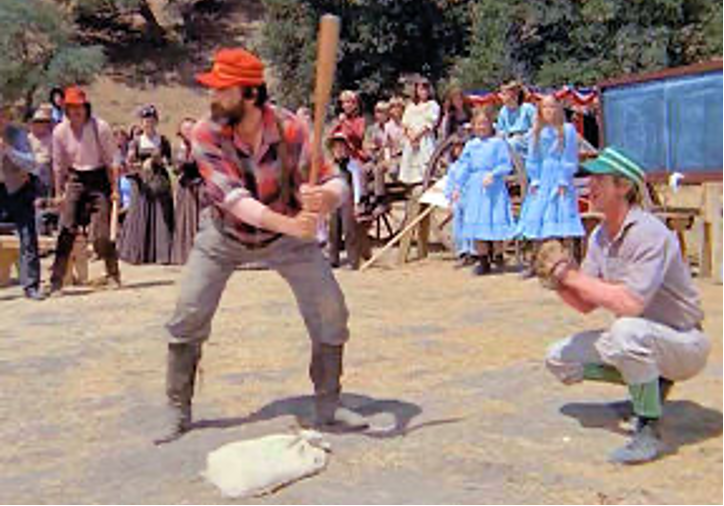
Pitcher Jebediah Mumfort (left)
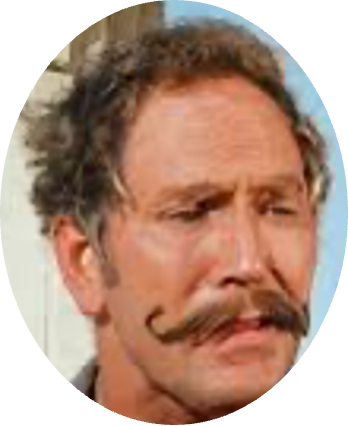
and with team (right)
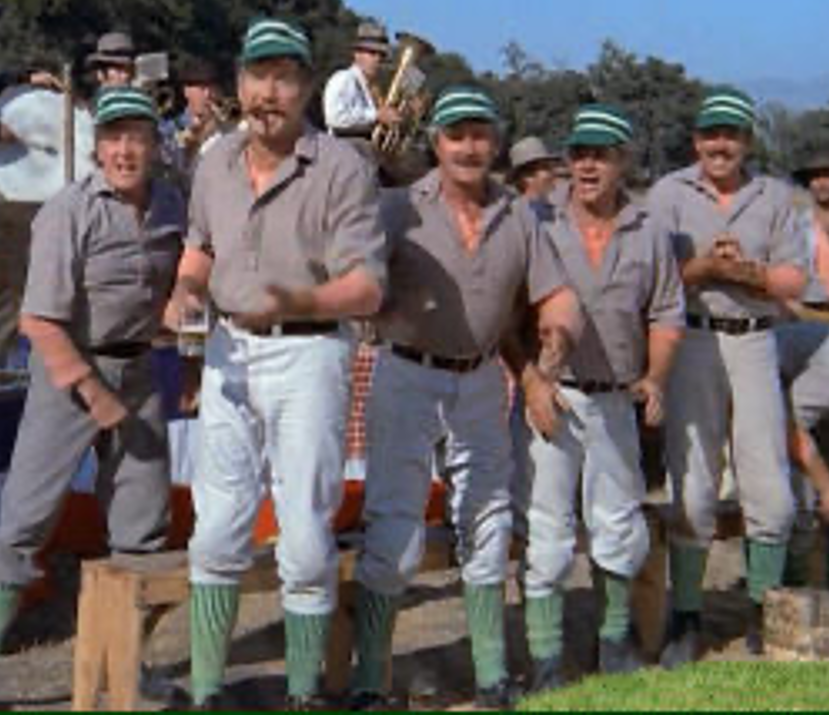
Jebediah’s wife strenuously objects to the sinful wagering that has already taken place on the game (especially because it’s scheduled for the Sabbath) and won’t let her husband participate. If he doesn’t pitch, a lot of money already bet will almost surely be lost. Fortunately, Caroline Ingalls (Karen Grassle) comes up with an ingenious solution. She suggests the winnings all be donated to the church. Since those monies would be lost anyway, the townsfolk agree to the alternate plan … and Jebediah’s wife relents. The big game is on after all.
In the meantime, there’s a minor controversy over whether the Walnut Grove team should be called the “Millers” or “Merchants.” It’s never really settled, but the “M” on their red caps could represent either name.
Slick and his team are super confident of another massacre. That is, until they see Jebediah pitch. In fact, Slick leads off the game and whiffs on three swinging strikes on the first three pitches. Whoosh. … Whoosh. … Whoosh. However, it remains a close game throughout as Slick is also throwing as hard as ever.
To try to get an advantage, Sleepy Eye starts to play dirty and resorts to some shenanigans. First, Slick deliberately throws at the batters and almost nails Mr. Edwards (Victor French) who threatens him with the bat. Then, when runners are on base, the Green Stockings’ infielders punch them in the stomach as they pass by. Finally, Slick asks the ump (The Rev. Alden played by Dabs Greer) for time out so he can get a drink of water. Upon, getting to the bench, Slick clandestinely puts the ball in the bucket of drinking water while he takes long, leisurely sips. When he returns to the mound with the ball, he pitches to Charles who breaks his bat when hitting the heavy, waterlogged horsehide. Walnut Grove protests and a new ball is put in play, while Slick innocently shrugs his shoulders. (What? … Me?)
The Millers/Merchants are twice down to their last strike in the bottom half of the last inning while trailing 8-5. But they manage to load the bases and Charles then hits a blast over the centerfielder’s head. With three runs already in, the play at the plate is close as Charles slams into Slick, resulting in a full-blown, bench-clearing melee. After the dust – and brawling settles – The Rev. Alden declares Charles safe, as Slick dropped the ball. Walnut Grove pulls it out 9-8.
This was the fourth episode of Little House on the Prairie’s second season and is quite entertaining. There were over 200 episodes on NBC between 1974-83.
Gregory Walcott on Bonanza
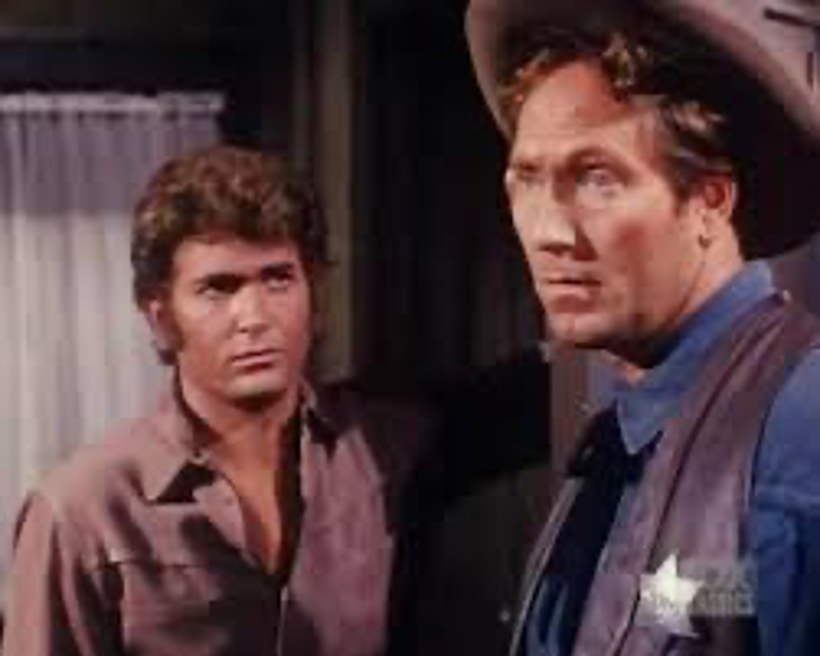
Finally, between 1952-94, character actor Gregory Walcott appeared in over 100 films and television shows. Prior to Little House, Michael Landon played “Little Joe” – the youngest Cartwright son – on “Bonanza” from 1959-73. As a guest on Bonanza, Walcott worked with Landon seven times during the series’ 14-year run.

During roughly the same general time frame as the setting for Little House (1870s-1890s), the first baseball cards began to appear – usually to help promote the sale of tobacco products. The four cards shown below are examples of Goodwin & Co.’s “Old Judge” issue. They were distributed with cigarettes between 1887-90 and featured both minor and major league players.
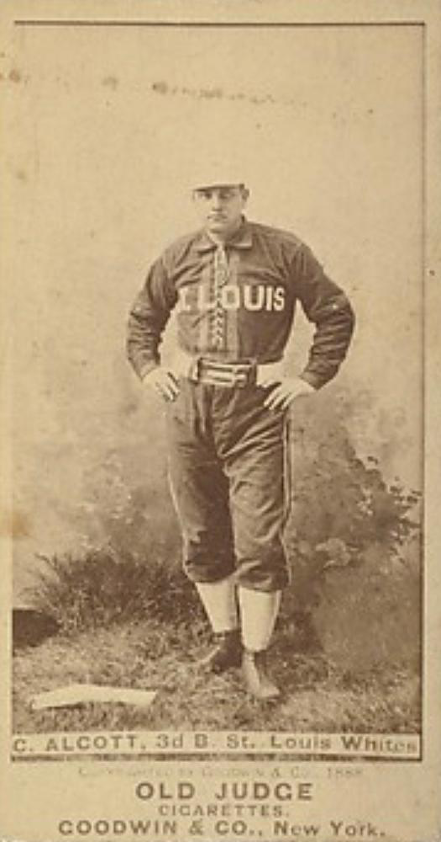

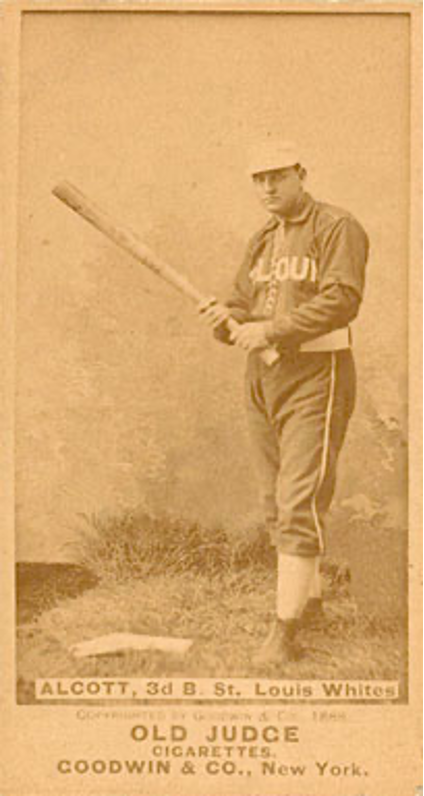
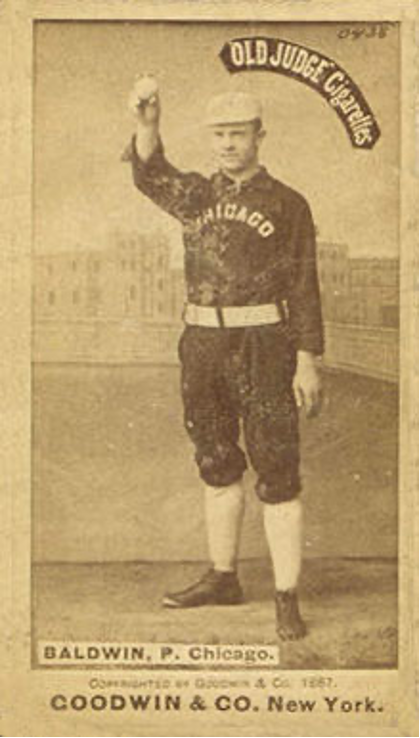
Goodwin & Co. “Old Judge” cards issued between 1887-90
• • • • • •
NOTE: To find out if this show is available in your area, use a search engine and type in: “Where to watch LITTLE HOUSE ON THE PRAIRIE” … In general, know that some television programs are currently only available on DVD, so check your local library … Others may not be available at all at this time.
THIS ARTICLE WAS WRITTEN
EXCLUSIVELY FOR BaseballCardFun.com
• • •
Text Copyright © 2025 by BaseballCardFun.com / Mark A. Larson
No article appearing on this website may be reproduced without written consent of the Editor/Publisher
To keep up-to-date on additions to BaseballCardFun.com, subscribe below*
* Your email address will never be shared and is only used to announce new articles
 BaseballCardFun.com