
BY PATRICK “PACKY” MADER
Staff Writer
Passionate baseball card collectors with a long history in the hobby may remember the first baseball card in their collection.
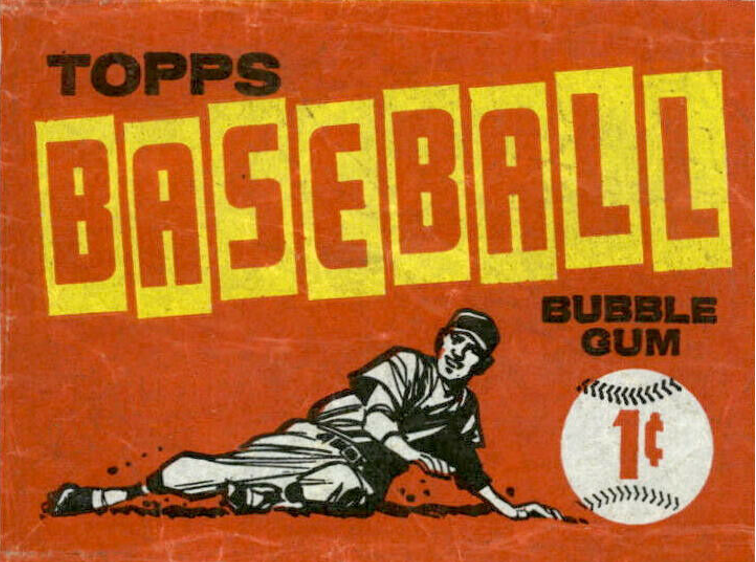
The Washington Senators had moved to Minnesota in 1961 to give the state its first Major League Baseball (MLB) team. It was an exciting time for this youthful Minnesota fan to follow a home team in its inaugural season. I was hoping to land a Twins’ player with my first purchased baseball card penny pack. Despite pressing the wax papered wrap down and smoothing it many times, I was unable to read a player’s name on any card.
Finally, I decided to buy a crisp looking wax pack and opened it. To my dismay, it revealed a player named Gene Baker of the Pittsburgh Pirates. While I was only six years old, I knew a .300 hitter or a batter with 25 home runs packed some statistical punch. Baker’s card yielded paltry numbers: 37 at bats, no home runs, four RBIs, and a tepid .243 batting average. I not only did not get the joy of buying a card with a Twins’ player featured, but I thought I got a dud.
As a person who enjoys the history of baseball, I can now say that disappointment has pivoted to a point of pride.
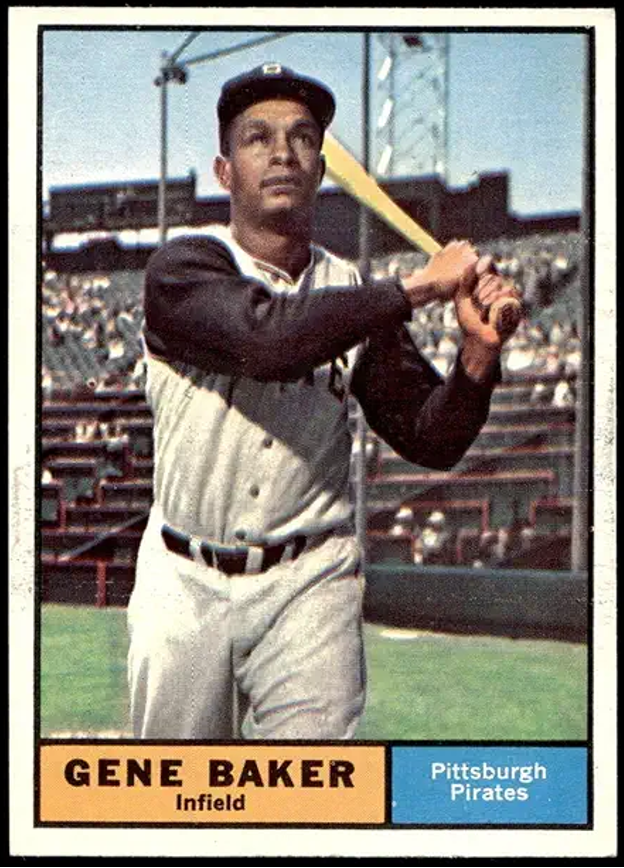
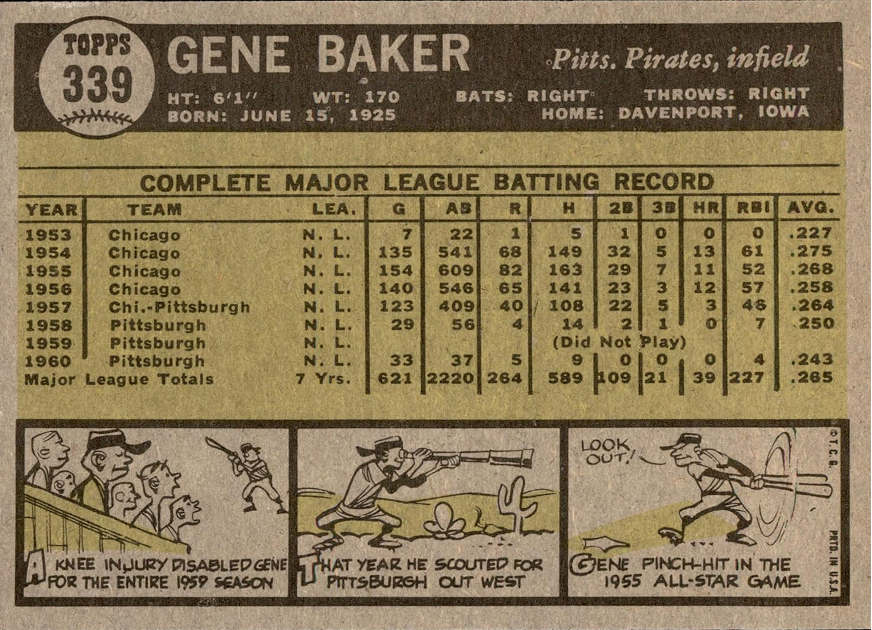
Gene Baker and Ernie Banks were the first Black players to integrate the Chicago Cubs in September 1953. Both played shortstop, but the decision was made to move the more experienced Baker to second base instead of the youthful Banks. The double play combination had solid rookie years in 1954, with Banks being voted runner-up to Wally Moon for National League Rookie of the Year honors. Baker, a native of Davenport, Iowa, played in every game in 1955 and was named to the National League All-Star team. He had a respectable career, batting .263 over nine seasons, starting regularly in five of them. But he played a role in the history of the game that few people know about.
After a dismal start to the 1961 baseball season, Baker was waived and assigned to manage the Class D affiliate in Batavia, New York. It has been reported that Baker was the first Black to manage a team affiliated with Major League Baseball, but this claim is in dispute. What does appear to be factual is that Baker was the first Black manager in organized baseball who played in MLB. The team performed well under Baker’s guidance, and he was promoted to the Class AAA Columbus team in 1962. The next year he was offered a position on the Pirates’ coaching staff, only the second Black ever to serve as an MLB team coach (Buck O’Neil was the first). And then came his historic role.
Baker was the first Black to manage in a Major League Baseball game when Pirates’ manager Danny Murtaugh and first base coach Frank Oceak were ejected for contesting a close call in the 8th inning of a game vs. the L.A. Dodgers on September 21, 1963. As Murtaugh left the field he told Baker that he was in charge. Baker made decisions about changing relief pitchers and who to send up to pinch-hit and pinch-run in the loss.
In 1964, Baker returned to the job of managing the Class D team in Batavia, but it would be his final season as a manager. The Pirates’ organization appreciated Baker’s baseball acumen and personality, however, and he remained with the club for more than two decades, including time as the Pirates’ chief scout of the Midwest – which leads to another reference about Baker.
William “Buzz” Schneider was a key member of the 1980 “Miracle on Ice” Olympic hockey team, tied for second in scoring. Buzz was a star hockey and baseball player from Babbitt, Minnesota, a small town atop the Iron Range in the sparsely populated northeastern section of the state. He had received full athletic scholarships in baseball and hockey from the University of Minnesota (U of M). That was an amazing offer because they were from Dick Siebert and Herb Brooks, a legendary baseball coach and a soon-to-be legendary hockey coach. A left-handed hitting third baseman, Buzz caught the attention of someone who alerted the Pirates.
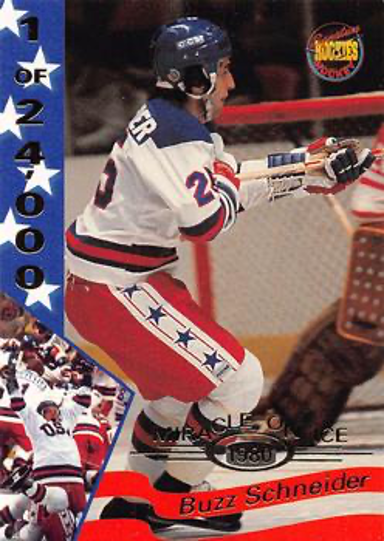
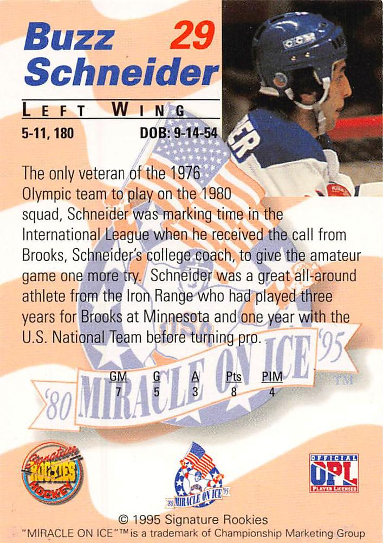
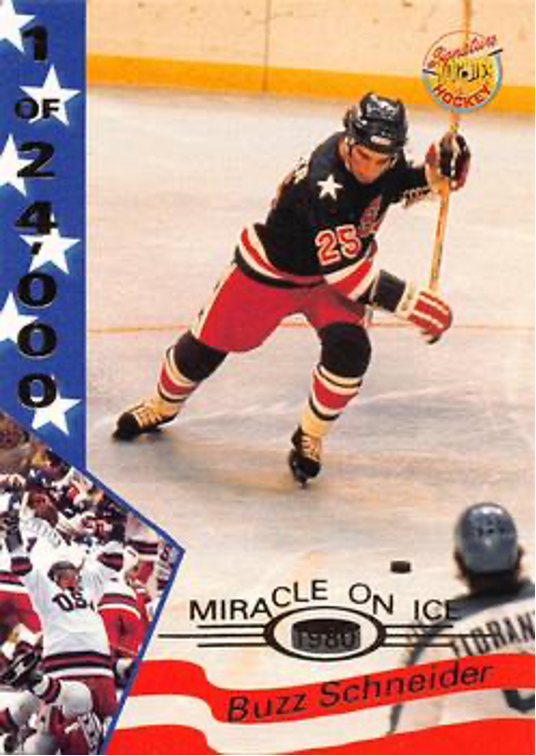
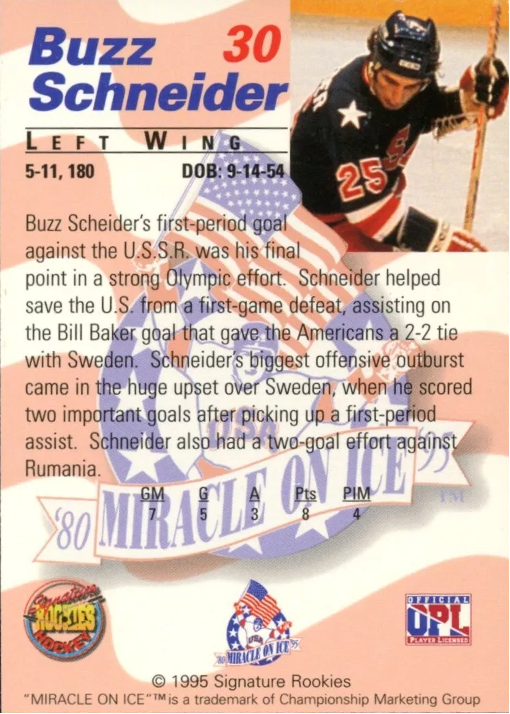
1995 Signature Rookies “Miracle on Ice”
Gene Baker came to watch him play a game during Buzz’s senior baseball season. The long-time scout must have been impressed because he requested a training session with Buzz and brought two other scouts. They were interested in turning Buzz into a switch-hitter and some of the drills involved Buzz hitting right-handed. At the conclusion of their time together, Baker approached Buzz and said, “I know you guys in northern Minnesota like to chase this little thing called a puck, but if you decide not to go to college, the Pirates will draft you.”
Buzz chose to attend college. He played one year of baseball at the U of M and then opted to concentrate on hockey – and the rest is history. But Gene Baker and my first baseball card have their own history too.


• • • • • •
THIS ARTICLE WAS WRITTEN
EXCLUSIVELY FOR BaseballCardFun.com
• • •
Text Copyright © 2025 by BaseballCardFun.com / Patrick Mader
No article appearing on this website may be reproduced without written consent of the Editor/Publisher
• • •
Patrick “Packy” Mader has written several books, including two large volumes on Minnesotans who were in the Olympic Games or competed in world competitions. To view hundreds of articles on Minnesota athletes, be sure to visit Packy’s website: MNAthletes.com. (Click Link Here)
To keep up-to-date on additions to BaseballCardFun.com, subscribe below*
* Your email address will never be shared and is only used to announce new articles
 BaseballCardFun.com