
BY MARK A. LARSON
Editor & Publisher
Sometimes even hard-core collectors – like myself – need a break from baseball cards. … So where does one turn while not leaving the general hobby?
For many, football, basketball, hockey and other sports cards offer the most obvious collecting alternative. Still others pursue sports memorabilia in its many forms: Uniforms and equipment; publications; autographed items, ticket stubs, etc.
However, when I need a slight change of pace I turn to non-sports cards.
For many sports hobbyists, non-sports cards are like an alien landscape. The same may be true in reverse for some non-sports card collectors. But it’s not an either/or situation … you either collect sports cards or collect non-sports cards. You can collect one – or the other – or both. There’s no reason to view each other’s collecting passion with anything but respect.
Besides the actual cards themselves, the most obvious link between the two related hobbies is the overlap of manufacturers who have produced cards of both sports and non-sports in the past: Topps, Bowman, Fleer, Donruss and many others dating back to the 1800s. Let’s just call our interests the “Trading Card Collecting Hobby.”
In any case, I like a little non-sports mixed in with my collecting. Like my pursuit of baseball cards, I concentrate on a variety of cards from the late 1950s to the present. I’ve chosen a small number of non-sports card types that I particularly like and have highlighted them here:
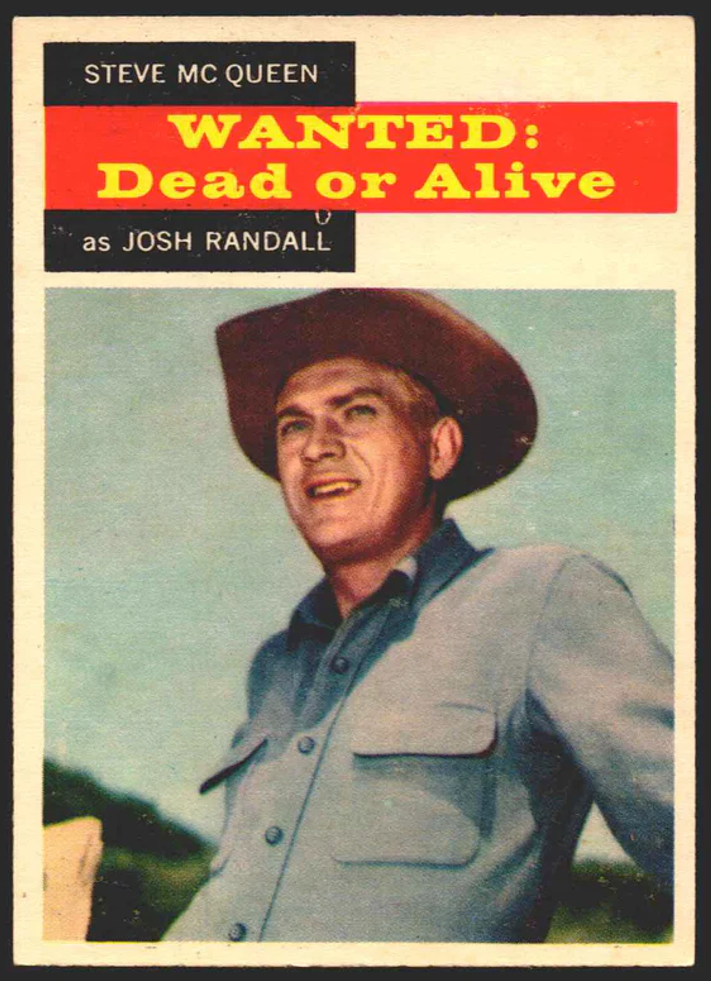
1958 Topps “TV Westerns”
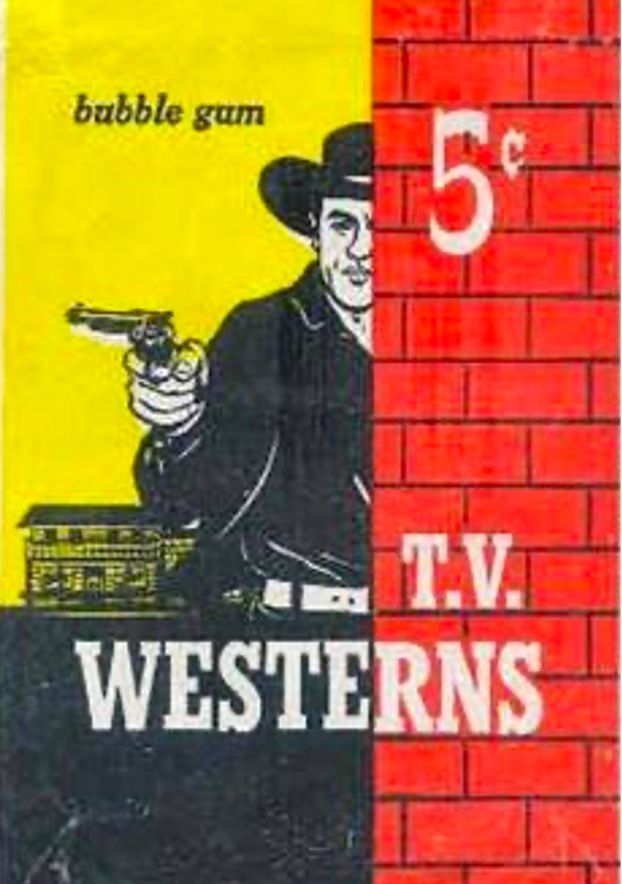
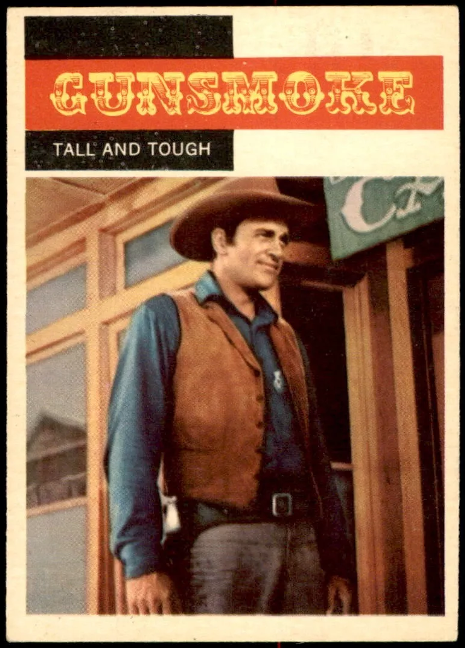
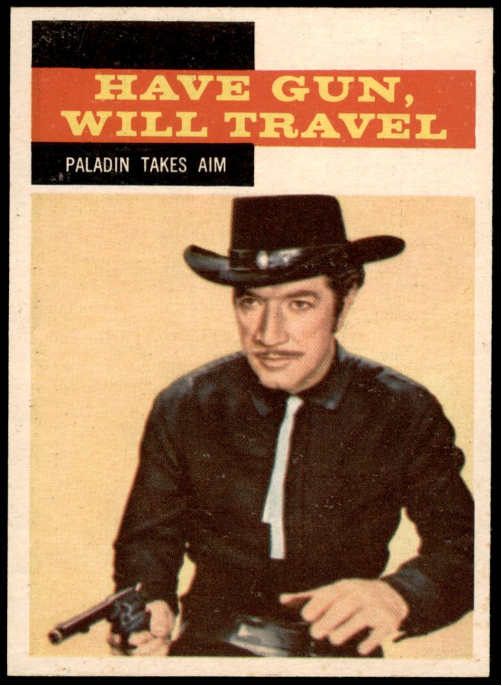
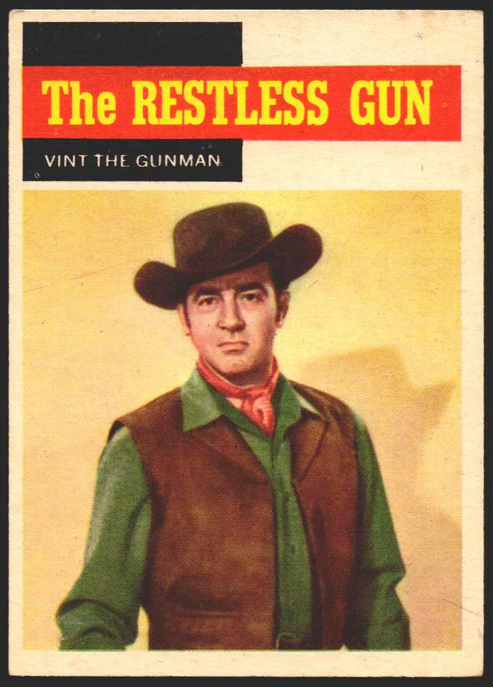
Talk about timing. When Topps issued their “TV Westerns” set in 1958, the timing couldn’t have been better. They absolutely nailed it. … Spot on. … Perfecto.
It’s hard to believe now, but the western genre dominated television in the 1958-59 season with roughly 30 prime-time shows. Whoa. About an average of four westerns per night were galloping across America’s TV screens. Think about it: That’s probably upwards of 750-900 episodes shown during the season. Hard to imagine, but that’s a whole lot of gunpowder, for sure. In addition, in the spring of 1959, eight of the top 10 shows were westerns. (“Gunsmoke” was the Number One show in the country.)
Some shows and stars included in the set are still familiar to many of us, while some have slowly faded into the sunset: Gunsmoke (starring James Arness); Have Gun, Will Travel (Richard Boone); Tales of Wells Fargo (Dale Robertson); Trackdown (Robert Culp); The Restless Gun (John Payne); Wagon Train (Ward Bond); and Wanted: Dead or Alive (Steve McQueen).
The TV Westerns set consists of 71 cards featuring 11 shows. The number of cards per program varied from 3-15 (probably depending on popularity). Considering it was in the midst of a four-year run atop the TV ratings heap, the set not only leads off with Gunsmoke, but the Dodge City drama had the most cards with 15.
Over the course of the next decade and a half, westerns slowly lost their appeal to American TV viewers. Gunsmoke outlasted them all, finally biting the dust in 1975 after a 20-year run.
Topps’ TV Westerns was very popular and certainly reflective of the time. … No horsing around, this is a classic non-sport set.

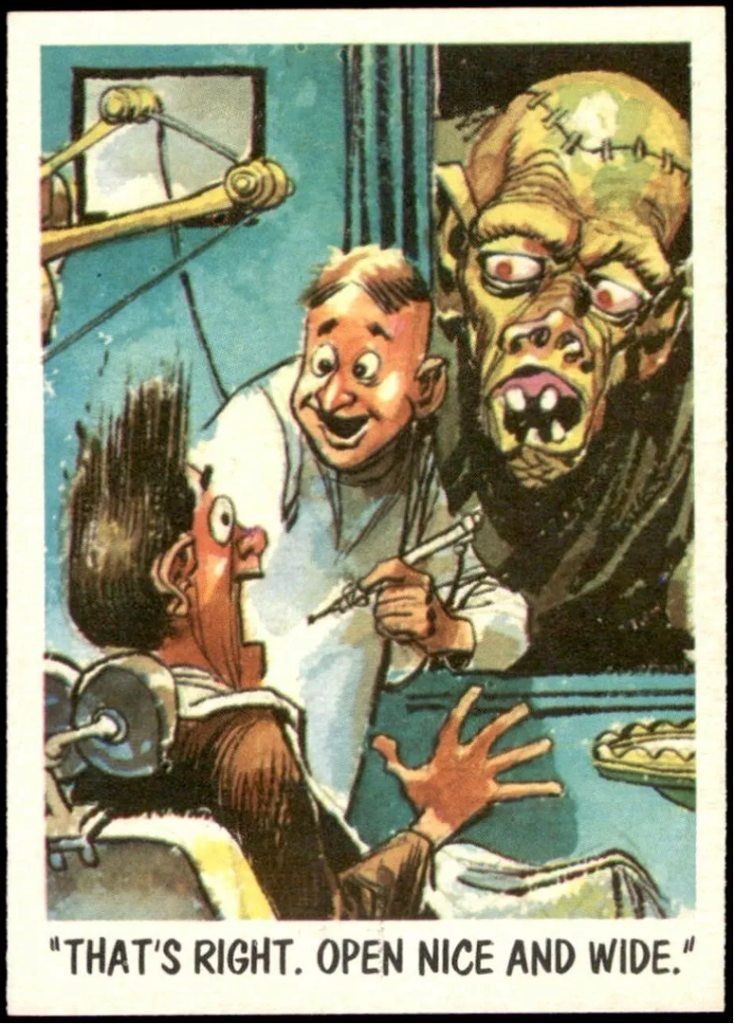
1959 Topps “You’ll Die Laughing”
— aka “Funny Monsters”
I love this set.
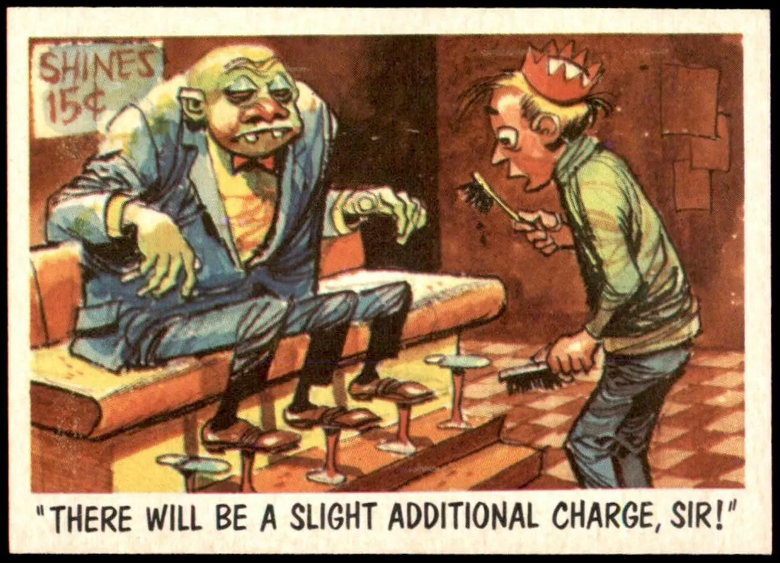
I love the artwork. … I love the gags on the front. … I love its slightly warped attitude.
The excellent artwork on the cards was done by Jack Davis – perhaps best known for his Mad Magazine work. In addition to “You’ll Die Laughing,” Davis also drew Topps sets including: Two series of Funny Valentines in 1959-60; Wacky Plaks in 1959; and 1964’s Nutty Awards.
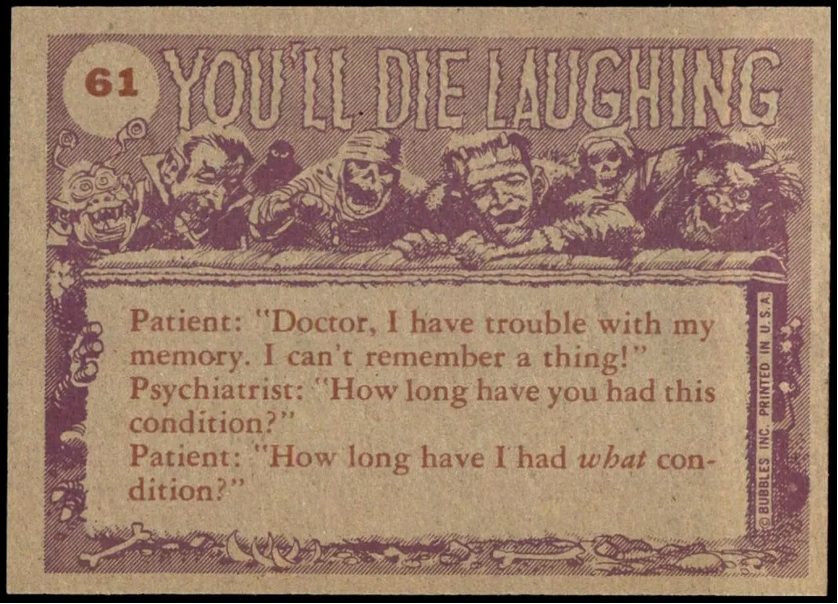
Gags on the front of the cards are actually funny and have a slight attitude. (Keep in mind this was the 1950s.) Card backs, however, contained pretty weak attempts at humor.
Speaking of attitude, this 66-card set was produced by “Bubbles Inc.” (copyright shown on backs), which was just a pseudonym for Topps. Legend has it the company resorted to its Bubbles moniker when it thought its cards might be too edgy and cause controversy – especially among parents.
Three years earlier, Topps used Bubbles when it issued its “Elvis” set. After all, “The King” did swivel his hips while rocking and rolling. (Kids, cover your eyes.) Later, the company resorted to the fake name a few more times including when it issued its “Mars Attacks” set in 1962. This time, however, the bubbles burst. The cards proved to be controversial enough for Topps to stop producing them.
But really, was anyone actually fooled by the Bubbles name? Briefly, maybe at first, but highly doubtful.
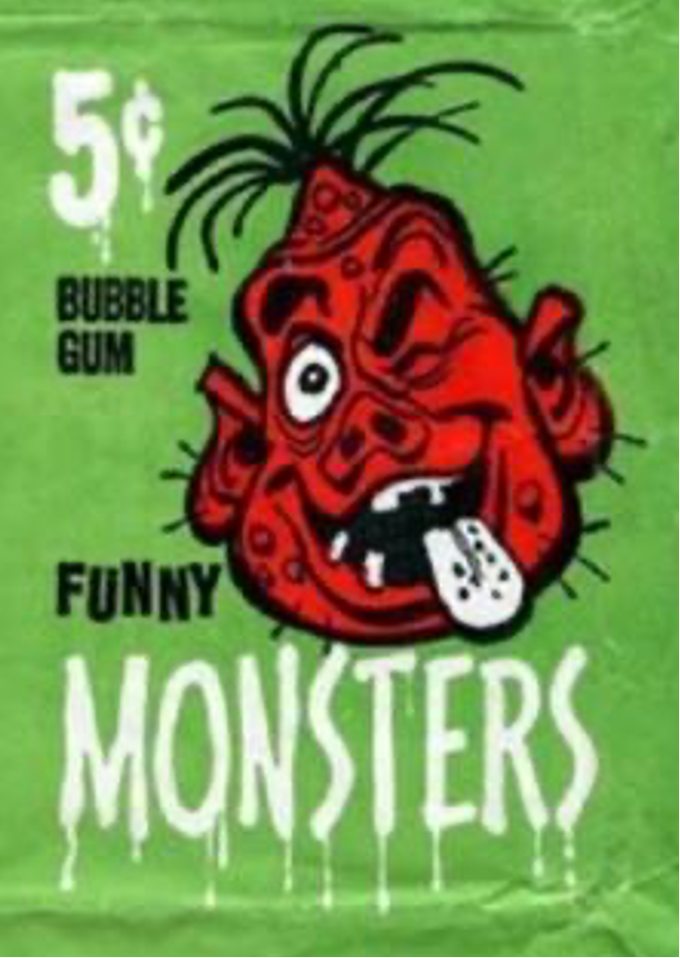
Finally, the actual name of the set … Retail boxes and packs were entitled “Funny Monsters.” This name does not appear on the cards themselves. Yet, the back of the cards show You’ll Die Laughing and that’s what the set is known as by most collectors. It’s actually understandable that Topps/Bubbles would resort to the Funny Monsters name for card packs. It’s short and descriptive of the set – especially when the age of the buyers is concerned. For several reasons, the longer name on packs probably would not have sold as well.
It’s unlikely anyone died from laughing at this set, but it does provides some smiles, chuckles, and an occasional guffaw or two. … Bravissimo.


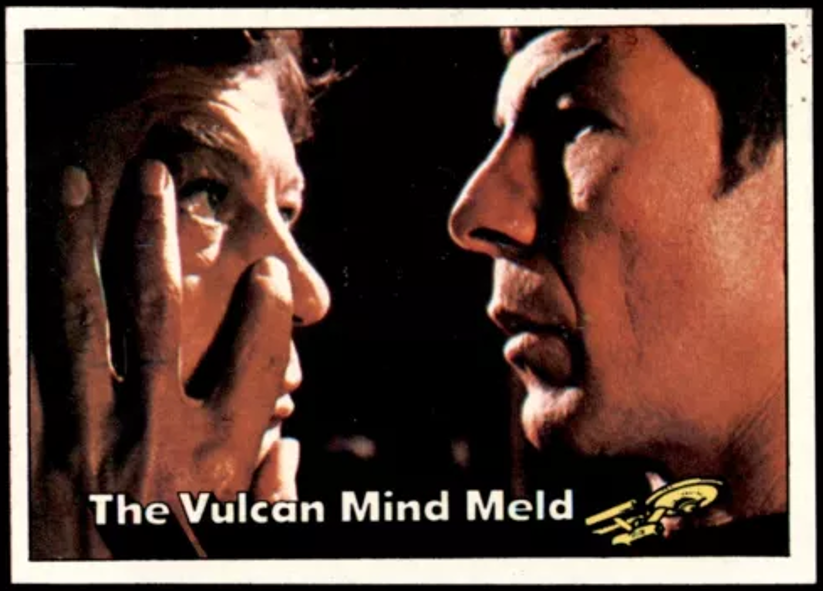
1976 Topps “Star Trek“

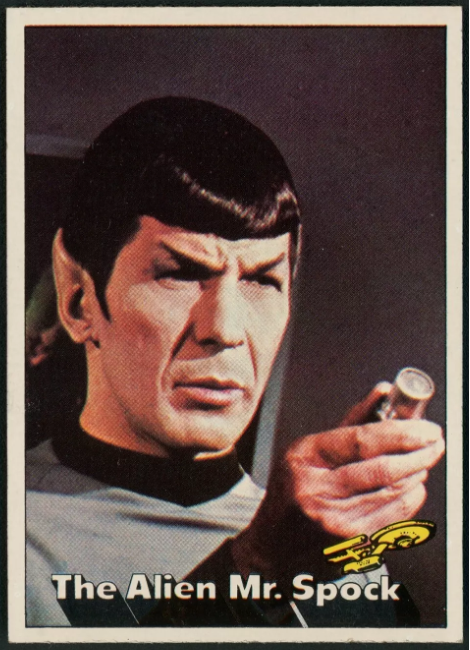
Remember the opening of NBC’s original 1966-69 “Star Trek” series?
“Space: The Final Frontier. These are the voyages of the starship Enterprise. Its five-year mission: …” – WAIT A MINUTE. … HOLD IT. … STOP. … CUT.
To the great disappointment of fans, the network aborted the mission at just three years, canceling the show. From that point on, followers of the Enterprise’s mission wanted it back.
The first revival was in the form of a Saturday morning animated series on the same network from 1973-74, consisting of 22 episodes (the original totaled 79). Hard-core fans finally got their wish 10 years after its first mission was cut short when Star Trek landed in movie theaters in 1979.
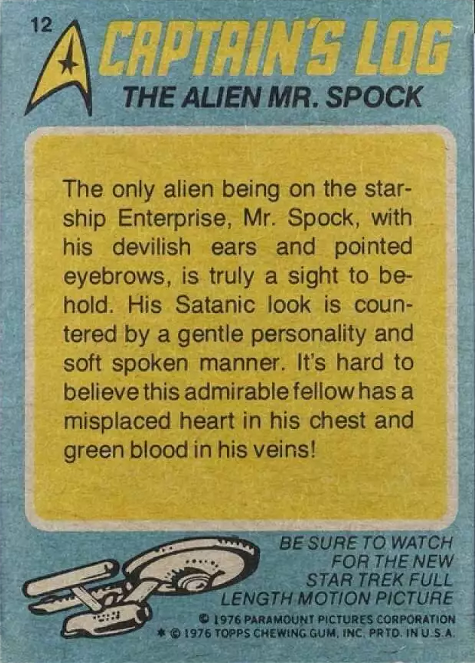
Sandwiched in between the Saturday morning show and the opening of “Star Trek: The Motion Picture” was an 88-card, 22-sticker set issued by Topps (Star date: 1976). It was good-looking, with color photos on the front from the original series and a blue-and-yellow back (on gray cardboard) called “Captain’s Log.” At the bottom of the reverse there’s a little notation that reads: “Be Sure to Watch for the New Star Trek Full Length Motion Picture.” But “Trekkies” needed to be patient, as mentioned above, that didn’t come until three years later.
Yet, the Topps ’76 offering wasn’t the first set of Star Trek cards.
In 1967, Leaf planned to issue a black-and-white set during the original series’ run, and ironically – like the series itself – it was aborted. According to “The Vintage Trading Card Price Guide” by Todd Frye, Leaf started producing the cards while waiting for the official license. It never came. Therefore, the set was stopped cold, but some cards made their way into the hobby anyway.
“I’m a collector, not a Trekkie.” But I’ve always enjoyed the original Star Trek television series, subsequent movies and some of the sequels, prequels and follow-ups. Dozens of Star Trek sets have been issued since 1976, but this the original … and Topps did a good job with it. … Live long and prosper.
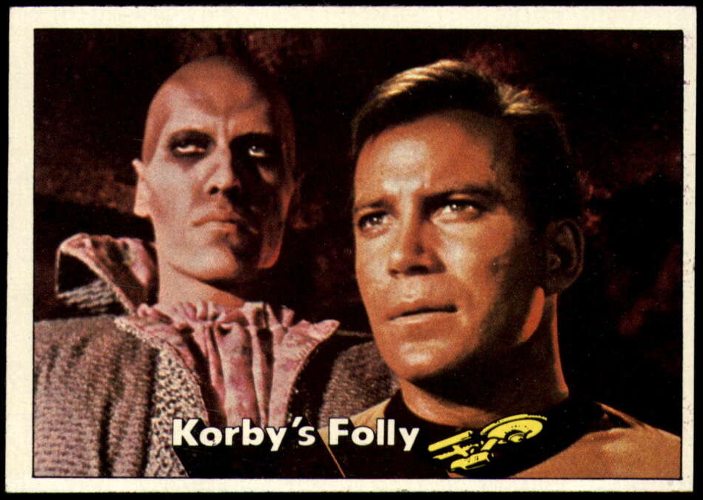
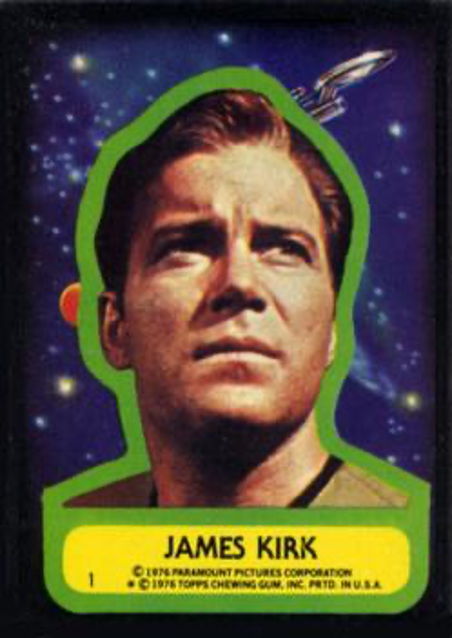
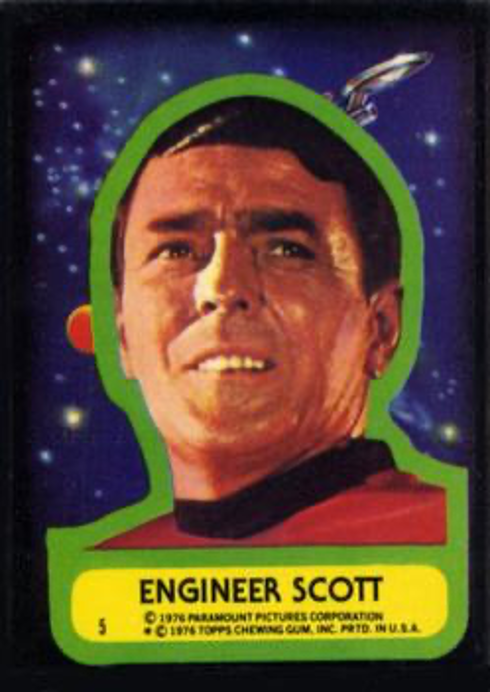
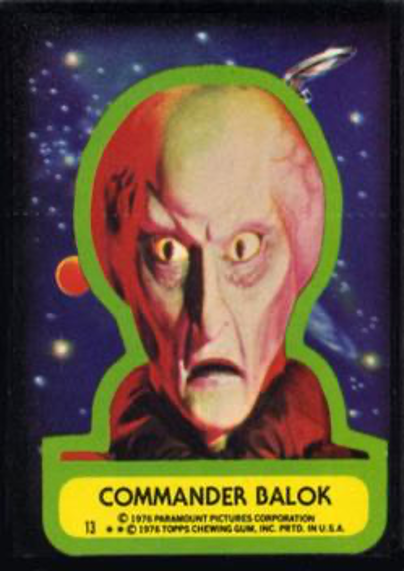
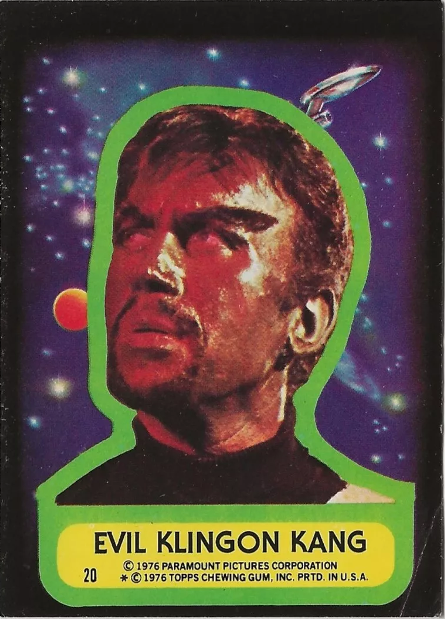
Sticker inserts — (Actual size same as regular cards in set)
1973 Topps “You’ll Die Laughing”
— aka “Creature Feature”
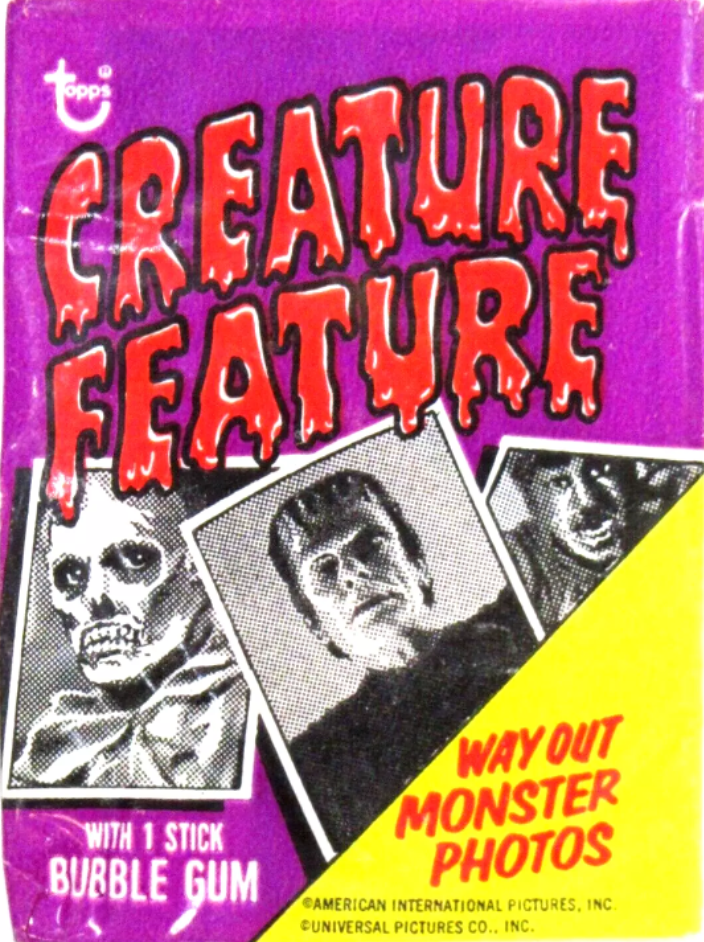
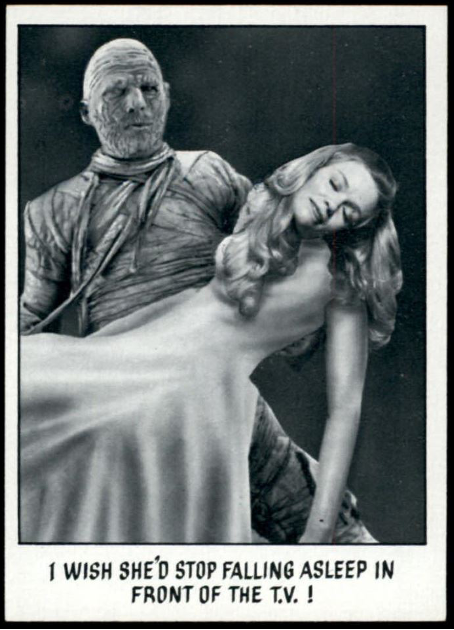
Topps’ 1973 version of “You’ll Die Laughing” is a step down from the original set issued in 1959, but it still maintains a soft, nostalgic spot in my memory.
The year 1973 was when I returned to the hobby after a couple years off from intense baseball card collecting as a kid. I didn’t buy a lot of packs of You’ll Die Laughing because I was so into baseball cards again, but I bought enough to enjoy a small collection.
Also adding to my pleasant memories of the set was the almost simultaneous re-release of one of my all-time favorite novelty songs: “Monster Mash.” The two just seemed to go together. Monster Mash was a Number One hit for Bobby “Boris” Pickett and the Crypt-Kickers in 1962. And in 1973, the identical recording soared up the Billboard Charts once again, reaching Number 10.
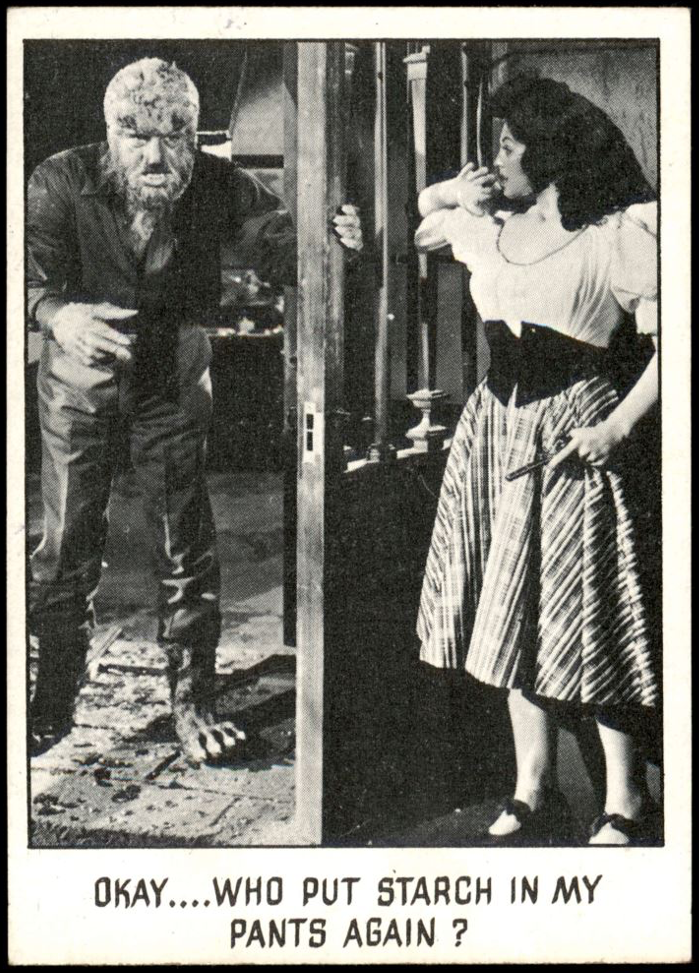
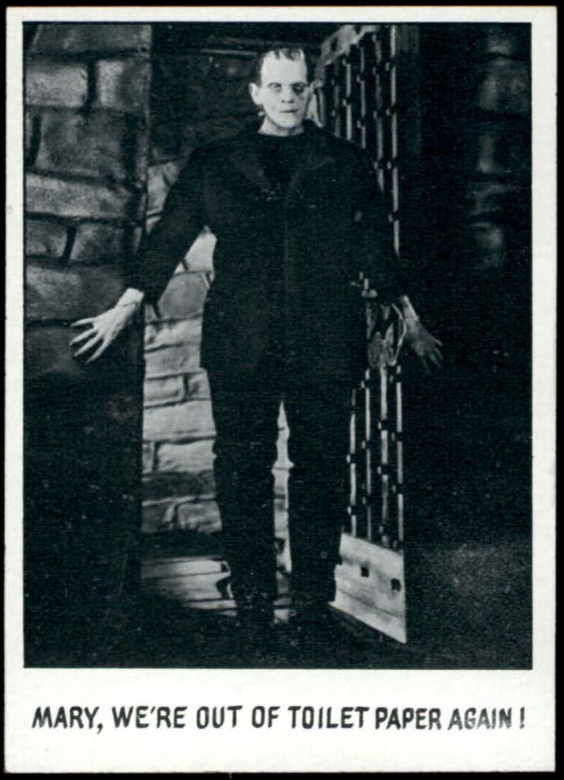
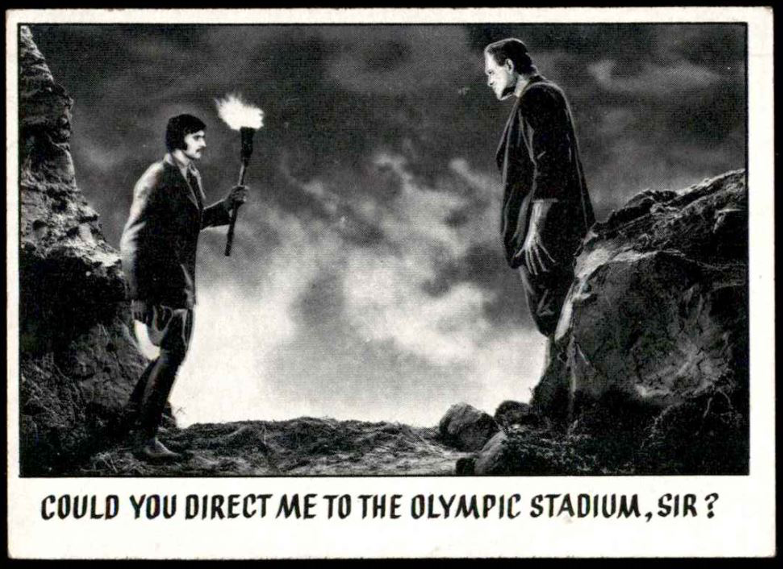
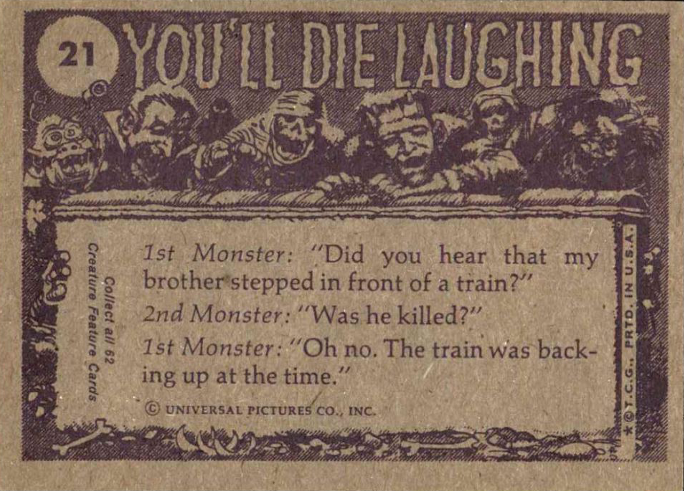
The front of the cards themselves are very different from the 1959 version. However, the backs are nearly identical. This time, instead of original artwork, Topps used a black-and-white still from an old horror film on the front and added a (sometimes) clever caption. For instance, on card #80 (see above, left), the Wolf Man is shown bursting through a door and confronts a woman saying “Okay … Who Put Starch in My Pants Again?” Haha – I guess. … (Although card #21 – below, left – involving Frankenstein is pretty good.)
The 1973 set was not exactly an original idea. Using horror movie photos with humorous captions had been done before by other companies. Like You’ll Die Laughing cards 14 years earlier, packs showed a different name – this time, “Creature Feature.” But, again, the longer name has stuck. It was distributed in two series totaling 128 cards.
Both front and back jokes in 1973 were pretty lame. There are many more groans than laughs. Maybe the set should have been called “You’ll Die Groaning.”
• • • • •
One final note, a third Topps “You’ll Die Laughing” set came out in 1980. This one also showed the “Creature Feature” title on packs. It contained 88 cards, plus an additional 22 stickers. Both the fronts and backs were spruced up a bit, with the addition of some color borders. However, this version was clearly the last gasp before the final nail was put into the coffin of this idea. Basically, by 1980 one foot was already in the grave, as many photos and captions were repeated from the previous ’73 set.
1967- Topps “Wacky Packages”
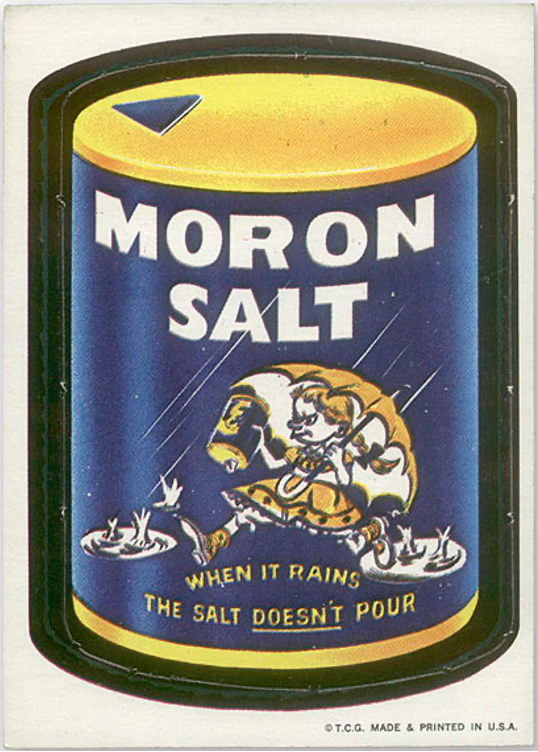
(Morton Salt)
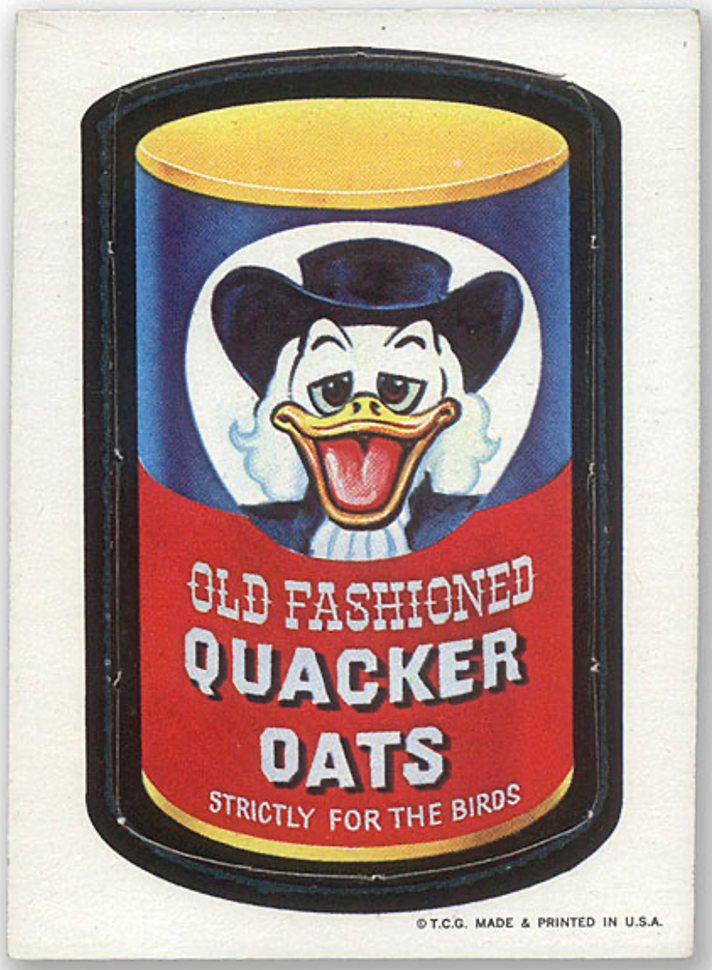
(Quaker Oats)
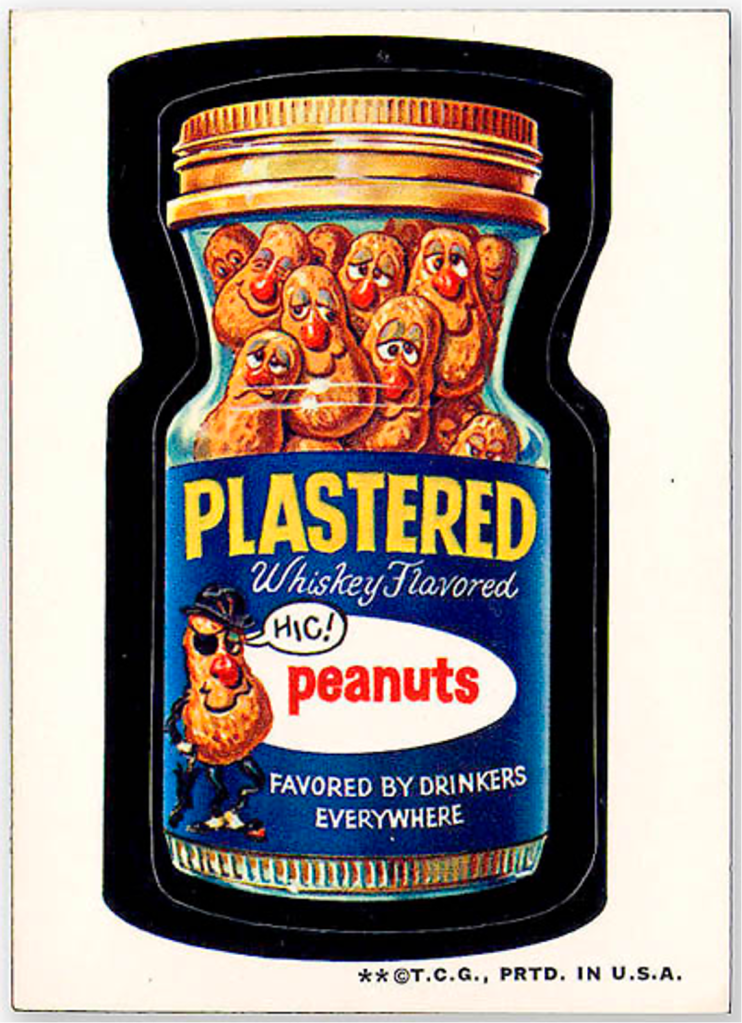
(Planters Peanuts)
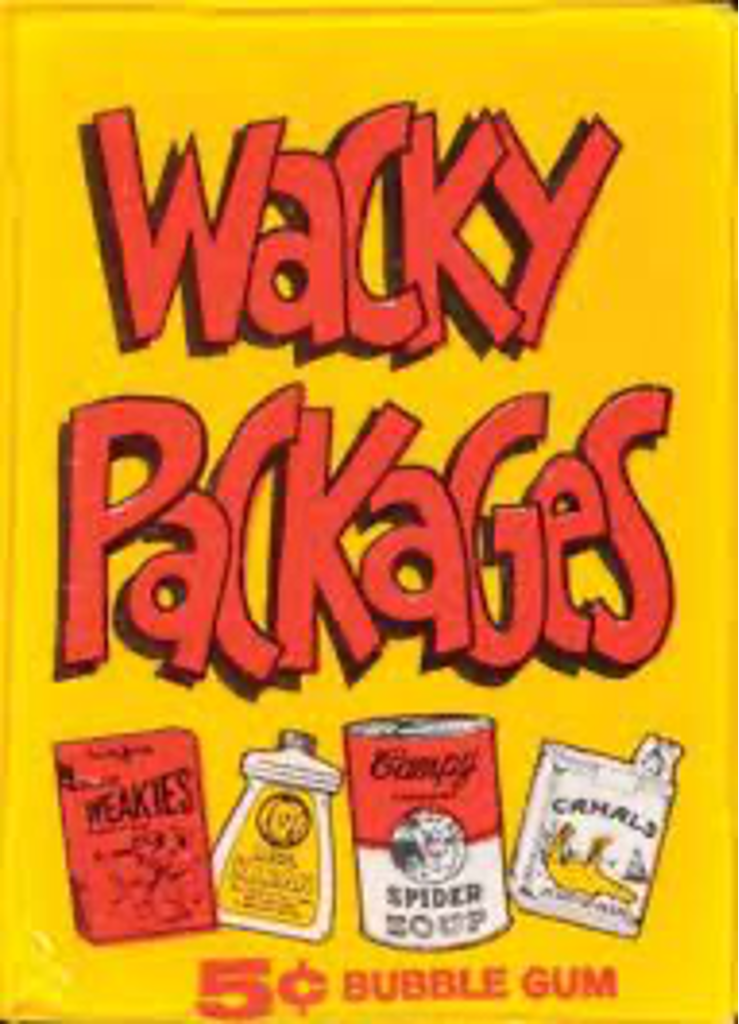
Not long after I discovered baseball cards, to my delight, “Wacky Packages” appeared on the horizon.
I purchased my first baseball cards in the spring of 1967 and right away was crazy about them. By summer, Wacky Packages also began showing up on store shelves and I was picking up a pack of them now and then. At eight years old, I found them to be appealingly off-kilter.
One of the early product parody sets was issued in 1960 by Leaf. It came in at 72 cards and was called “Foney Ads.” This was definitely a major influence on the later Wacky Packages. Yet, the Foney Ads didn’t actually show the product (it was only implied). For instance, the takeoff of Morton Salt was called “Snoreton Salt” and only shows a sleepy, grimy character using a salt shaker on some dead fish. Amusing yes, but without seeing the actual product it definitely lacks the parody punch of Wacky Packages.
Fast forward to 1967. Topps introduced its 44-card Wacky Packages set. Instead of just issuing it on the usual card stock, these came on perforated cardboard and were designed to be punched out. Not only that, but the back had an adhesive that when licked allowed one to “paste” the punched out Wacky on a surface. The adhesive wasn’t very good, but hey, it made Wackys more fun and unique.
Wacky Packages didn’t show up again as part of Topps’ product line until 1973. Possibly, the first effort in ’67 didn’t meet the company’s expectations? Or maybe Topps was leery of more legal action from companies that were the subject of its humor? (One prime example of this was Morton Salt. In 1967, they insisted Topps stop issuing the “Moron Salt” card. What were they afraid of anyway? That some kid or someone, somewhere might think their salt was dumb? … Personally, I can’t taste the difference between dumb and smart salt – but then, that’s just me.)
In any case, this time the format was almost exactly the same, except instead of a cardboard lick-and-stick, the Wackys were an easy-to-peel sticker. And they were a hit. A huge hit. A colossal hit. So much so that 16 series were issued over the next four years. In fact, in the months following their revival, Wacky Packages actually outsold baseball cards for awhile. It was Wackymania.
Enthusiasm eventually died out, but Wacky Packages weren’t ready to be put six feet under just quite yet. Not by a long shot.
The concept was first revived in 1979-80 with reissues of earlier stickers. In 1985, a new series was distributed, as well as in 1991. But Wacky Packages really came roaring back with the issue of an “All-New Series” in 2004. This was followed by many additional sticker sets and Wackys are still alive today.
And my favorite Wacky Package of all-time? Hands down – for sentimental reasons – it’s 1967’s “Quacker Oats.” First of all, Donald Duck has always quacked me up with his frustration and gibberish-like talk. To me, there’s nothing funnier than when he loses his temper, blows his stack and goes ballistic. Donald’s short-tempered, but deep down a nice guy.
Secondly, when I was sitting in fourth grade Catholic School class one day, out of the blue one of my collecting friends tapped me on the shoulder from behind. I turned around and he flashed a Quacker Oats Wacky at me and I couldn’t stop laughing. I mean, I was really beside myself. Fortunately (Guardian Angel?), for some reason, the old, harsh, no-nonsense nun, Sister Beatrice, didn’t notice me. Whew. … That brief incident still makes me smile. (OK, maybe you had to be there.)
Whether from 1967 or the 2020s, Wacky Packages are still funny to me. The artwork and gags remain quite clever and remind me of the first ones I encountered oh-so-many-years-ago. There’s just enough irreverence about Wackys that they still bring out feelings of my inner rebel. … (Excuse me while I go out and “Question Authority.”)

(Cheerios)

(Eveready)
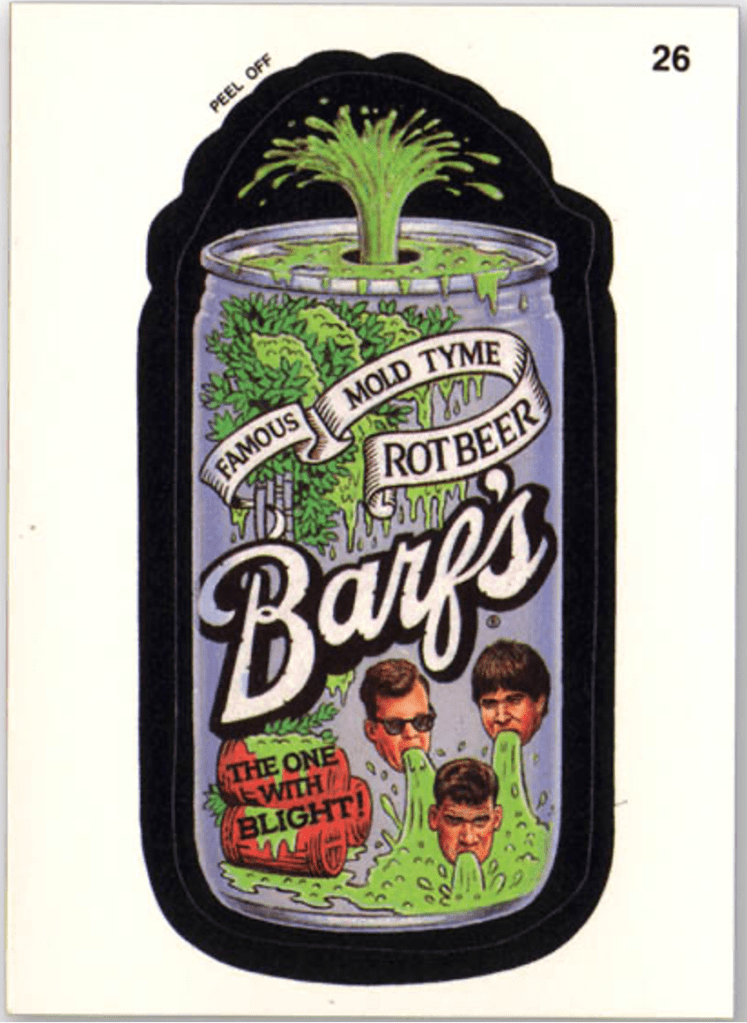
(Barq’s Root Beer)
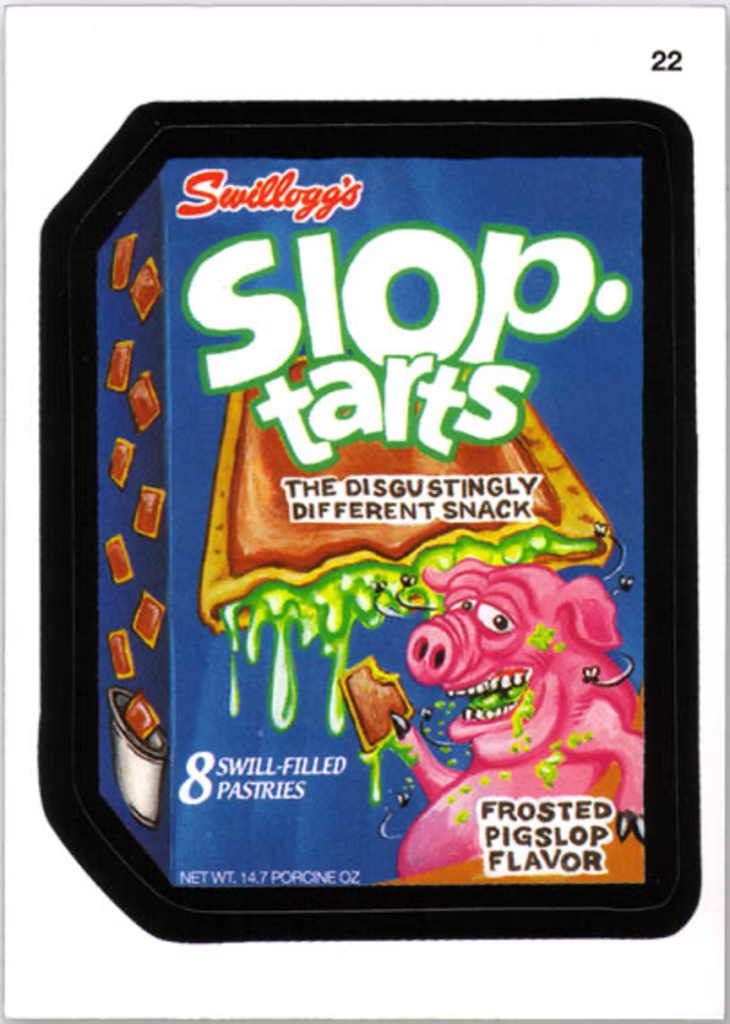
(Pop Tarts)
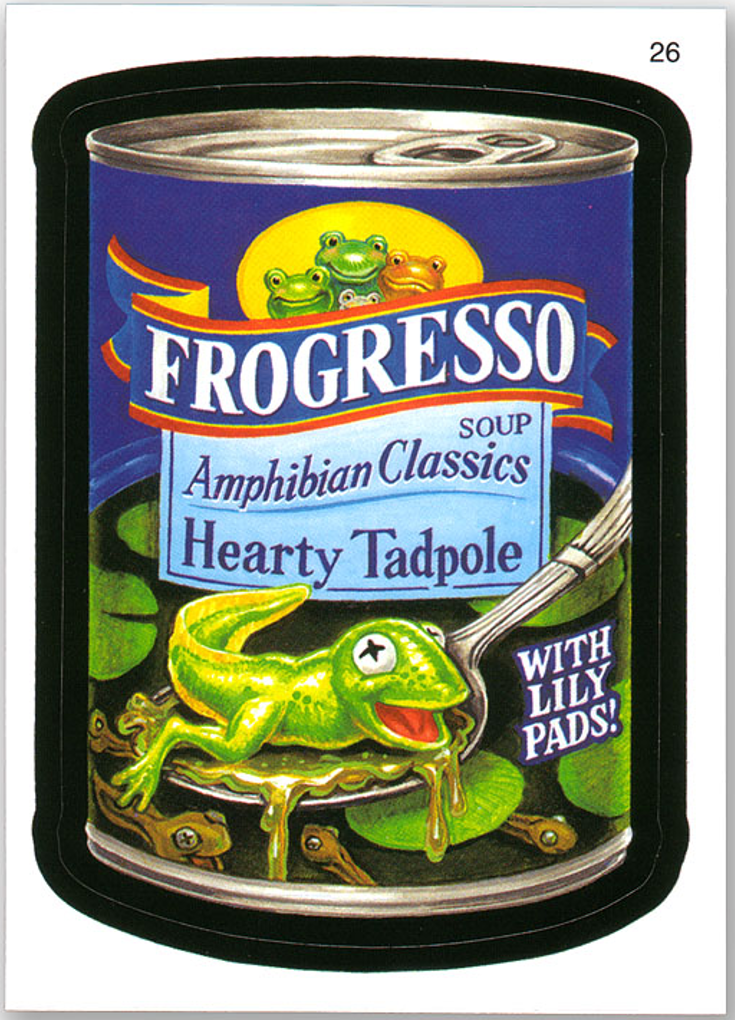
(Progresso Soup)
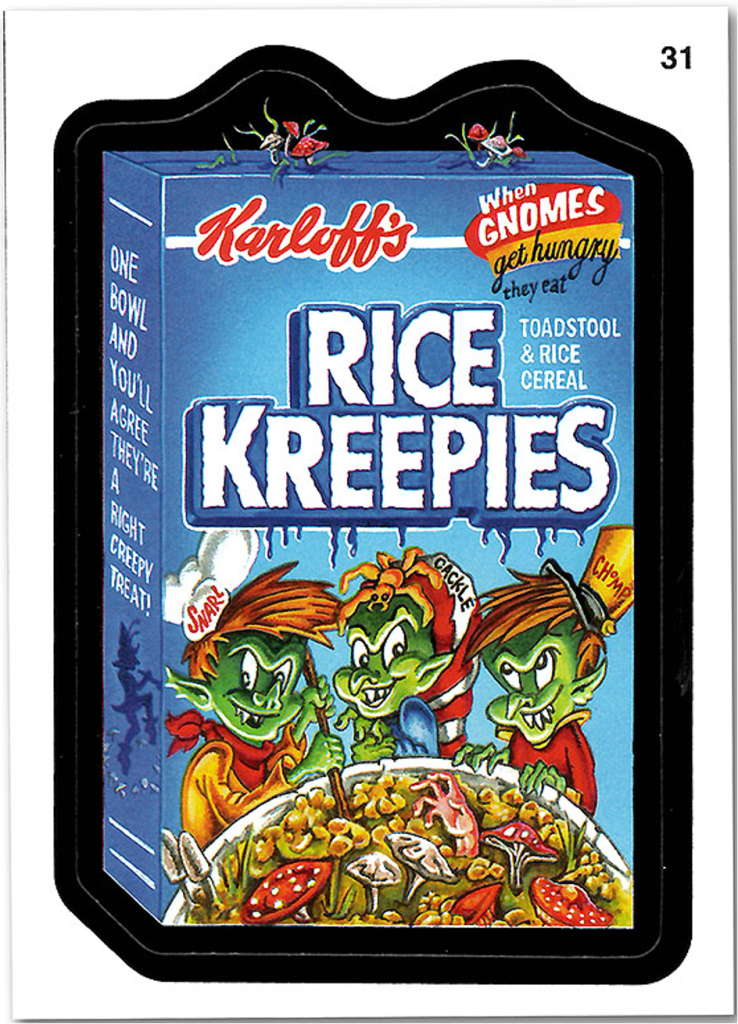
(Rice Krispies)
2013 Topps “75th Anniversary”
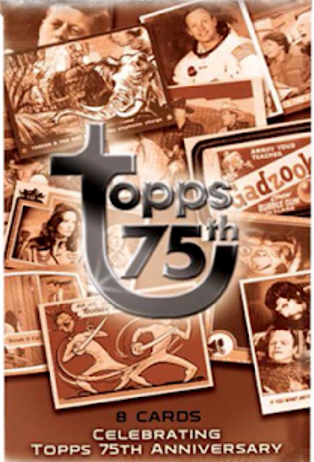
In a way, this set is all about itself.
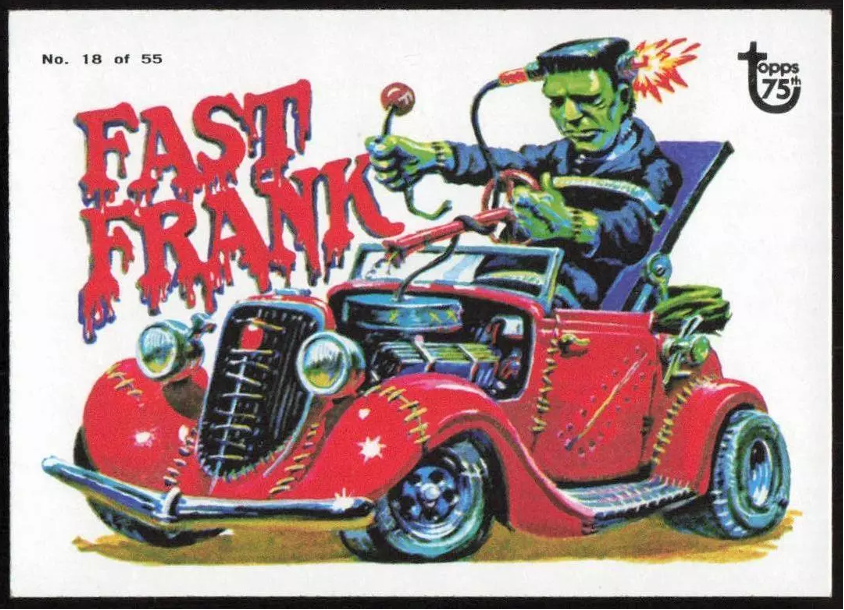
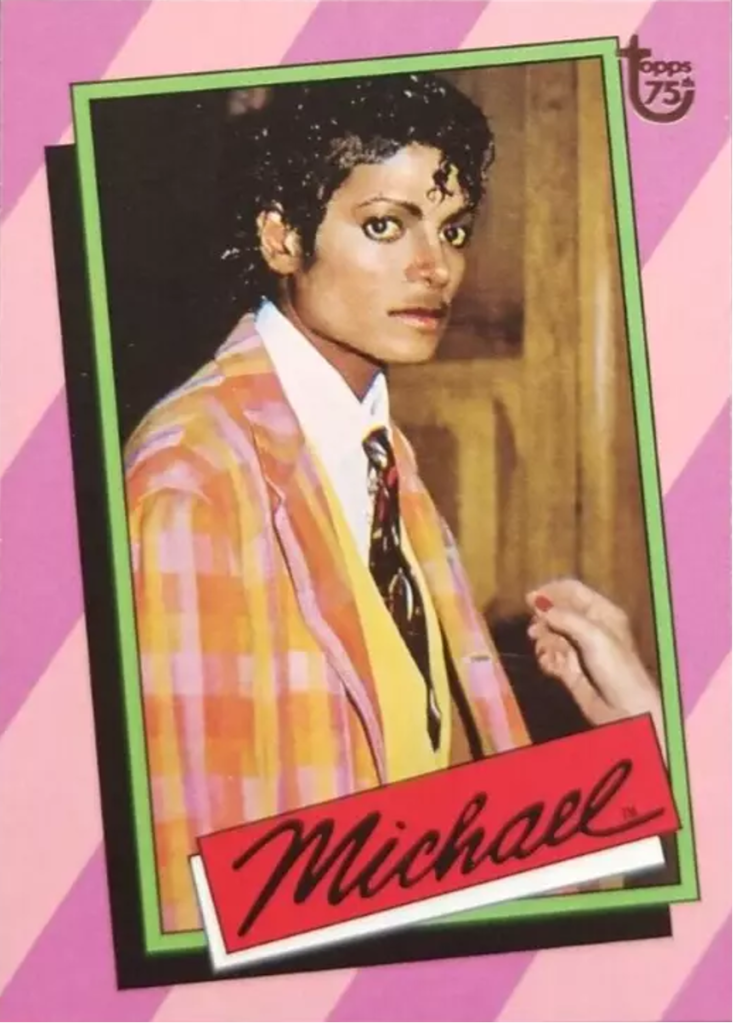
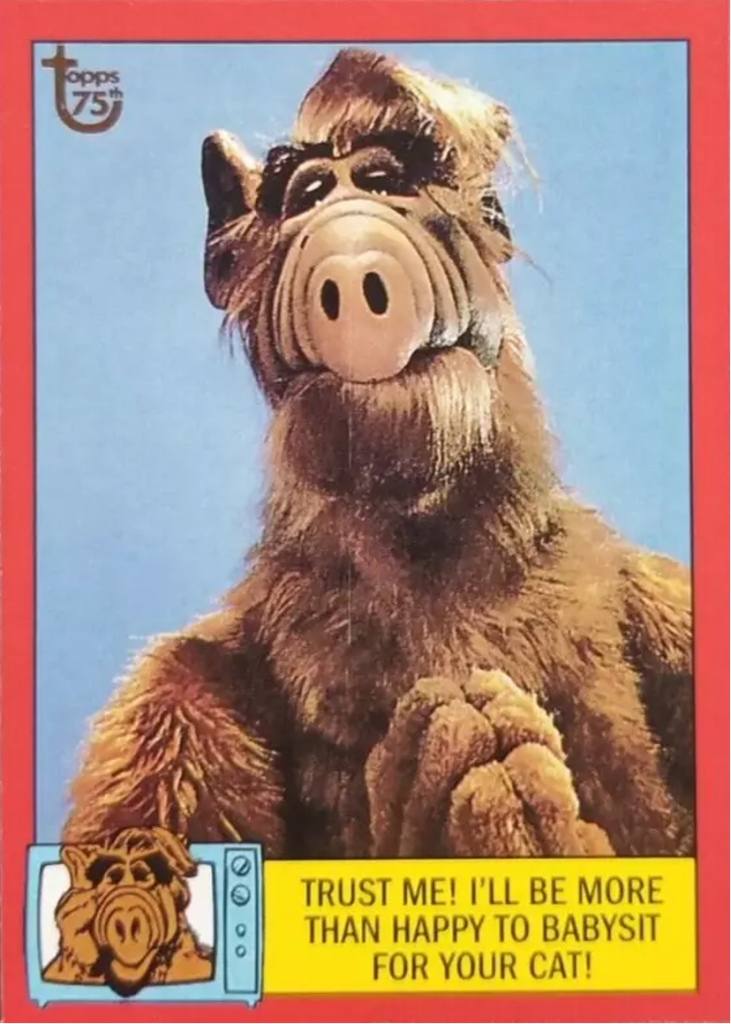
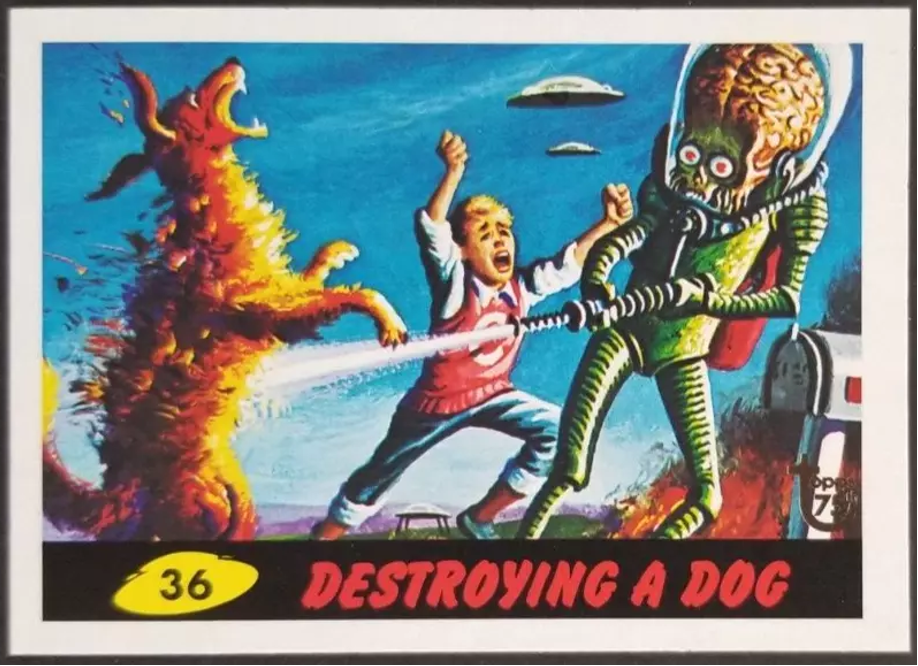
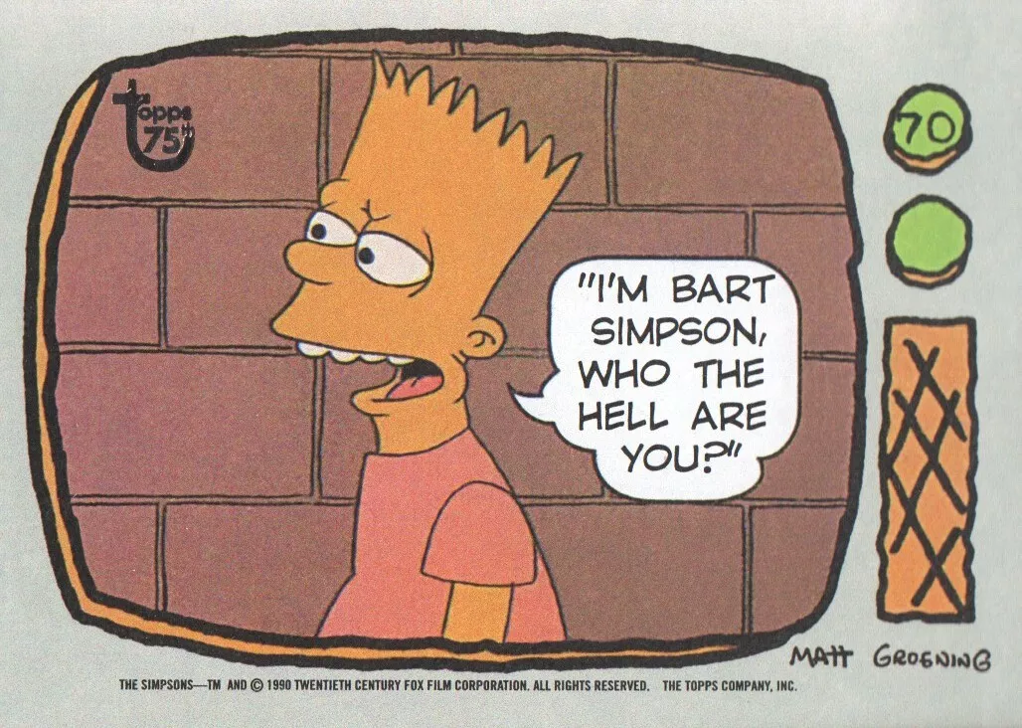
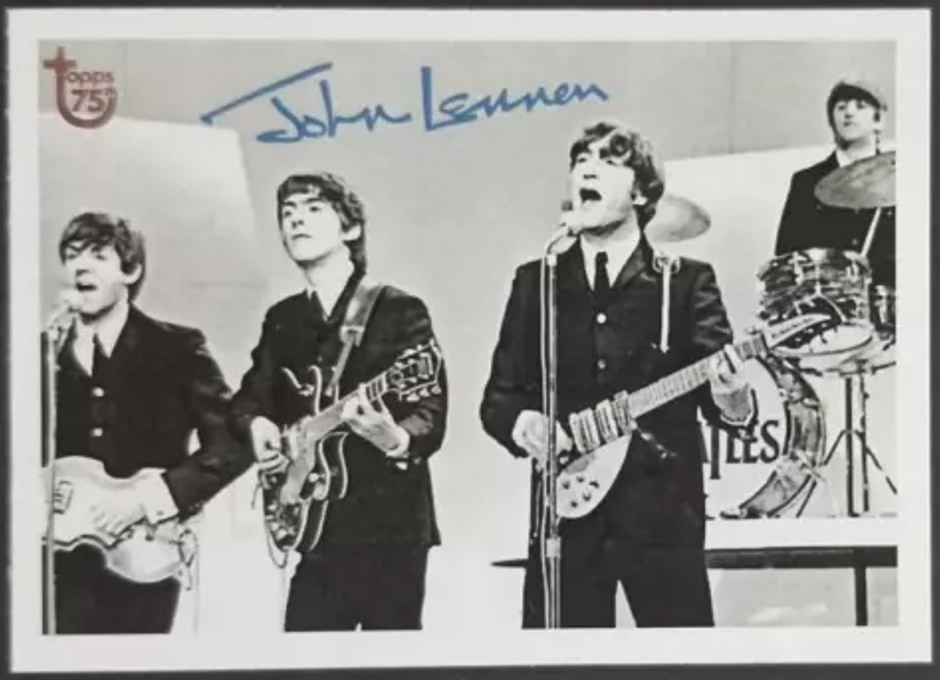
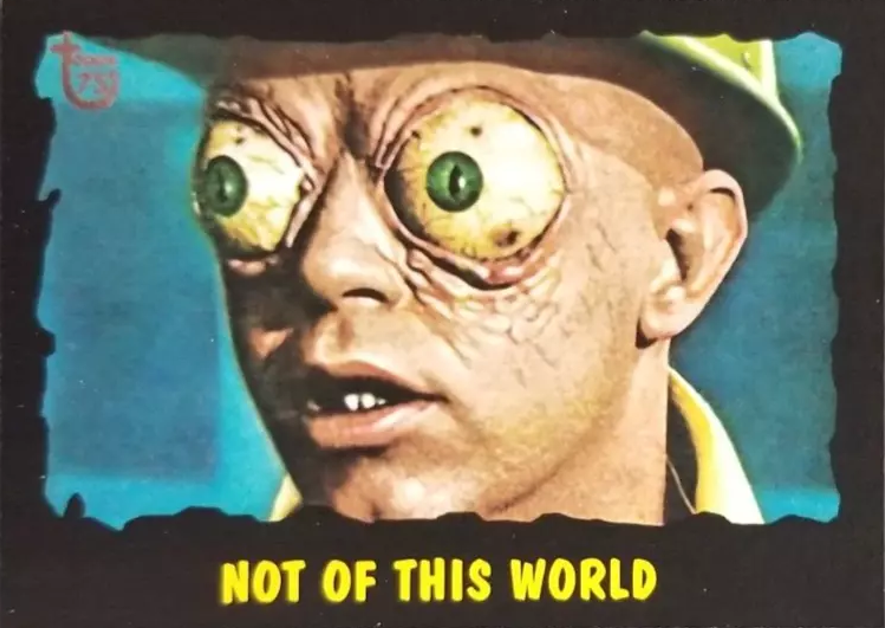
Topps’ 2013 “Anniversary” set is rather unique. It’s a non-sports card set where the entire focus is on the company’s previous non-sports sets – a retrospective, so to speak. It highlights Topps’ non-sports sets from 1948-95. (Topps was founded 10 years earlier in 1938.)
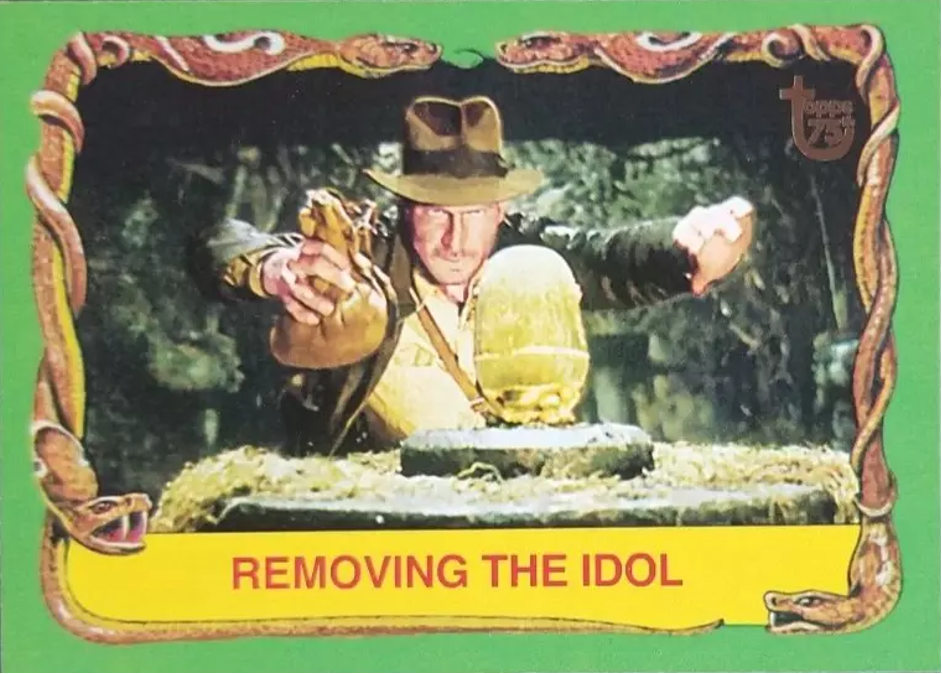
The Anniversary set consists of 100 cards. Each card front shows a sample card from a non-sport set. A detailed explanation on the back describes the contents of the set, number of cards, year of issue and card size. The backs are very informative and really add to the quality of the set.
It starts out with 1948’s “Magic Photos” issue and goes through 1995’s “X-Files.” In between, 98 other sets are highlighted featuring themes like TV shows, movies, music, historical events, sci fi and humor. They run the gamut: From 1955’s “Rails and Sails” to “Michael Jackson” (1984); from 1964’s “Beatles” to “Raiders of the Lost Ark” (1981); from 1962’s “Mars Attacks” to “The Simpsons” (1990); plus others like “Zorro’ (1958), “Outer Limits” (1964), “Weird Wheels” (1980), “Alf” (1987) and on and on. The sheer variety is astounding and gives a great glimpse of different card designs throughout multiple eras.
Not every single series is represented in the set, but most are. For instance, multiple sets/series of “Beatles,” “Wacky Packages,” “Star Wars” and “You’ll Die Laughing” were issued throughout the years, but only one card is shown for each. It only goes through 1995, and of course, there have been many Topps non-sports sets since.
This a great collection for those who want to learn about Topps non-sports card sets or who just want to reminisce. It may even spur on some collectors to pursue a different part of the hobby or a new set. Topps is to be congratulated on an issue that is extremely well done. Plus, the Anniversary set is relatively easy to obtain in its entirety. Who could ask for more? … Two thumbs up.
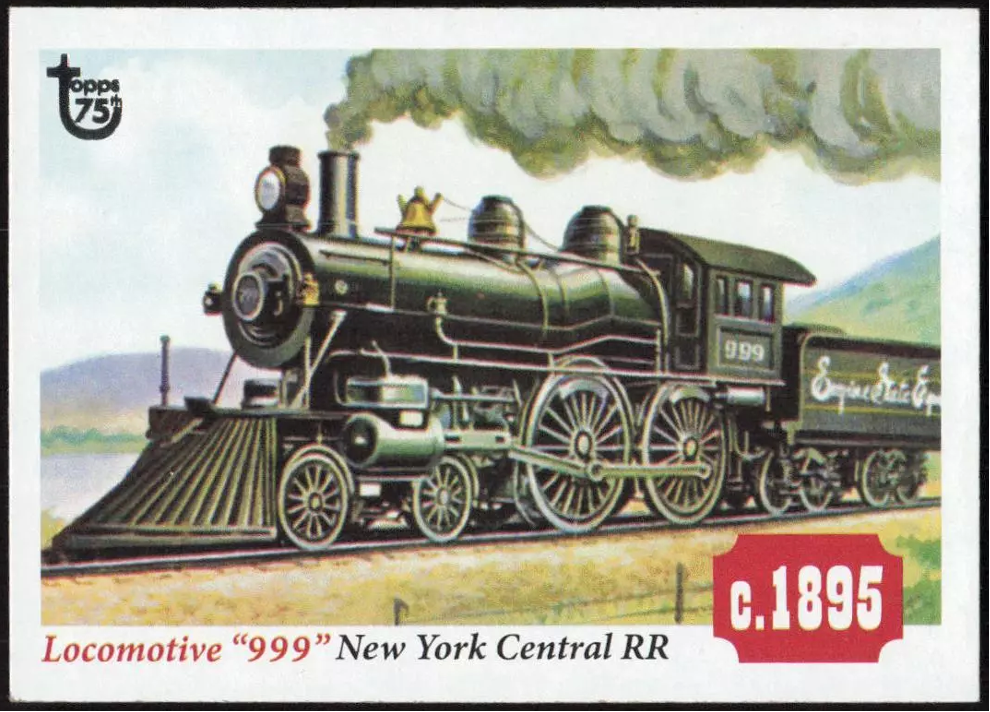
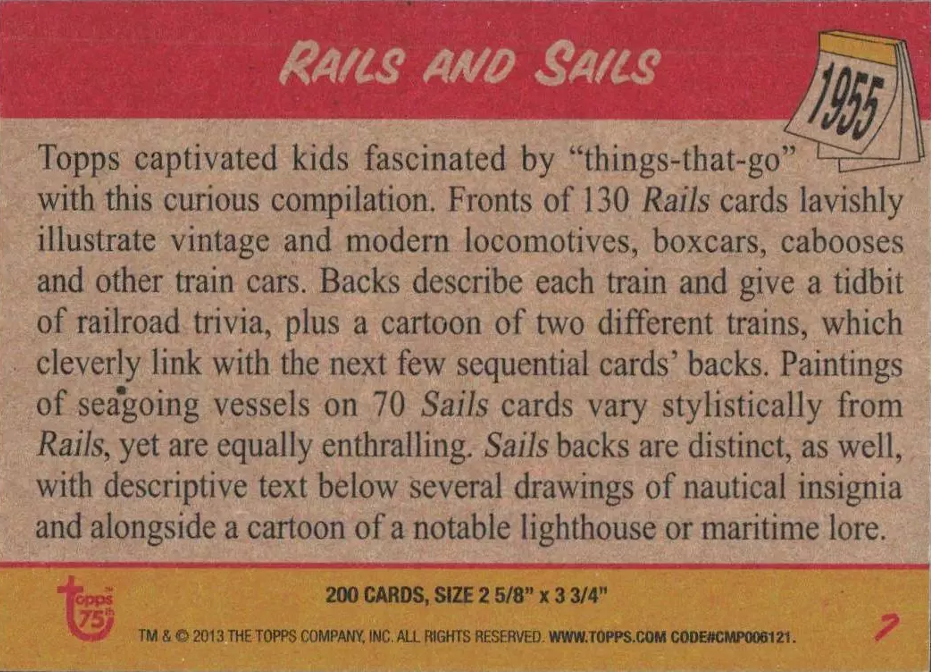
“Rails and Sails” (1955)

• • • • • •
See related article on BaseballCardFun.com entitled:
“BASEBALL HOBBY NEWS — Baseball Cards in Non-Sport Card Sets”
Click Link Here
THIS ARTICLE WAS WRITTEN
EXCLUSIVELY FOR BaseballCardFun.com
• • •
Text Copyright © 2025 by BaseballCardFun.com / Mark A. Larson
No article appearing on this website may be reproduced without written consent of the Editor/Publisher
• • •
“THE WRAPPER” MAGAZINE:
The Wrapper has been serving non-sports card collectors since 1978. It is full of articles mostly concentrating on classic non-sports sets, plus interviews and profiles of hobbyists. In addition, there are variety of ads in each bi-monthly issue that offer collectors a chance to obtain cards for their collections.
Click Link Here
To keep up-to-date on additions to BaseballCardFun.com, subscribe below*
* Your email address will never be shared and is only used to announce new articles
 BaseballCardFun.com