
The Improbable Saga of the New York Mets’
First Year – by Jimmy Breslin (1963)
REVIEWED BY MARK A. LARSON
Editor & Publisher
Looking back at the 2024 season, one thing stood out for me above all others.
It wasn’t Shohei Ohtani’s 50/50 season. Not Aaron Judge’s and the Yankees’ World Series woes. Not either of those. It had to do with the pitiful cellar dwellers of the A.L. Central.
No offense to Chicago Southsiders, but I’m not a White Sox fan. Not now. Not in the past. Not in the future. I don’t despise the team or anything, I’m just not a fan. … Having said that, I was thoroughly bummed when the atrocious ’24 Chisox set the all-time major league loss record last year. Darn Sox.
Why would I care about those 121 losses if I have no emotional attachment to the White Sox?
Quite simply: The Mets. The 1962 Mets to be specific.
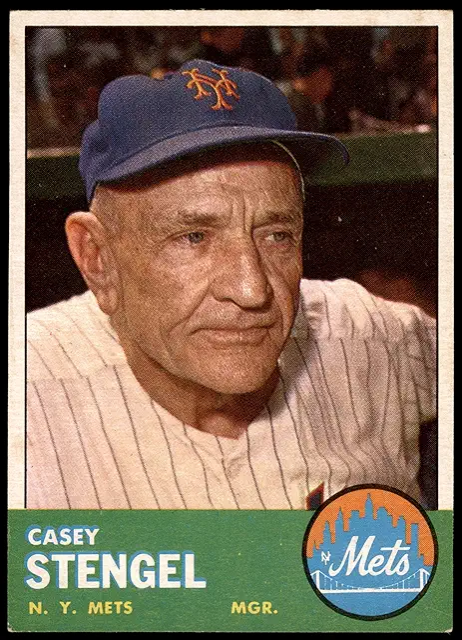
I’ve always had a soft spot in my heart for the early New York Mets whose 1962 record of 120 losses was surpassed by Chicago. … No matter that the Sox actually won one more game or had a winning percentage slightly higher than the expansion Mets. I wanted those 120 defeats to always stand for the ultimate in futility. Then, now and forever.
They were THE Mets. The hopeless, hapless, helpless 1962 New York Mets – the team that set the then all-time major league record in ineffectiveness with that colassal number of losses (against just 40 wins) in their inaugural season.
It was a squad that utilized every form of blowing a ballgame known to mankind … and then some. They were last in the league in offense, defense and pitching, finishing 60 games out of first place. You would think, then, that New Yorkers would have shunned the Mets without more than a fleeting thought. Nope. Just the opposite. Citizens of the Big Apple (and beyond) embraced them. Big time.
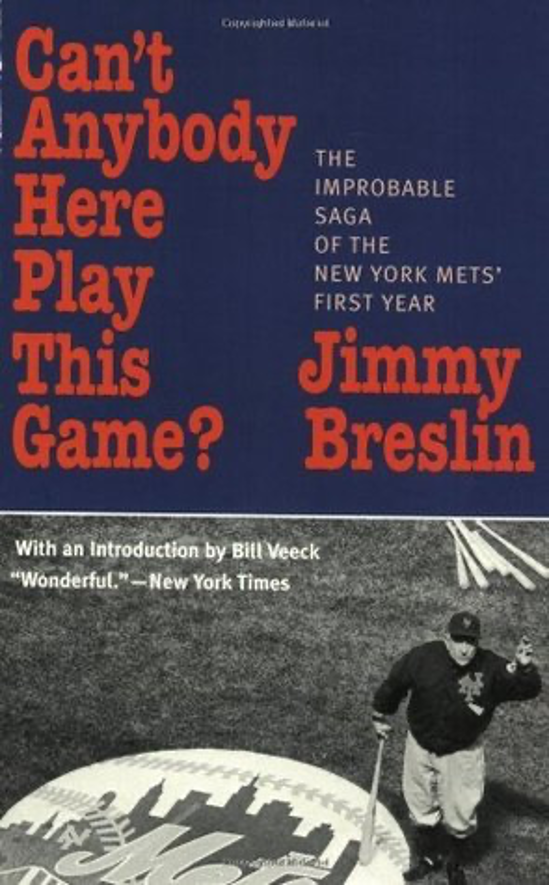
Jimmy Breslin’s “Can’t Anybody Here Play This Game?” explains why a team that was so rotten was also so endearing. In the dedication at the beginning of the book, the author writes: “To the 922,530 brave souls who paid their way into the Polo Grounds in 1962. Never has so much misery loved so much company.”
The introduction was written by baseball showman, Bill Veeck, who explains he knows a bit about dreadful baseball teams, having owned the St. Louis Browns in the early ’50s. He touches on the theme that Breslin articulates, stating “Jimmy Breslin has written a history of the Mets, preserving for all time a remarkable tale of ineptitude, mediocrity, and abject failure. It’s stories like his that are important. They spur the losers of the world to take heart – to rise and lose again.”
The author maintains the Mets meant so much to fans for a couple of reasons. They had lost National League baseball when the Dodgers and Giants moved to the west coast after the 1957 season. Breslin writes: “It (the moves) exposed most of the people on the business side of baseball for exactly what they are – arrogant, money-hungry people with a sense of loyalty only to a bank account.”
In addition, many average folks in the New York area just couldn’t relate to the Yankees. (The old saying was “rooting for the Yankees was like rooting for General Motors.”) Everyone wants to cheer on a winning team. Yet, what many people can really relate to in real life is a lovable loser – a person (or in this case, team) – that gets knocked around, repeatedly knocked down, but still gets back up and dusts themselves off for another shot at life. Just like Bill Veeck indicated in his intro. That’s what the Mets represented: Lovable losers. Fans were basically rooting for David … after all, who roots for Goliath?

The team wasn’t deliberately not trying. They weren’t auditioning to be circus clowns. They were just bad.
The Mets started the season 0-9 and it pretty much went downhill from there. Later on, they had a brief uptick in winning, but then at one point lost 17 in a row and swirling down the drain they went.
Breslin writes: “… All the Mets did was lose. They lost at home and they lost away, they lost at night and they lost in the daytime. And they lost with maneuvers that shake the imagination …”
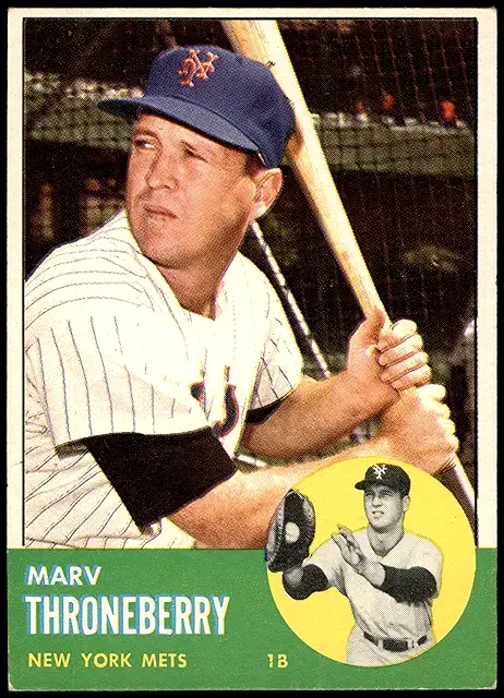
The team found new ways to commit errors, new ways to run the base paths, new ways to “pitch,” new ways to “hit” and new ways to make outs. Some on-field plays made fans laugh; others made fans wince; still others just made people scratch their heads. Breslin relates that despite their abysmal play (and record) it became fun to be a New York Mets fan. And the team’s boosters eventually gravitated toward first-baseman Marv Throneberry (“Marvelous Marv”) as their representative of the ultimate downtrotten Met hero.
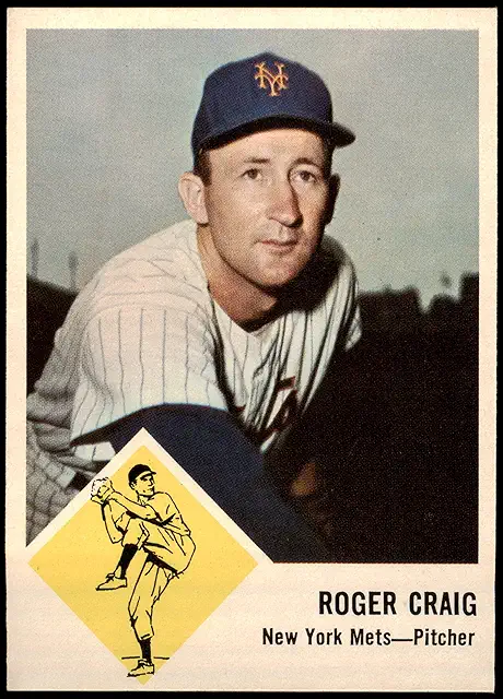
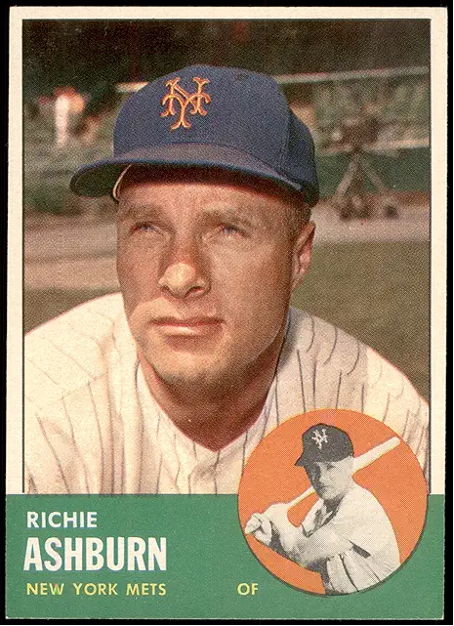
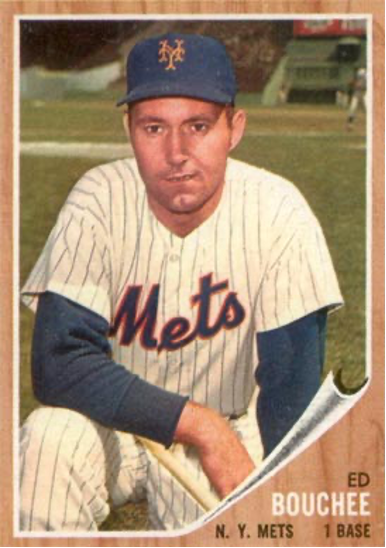
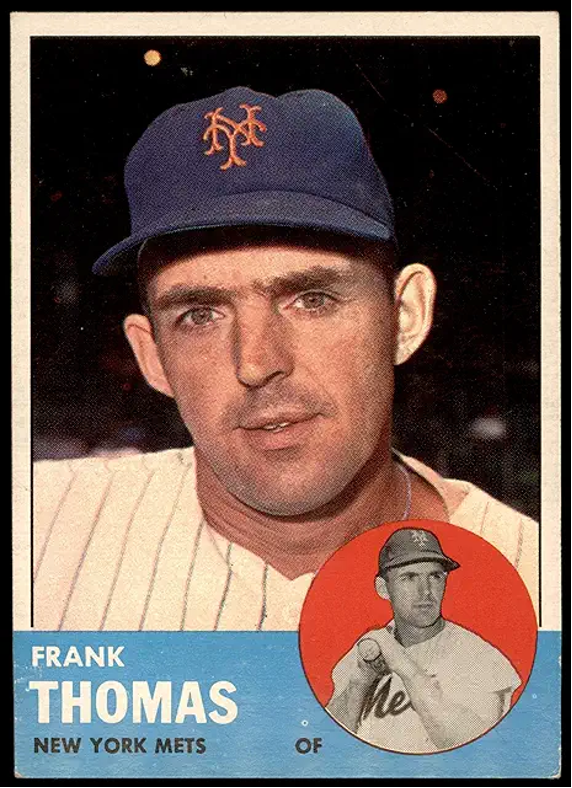
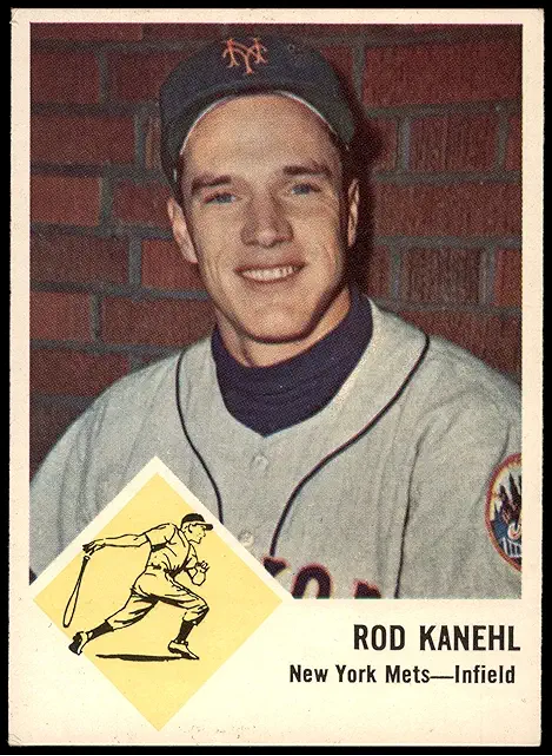
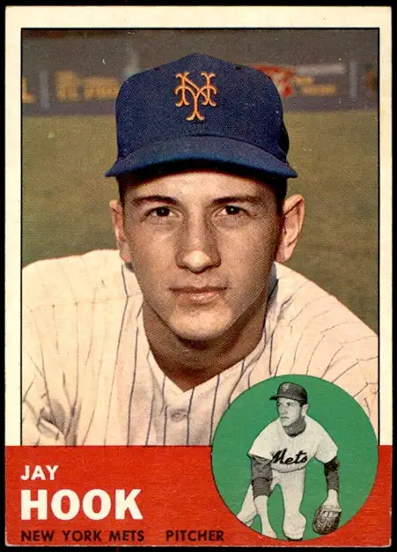
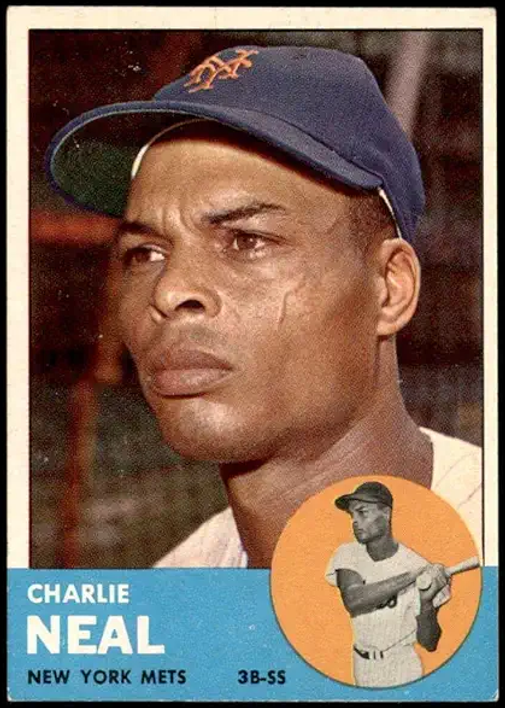
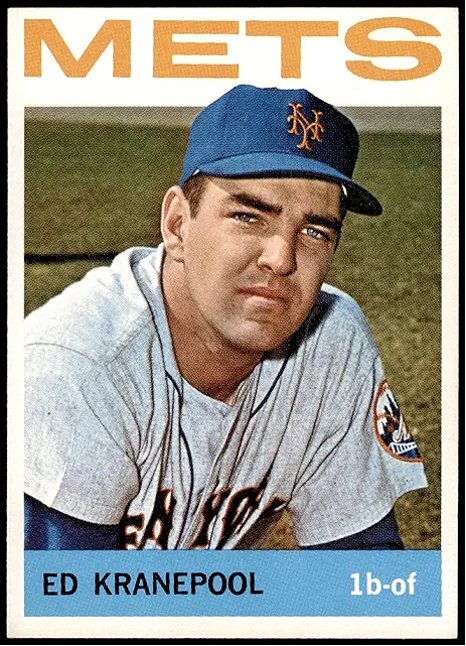
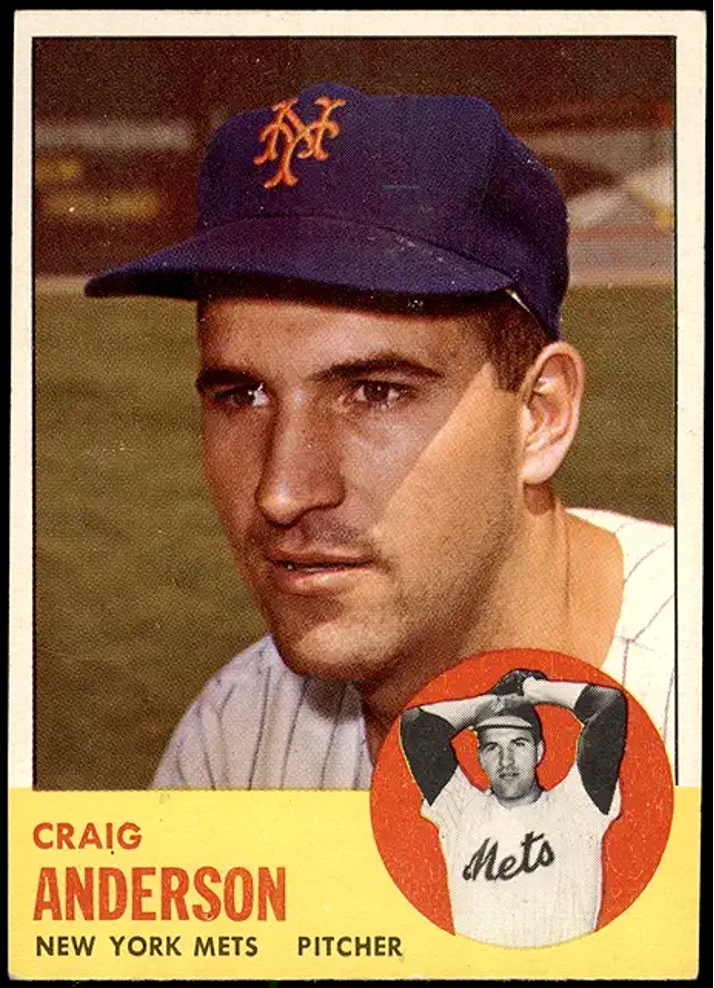
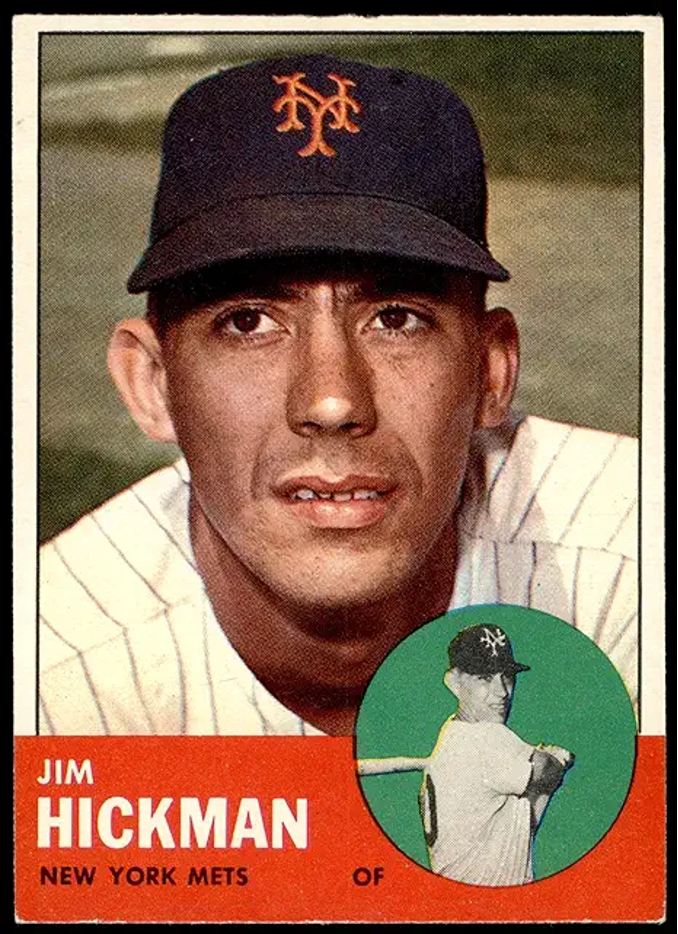
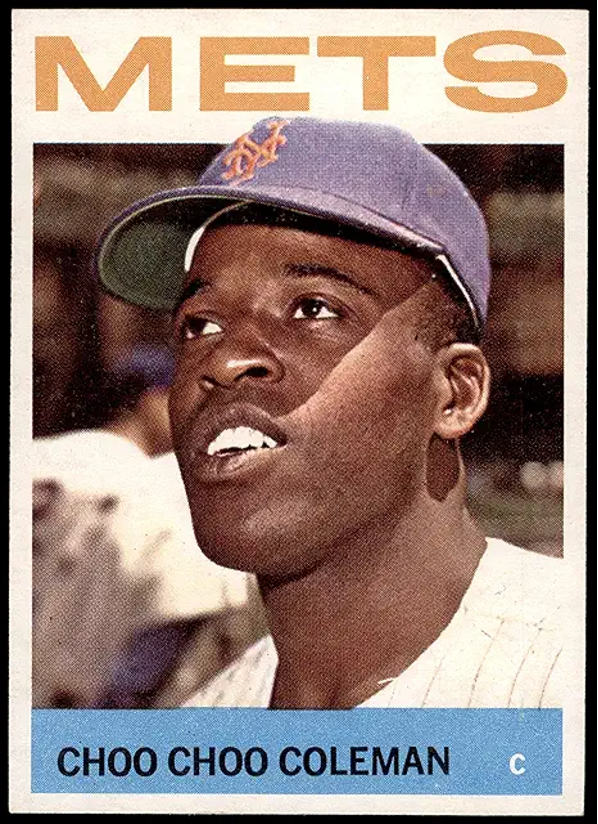
In addition to Marv, the exploits of many other 1962 Mets are also chronicled in the book. The team included players such as: Charlie Neal, Gil Hodges, Ed Bouchee, Richie Ashburn, Jay Hook, Roger Craig, Al Jackson, Choo Choo Coleman, Frank Thomas, Rod Kanehl, Felix Mantilla, Galen Cisco, Ed Kranepool, Craig Anderson and Jim Hickman among others. Not everyone sucked – Ashburn hit .306 and Thomas slammed 34 homers – but many did.
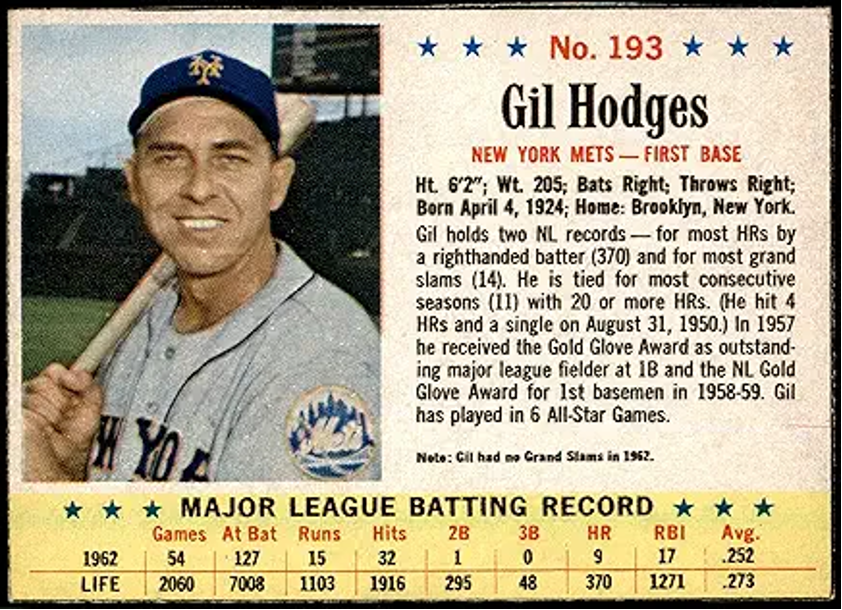
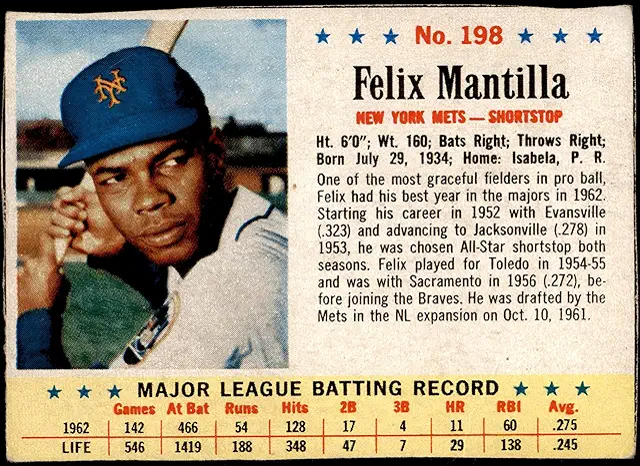
1963 Post Cereal
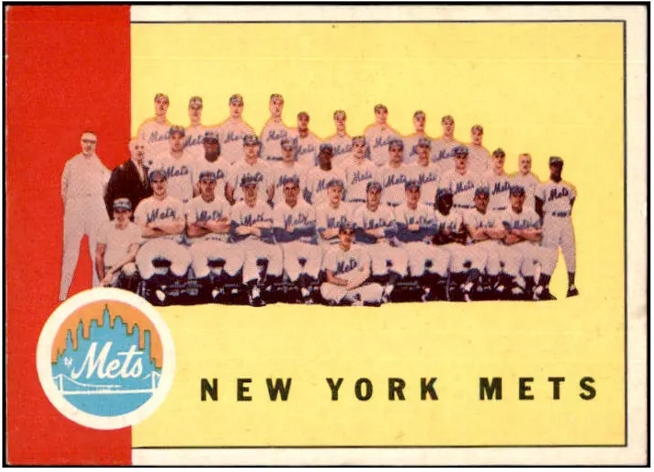
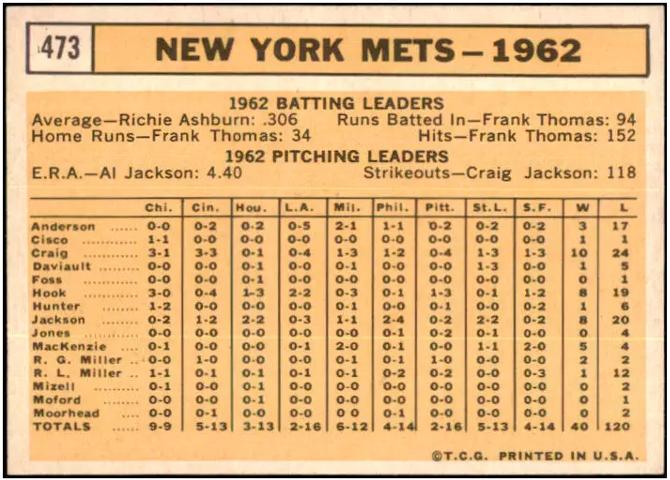
1963 Topps
The book covers the period from 1958 through the ’62 season. It gives readers an interesting history lesson of what led to the Mets becoming a National League expansion team, including: William Shea’s early attempts at forming a third major league – the Continental League – which would have included a New York team; background on the Mets’ eventual owner, Mrs. Joan Payson; the hiring of former Yankees skipper, Casey Stengel to manage the team; playing in the Giants’ odd-shaped former home stadium, the Polo Grounds; and the inequity of the National League’s expansion draft.
For instance, in one section on the expansion draft it notes that before the draft, the Mets hired Hall-of-Famer Rogers Hornsby to do scouting reports on all major leaguers. Hornsby knew the N.L. expansion draft rules were going to be brutal toward the two new teams (the Houston Colt .45s – now Astros – were the other). He warned, “They say we’re going to get players out of a grab bag … from what I see, it’s going to be a garbage bag.”
Jimmy Breslin wrote for New York area newspapers for a half century. During his long career, he often wrote about – and from the point of view of – the “average guy.” In this book, he has sort of a meandering writing style. He touches all the bases (pun intended), but sometimes seems to jump from topic to topic. He zigs and he zags, but eventually gets to the point. The stories are somewhat intertwined and it all ties together in the end. Never having read his columns and articles, this just may be Jimmy’s usual style.
Breslin was a character himself, for sure. According to Wikipedia: He was once beat to a pulp by mobsters who didn’t take kindly to something he wrote; He once ran as part of a slate of local candidates in New York City whose unofficial slogan was “Vote the Rascals In.” … On a sadder note, he was covering Robert F. Kennedy’s 1968 presidential run and was just five feet away from the Senator when he was shot.
The title of the book comes from a quip uttered by Manager Casey Stengel after describing the ineptness of the Mets: “You look up and down the bench and have to say to yourself ‘Can’t anybody here play this game?’”
Finally, pondering the Mets’ 120-loss 1962 season, grandmotherly team owner Joan Payson is quoted as saying: “… Well, let’s hope it is better next year. If we can’t get anything, we are going to cut those losses down. At least to 119.” … (The ’63 Mets did even better than that. They “only” dropped 111.)
Breslin hits the mark in explaining the Mets’ early history, their on-field follies and failures, and ultimately their unlikely appeal.
Long live the lovable losers known as the 1962 New York Mets.
It’s doubtful if anyone will ever say that about the 2024 White Sox.

• • • • • •
THIS ARTICLE WAS WRITTEN
EXCLUSIVELY FOR BaseballCardFun.com
• • •
Text Copyright © 2025 by BaseballCardFun.com / Mark A. Larson
No article appearing on this website may be reproduced without written consent of the Editor/Publisher
To keep up-to-date on additions to BaseballCardFun.com, subscribe below*
* Your email address will never be shared and is only used to announce new articles
 BaseballCardFun.com