
– by Brendan C. Boyd and Fred C. Harris (1973)
REVIEWED BY MARK A. LARSON
Editor & Publisher
This book was first published in 1973. It provided a load of chuckles then and nearly 50 years later it’s still a hoot.
The timing of this tribute to baseball and card collecting was spot on. After the turbulent ’60s, the country drew a deep collective breath and was in the throes of a nostalgia boom that was picking up steam fast.
First, it was the 1930s, with comedians Laurel and Hardy and the Marx brothers leading the way. “The Waltons” premiered on CBS in 1972 and the Best Picture of ’73 was “The Sting” – both set in the depression era. But, maybe more importantly, also released in 1973 was “American Graffiti,” which was a huge success. It was followed on television by “Happy Days,” which quickly caught fire. These shows reflected the move toward fond Baby Boomer memories of the 1950s and early ’60s.
Boomers who had collected baseball cards in those earlier times were now starting to round the corner into their mid- to late-’20s and were beginning to long for reminders of their youth.
In addition, the baseball card hobby in 1973 was just beginning to peek out from behind its “for-kids-only” persona. Shows – large and small – that included mostly adults were starting to pop up across the country. A new hobby publication called “Sports Collectors Digest” came on the scene that year and would go on to become one of the most influential card-oriented publications.
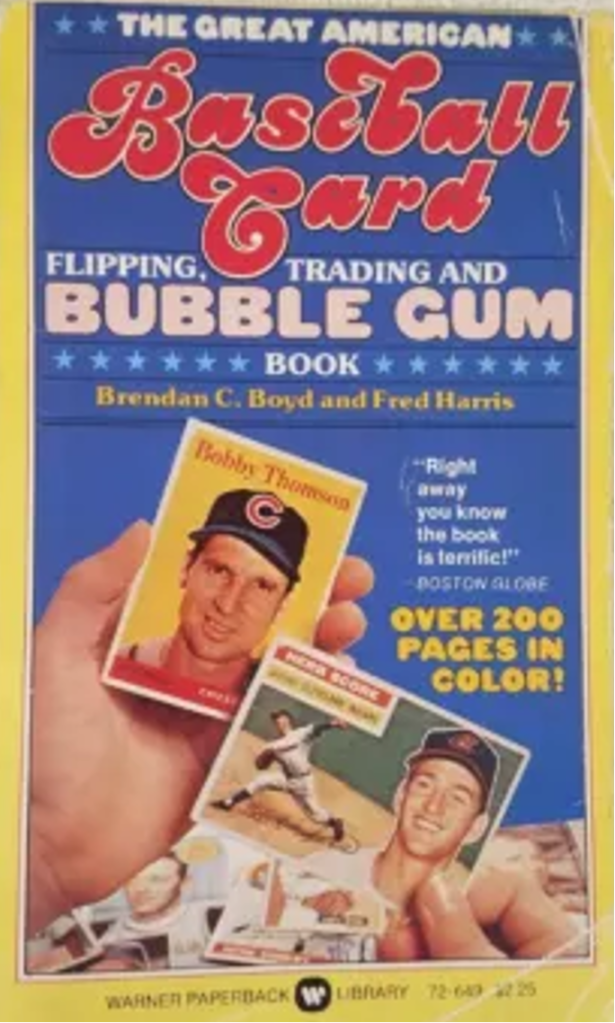
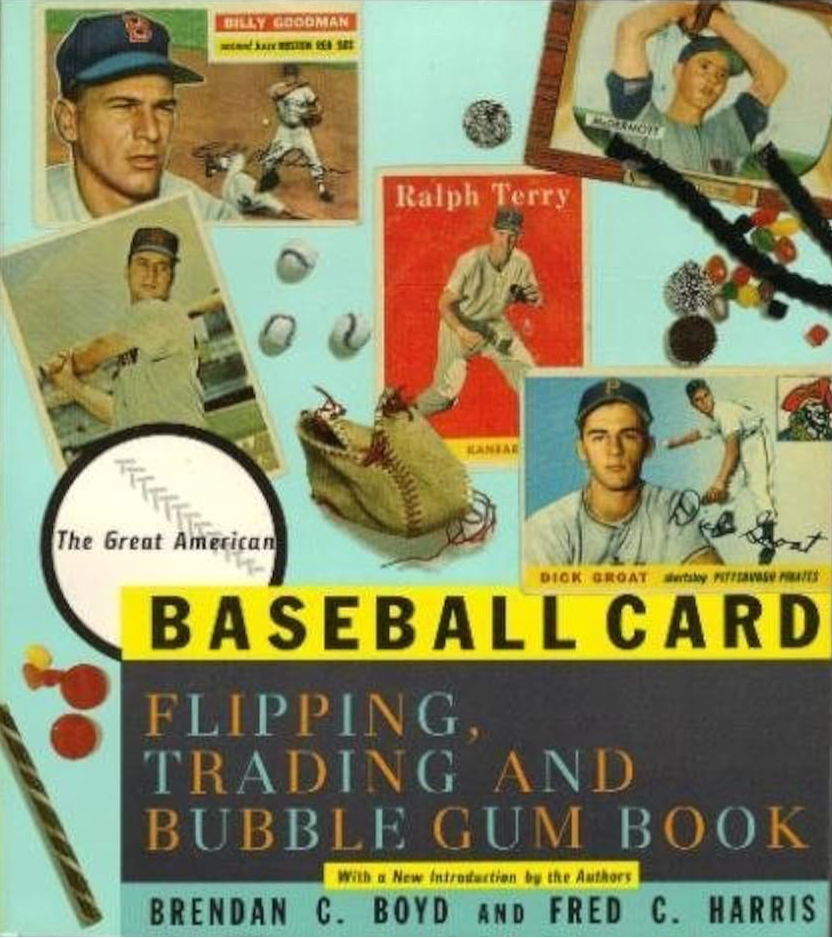
Enter “The Great American Baseball Card Flipping, Trading and Bubble Gum Book” by Brendan C. Boyd and Fred C. Harris. In light of the nostalgia boom (including baseball of the ’50s) and the burgeoning interest in baseball cards, the world was ripe for this book.
Boyd and Harris seem like a couple of guys in their twenties who probably got together over some beers and started reminiscing about the game and cards of their youth.
As stated by the authors in the 1991 updated introduction: “We didn’t want it (the book) to be about baseball cards, for example, or even baseball. We wanted it to be about being a kid, and a fan – a kiddish fan, the way some part of you always remains. We didn’t want to fawn, either. We’d express our respect for baseball by kidding it. And that, for better or worse is what we did.”
The book starts off with a chapter subtitled “Some Reflections on a Baseball Card Childhood” – touching on the wonders of being a kid in general and collecting cards in particular. Then they recap a tour of Topps’ Brooklyn, New York operation, including a chat with the company’s resident card guru, Sy Berger.
The first 32 pages are a prelude to the main raison d’etre for “The Great American Baseball Card Flipping, Trading and Bubble Gum Book” … the player profiles.
The bulk of the book is devoted to a focus on nearly 250 ballplayers from the two decades prior to the 1973 publication date. (Each profile includes a photo of a Topps or Bowman card for that player.) These mini-biographies are a celebration of flippancy: done in a fun, off-the-wall, sometimes snarky and sarcastic, tongue-in-cheek style. They range in length from a sentence or two to a long paragraph. A small sampling of tiny excerpts will give you a glimpse of the authors’ approach:
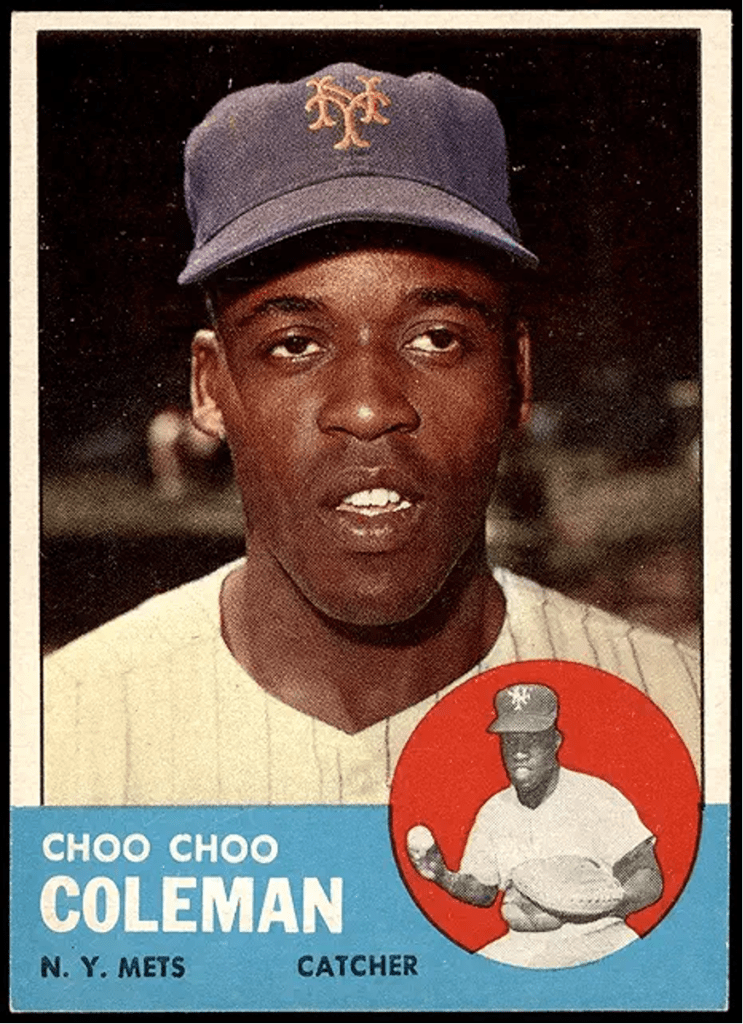
• “Choo Choo Coleman was the quintessence of the early New York Mets. … never hit over .250 in the majors, had 9 career home runs, 30 career RBIs, and couldn’t handle pitchers. Plus his name was Choo Choo. What more could you ask for?”
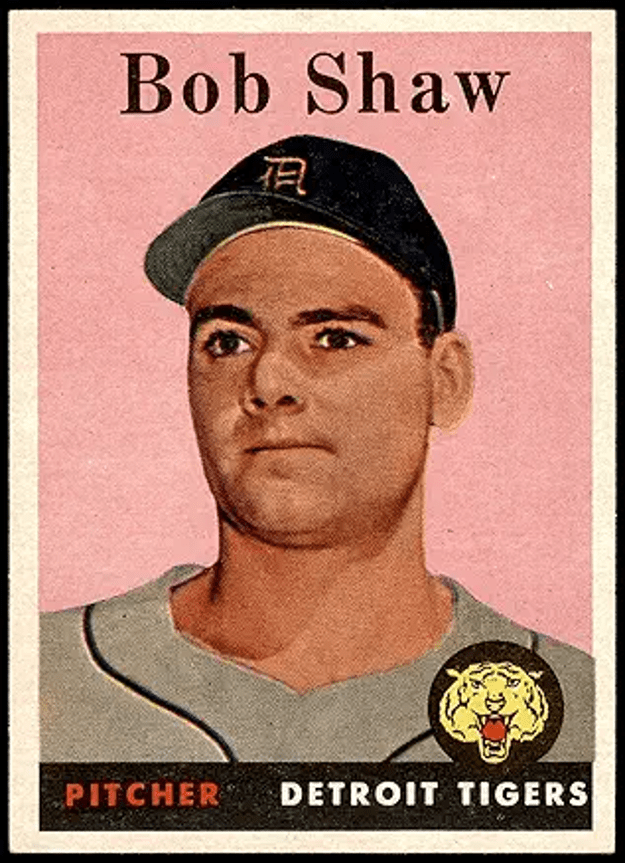
• “Oooopppps! In 1963 … Bob Shaw committed 8 balks – 5 in one game, 3 in one inning. Pretty silly.”
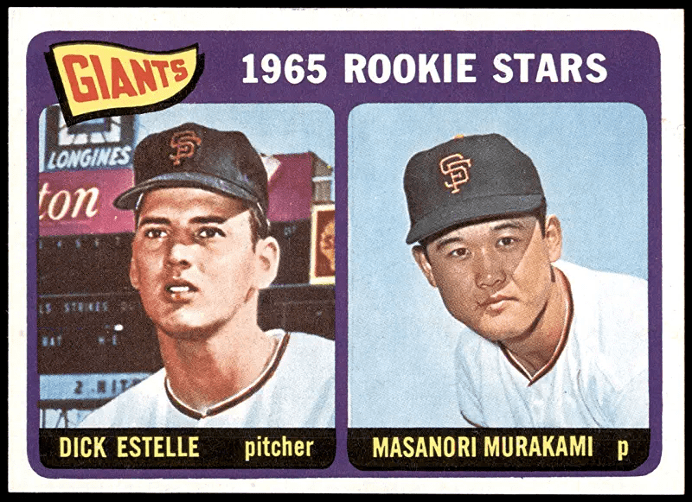
• “Musanori Murakami was, with the possible exception of Yogi Berra, the only man who ever played in the big leagues who did not speak English.”
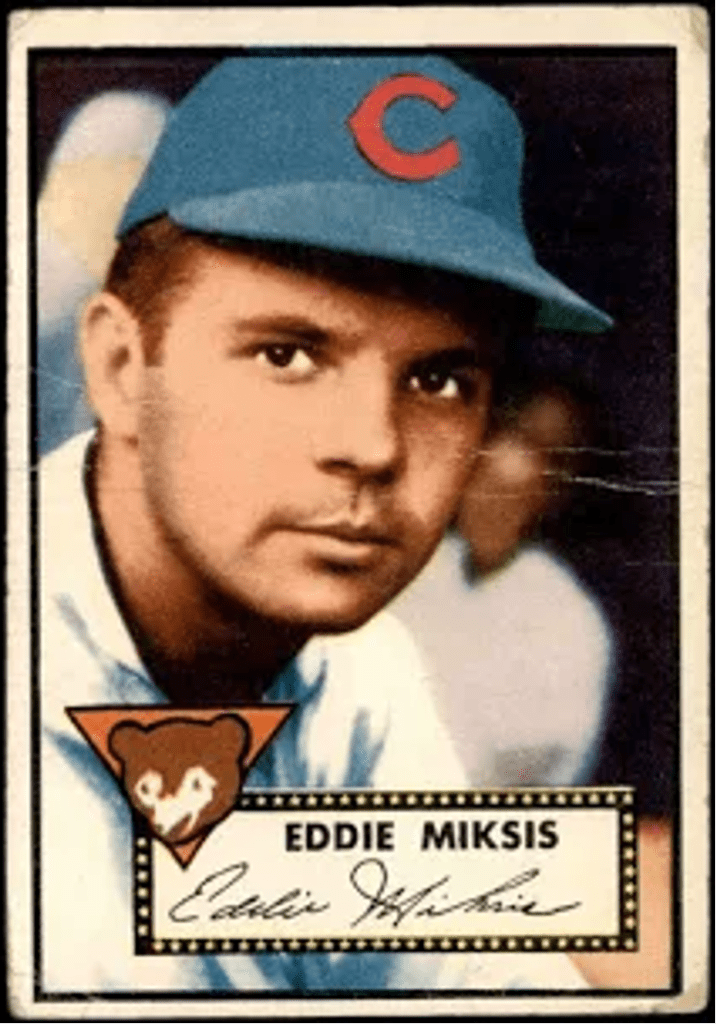
• “The nicest thing that Topps could figure out to say about Eddie Miksis was that he was tenth in the National League in stolen bases in 1951, with 11. … Miksis was the sort of guy that if you were introduced to him at a party and he told you he was a big league ballplayer, you’d think he was kidding. … In a way he would have been.”
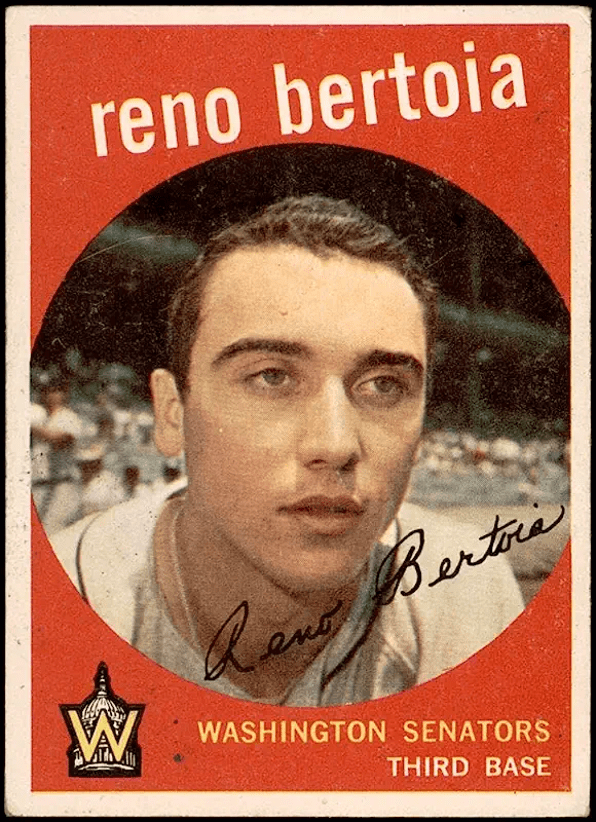

• “… The back of Reno’s (Bertoia) card is interesting. It says that his average last year was .162 and that … he gained valuable information about American League hurlers that would help him in the future. I suspect that the information he gathered was that every pitcher in the American League could get him out, and that perhaps he should try some other line of work.”
• “Cal McLish’s full name was Calvin Coolidge Julius Caesar Tuskahoma McLish. If you can pick out a thread running through all that, then you are definitely a better man than I.”
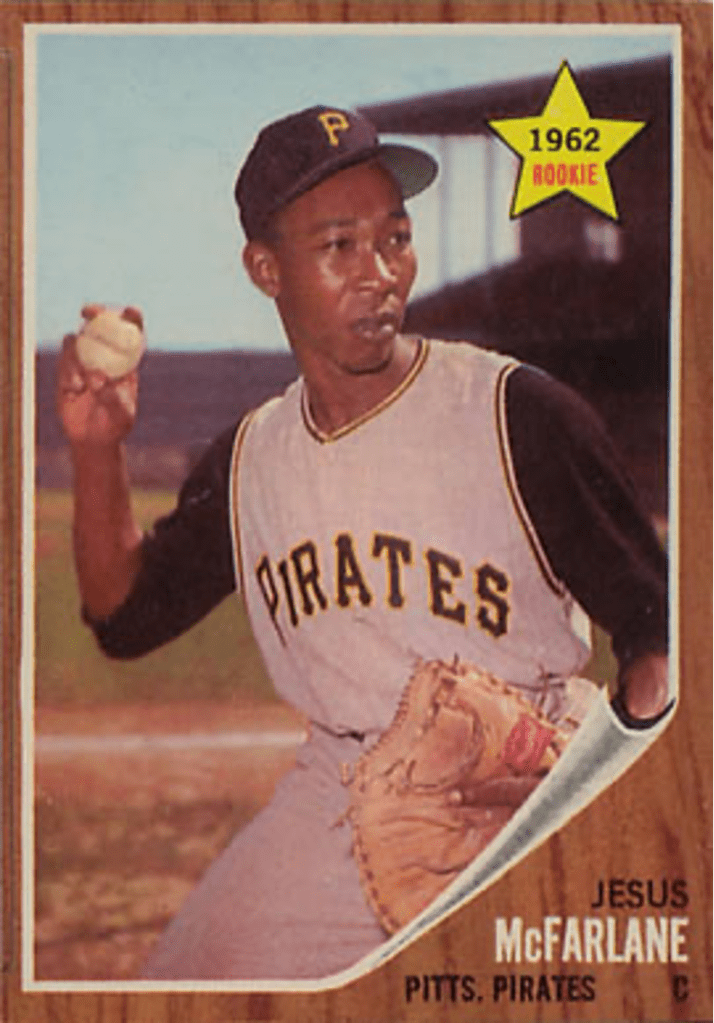
• “Jesus McFarlane was a living testimonial … to the fact that naming your child after a famous celebrity does not necessarily help.”
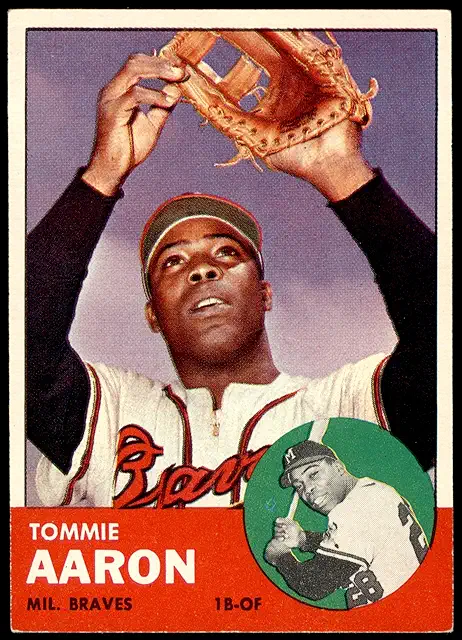
• “… it wasn’t bad enough that Tommie Aaron should have chosen to follow in the illustrious footsteps of his brother Henry … but that he should have chosen to do so on the same team as his brother, at the same time, and in the same position can only be described as a needless and willful public self-humiliation. Tommie, why?”
You get the idea.
Although a lot of the comments are gentle put-downs, the subtle impression is the two authors really like baseball – especially players who may not have been that good, but nonetheless make for interesting characters. Those are actually the guys (and cards) that produce the best memories. In other words, the best nostalgia-builders.
In the final chapter, Boyd and Harris sum it up by stating: “There are four things that everybody remembers about baseball cards: The pale chalky powder that clung to them interminably … bubble gum dust; That you could never get a Ted Williams, no matter how hard you tried; That you could never not get a Cliff Mapes, no matter how hard you tried; And that your mother threw them out … and there was no possible way to get them back.”
In the end, “The Great American Baseball Card Flipping, Trading and Bubble Gum Book” is really pretty goofy. And pretty darn fun … which is exactly what baseball cards should be all about: F-U-N.
• • • • • •
THIS ARTICLE WAS WRITTEN
EXCLUSIVELY FOR BaseballCardFun.com
• • •
Text Copyright © 2024 by BaseballCardFun.com / Mark A. Larson
No article appearing on this website may be reproduced without written consent of the Editor/Publisher
To keep up-to-date on additions to BaseballCardFun.com, subscribe below*
* Your email address will never be shared and is only used to announce new articles
 BaseballCardFun.com