
— by Tom Zappala & Ellen Zappala
with John Molori, Joe Orlando (2020)
REVIEWED BY MARK A. LARSON
Editor & Publisher
If you want to see all of the 407 cards that make up the landmark 1952 Topps set – and learn about each of the players depicted – then this is the book for you.
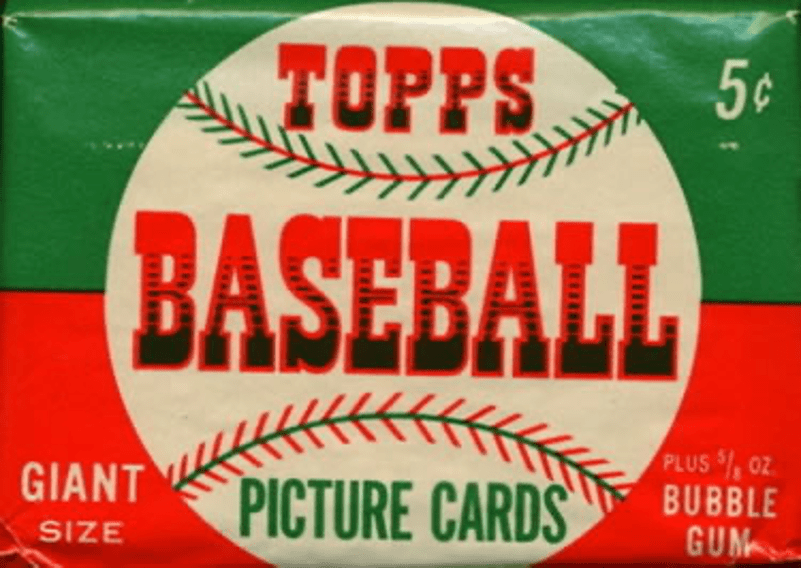
In sports collecting hobby history, the ’52 Topps set is arguably the most important ever issued. It dwarfed the then current issues of the Bowman Co. … both in physical size and the sheer number of different cards. Young collectors of the day responded positively and Topps was well on the way to crushing their rival and – within four short years – taking complete control of the national baseball card market. Plus, the set included the most sought-after (and valuable) baseball card of the post-World War II era … the tough last series card of Mickey Mantle (#311).
The book includes an introduction to the 1952 Topps set, a tribute to Sy Berger (Topps’ legendary main baseball card man at the time), a chapter on the famous Mantle card, information on errors and variations in the set, a focus on players Andy Pafko and Eddie Mathews (the first and last cards in the set), and other stories, tidbits and trivia relating to the set over the past seven decades.

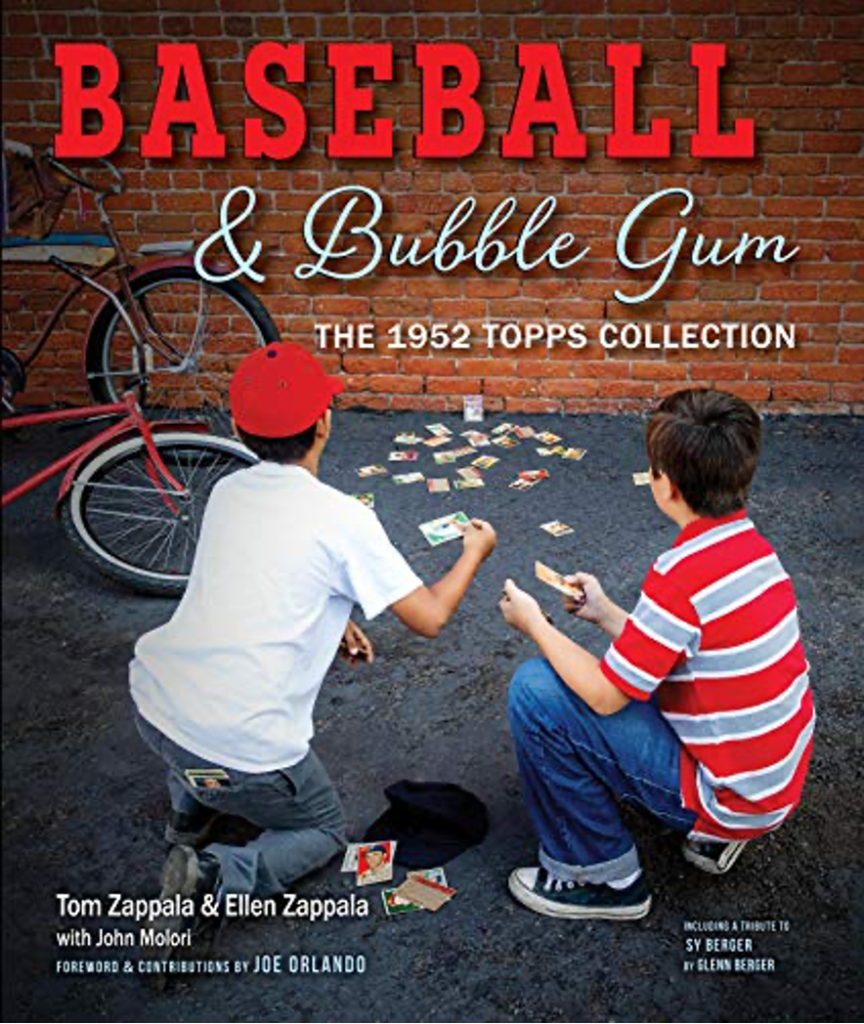
Every single card that was part of the ’52 set is beautifully photographed and shown in the book in full color on glossy paper stock. And since each card only includes one player (no checklists, team cards, league leader cards, multi-player rookie cards, etc.), there are 407 different player profiles included. Instead of starting with card #1 and going straight through to card #407, the book is divided into three main sections:
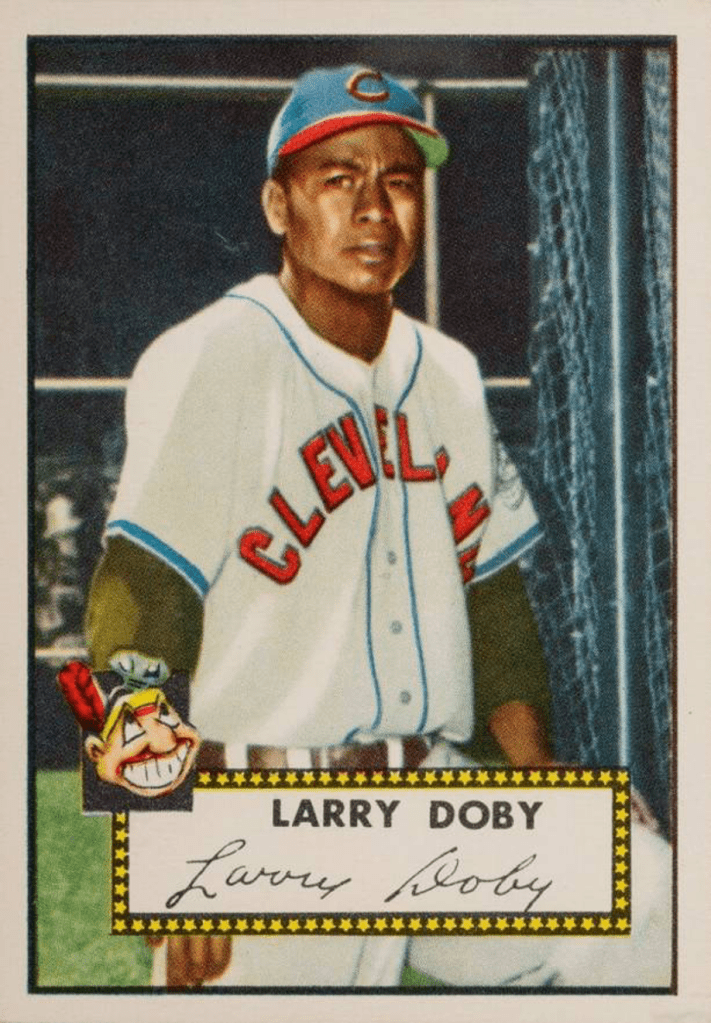
• The first covers the 26 Hall-of-Famers included in the set. In addition to Mantle, big names such as Willie Mays and Jackie Robinson are shown, as well as lesser-known stars like Bob Lemon, Larry Doby, Monte Irvin and Hoyt Wilhelm.
• The second part focuses on 142 “uncommon” players (not the greatest, but somewhat noteworthy) … guys like Pete Runnels, George Crowe, Hank Sauer and Virgil Trucks.
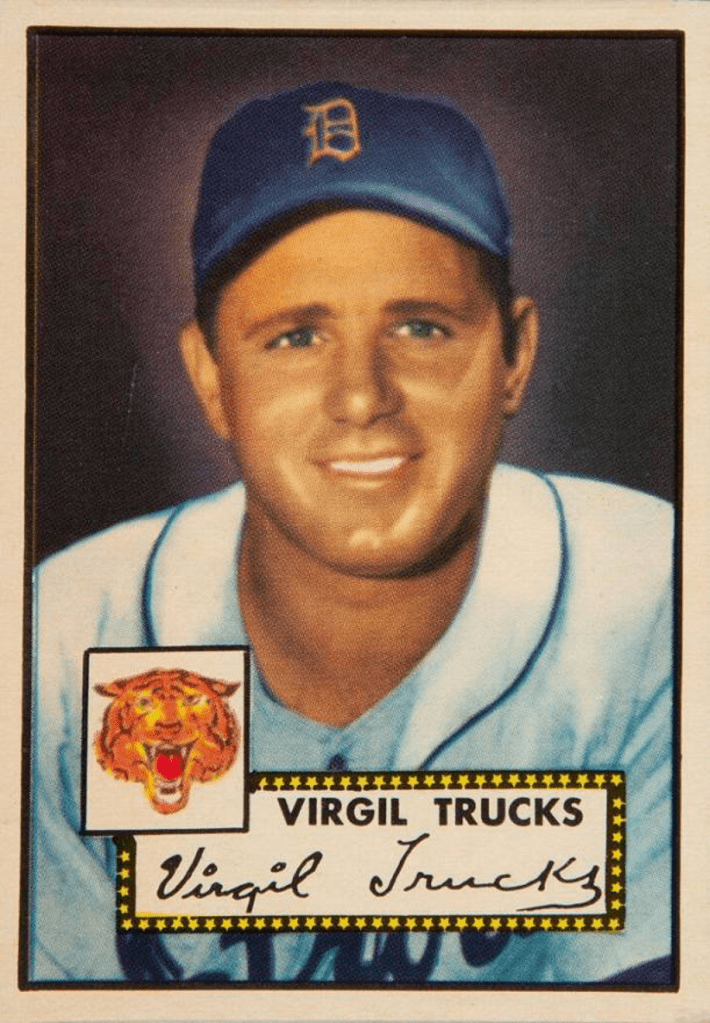
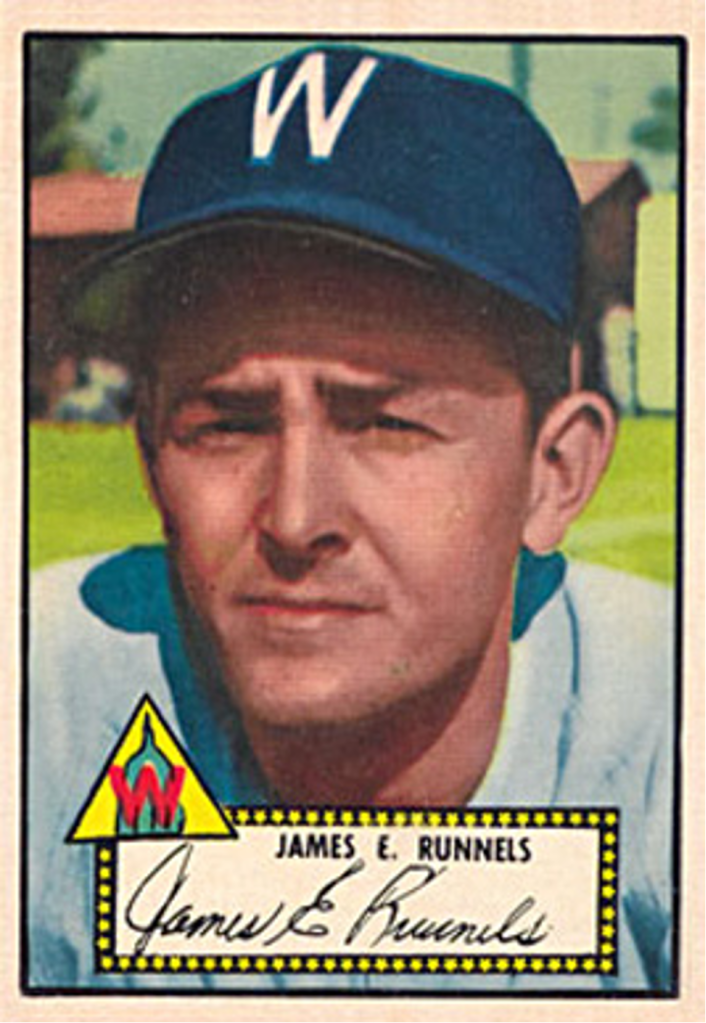
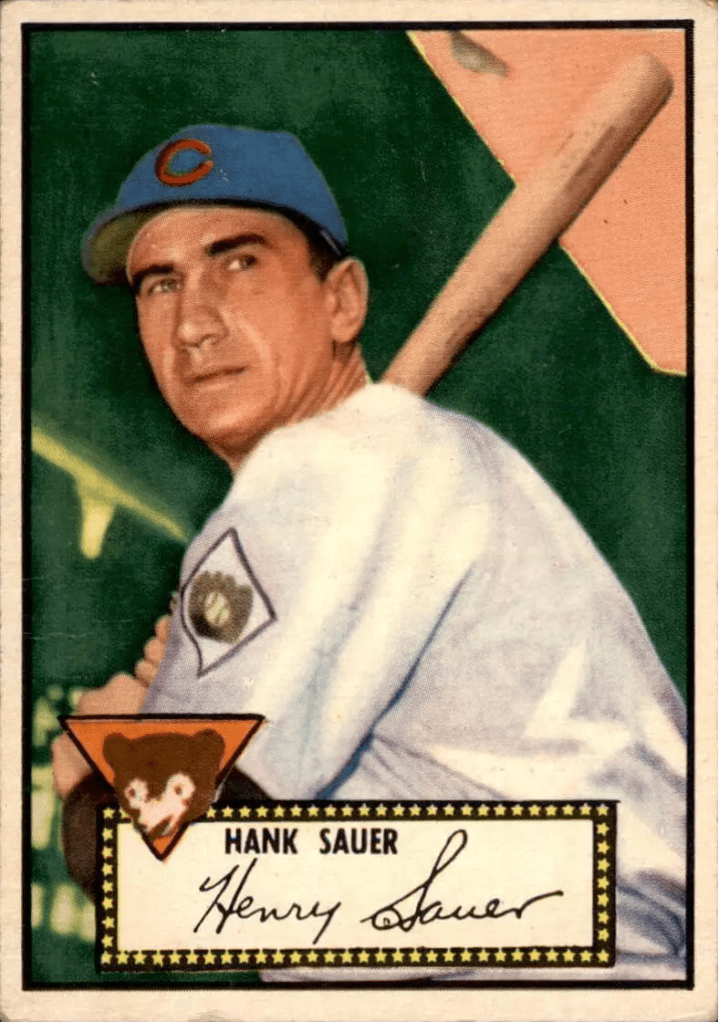
• While the third section includes 239 players classified as “commons” (everyday, ordinary players … sometimes the most interesting). Some of the commons included are: Cloyd Boyer, Johnny Pesky, Joe Page and Eddie Robinson. The mini-biographies are presented in each of the three areas alphabetically.
“Baseball & Bubble Gum” is as much about baseball itself as baseball cards. The short synopsis of each player’s career gives the reader a glimpse of the lives of over 400 different ballplayers … thus providing a snapshot of early ’50s major league baseball.
The small, bite-size chunks about the players (plus tiny morsels of statistics) make it the kind of book you can pick up and then set down for a spell without losing any continuity. For many readers, the snippets may serve as a springboard to learning additional information about the players by simply checking out more complete biographies online.
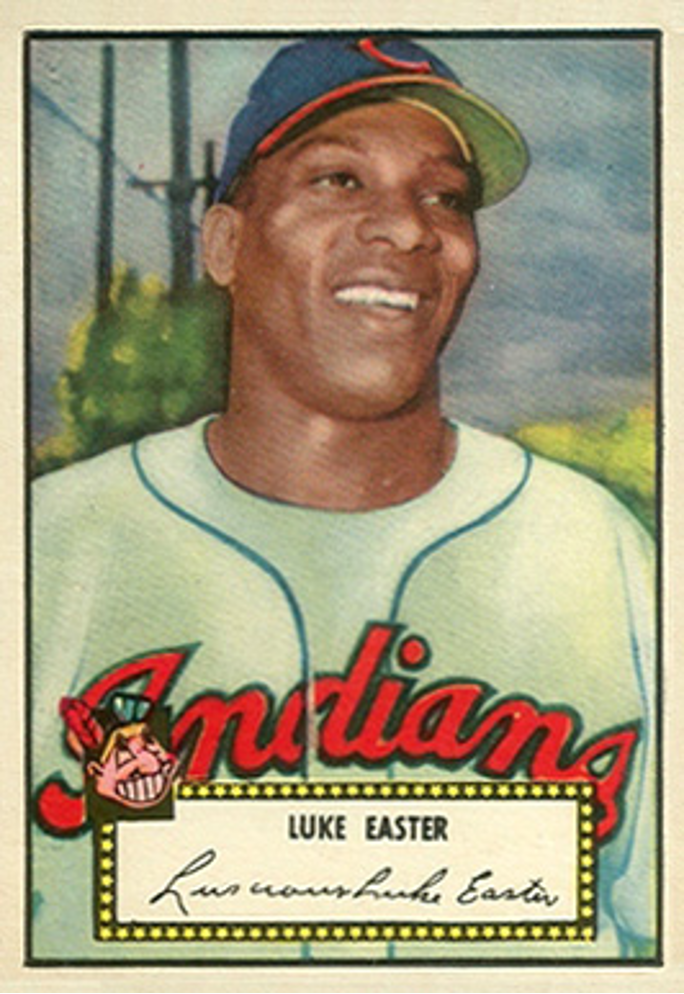
For instance, since I didn’t start collecting cards until 15 years after the 1952 set was issued, I learned about first-baseman Luke Easter (#24), who joined the Indians just two years after Larry Doby broke the color line in the American League for Cleveland. Although already 34 years old when he made his major league debut, Easter had three great seasons for the Tribe between 1950-52, averaging 29 homers and 102 RBIs during that period. (It will be interesting to see what Easter’s overall numbers look like when his Negro Leagues stats are officially added in the near future.) Plus, I learned about his unfortunate death at the hands of criminals at age 63.
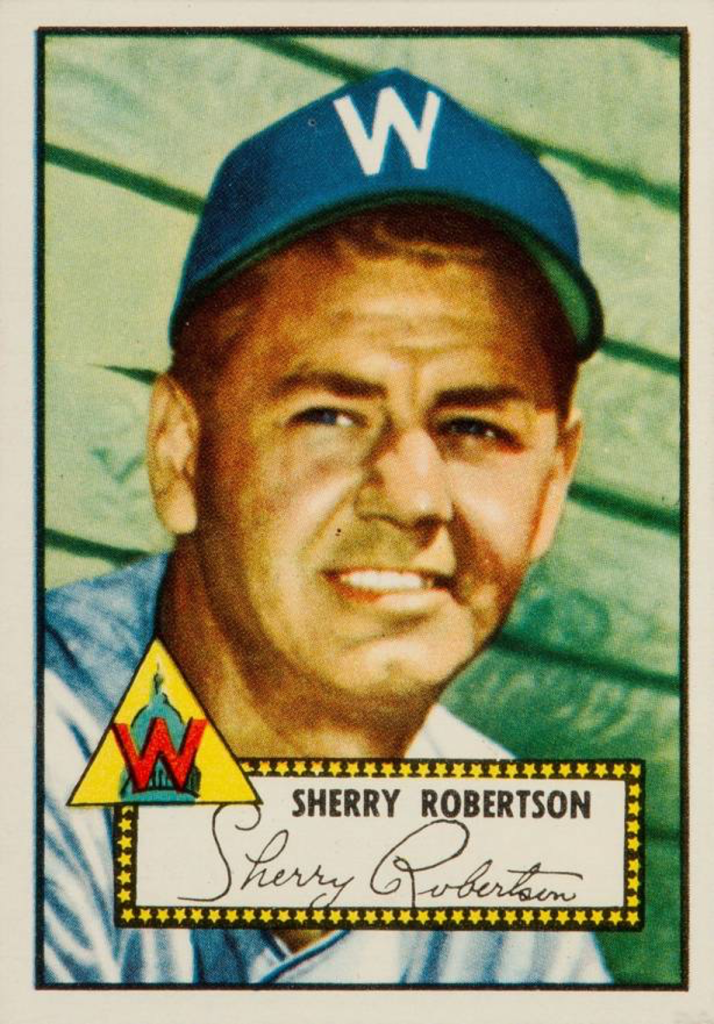
Other examples of players I also learned more about were two future baseball executives for my favorite team, the Minnesota Twins. Both Sherry Robertson (#245) and Joe Haynes (#145) appear in the ’52 set as players for the Washington Senators (who moved to Minnesota and became the Twins after the 1960 season). As a kid, I would see these two men in the most boring portion of Twins’ yearbooks as part of the front office, but didn’t know they were former players who appeared in the first major Topps set.
Even though it would have been nice to have more information on Topps’ Sy Berger and possibly a few more stats included with the player biographies, this is a good book. It’s very ambitious and the authors are able to pull it off nicely.
Nearly all of the players in the ’52 set are gone now. And those who actually collected the cards as kids at the time are over the age of 75. However, the 1952 Topps set will always live on as the issue that set the tone for card collecting generations to come – right up until this day. Its impact was nothing short of enormous.
• • • • • •
THIS ARTICLE WAS WRITTEN
EXCLUSIVELY FOR BaseballCardFun.com
• • •
Text Copyright © 2024 by BaseballCardFun.com / Mark A. Larson
No article appearing on this website may be reproduced without written consent of the Editor/Publisher
To keep up-to-date on additions to BaseballCardFun.com, subscribe below*
* Your email address will never be shared and is only used to announce new articles
 BaseballCardFun.com