
BY PATRICK “PACKY” MADER
For someone diagnosed with a brain tumor his senior year as a baseball player in 1994 with the University of Minnesota (U of M) while leading the Big Ten Conference with a .488 batting average and then told he had three months to live in 2005 when the tumor returned when serving as bullpen coach for the San Diego Padres, Mark Merila considers not only every baseball season but every calendar season a miracle.
Born in Litchfield, Minnesota, in 1971, the son of Joe and Kaye Merila, Mark and his sister Tracy – who he looked up to – heard stories of town baseball from his father, a construction worker. “Dad always wanted me to try different sports,” says Mark, who played soccer, hockey, and baseball. “But he said, ‘When I get home you have to ask me to play catch.’ When I was six or seven, he’d put a hammer in my left hand and say, ‘See how you do hitting a nail.’ I’d tap, tap, tap it, then smoke my thumb,” Mark says, laughing. “He was way ahead of the game [leading Mark to become a switch-hitter].”
The Merila family moved to the metro area and Mark became a star player in hockey and baseball at Robbinsdale Armstrong, earning playing time on the varsity squads as a 9th grader. He recalls his high school career paralleling that of Tom Nevers of Edina. Following his father came another influential coach, Bruce Vandersall, a former Gophers’ football defensive coordinator. Vandersall’s son, Mark, also starred on the baseball team and the pair remained united later as Gophers. However, Mark was recruited primarily for his hockey skills: Wisconsin, Notre Dame, and Boston College all came calling. “The U of M was the only school to recruit me as a baseball player. I always wanted to be a Gopher and be close to home so dad could watch me,” says Mark of his collegiate choice. There he would meet a third influential coach, John Anderson. “He is the type of guy who is more concerned about you off the field, but he is obviously a great coach.”

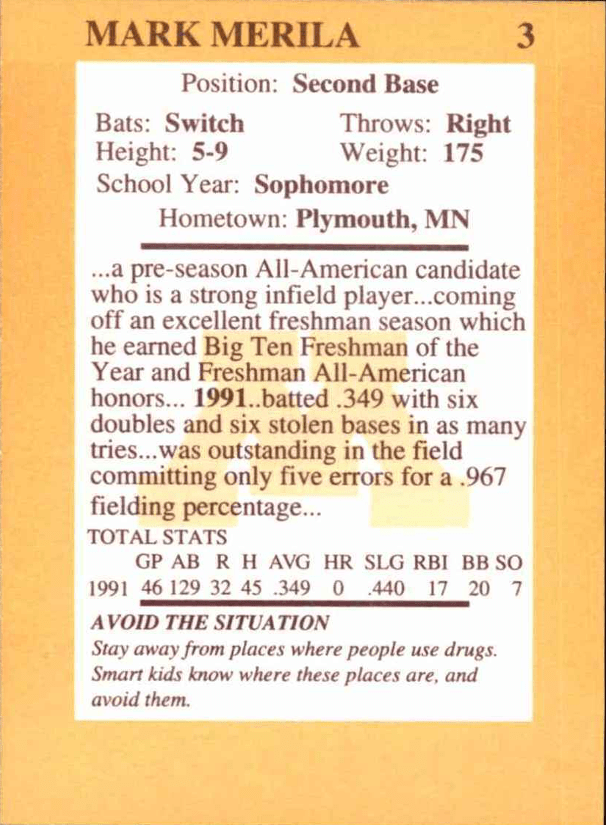
1992 Quaker Oats
Hoping to emulate switch-hitting Brent Gates and be as productive as Gopher greats Dan Wilson and Brian Raabe, Mark’s 5’ 9” broad build caught the attention of outfielder Jeff Monson who dubbed him “Stumpy.” You don’t question a fifth-year senior,” laughs Mark about the change in nickname from the childhood name Sparky. After having batted right-handed through high school, Mark first struggled with the change to switch-hitting. A last try was successful, and the second baseman ended up being Big Ten Freshman of the Year in 1991 with a .349 batting average. His batting average climbed to .408 his junior year and he was drafted in the 10th round by the Twins. A highlight was hitting home runs from both sides of the plate against Illinois.
In 1993 he was a member of Team USA, batting second in the lineup, ahead of Todd Helton and Todd Walker, future major league stars. “It was the biggest baseball thing in my life when we played the Cubans,” he reports on his success of batting .460 against the powerful team in eight games. Soon his senior year would begin, and so would the start of seasons of miracles.
During warm-ups before a Big Ten game in 1994, Mark collapsed and was rushed to the U of M Hospital. The cause was a grand mal seizure, and a brain tumor was diagnosed. Following radiation therapy, he was able to return to the team and completed the season with a conference-leading .452 batting average and named co-winner of the Big Ten Conference Player of the Year. Mark’s name is prominent in Gopher baseball record books: 1st in career batting average (.393) and on base percentage; 4th in RBIs; (181) 6th in runs (201); and 5th in doubles (59). But due to his uncertain health situation, the two-time All-American’s draft stock plummeted from being a predicted 3rd round draft choice to being selected in the 33rd round by the San Diego Padres.
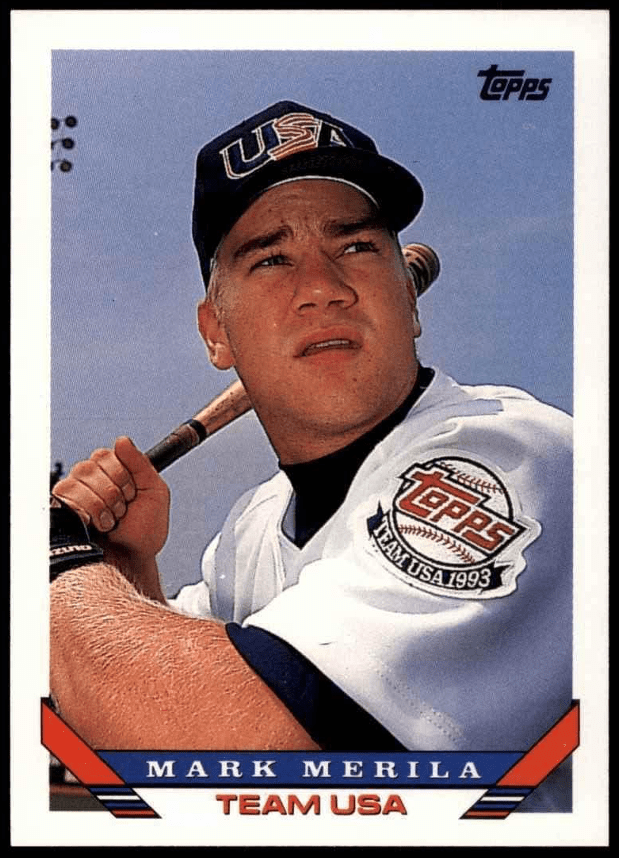
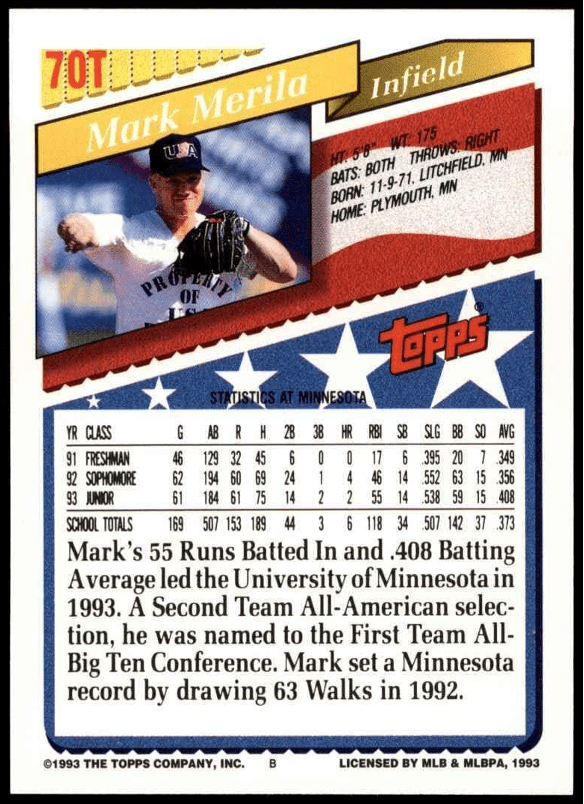
1993 Topps Traded
Mark played two years of minor league baseball with moderate success (a .284 batting average in 1995) despite weeks of radiation again before his final season. Meanwhile, he completed a degree in economics at the U of M. The Padre organization showed a lot of empathy and offered Mark a position as a bullpen catcher with the major league team. “I had never caught in my life!” exclaims Mark. “My family and I discussed whether I could survive catching Trevor Hoffman and playing outfield catch with Tony Gwynn and Rickey Henderson (all future Hall-of-Famers).”
Evidently, he determined he could. Mark remained on the Padre staff from 1996-2011. In 1998 he was voted a playoff share and in 1999 he was proud to be included as an All-Star coach. Mark savored his role with the team and was invited to play $2 buy-in poker games with manager Bruce Bochy, the general manager and stars Gwynn and Wally Joyner as the stories were joined with laughter and camaraderie. In 2005, the tumor returned, and he received the dreaded opinion of having three months to live.
“I had to relearn to read,” Mark says of his many trials. Experimental drug treatments required every two weeks were not covered by insurance but the benevolent Padres owner, John Mores, paid the $5,000 expense for a full year (total of $120,000). It severely limited his physical ability, and his new role was to be an assistant to third base coach Glenn Hoffman, Trevor’s brother. In 2012, Mark accepted a position as a scout in Minnesota so he could spend more time with his children following a divorce.
Mark names Gwynn and Hoffman as personal baseball favorites. “They are the definition of work ethic,” he says of the pair. Hoffman, the baseball career saves leader until Mariano Rivera broke his record, began his professional career as a shortstop. Gwynn was a pioneer in recording and analyzing hitting video.
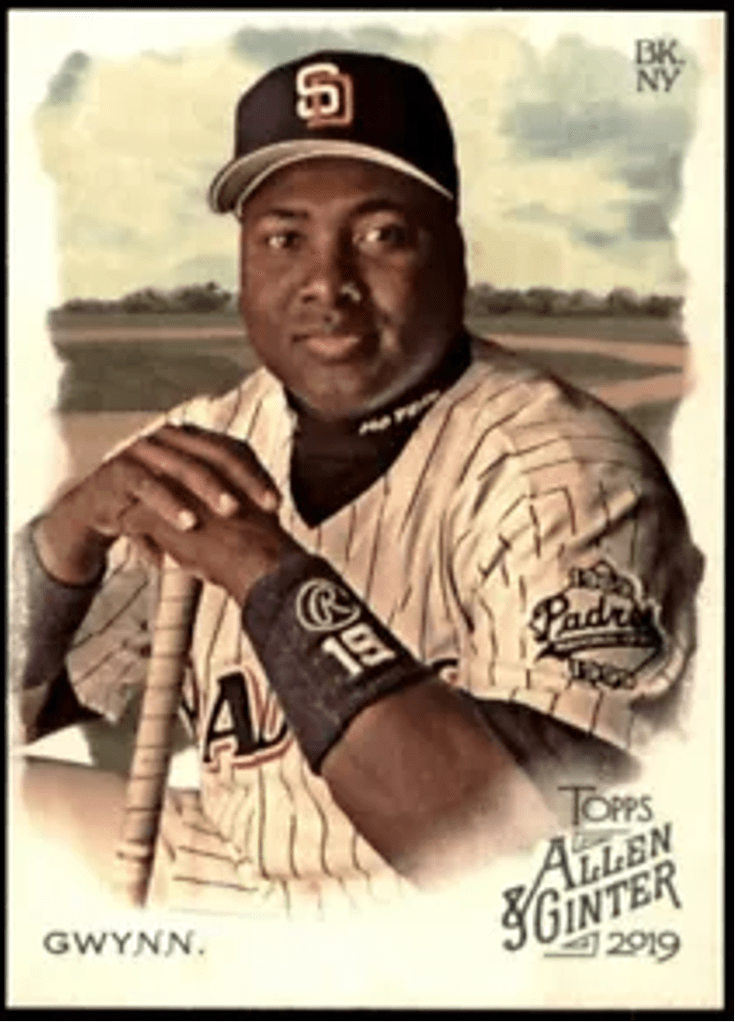
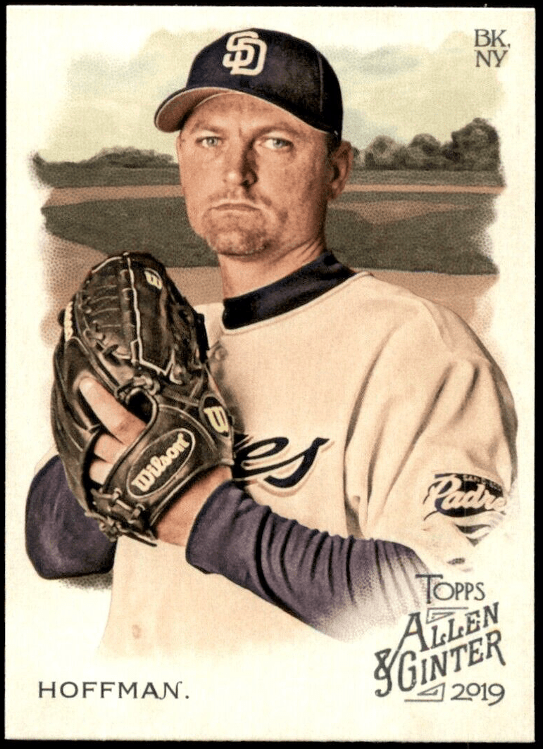
2019 Topps Allen & Ginter
Another miracle season occurred in 2018. Mark had cancer is his thigh and doctors were unsure if he would be able to walk again. “I may have had only the fifth surgery of its kind in history,” he says of the latest trauma. He is walking and driving again. The tumor remains inoperable on the left-side of his brain, however, and affects his speech, motor function, and vision.
Today, Mark lives in Rogers, Minnesota, and is the father of “Three Killer Bs”: Brooke, an All-American gymnast at Gustavus Adolphus College (St. Peter, MN); Boston, a U of M baseball signee; and Brody, a dancer.
And he is very appreciative of another season of miracles.
• • • • • •
• Originally Published in Dec. 2020 on “MNAthletes.com” •
THIS ARTICLE FROM “MNAthletes.com” WEBSITE IS REPRINTED WITH PERMISSION OF THE AUTHOR. IT HAS BEEN RETYPED, BUT NO CONTENT HAS BEEN CHANGED, EXCEPT GRAPHICS.
Patrick “Packy” Mader has written several books, including two large volumes on Minnesotans who were in the Olympic Games or competed in world competitions. To view hundreds of articles on Minnesota athletes, be sure to visit Packy’s website: MNAthletes.com. You can click on the link below:
To keep up-to-date on additions to BaseballCardFun.com, subscribe below*
* Your email address will never be shared and is only used to announce new articles
 BaseballCardFun.com