
BY MARK A. LARSON
Little pieces of art.
That description has often been used to characterize those colorful slices of cardboard we collect called baseball cards. Yet, “little pieces of art” is an apt description of the 316 different Diamond Kings cards that have been issued since the early 1980s.
This is the 12th consecutive year Donruss has distributed Diamond Kings cards. Beginning with its 1982 set, one player per club was chosen to be that team’s “Diamond King.”
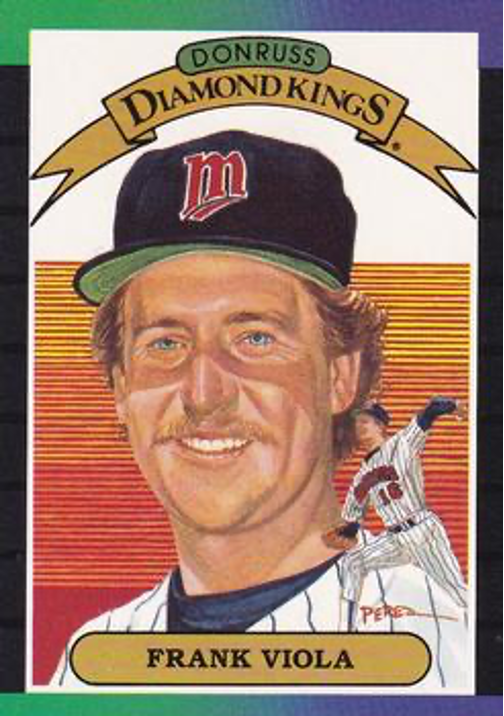
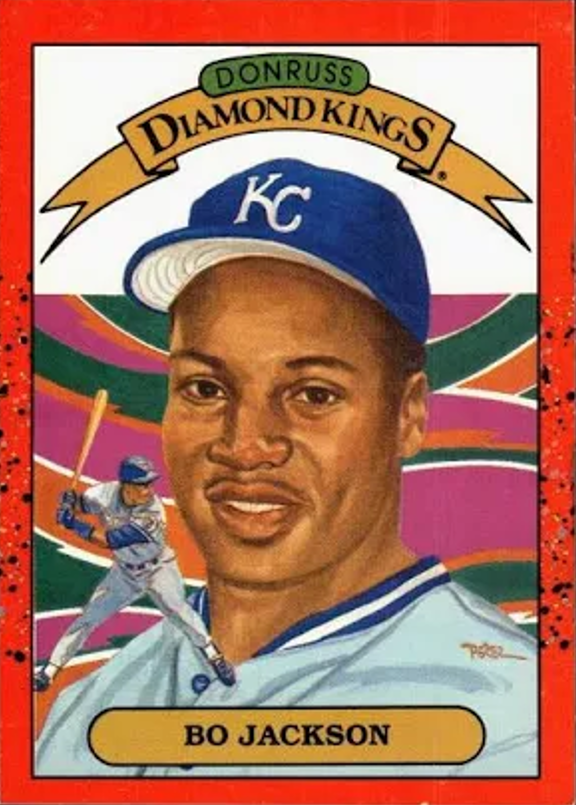
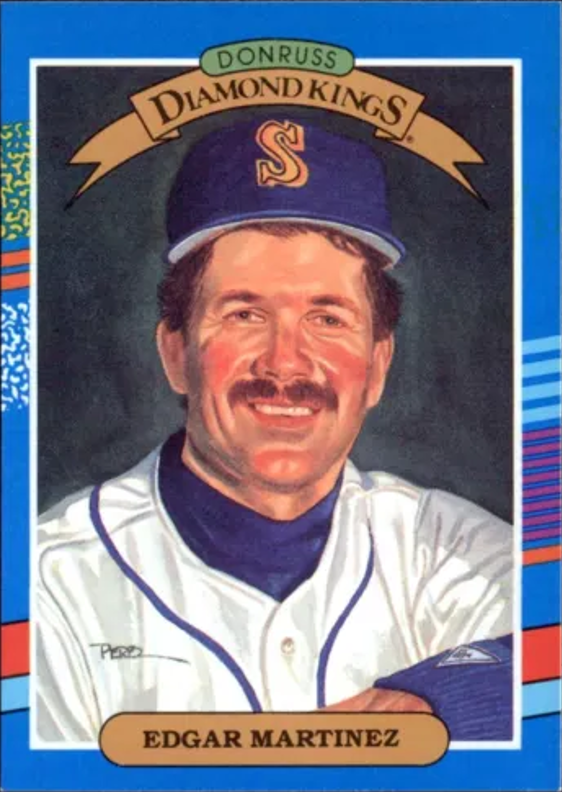
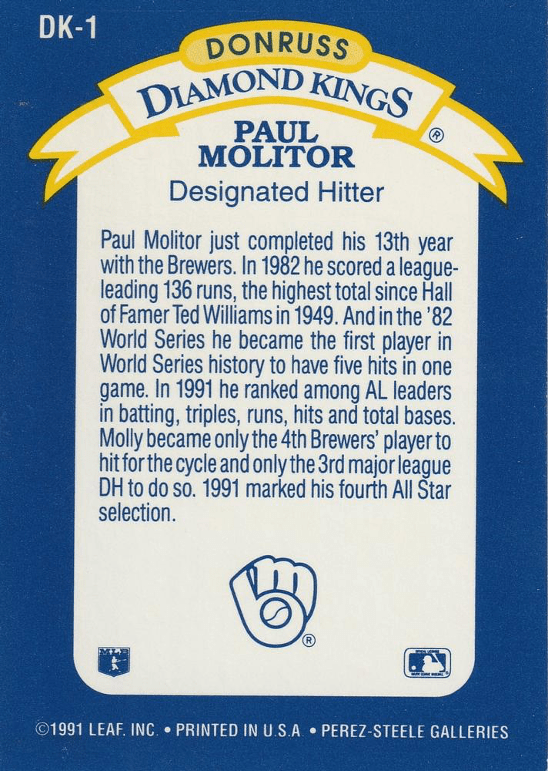
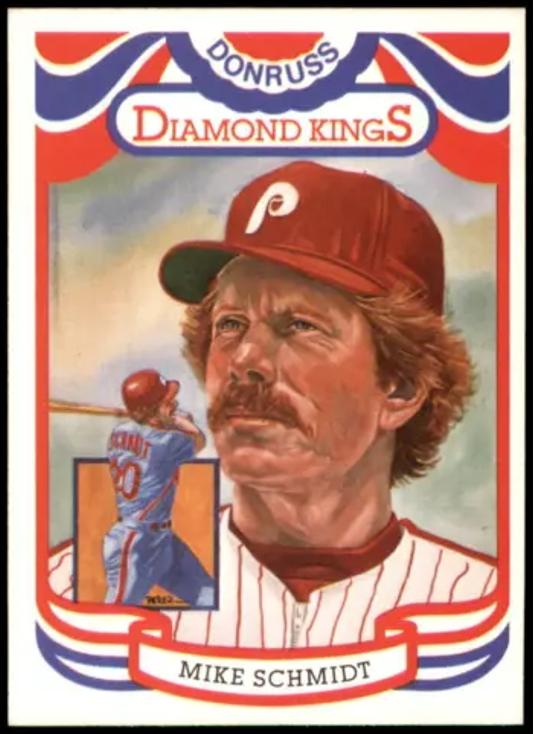
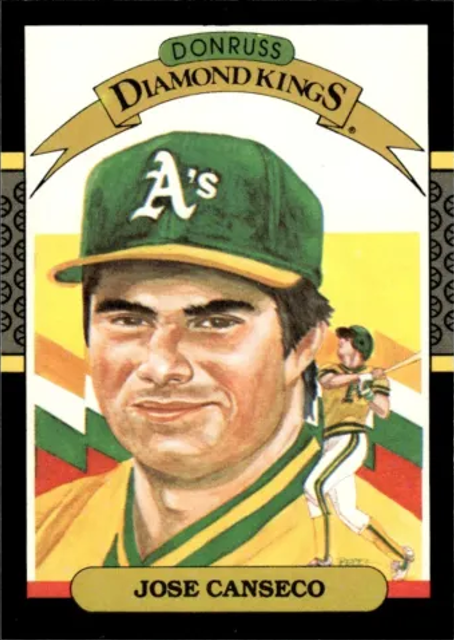
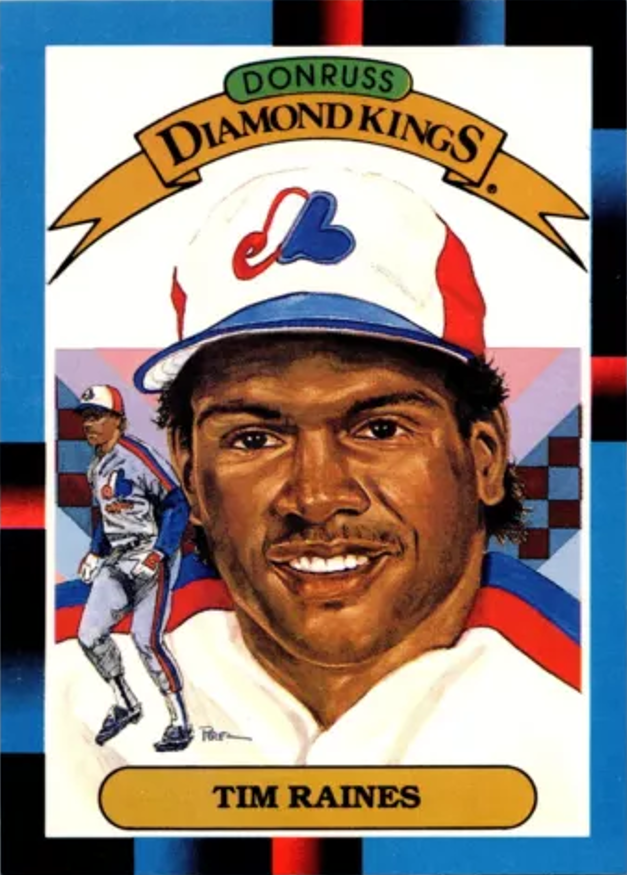
The front of each Diamond Kings card is an artistic work by Dick Perez done in a painting format. Backs feature a biographical write-up on the player and why he was chosen to be a Diamond King. Only the top players are featured and none were repeated during the first five years of the subset (1982-86).

1982
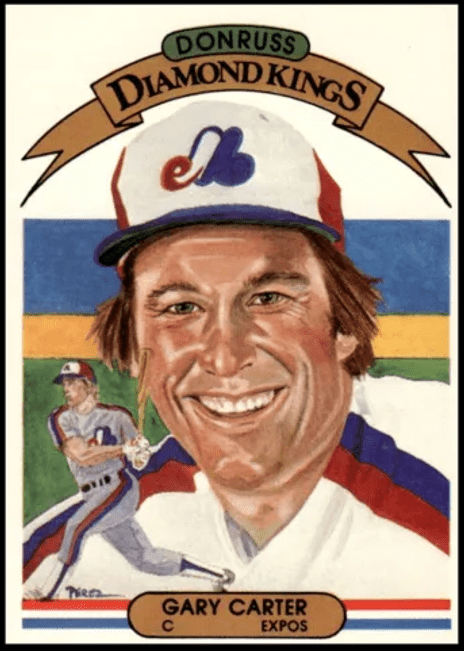
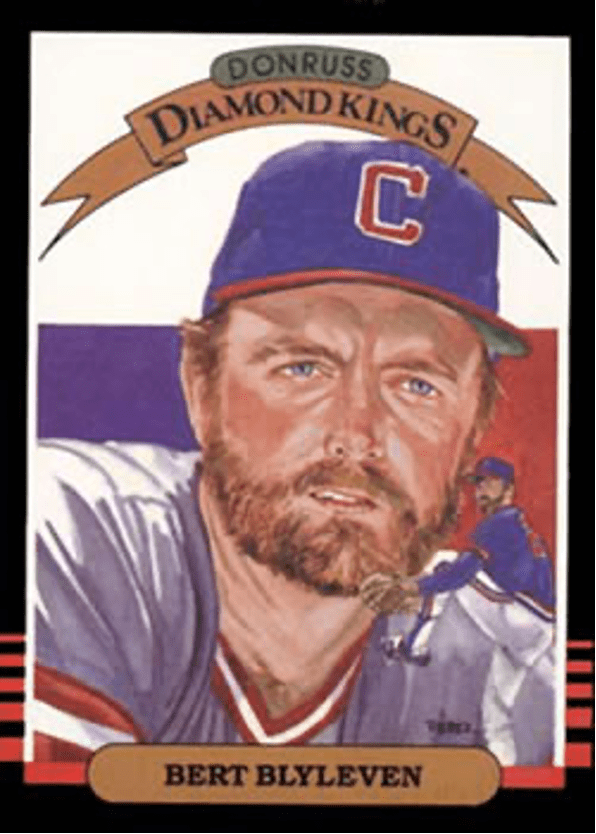
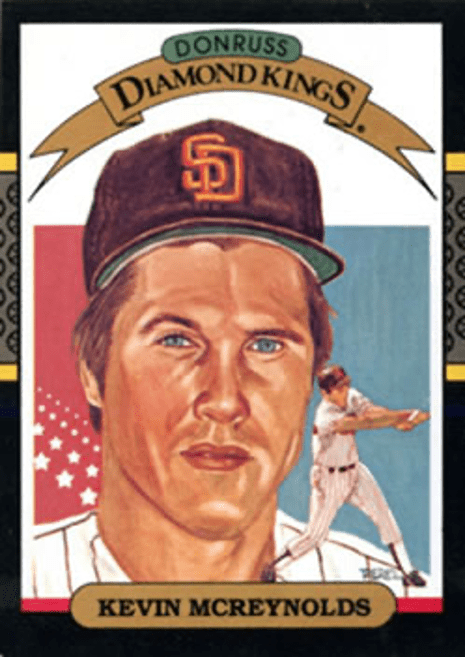
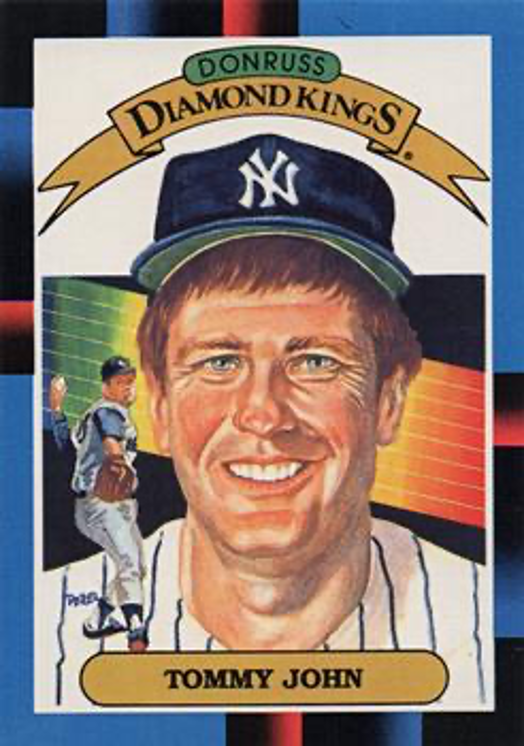
Except for 1984, the basic style of Diamond Kings card fronts remained basically unchanged from 1982-91. A close-up portrait of the player occupies most of the space, with a smaller, action drawing off to one side. At the top of the card is the title “Donruss Diamond Kings.” The player’s name is at the bottom. (In 1982-83, the player’s position was listed next to his name.) Card borders are the same as regular cards in the set for that year.
During the first 10 years of Diamond Kings, they were issued as part of Donruss’ regular set, always found at the beginning, numbered 1-26. From 1982-86, an unnumbered Diamond Kings checklist card was issued. From 1987-91, the checklist was always card #27.


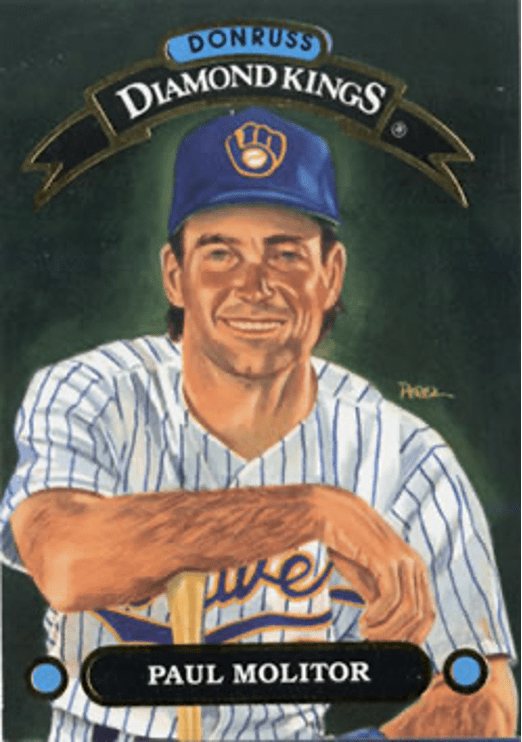
In 1992, Donruss altered the way Diamond Kings were issued. No longer were they part of the regular set. They became an extra, bonus insert – now often called “chase” cards. The first 13 could be found randomly inserted in first series packs of Donruss’ 1992 baseball cards. Cards #14-26 could be found in second series packs. (The numbers could be distinguished from the regular set because they used the prefix DK-1, DK-2, etc.)
In addition to the obvious change in distribution, the look of the Diamond Kings was also altered. Instead of using the same border as the regular set, the cards were borderless, with the painting “bleeding” all the way to the edge. In most cases, it made for an even more attractive card than previous Diamond Kings.
The insert idea is again being used this year, but for the first time the number of cards in the set has been increased – from 26 to 30 (plus a checklist). Two cards were added for the National League’s expansion teams. Since neither team existed in 1992, the player chosen in the first round of the expansion draft is featured as the club’s Diamond King. In the case of the Colorado Rockies, their first Diamond King is pitcher David Nied. Outfielder Nigel Wilson is the Florida Marlins’ premier Diamond King.

An additional pair of special Diamond Kings cards featuring Rookies of the Year Pat Listasch and Eric Karros is included in 1993. This is the first time Donruss has deviated from the one-Diamond-King-per-club format.
During the first five years of Diamond Kings cards (1982-86), no players appeared more than once. Beginning in 1987, Perez-Steele Galleries and Donruss decided it was time to feature deserving players a second time … especially those who continued to pile up impressive career stats and leave their mark on the game. That year, a half dozen of the 26 Diamond Kings had previously appeared in the subset, and this fact was noted on the back of their ’87 cards.
All in all, 267 different players are featured on Diamond Kings cards, with 41 appearing twice and four included three times.
The system of choosing one player per team per year and not repeating a particular player often makes the selection process a challenging one. Some teams are so weak that no player stands out and a relatively mediocre one ends up being crowned a Diamond King. This is not a criticism, but does point out how the choices are not always easy or cut-and-dried. Examples …
In 1988, second-baseman Glenn Hubbard of the Braves made his only Diamond Kings appearance. His previous year’s stats were nothing to write home about: five home runs, 38 RBIs and a .264 average. Two factors made Atlanta’s Diamond Kings choice a tough one. First, the team finished dead last the year before with a record of 54-106 and most of Hubbard’s teammates had awful years. Secondly, the only Brave who had any kind of year, Dale Murphy, had just been a Diamond King in 1987.
A similar situation occurred with Baltimore’s 1989 Diamond King. The team was coming off a horrible season in 1987, when it struggled to finish 54-107. Eddie Murray had recently been traded to Los Angeles and Cal Ripken was the team’s ’88 Diamond King. So pitcher Dave Schmidt was named. Schmidt had a record of 8-5, with a 3.40 ERA in 1988. Not much of a performance, but believe it or not, head and shoulders above most of the other Birds.
In the case of San Francisco’s 1987 Diamond King, Chris Brown, it looked like the third baseman was heading for stardom. He hit .317 the year before. Ironically, midway through the ’87 season he was traded to the Padres as part of the Kevin Mitchell deal. From about the time of his lone Diamond Kings appearance, Brown’s career quickly careened steadily downhill.
1992
The Diamond Kings series is filled with familiar baseball names such as Dave Winfield, George Brett, Andre Dawson, Don Mattingly, Wade Boggs, Kirby Puckett, Mark McGwire and Ken Griffey Jr. But many names are no longer so familiar, although their status as Diamond Kings at the time they appeared was fully justified. Included in this group are Len Barker, Mike Norris, Steve Rogers, Dwayne Murphy, Matt Young, Rich Dotson, Bob Brenly, Mike Davis and Gary Ward.
Barker was Cleveland’s ’82 Diamond King. He was only 8-7 in strike-shortened 1981, but he led the A.L. in strikeouts. The same year, Oakland’s Mike Norris was also a Diamond King. He was only 12-9 in ’81, but was 22-9, with a 2.54 ERA the year before. In 1983, Expos’ hurler Steve Rogers’ only Diamond King appearance was due to an excellent season the previous year. In 1982, Rogers was 19-8 and led the N.L. with a 2.40 ERA.
Two players are worth mentioning in each of the 1984, 1985 and 1986 Diamond Kings groups.
Outfielder Dwayne Murphy of the A’s batted only .227, with 17 round-trippers and 75 RBIs in ’83, but he was far and away Oakland’s best power hitter. He proved it the year he was a Diamond King (1984): 33 homers, 88 RBIs and a modest .256 average. The same goes for Matt Young of the Mariners. While his team was compiling a 60-102 record in 1983, Young went 11-15, with a 3.27 ERA in his rookie season.


1993
Rich Dotson was the Chisox Diamond King in 1985. In ’84, Dotson had a record of 14-15, but the year before that he was 22-7. San Francisco backstop Bob Brenly was also a Diamond King in ’85. Few remember that he belted 20 homers and had 80 RBIs to go along with a .291 average in 1984.
The A’s Mike Davis had his best year in 1985 when he smashed 24 home runs, hit .287 and had 82 RBIs. He was a member of the 1986 class of Diamond Kings. Finally, outfielder Gary Ward represented the Texas Rangers in the ’86 Diamond Kings subset. From 1982-85, Ward averaged 21 homers and 82 RBIs per season, while batting .284. Not Hall of Fame material, but certainly worthy of Diamond King status.
OTHER DIAMOND KINGS NOTES:
• Although pitchers make up about 40 percent of major league rosters, only 27 percent of all Diamond Kings (1982-93) have been hurlers. In both 1984 and 1988, only five of the 26 Diamond Kings were pitchers.
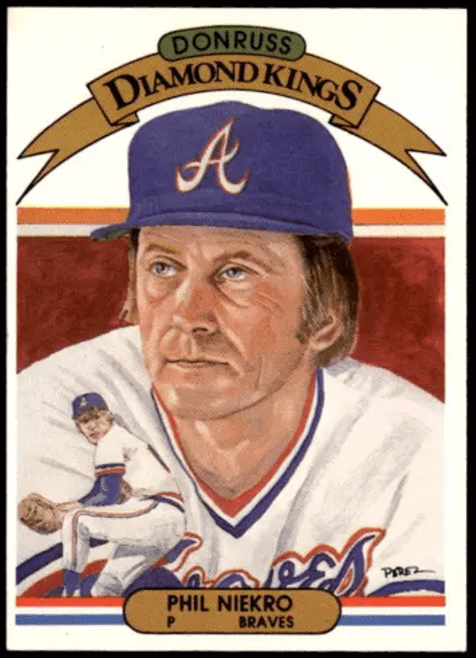
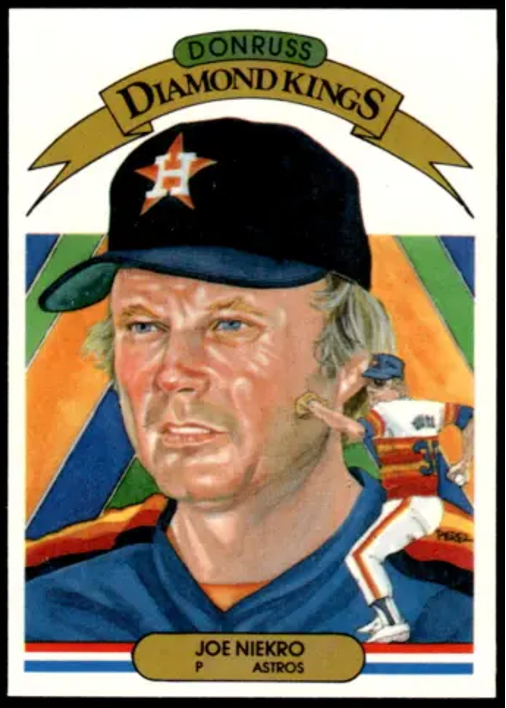
• Two pairs of brothers have appeared on separate Diamond Kings cards. Phil Niekro was included in the 1982 group, while brother Joe was featured in 1983. Roberto and Sandy Alomar Jr. both made an appearance in the 1991 Diamond Kings (Roberto is included again this year).
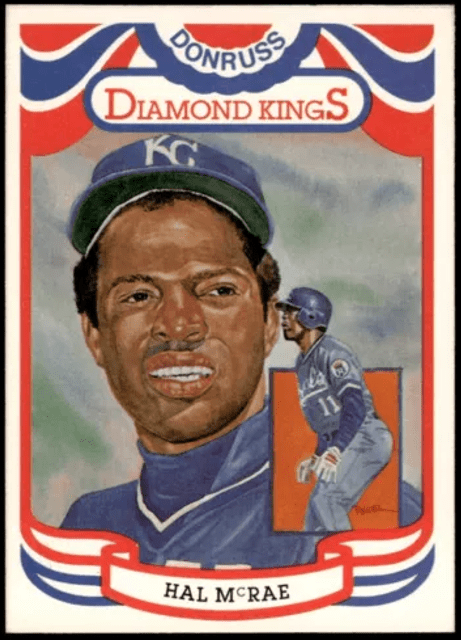
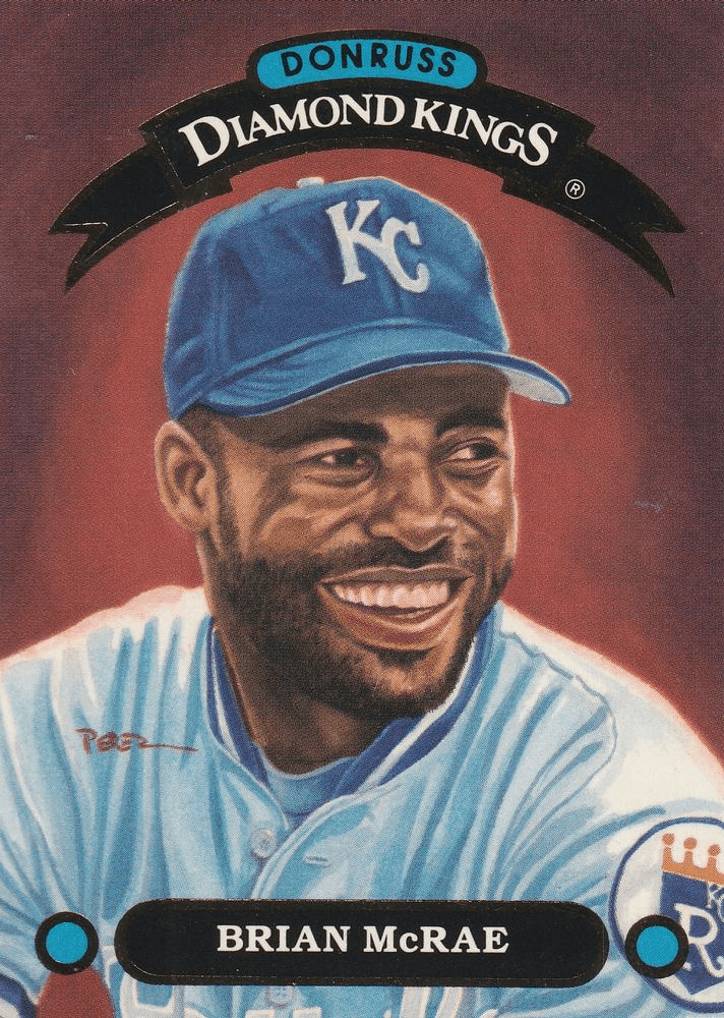
• One father and son combination has been featured as Diamond Kings. Not the Griffeys, as one might expect, but the McRaes. Hal McRae was the Royals Diamond King in 1984, while his son, Brian, represented Kansas City in 1992.
• A pair of players hold the distinction of appearing on two Diamond Kings cards nine years apart – the largest gap for anyone included twice. Dave Parker was in the premier issue in 1982 and again in 1991. While Eddie Murray was featured in 1984, but not again until 1993.
• Andre Dawson was the first player to appear twice within a three-year period. In 1986, Dawson represented the Expos as a Diamond King. He was included again in 1988, this time as a Cub, after his monster year in 1987 … 47 homers, 137 RBIs and a .287 average.
• Surprisingly, future Hall-of-Famer Mike Schmidt made only one appearance as a Diamond King in 1984, although he played into the 1989 season. Three other well-known stars have only appeared once so far: Darryl Strawberry, Jose Canseco and Tim Raines.


• From 1985-91, Donruss offered a giant or super-sized (5 by 7-inch) set of Diamond Kings to collectors through a mail-in offer. These were basically just a larger version of that year’s cards.
Many collectors had tired of the Diamond Kings subset because it was almost the same every year from 1982-91. But it was rejuvenated in 1992-93 with a change in design, distribution method (becoming an insert), and the addition of four cards in 1993. With innovations from time-to time, there’s no reason the Diamond Kings series can’t continue for many more years.
• • • • • •
• Originally Published in June 1993 “Baseball Hobby News” •
THIS ARTICLE FROM “BASEBALL HOBBY NEWS” MAGAZINE IS REPRINTED WITH THE PERMISSION OF BOTH THE EDITOR/PUBLISHER AND THE AUTHOR. IT HAS BEEN RETYPED, BUT NO CONTENT HAS BEEN CHANGED (EXCEPT FOR VERY MINOR ADJUSTMENTS, CORRECTIONS TO TYPOGRAPHICAL ERRORS AND CHANGES TO GRAPHICS). COMMENTS OR INFORMATION IN THE ARTICLE MAY BE OUT-OF-DATE.
To keep up-to-date on additions to BaseballCardFun.com, subscribe below*
* Your email address will never be shared and is only used to announce new articles
 BaseballCardFun.com