
The history of Topps baseball card sets
BY MARK A. LARSON
Two major hobby developments in the spring of 1979 weren’t directly related to that year’s card set, but would have long-lasting and far-reaching impacts on the sports collecting hobby for years to come.
In 1979, Baseball Hobby News was founded by Frank and Vivian Barning. It filled a growing need for timely information and opinions on hobby happenings, plus the historical and fun aspects of baseball and baseball card collecting. It continues in that role today.
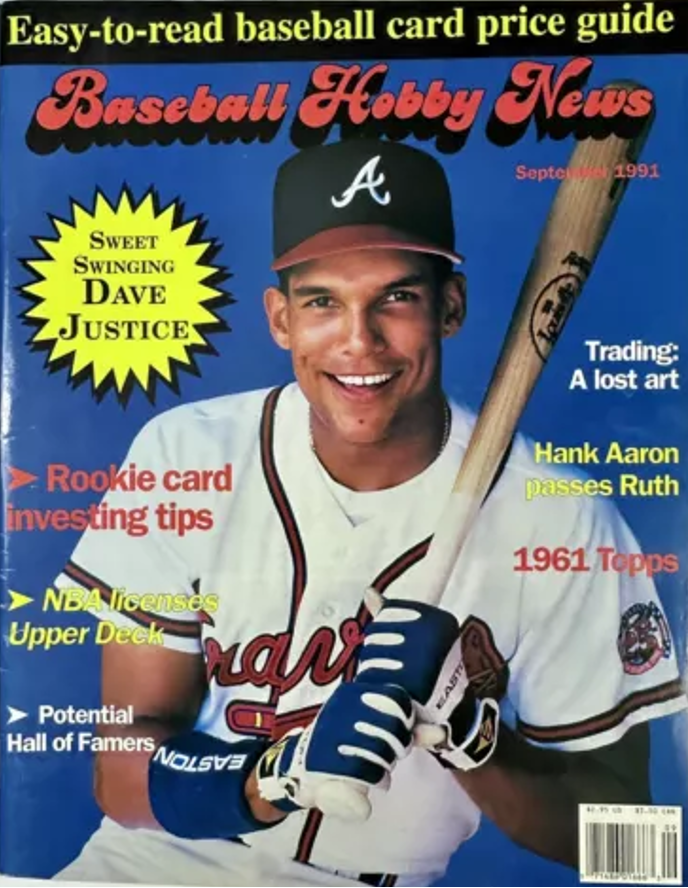
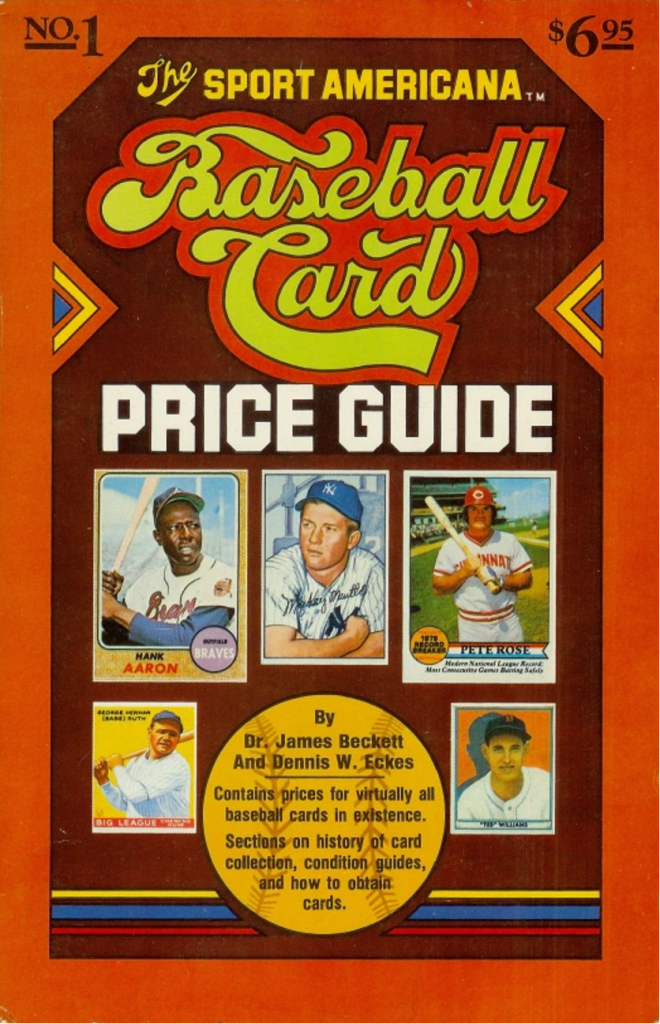
The second big development in early 1979 also involved a publication, this one a book. The first annual Sport Americana Baseball Card Price Guide by Dr. James Beckett and Dennis W. Eckes was published. The release of this book – and its annual follow-ups – turned out to be one of the, if not the, most powerful single events in hobby history.
No longer would collectors have to guess about card values, they had a guide to help them. The annual Beckett guides paved the way for the influx of investors and speculators into the hobby. But it also led to hobby legitimacy, as thousands of people searched attics, garages and basements for shoeboxes of old cards. For now there was a definitive reference for putting a value on those often forgotten-about childhood treasures. This meant tons of additional material was available to collectors.
In addition, price guides helped give rise to the modern card dealer. Hobbyists could feel more comfortable paying “X” amount of dollars for a card if it was listed in the guide. But guides may have also led to the loss of the art of trading, as people became more interested in cold, hard cash and wouldn’t simply trade a superstar player’s card for the few commons they needed to complete their set.
Some may argue the advent of price guides ruined the hobby because of the emphasis on dollar values. Others will dispute this and say it, in effect, helped open up collecting to tens of thousands of new people. Either way, the impact was enormous.
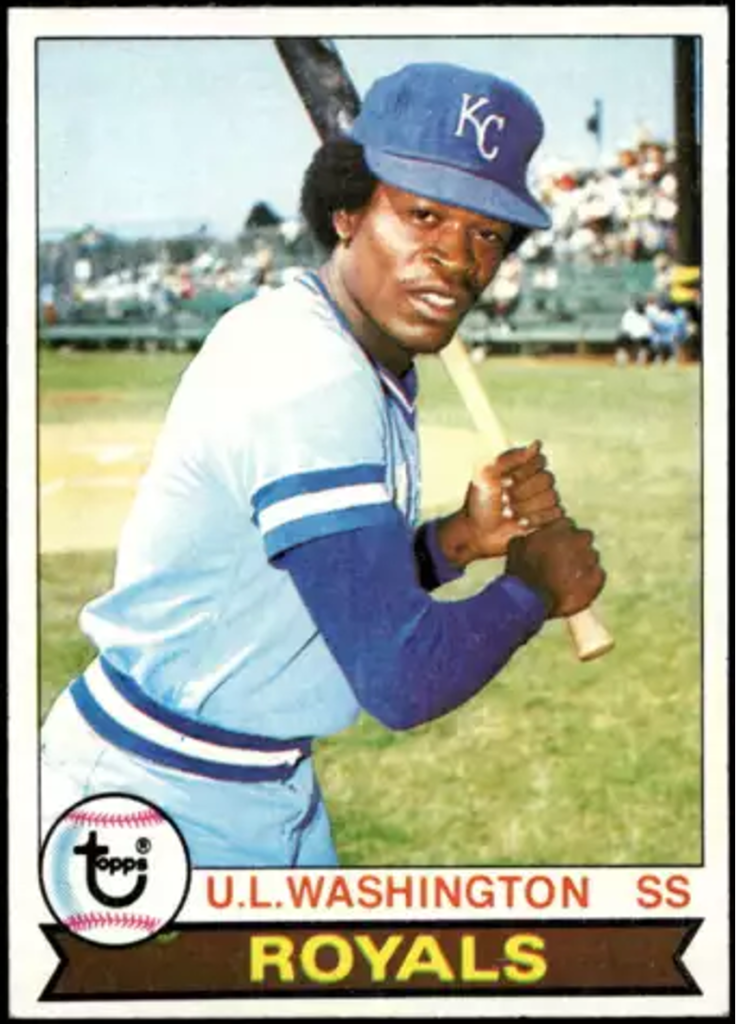
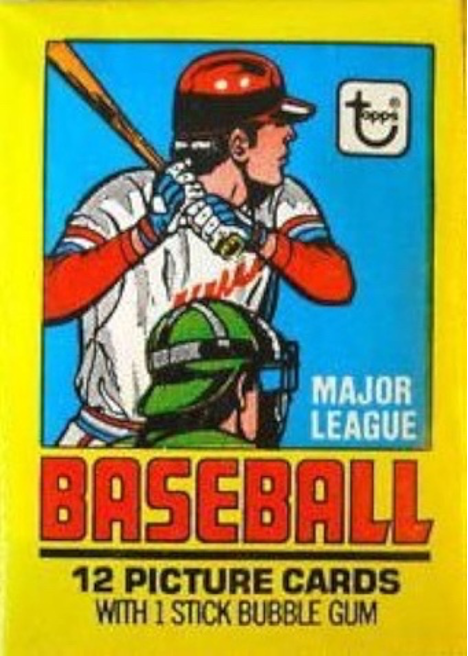
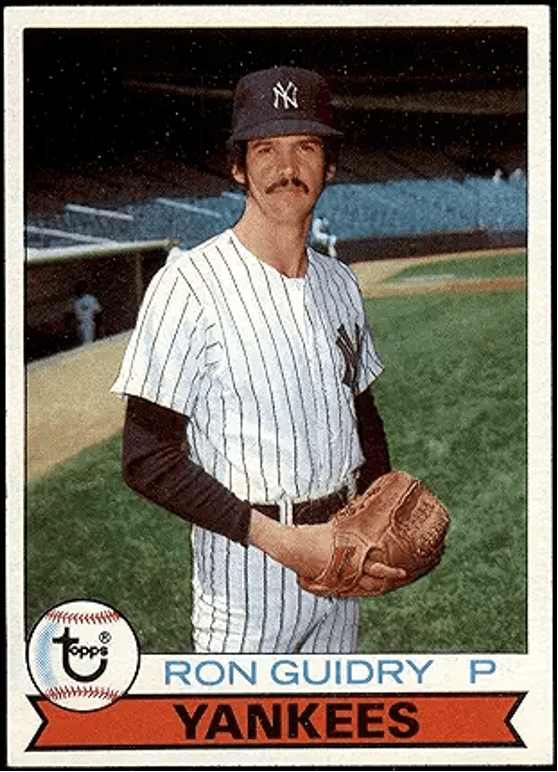
The 1979 Topps set was perhaps the plainest-looking since the 1961 issue. Fronts simply featured the player’s name, position and team across the bottom. The team’s nickname was in a small color-coded bar. In addition, for the first time the “Topps” name appeared on the card front. It was on a small baseball next to the player’s name.
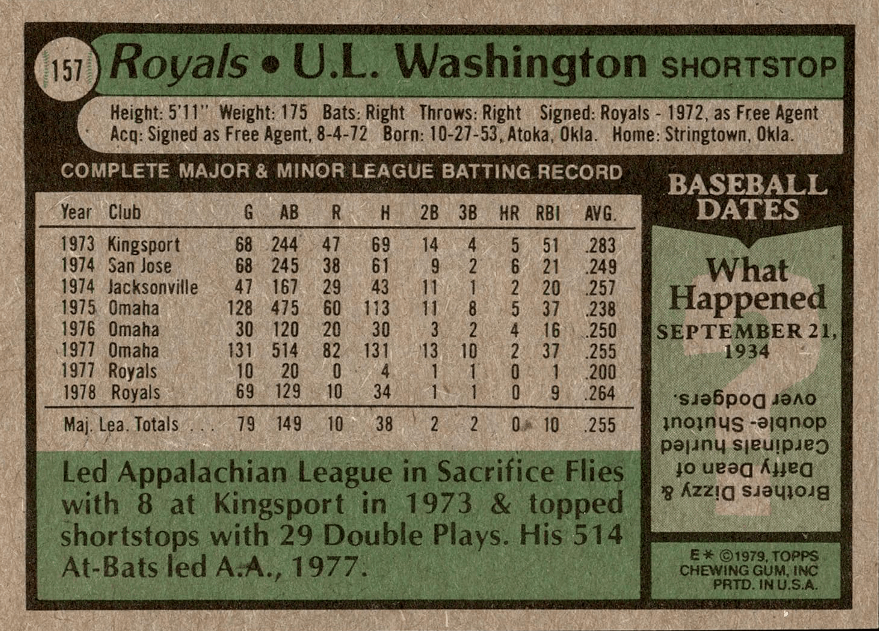
Card backs pretty much included the same old thing. They were horizontal, with the usual statistics, biographical data and write-up in a green motif on gray cardboard.
A question-and-answer quiz was added to card backs in 1979 called “Baseball Dates.” For instance, on the back of Buddy Bell’s card (#690) the question is: “What happened July 3, 1973?” Answer: “Tigers’ Jim Perry faced his brother, Indians’ Gaylord Perry for the only time in career.” On the back of Lou Piniella’s card (#648) the question reads: “What happened September 13, 1970?” Answer: “A’s shortstop Bert Campaneris took part in 6 double plays in 11- inning game.”
The 1979 set consisted of 726 cards, which like 1978, included 66 double-prints (cards printed in twice the quantity as the others). Subsets include “League Leaders” (#1-8), “Record Breakers” (#201-206), “All-Time Record Holders” (#411-418), and “1979 Prospects” (#701-726).
The League Leader cards included the top player from the American and National League in each category (such as home runs, RBls, etc.) on the front of the card. Backs listed the Top 10 players from each league in the specific category from the previous season.
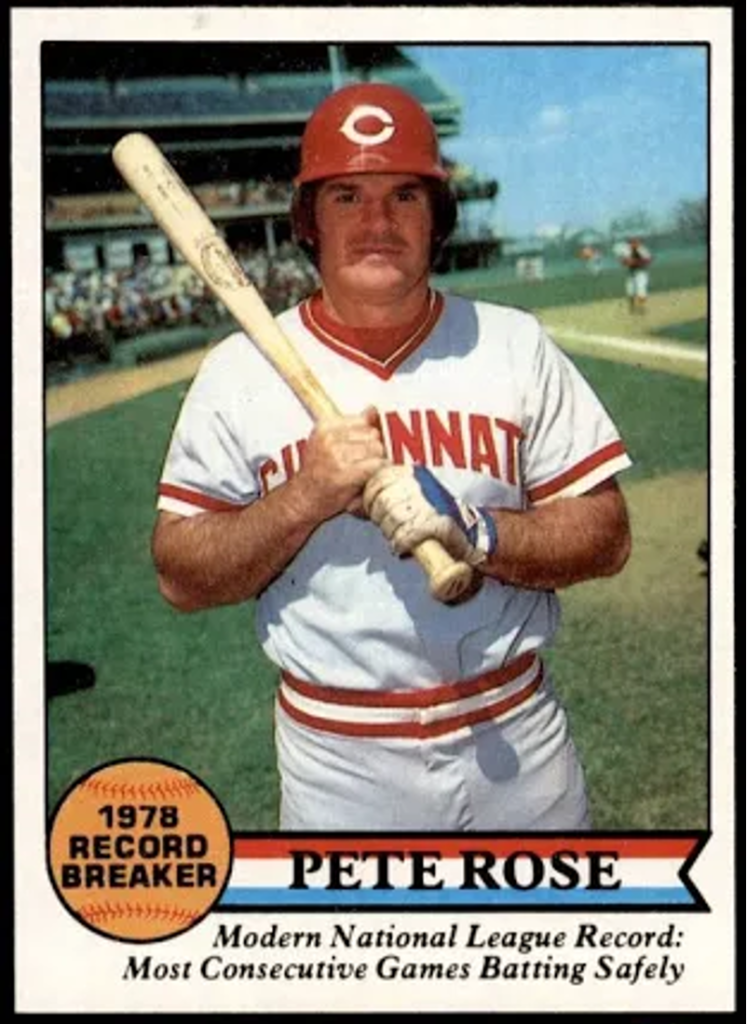

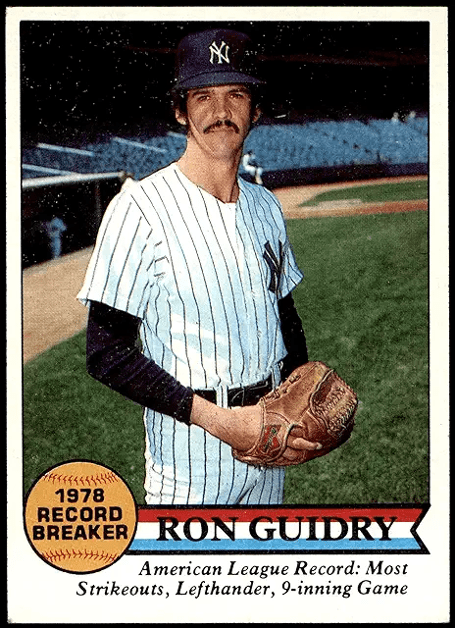
Record Breaker cards featured a player who broke some type of baseball record during the 1978 season. For example, card #205 shows Mets’ catcher John Stearns and lists his feat as “National League Record: Most Stolen Bases By a Catcher in a Season.” Stearns’ 25 swipes broke a 76-year-old N.L. mark. Among other Record Breakers was Pete Rose who set a modem N.L. mark with a 44-game hitting streak the summer before.
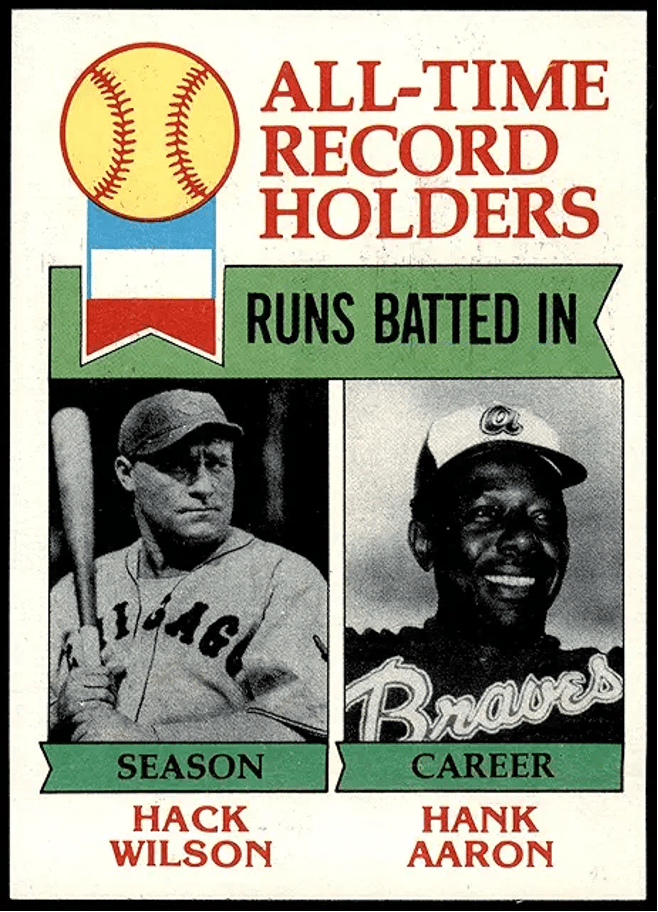
With its “All-Time Record Holders” subset, Topps included a black-and-white photo of the seasonal leader and career leader in such categories as hits, home runs, strikeouts, earned run average, etc. Card #412 features Hack Wilson, all-time seasonal RBI leader with 190, and Hank Aaron, the career leader with 2,297.
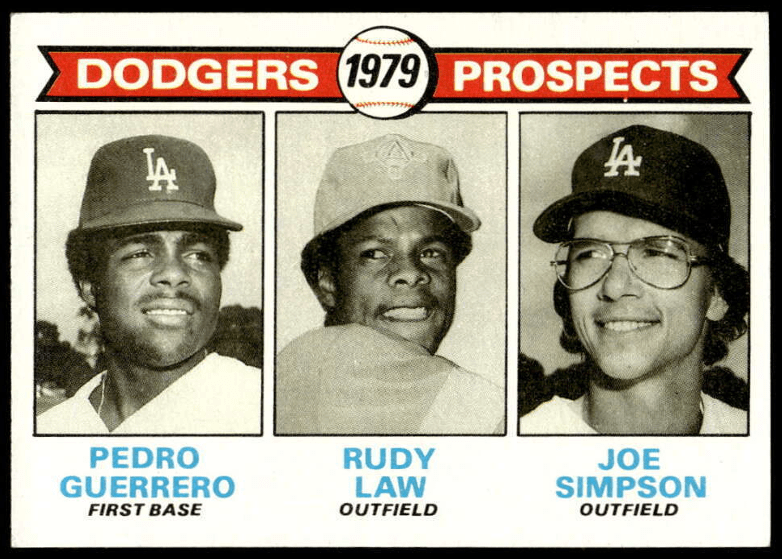
Each major league team was allocated one Prospects card in the ’79 Topps set. These consisted of three black-and-white photos of the most promising rookie players for a particular team. Very few of that year’s “prospects” ever prospered in the big leagues.
Top rookies included in the set were: Ozzie Smith (#116), Carney Lansford (#212), Bob Welch (#318), Willie Wilson (#409) and Pedro Guerrero (#719). Ironically, only Guerrero appears on a Prospects card. The rest all have their own cards.
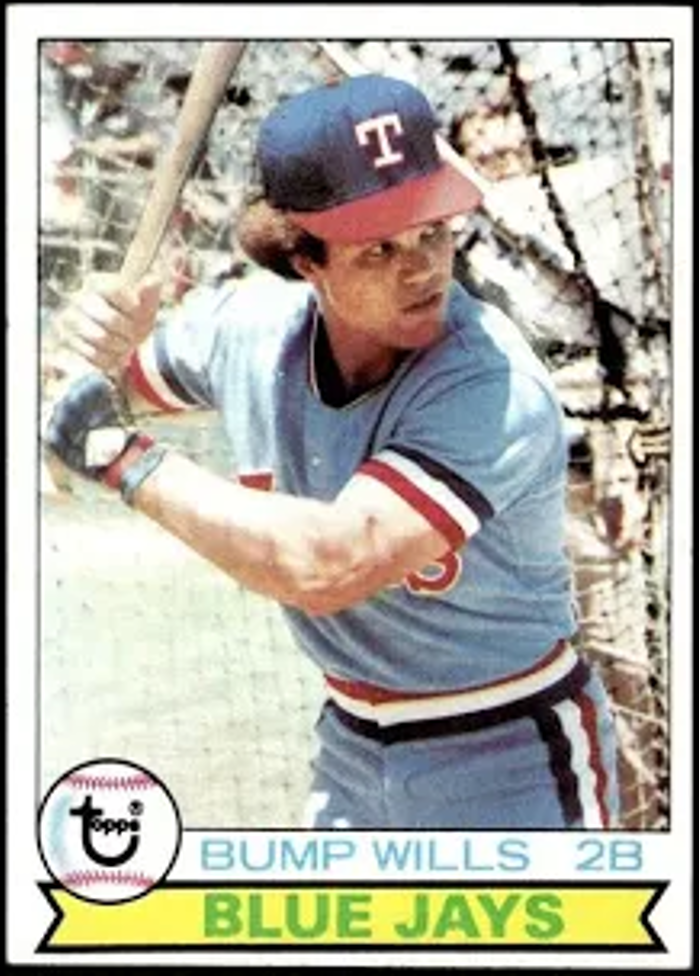
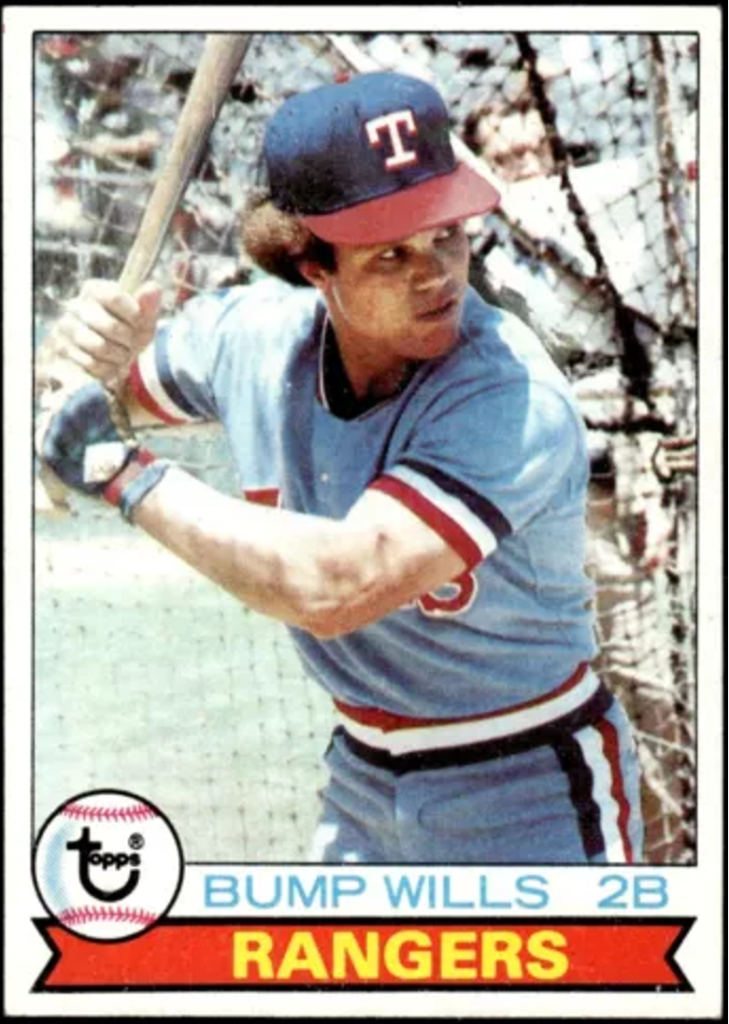
A card variation initially added interest to the ’79 set. Second-baseman Bump Wills’ card (#369) which shows him in a Texas Rangers uniform, was mistakenly issued with the Blue Jays team designation on the card front. It was corrected and reissued later with his proper Rangers team name. Both versions go for about $3 each. (Normally, Wills would be considered a common in the 15-25 cent range.)
Thurman Munson’s final regular Topps card appeared in 1979. The Yankees’ backstop died in a plane crash in mid-season. From 1975-78, Munson averaged .307, with 13 homers and 94 RBls per season. He hit .339 in 14 A.L.C.S. games and .373 in 16 World Series contests. He was 32.
Now is an appropriate time to discuss Topps’ team sets produced for the Burger King fast-food restaurant chain. From 1977-80, Topps adapted many of its cards from those years into team sets for Burger King. For the most part (except for a few photo changes) the cards are identical to the regular Topps issues from those years, except for the card number. In 1979, Topps made Burger King team sets for the Phillies and Yankees. Each set included 22 players (numbered 1-22) and a checklist (unnumbered).
“Record Breaker”

One of the photo changes in 1979 involved Yankees’ southpaw Ron Guidry. On his regular Topps card (#500) he is shown in an action pitching shot. His Burger King card (#4 in that set) shows him in a posed position, holding the ball in his glove at waist level. Interestingly, the photo used on the Burger King card was the same one used by Topps on Guidry’s Record Breaker card (#202) that season.
All in all, the 1979 Topps set isn’t very exciting. However, the important changes taking place within the card collecting hobby that year more than made up for a dull set.
• • • • • •
See related article on BaseballCardFun.com entitled:
“BASEBALL HOBBY NEWS — Stargell, Hernandez and Baylor Sparkled in 1979”
Click Link Here
• Originally Published in Apr. 1993 “Baseball Hobby News” •
THIS ARTICLE FROM “BASEBALL HOBBY NEWS” MAGAZINE IS REPRINTED WITH THE PERMISSION OF BOTH THE EDITOR/PUBLISHER AND THE AUTHOR. IT HAS BEEN RETYPED, BUT NO CONTENT HAS BEEN CHANGED (EXCEPT FOR VERY MINOR ADJUSTMENTS, CORRECTIONS TO TYPOGRAPHICAL ERRORS AND CHANGES TO GRAPHICS). COMMENTS OR INFORMATION IN THE ARTICLE MAY BE OUT-OF-DATE.
To keep up-to-date on additions to BaseballCardFun.com, subscribe below*
* Your email address will never be shared and is only used to announce new articles
 BaseballCardFun.com