
The history of Topps baseball card sets
BY MARK A. LARSON
You are entering the “Baseball Card Zone” … where the slightest nuance on one of your older cards whisks you away to a time and place long ago.
The year is 1978. The company is Topps. Your cardboard memories have become reality.
Fifteen years have passed since the ’78 Topps set was issued and it seems so long ago. Consider this:
Disco music was in full swing. The Bee Gees had three No. 1 hits that year, “How Deep is Your Love,” “Stayin’ Alive” and “Night Fever.” Two Vietnam War films attracted the most attention among moviegoers, “The Deer Hunter” starring Robert DiNiro and Christopher Walken and “Coming Home” with Jon Voight and Jane Fonda.
“The Deer Hunter” won the Academy Award for Best Picture, while Voight and Fonda won best actor and actress awards.
The top television programs included “Happy Days,” “Laverne and Shirley,” “M*A*S*H” and “Charlie’s Angels.”
We were in the middle of the Jimmy Carter administration, the Shah of Iran was still in power and gasoline prices had not yet hit a buck a gallon. Bill Clinton was elected the youngest governor in the nation at age 32 that fall.
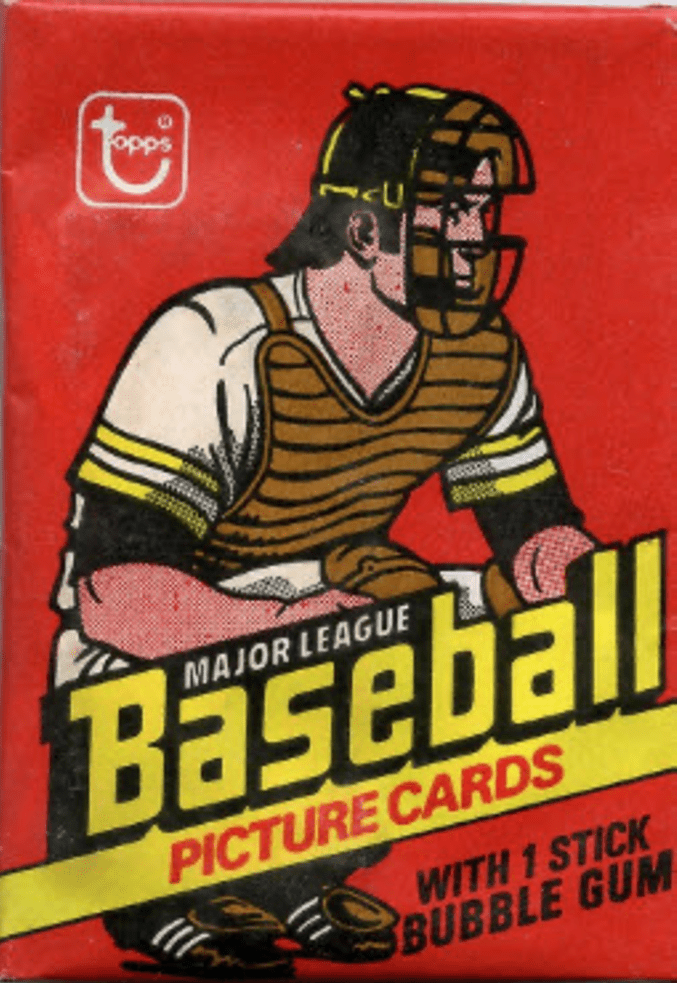

WAX AND CELLO PACKS
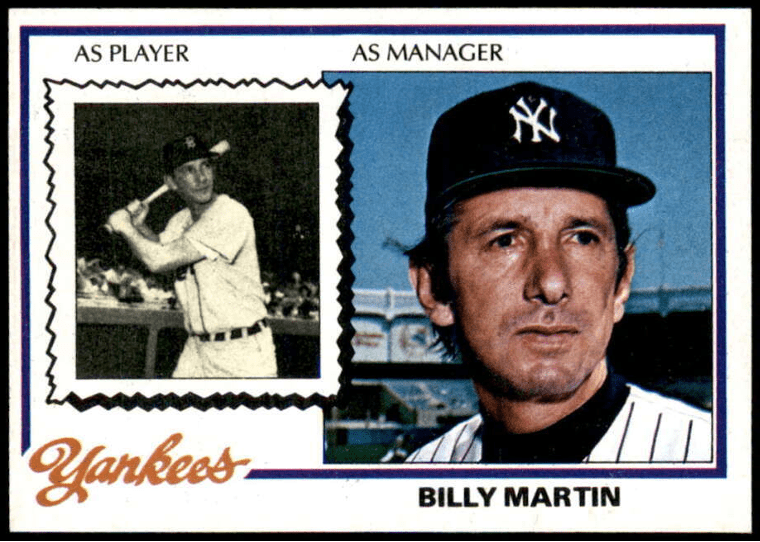

In baseball, the Yankees were the big news, as the “Bronx Zoo” moniker took hold. During a period of intense turmoil, Billy Martin was fired as manager in mid-season and replaced by Bob Lemon. The team pulled itself together and made a comeback to tie the Red Sox for the A.L. East title. In a one-game playoff, New York bested the Bosox, propelled by shortstop Bucky Dent’s dramatic home run. The Yanks then went on to beat the Dodgers in the World Series for the second year in a row.
Major baseball awards in 1978 included:
• Most Valuable Player … Jim Rice of the Red Sox and Dave Parker of the Pirates. Rice had a phenomenal season, belting 46 homers, with 139 RBIs and a .315 average. He had 213 hits and scored 121 runs. Parker won the N.L. batting title, hitting .334. He also smashed 30 homers and had 117 RBIs.
• Cy Young Award … Ron Guidry of the Yanks and the Padres’ Gaylord Perry. Guidry had one of the best seasons ever, going 25-3, with a 1.74 ERA. He struck out 248 batters in 274 innings, completed 16 games and hurled nine shutouts. Perry, who turned 40 near the end of the season, went 21-6 and posted a 2.72 ERA.
• Rookies of the Year … Detroit’s Lou Whitaker and Atlanta’s Bob Horner. Tigers’ second-baseman Whitaker hit .285, with three homers and 58 RBIs. Horner, meanwhile, blasted 23 homers in just 89 games for Atlanta. A third-baseman, he also had 63 RBIs.


The other big baseball event in ’78 was Pete Rose’s hitting streak. Throughout mid-summer, Rose hit safely in game-after-game. Charlie Hustle’s streak ended at 44, 12 games shy of Joltin’ Joe DiMaggio’s all-time record. It was Rose’s 16th and final season with the Cincinnati Reds.
As for the ’78 cards themselves …
Hip, Hip Hooray! The color green does not appear at all on the backs of Topps’ 1978 cards for the first time in five years. (The 1974, 1976 and 1977 cards had nearly entire green backs, while the ‘75s were pink with green trim.)
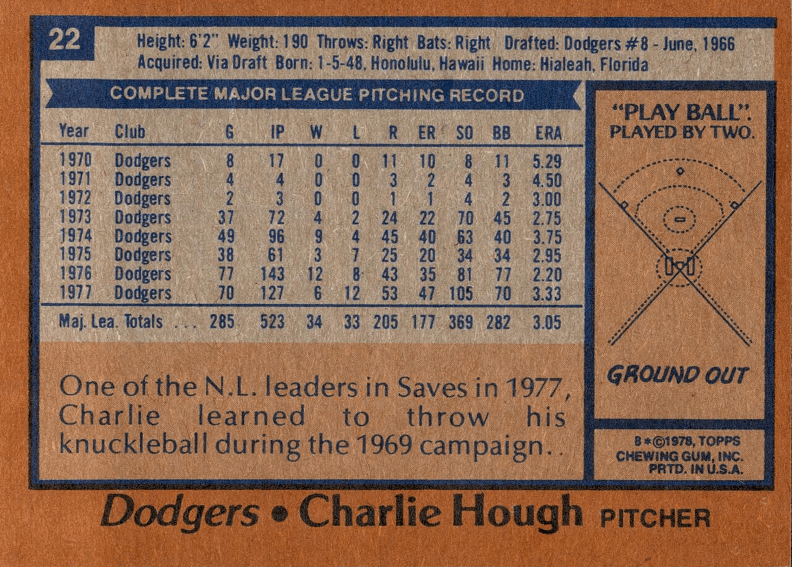
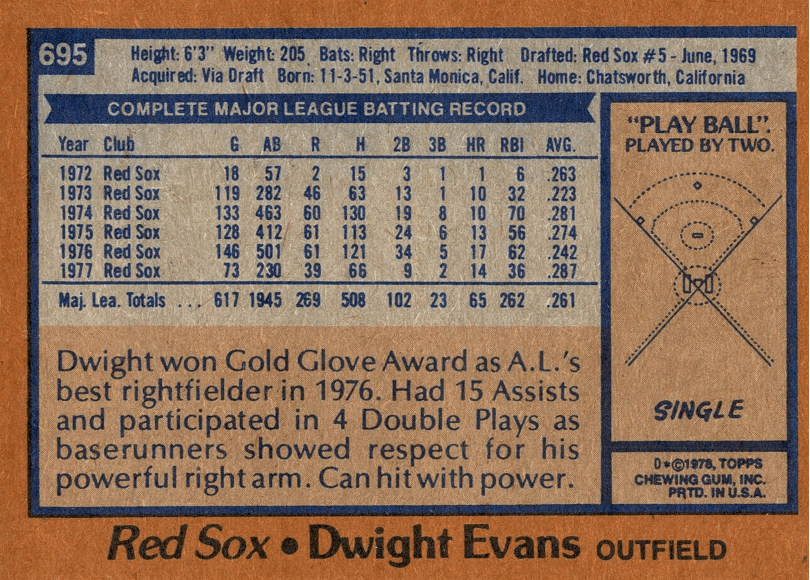
This time, backs were done in dark orange, with blue trim on gray cardboard. The layout for regular player cards was horizontal, with vital statistics at the top, year-by-year career stats in the center, followed by a short descriptive paragraph. The player’s name, team and position are in large letters at the bottom.
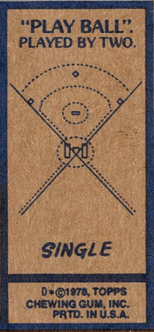
To the right of the career statistics is a box with either instructions or plays for a card game called “Play Ball.” It was designed to be a nine-inning simulated baseball game. By flipping one card over at a time, some type of hit or out would be made. For instance, Charlie Hough’s card (#22) says “Ground Out,” Dwight Evans’ card (#695) says “Single,” etc.

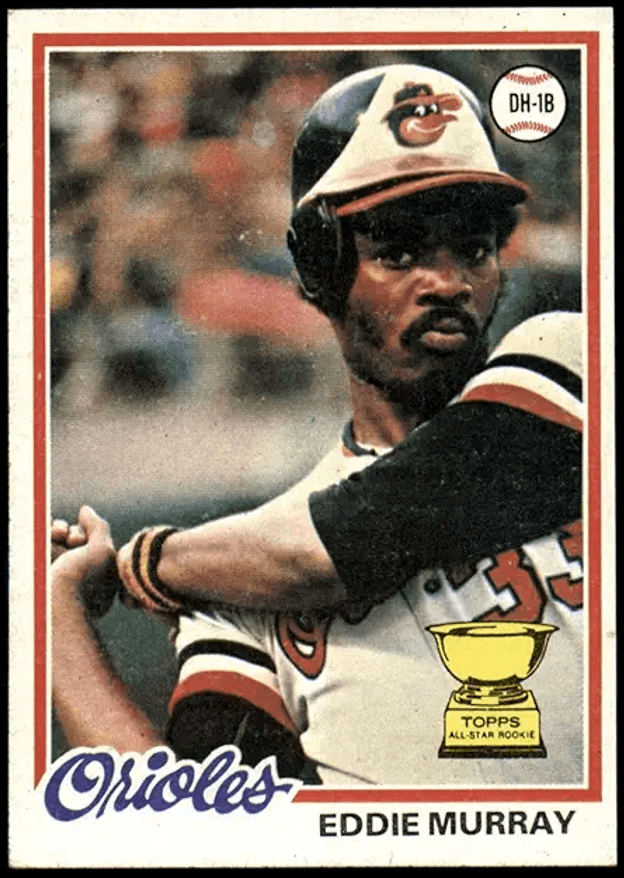
Card fronts in 1978 featured the team nickname in large script letters at the bottom left, color-coded by franchise. This was the first time script lettering was used on a Topps card front since 1970. To the right of the team designation is the player’s name in smaller, black, block letters. In the upper right-hand corner (and occasionally the left) is a small baseball with the player’s position.
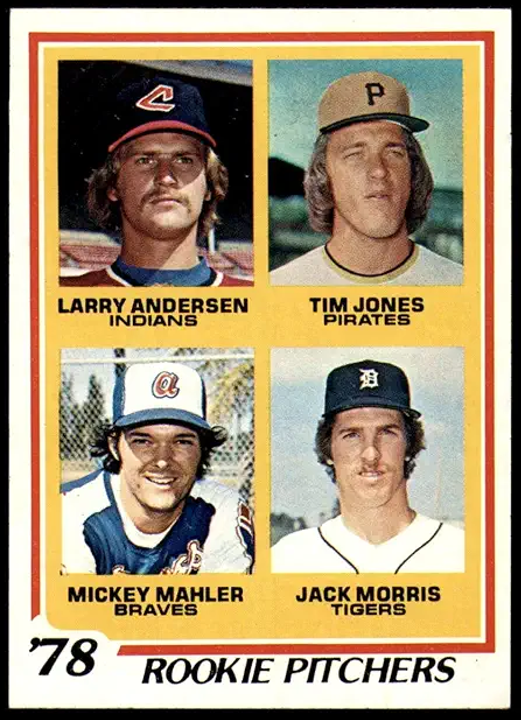
Six top players have their first card in the ’78 set. They include: Eddie Murray (#36), Jack Morris (#703), Lou Whitaker (#704), Alan Trammell and Paul Molitor (both on #707), and Lance Parrish (#708). All but Murray are on multi-player rookie cards.
This was quite a rookie card crop, especially considering what these half-dozen players have done in the past 15 years or so. Four of the six – Morris, Whitaker, Trammell and Parrish – were Detroit Tigers at the time.
Morris has compiled a lifetime 237-168 record, including three seasons of 20 or more wins. Whitaker and Trammell have been teamed up as the Tigers’ double-play combo ever since 1978. Both have more than 2,000 lifetime hits. Parrish has over 1,000 RBIs and has put 316 balls over the outfield fence during his career.
Murray has smashed 414 lifetime home runs, while collecting 2,646 hits and 1,562 RBIs. He has a lifetime average of .290 and will surely join the immortals in Cooperstown one day. Meanwhile, although plagued by injuries, Molitor owns a .303 lifetime average to go along with 2,281 hits and 412 stolen bases.
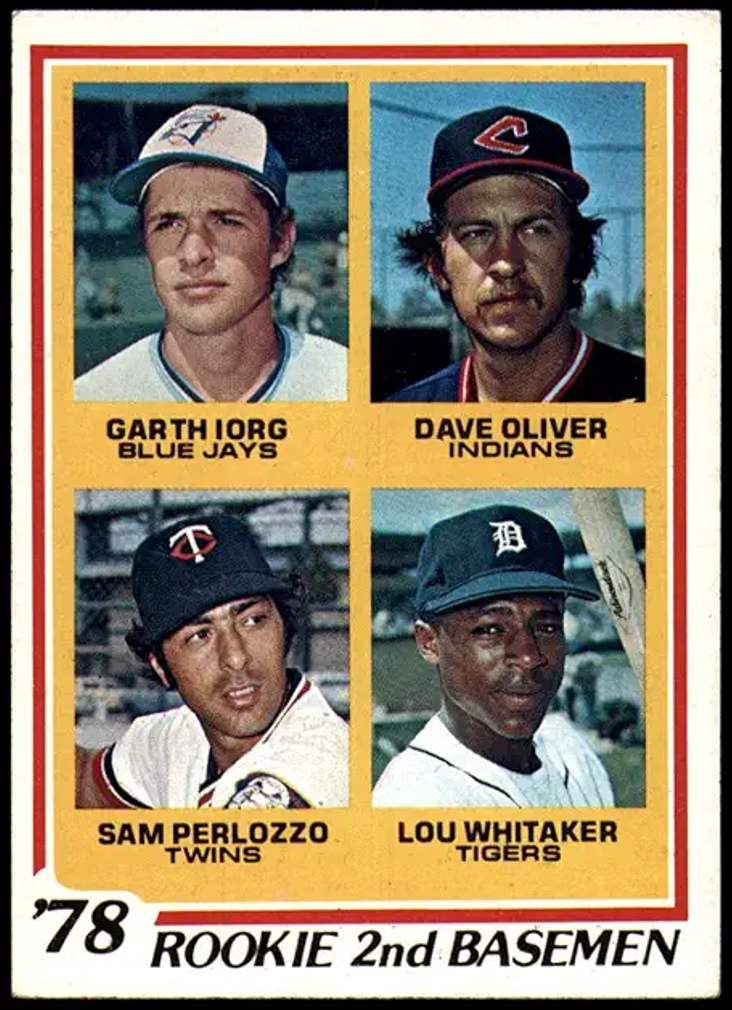
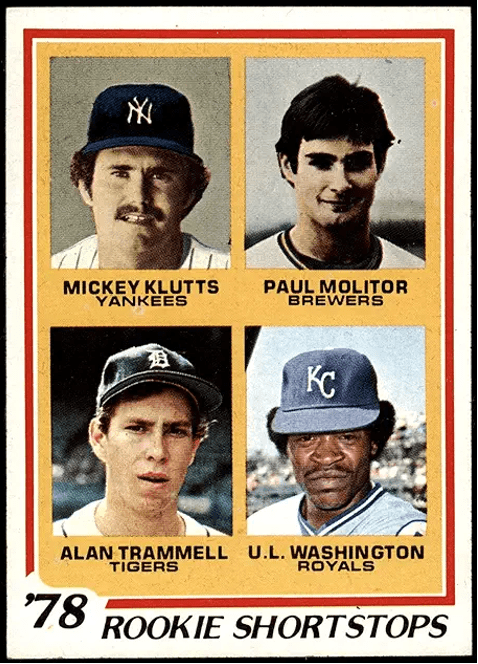
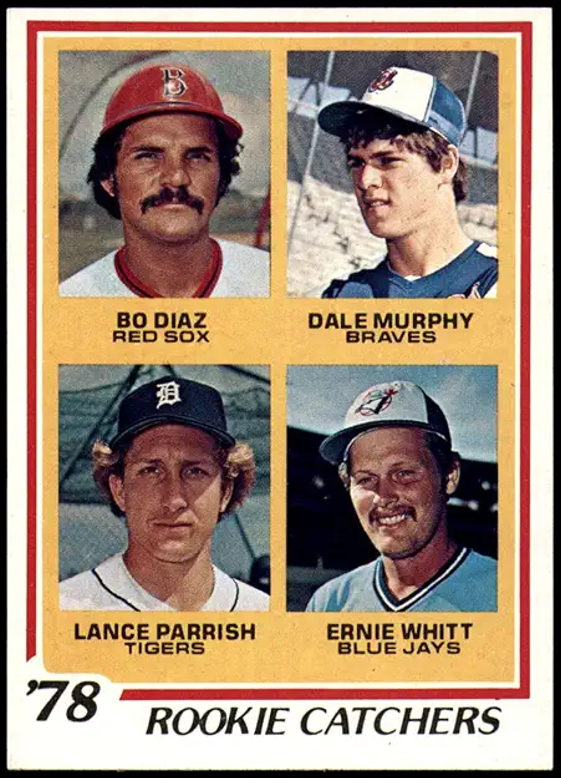
Second-year cards of top players in the ’78 set feature both Andre Dawson (#72) and Dale Murphy (#708). Dawson’s career totals include 399 home runs and 1,425 RBIs, while Murphy has 398 lifetime round-trippers and 1,259 RBIs. Murphy appears on his second consecutive “Rookie Catchers” card – the same one Lance Parrish occupies.
After five straight years of 660-card sets, Topps increased its 1978 issue to 726 cards. This was not the largest Topps set up until that time, however. In 1971, Topps issued a 752-carder, while the ’72 set consisted of 787 cards. The 726-card regular set would remain a Topps staple through 1981, before increasing to 792 cards the next year.
Although Topps had double-printed and sometimes even triple-printed cards before (cards produced in twice or three times the number as others in the set), the 1978-81 sets each included 66 double-printed cards. Topps used a 132-card printing sheet. Six sheets equaled 792 cards, thus leaving room for 66 “extra” cards in a 726-card set … the repeats or “double-prints.”
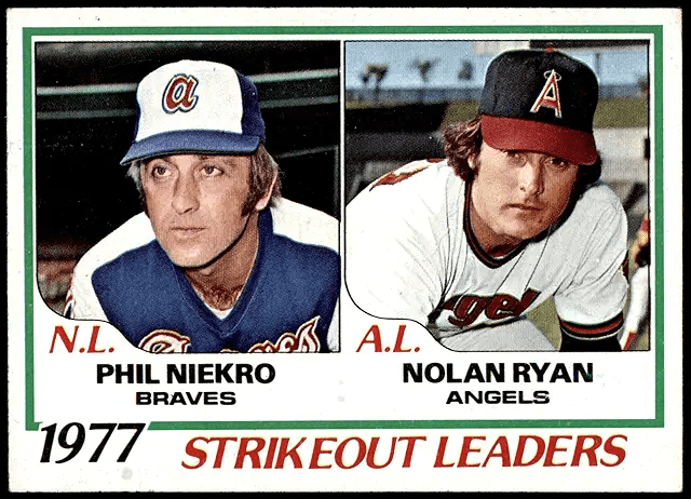
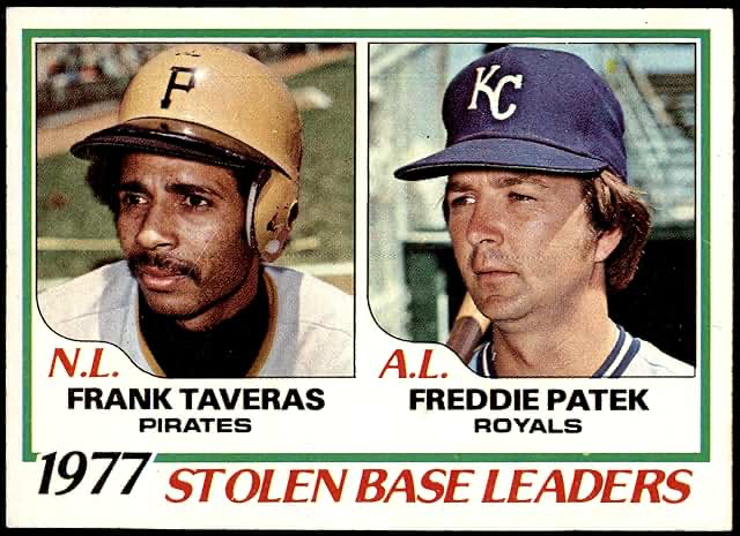
“Record Breaker,” “League Leaders” and “Championship/World Series” subsets, plus team cards and managers were all included in the 1978 Topps issue. Most were the same as in years past. Yet, the manager cards were slightly different.
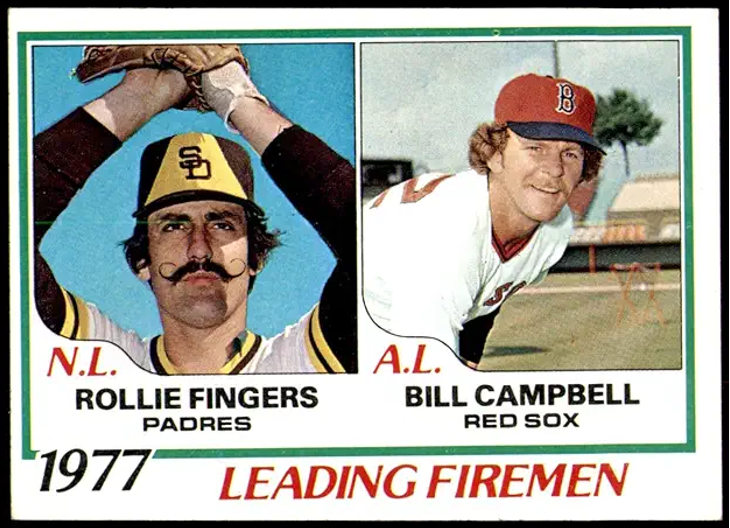
Horizontal fronts showed a small black-and-white photo on the left of the manager when he was a player, while a larger, color photo on the right showed him with his current team. For instance, Don Zimmer’s card (#63) shows him with the Washington Senators (player photo) and Boston Red Sox (manager photo).
Backs of manager cards included complete playing statistics on the left, just like the rest of the cards in the set. On the right side, a small box was devoted to “Managerial Highlights.”
Fifty cards have caps and/or uniforms that have been “touched up” to portray the player with his new team after a trade. Most of these touch-up jobs aren’t as obnoxious as in previous years when it looked like an infant with a crayon did them.
All in all, the 1978 Topps baseball cards are quite attractive, offer a large array of good first-year cards and bring back memories of a time a decade and a half ago. This is the last set issued prior to the advent of hobby price guides in 1979.
• • • • • •
• Originally Published in Feb. 1993 “Baseball Hobby News” •
THIS ARTICLE FROM “BASEBALL HOBBY NEWS” MAGAZINE IS REPRINTED WITH THE PERMISSION OF BOTH THE EDITOR/PUBLISHER AND THE AUTHOR. IT HAS BEEN RETYPED, BUT NO CONTENT HAS BEEN CHANGED (EXCEPT FOR VERY MINOR ADJUSTMENTS, CORRECTIONS TO TYPOGRAPHICAL ERRORS AND CHANGES TO GRAPHICS). COMMENTS OR INFORMATION IN THE ARTICLE MAY BE OUT-OF-DATE.
To keep up-to-date on additions to BaseballCardFun.com, subscribe below*
* Your email address will never be shared and is only used to announce new articles
 BaseballCardFun.com