
The history of Topps baseball card sets
BY MARK A. LARSON
Fireworks … Celebrations … Old Glory … The Spirit of ’76.
Collectors would have thought Topps might go with a red, white and blue card design in 1976, being it was the nation’s bicentennial.
Instead, the company opted for a far subtler design, which was probably good considering that the 1975 set was such an eye-opener with its extravagant use of color.
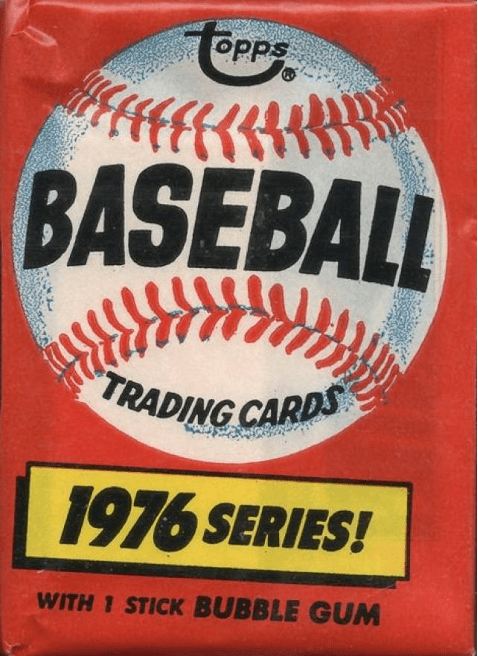
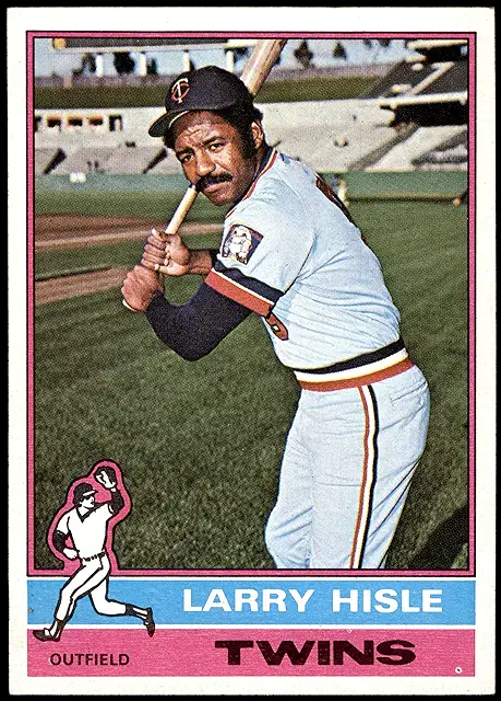
The ’76s are the first of 10 consecutive white-bordered sets from Topps. Fronts feature the player’s name, position and color-coded team nickname at the bottom. Positions are also designated by a small generic drawing of a player in the lower left front comer … somewhat reminiscent of the 1973 Topps set.
Topps must have over-purchased hundreds of drums of green ink during the late ’70s and early ’80s. The 660-card 1976 set is the second in three years to feature green ink on the back. (Between 1974-85, six out of the 12 Topps sets issued during that period had green backs.)
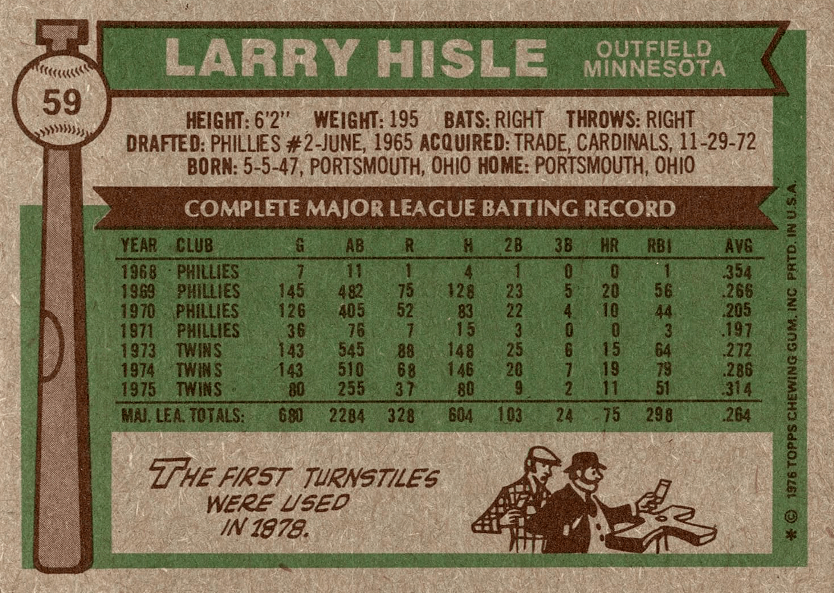
Backs of the ’76s feature the usual fare: personal information, statistics, and a cartoon at the bottom of the horizontal design on many cards. Information on which team signed the player and how he was acquired by his current team is also included.
Here’s a rundown on some of the special features of the 1976 Topps cards:
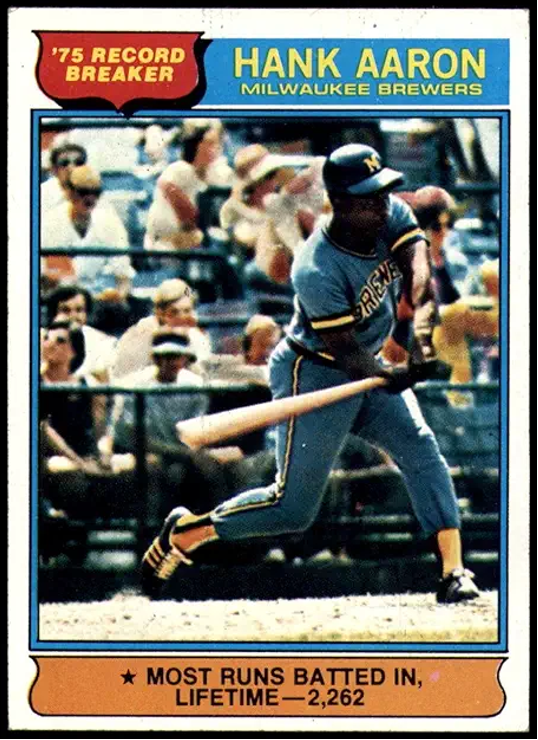
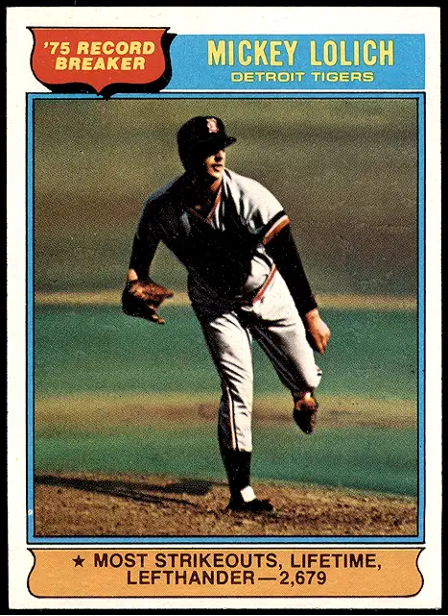
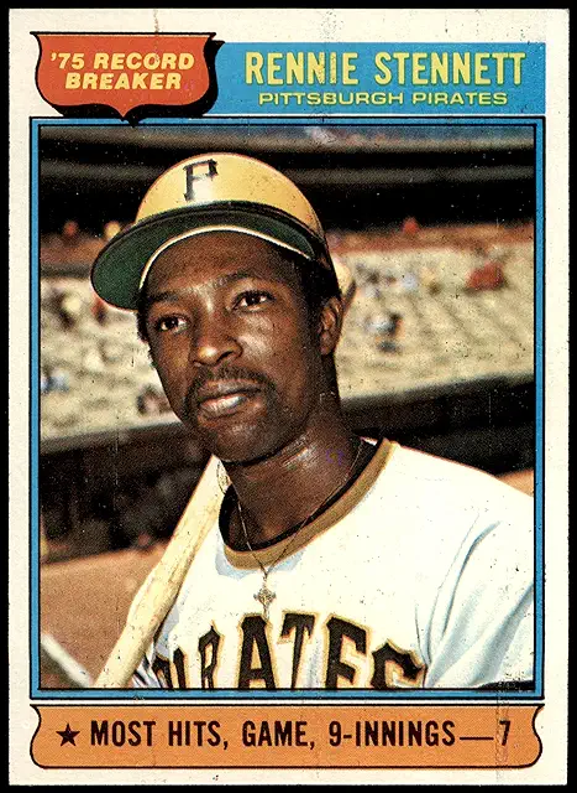
• The set leads off with the “Record Breakers” subset (#1-6). Each of the half dozen cards shows a player who set a significant record during the previous season. For instance, card #1 portrays Hank Aaron with the headline “Most Runs Batted In, Lifetime – 2,262.” Mickey Lolich appears on card #3, “Most Strikeouts Lifetime, Lefthander – 2,679.” While Rennie Stennett occupies card #6, “Most Hits, Game, 9 Innings – 7.”
• The newest member of the 3,000-hit club, George Brett, appears on his second Topps card (#19) in the ’76 set. Robin Yount, the other player to top the 3,000-hit mark in 1992, also appears on his second Topps card (#316).
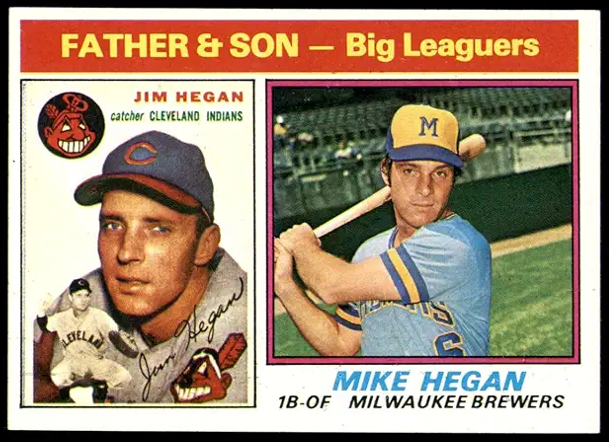
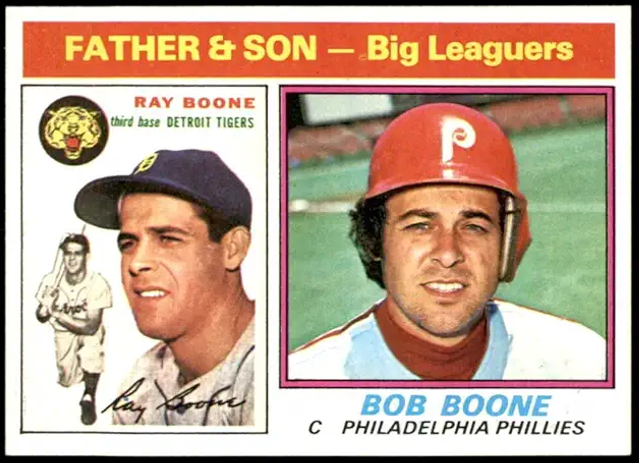
• “Father & Son – Big Leaguers” is a five-card subset (#66-70). It includes cards of Gus Bell/Buddy Bell (#66) and Ray Boone/Bob Boone (#67). A third-generation Boone, Bret of the Mariners, made his big league debut last summer. These gems utilized previous cards issued by Topps of the fathers … the third year in a row Topps recycled old cards on its new cards.
• The key rookie card in the ’76 set is that of Dennis Eckersley (#98). Back then, Eckersley was a starter – and not a bad one at that. Between 1975-79, Eck was 77-50, with a 3.12 ERA.
• The traditional League Leaders subset appears on cards #191-205. One of these, “American League ERA Leaders” (#202) features two Hall-of-Famers, plus a third pitcher who is a good bet for the Hall … Jim Palmer, Jim “Catfish” Hunter and Eckersley.
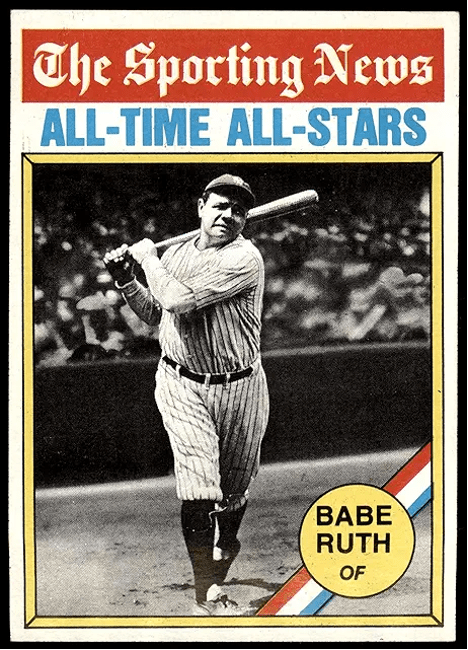
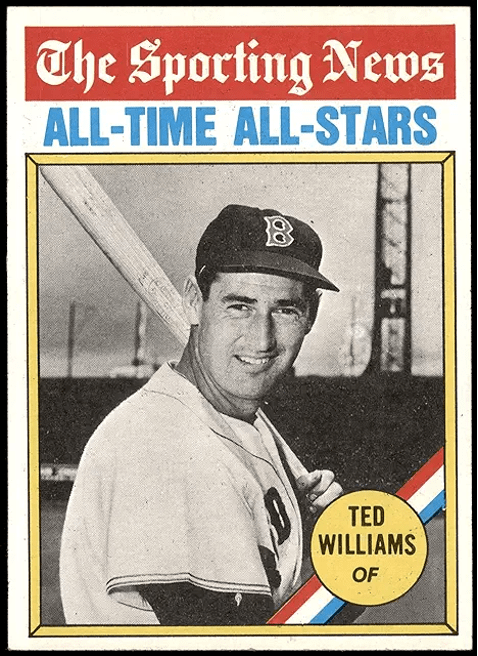
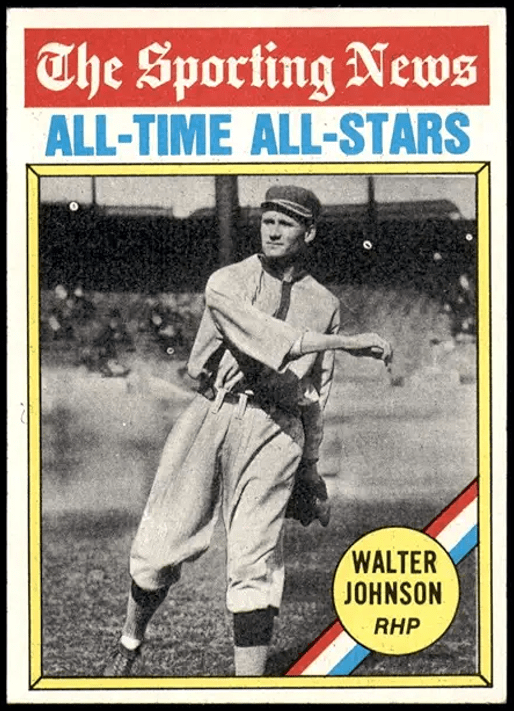
• “The Sporting News All-Time All-Stars” occupy 10 cards (#341-350). These black-and-white cards feature such immortals as Lou Gehrig, Babe Ruth, Ty Cobb, Ted Williams and Walter Johnson. Collecting this subset is an inexpensive way to obtain cards of the big names of yesteryear.
• The Playoffs and World Series were relegated to just one card each in the 1976 set. Card #461 features highlights from both the N.L. and A.L. Championship Series, while #462 covers the Fall Classic. In most prior years, Topps included one card for each post-season game … both Playoffs and World Series.
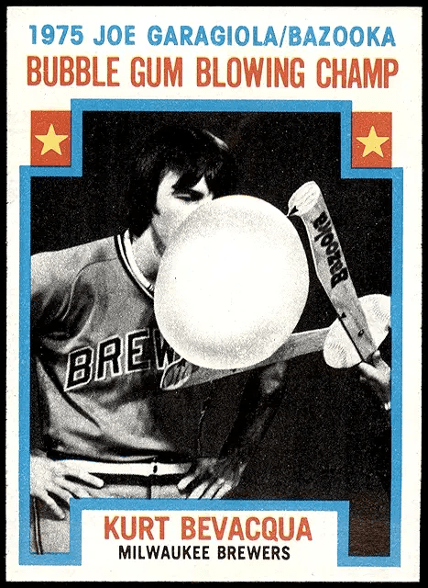
• Perhaps the most interesting card in the set is #564. It features Kurt Bevacqua of the Milwaukee Brewers as the “1975 Joe Garagiola/Bazooka Bubble Gum Blowing Champ.” Bazooka, a Topps brand, held a contest among ballplayers and Bevacqua’s bubble, as shown on the card, approached beach ball-size proportions.
• Eleven four-player rookie cards, grouped by position, are featured on cards #589-599. The most prominent of the 44 players appearing on these cards are: pitcher Mike Flanagan of the Orioles, second-baseman Willie Randolph of the Pirates and Yankees pitcher Ron Guidry.
• Many of the others are no-names such as Joe Pactwa, an Angels pitcher, George Throop, a Royals hurling prospect, and Art DeFilippis, a pitcher for the Rangers.
• In addition to the regular 660-card 1976 set, Topps issued a 44-card “Traded Series.” The format and card design was almost identical to Topps’ previous 44-card Traded Series, issued in 1974.
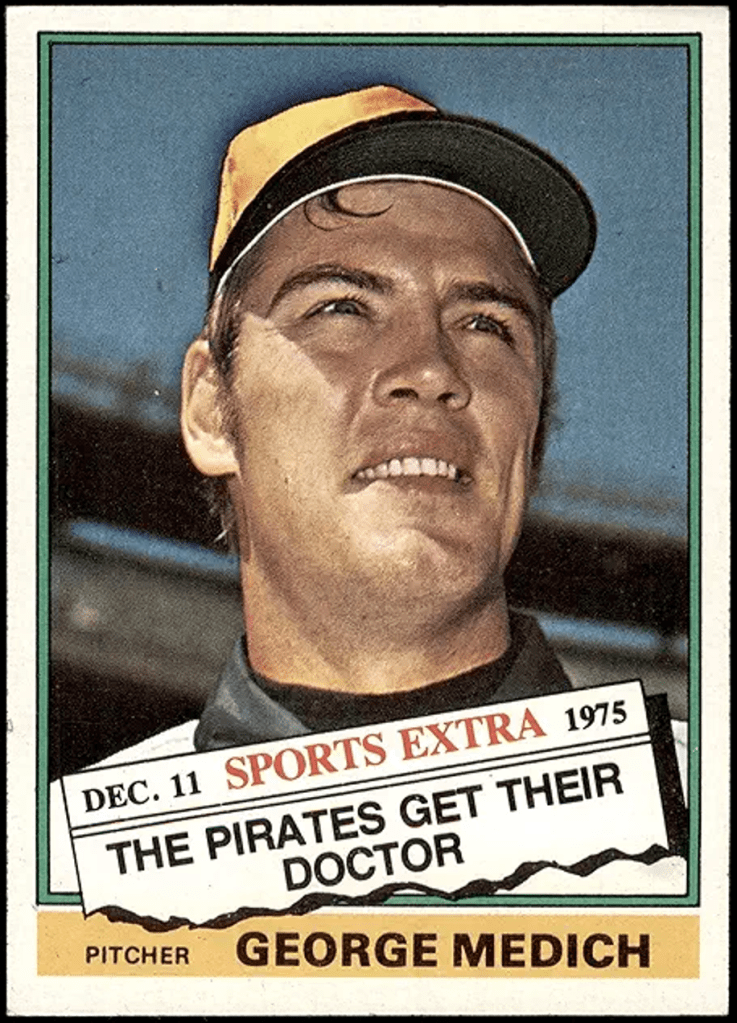
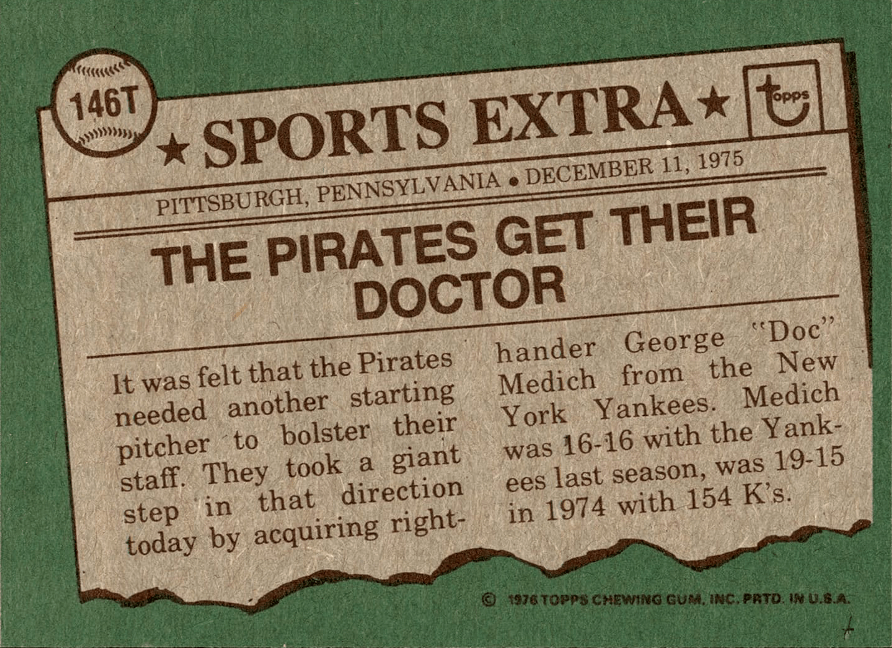
Talk about hideous-looking cards. If there was a dictionary of hobby terms, the 1976 Traded cards would be listed under “Ugly.” All of them are airbrushed, usually badly, and the headline torn from a simulated newspaper on the front of the cards is horrendous.
Two major stars are included among the 44 Traded cards. Card #250T features Fergie Jenkins, while Bobby Bonds appears on card #380T.
Interestingly, no Topps Traded cards were issued the year before, in 1975, and none would be seen again until 1981.
The 1976 Topps set may not be as exciting-looking as the 1975s or contain as many key rookie cards, but the clean design and abundance of subsets makes it highly collectible.
• • • • • •
See related article on BaseballCardFun.com entitled:
“BASEBALL HOBBY NEWS — Final Cards of Five Memorable Players in 1976 Set”
Click Link Here
• Originally Published in Jan. 1993 “Baseball Hobby News” •
THIS ARTICLE FROM “BASEBALL HOBBY NEWS” MAGAZINE IS REPRINTED WITH THE PERMISSION OF BOTH THE EDITOR/PUBLISHER AND THE AUTHOR. IT HAS BEEN RETYPED, BUT NO CONTENT HAS BEEN CHANGED (EXCEPT FOR VERY MINOR ADJUSTMENTS, CORRECTIONS TO TYPOGRAPHICAL ERRORS AND CHANGES TO GRAPHICS). COMMENTS OR INFORMATION IN THE ARTICLE MAY BE OUT-OF-DATE.
To keep up-to-date on additions to BaseballCardFun.com, subscribe below*
* Your email address will never be shared and is only used to announce new articles

