
The history of Topps baseball card sets
BY MARK A. LARSON
Colorful. True Colors. Technicolor. In Living Color.
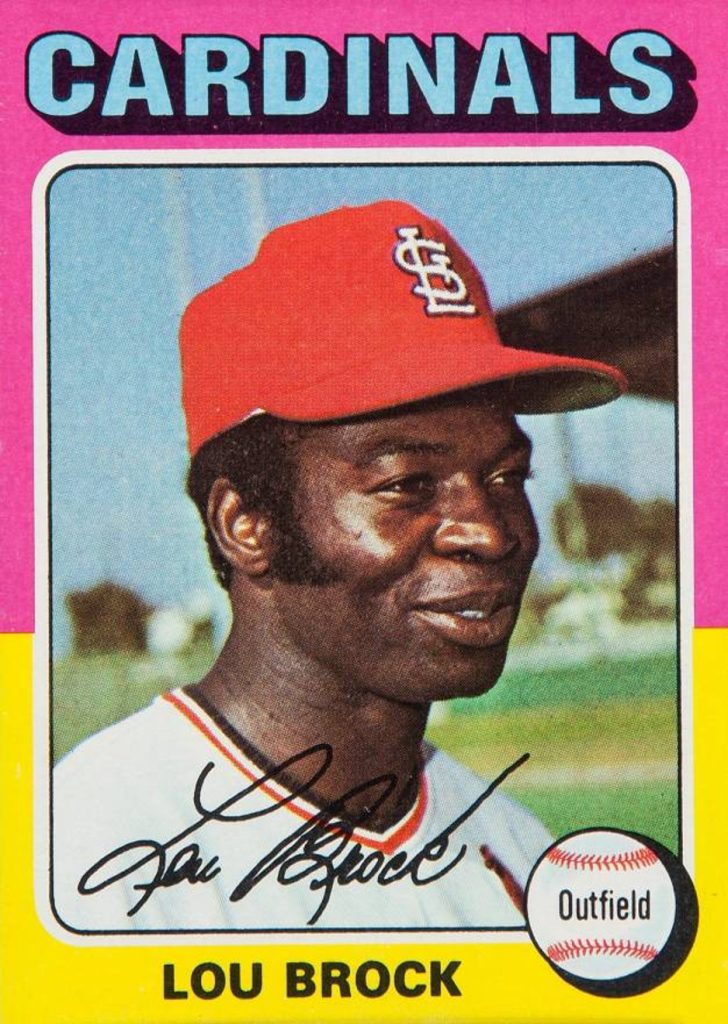
However you color it, Topps’ 1975 baseball 660-card set features the widest spectrum of color ever seen on cards issued by that company.
Card fronts have two-color borders. One color is on the top half, while another fills out the bottom.
Eighteen different top/bottom color combinations were used randomly throughout the set. From blue and orange on Rollie Fingers’ card to yellow and red on Brooks Robinson’s. From purple and pink on Nolan Ryan’s card to dark green and light green on Willie Stargell’s.
It was almost as if the graphic designers at Topps swallowed a batch of Crayola Crayons … the large, 64-count box.
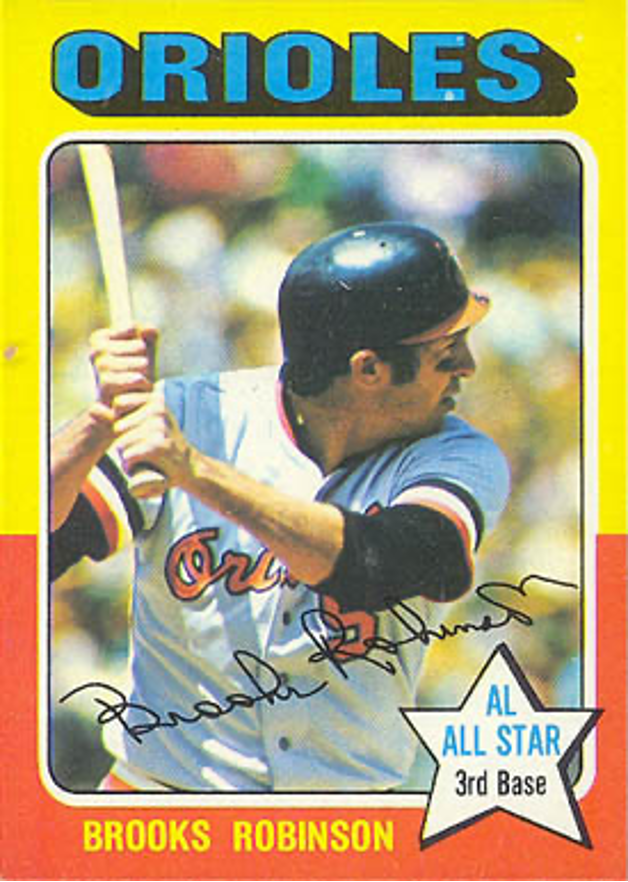
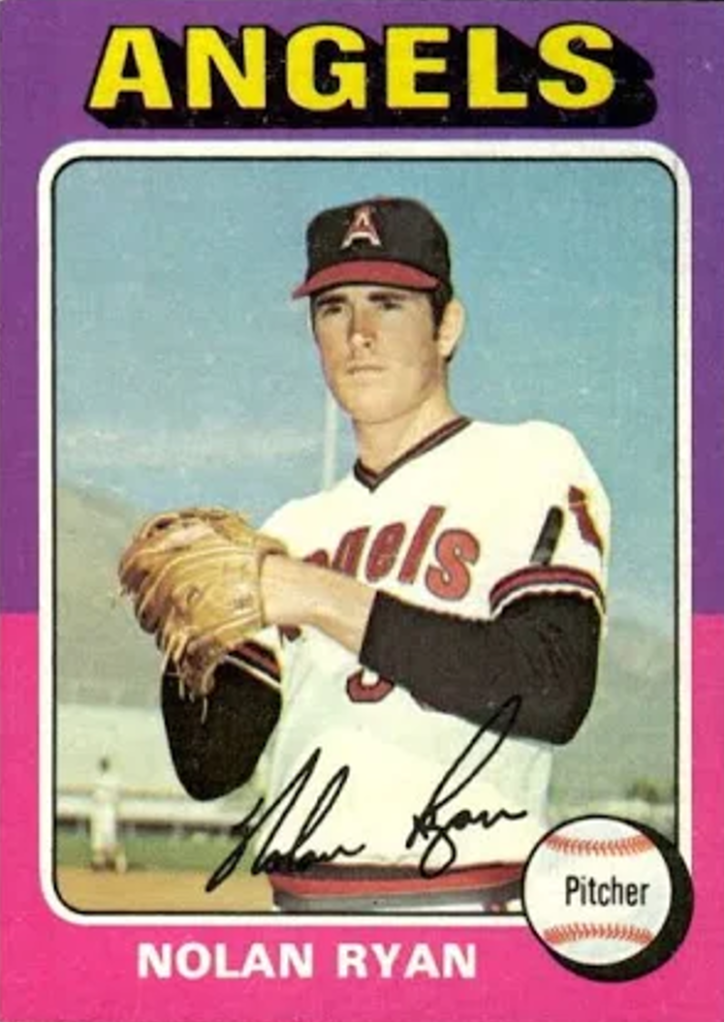

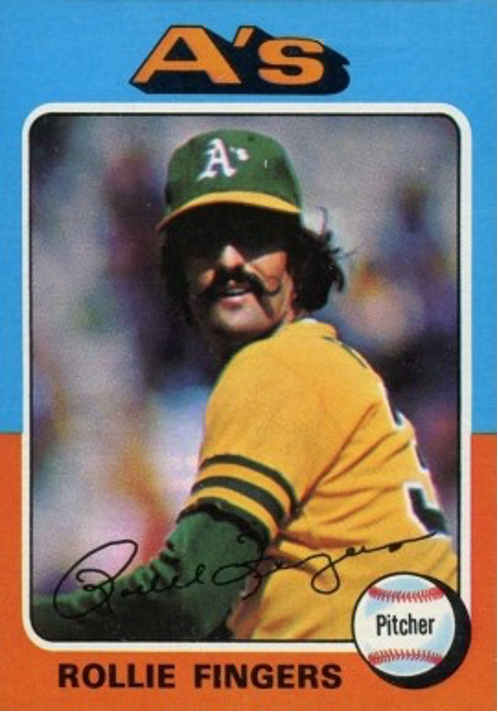
As in 1964, 1971 and 1972, each team’s nickname appears in large letters at the top of the card fronts. Backs are done in a vertical format, with a green and pink color scheme set on gray cardboard stock.
The 1975 season – especially the World Series – was colorful too. The Mets’ Tom Seaver won his third National League Cy Young Award, while in the A.L. Jim Palmer of the Orioles won his second. Bill Madlock of the Cubs led the N.L. in batting with a .354 average, and the Twins’ Rod Carew was the A.L.’s best, hitting .359.
Both pennant-winning teams – Cincinnati and Boston – boasted MVPs in 1975. Joe Morgan of the Reds and Fred Lynn of the Red Sox won the awards.
Lynn was also named A.L. Rookie of the Year … the first player ever to win an MVP and Rookie of the Year Award in the same season. In the National League, Giants’ pitcher John Montefusco won rookie honors.
Yet, it was the World Series that most remember about 1975. Five of the seven games were decided by one run. Cincinnati’s “Big Red Machine” had mauled opponents during the regular season. The team had a record of 108-54 and won the N.L. West by 20 games. Meanwhile, the Red Sox denied the A’s a shot at four straight World Championships by beating them in the A.L. Championship Series. The Reds took care of the Pirates in the N.L.C.S.
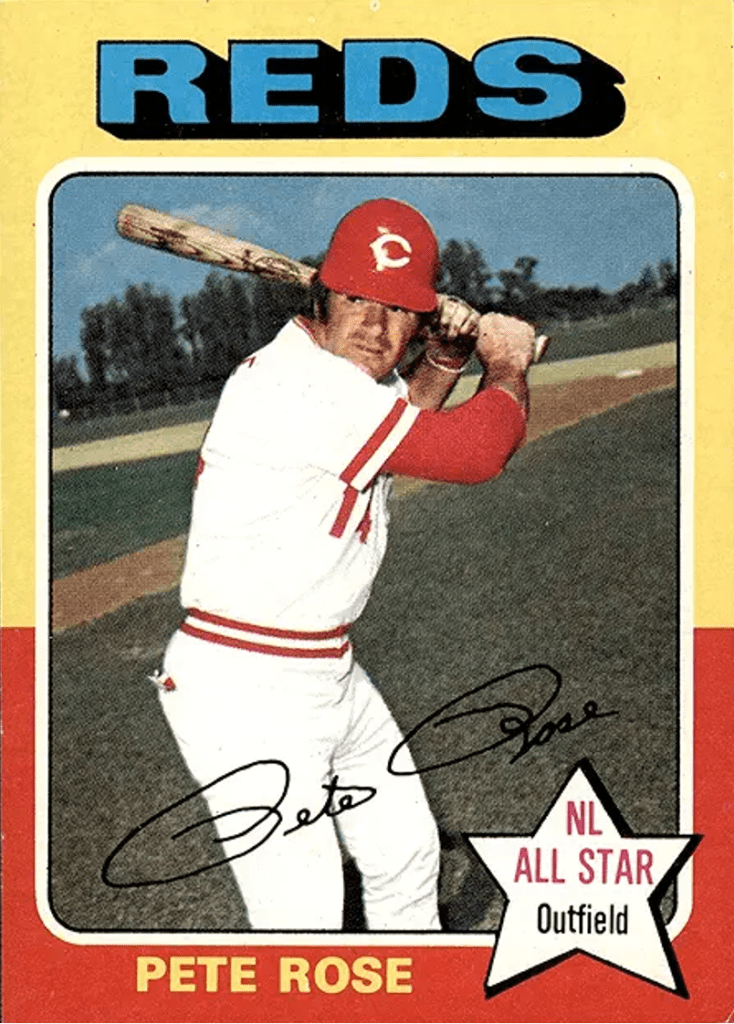
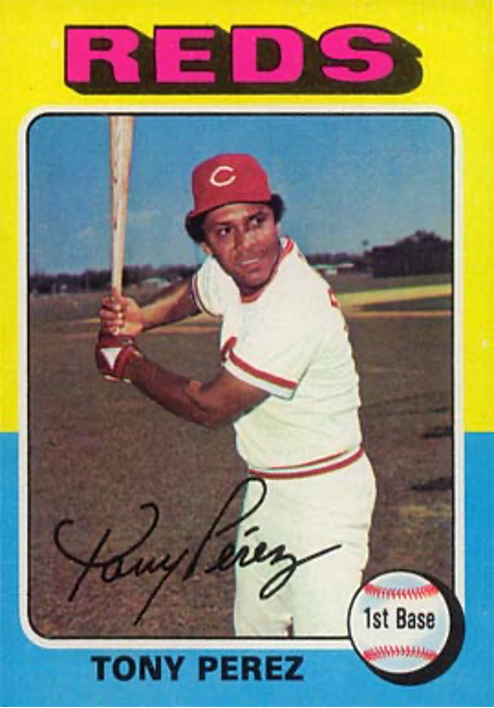
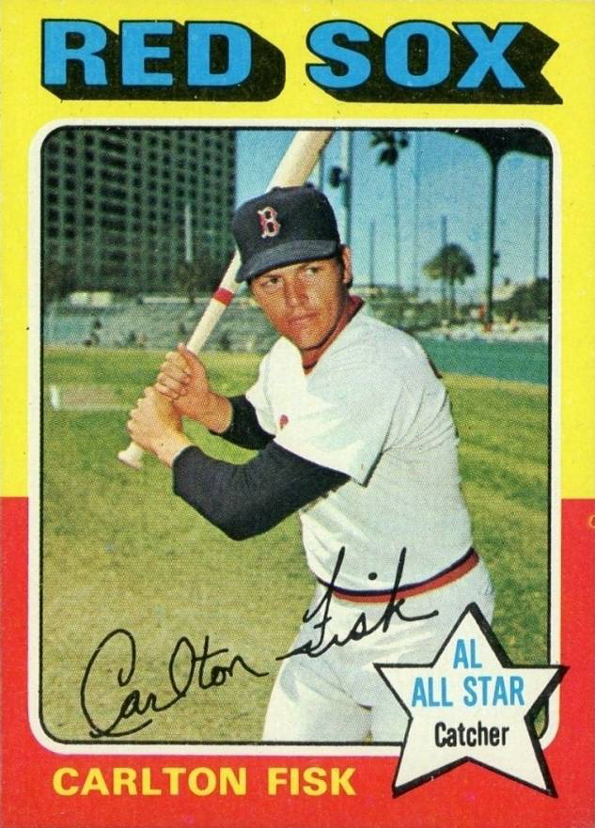
Pete Rose was named MVP of the Series, going 10-for-27 for a .370 average. Cincinnati’s Tony Perez belted three homers, but the most memorable scene from that year’s Fall Classic involved Carlton Fisk in game six.
Entering the sixth game, the Reds held a 3-2 advantage in the Series. Going into the bottom of the eighth inning it looked bleak for Boston. The Red Sox were behind 6-3, when Bernie Carbo slugged a three-run homer to tie it up and eventually send the game into extra innings. (The Sox filled the bases in the bottom of the ninth with nobody out, but failed to score.)
In the bottom of the 12th, with the game still deadlocked at 6-6, Fisk stepped up to the plate and hit a drive to left field. It was long enough for a home run, but would it be fair? Fisk, meanwhile, was frantically waving both arms on the way to first with a “stay fair, stay fair” motion. It was a classic moment in baseball history as the ball hit the foul pole, which meant it was a game-winning blast.
Unfortunately for Red Sox fans, Cincinnati won the seventh and deciding game 4-3.
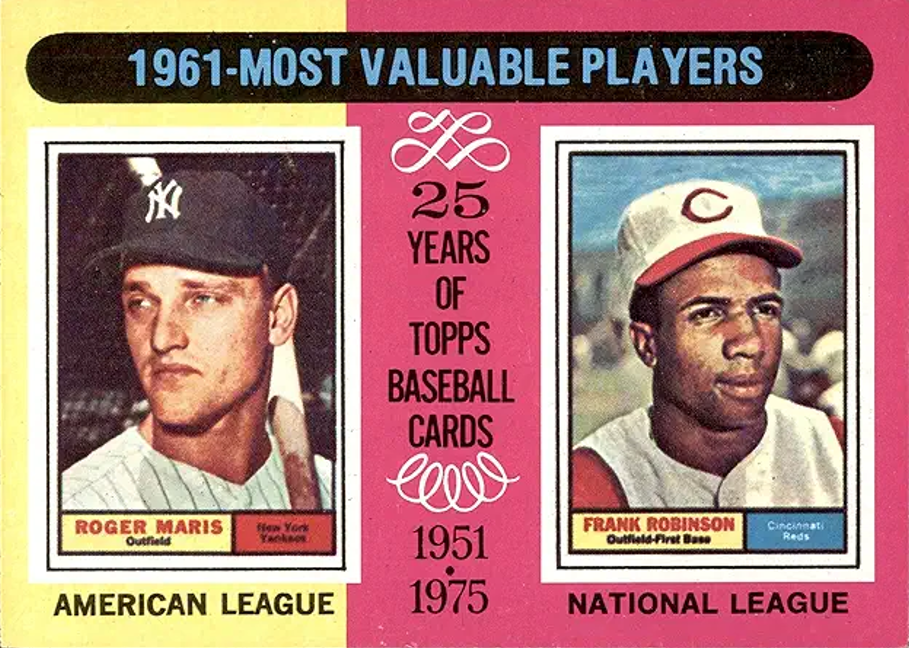
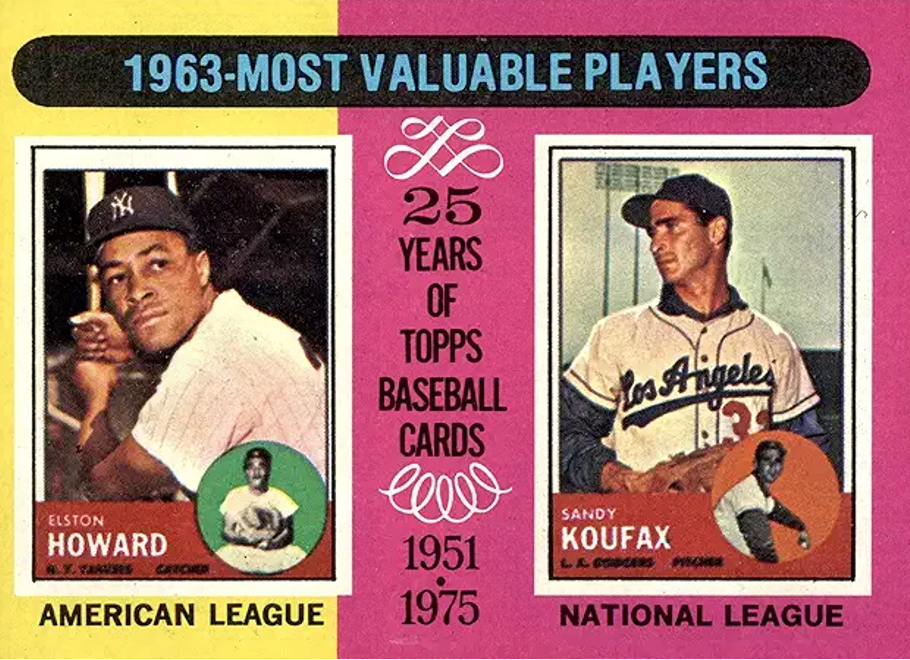
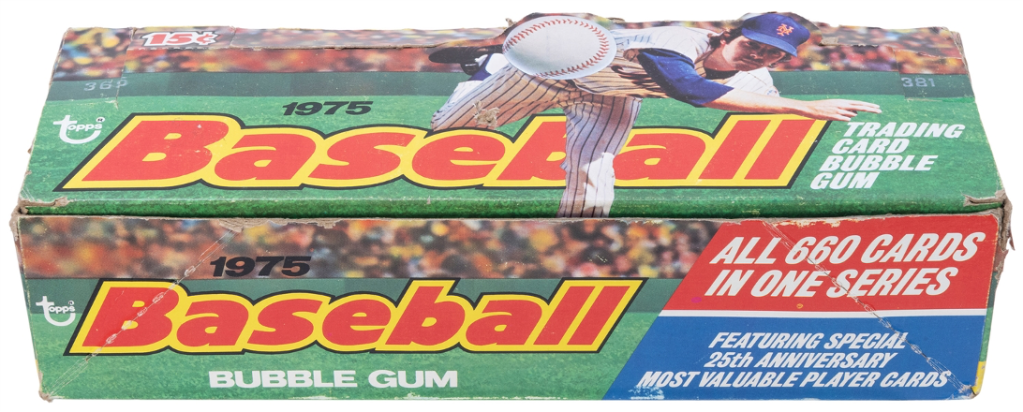
In addition to its bold colors, one of the other things that distinguishes the 1975 Topps issue is its MVP subset. The year 1975 marked the 25th anniversary of Topps baseball cards. To commemorate this milestone, the company issued a 24-card subset as part of its regular set (#189-212), featuring Most Valuable Players from the 24 previous seasons.
Each card showed two players – the MVP from each league – on their Topps cards from that year. For instance, card #195 shows 1957 MVPs Mickey Mantle and Hank Aaron on their ’57 Topps cards. (This was the second year in a row Topps used photos of its old cards in a current set.)
In addition to the 1957 Mantle/Aaron card, some of the better combinations include: Card #204, 1966 MVPs, Frank Robinson and Roberto Clemente; card #207, 1969 MVPs, Harmon Killebrew and Willie McCovey; and card #211, 1973 MVPs, Reggie Jackson and Pete Rose.
One curious sidenote on the MVP subset. No Topps card was produced of Roy Campanella in 1951 and 1955, nor of Maury Wills in 1962. Yet those players captured the MVP title in those years. What did Topps do? They had their artists make up a card to look like a ’51 Topps, ’55 Topps and ’62 Topps, while inserting a photo of Campanella and Wills.
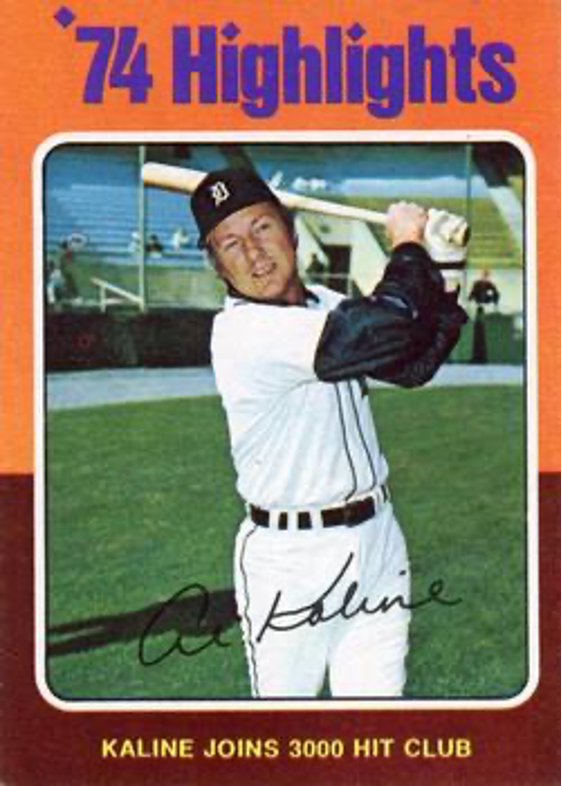
The ’75 set starts off with seven “Highlights” cards featuring famous feats from the previous year. Included are cards of Hank Aaron (“Aaron Sets Homer Mark”), Lou Brock (“Brock Steals 118 Bases”), plus cards of Bob Gibson, Al Kaline and Nolan Ryan among others.
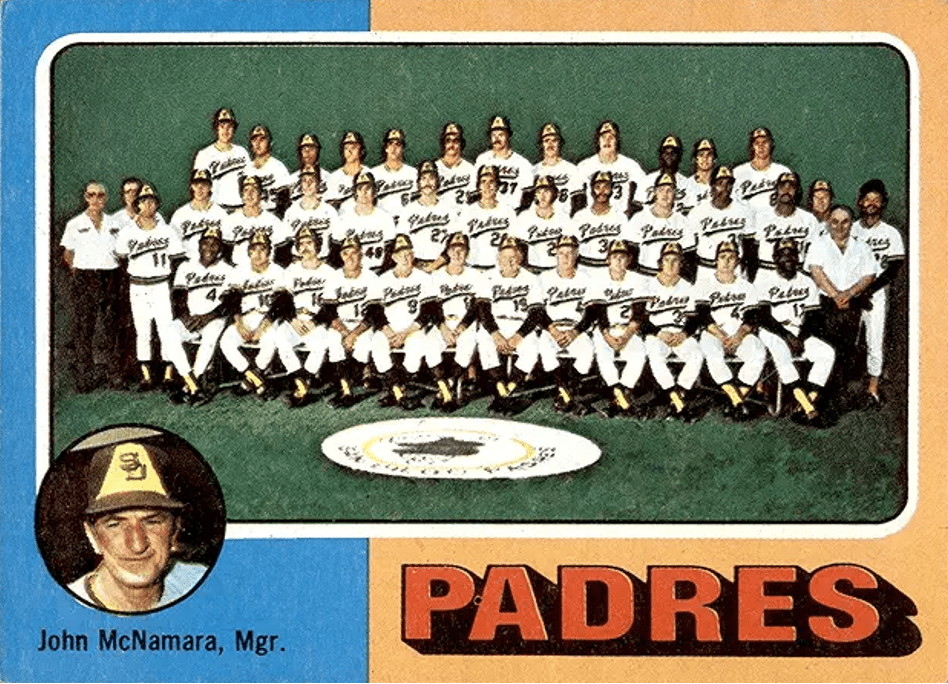
Team and manager cards took a different look in 1975 … they were combined. A small photo of the manager was inset in the lower-left corner on the front of the horizontal team card. Backs ignored the manager and featured a checklist of all players on that particular team. In addition, a special offer was included on card backs: “Get All 24 Team Checklist Cards. Send 40¢ plus 1 baseball wrapper … offer expires Dec. 31, 1975.”
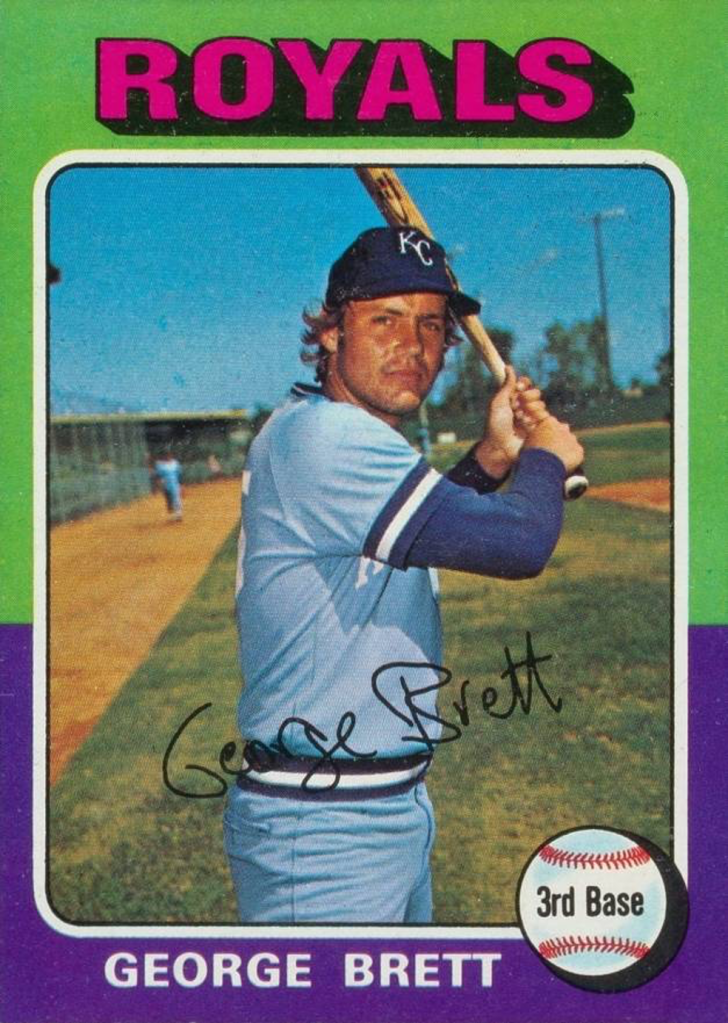
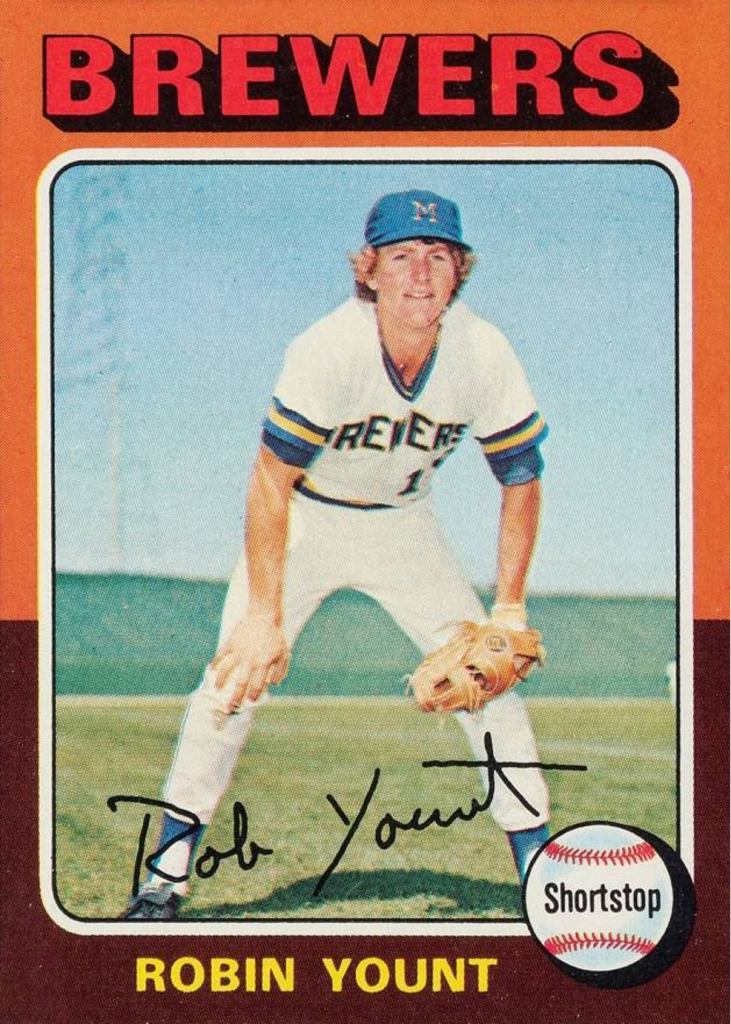
Good rookie cards abound in the 1975 set. The two most popular – and valuable – are Robin Yount (#223) and George Brett (#228). They each have their own cards.

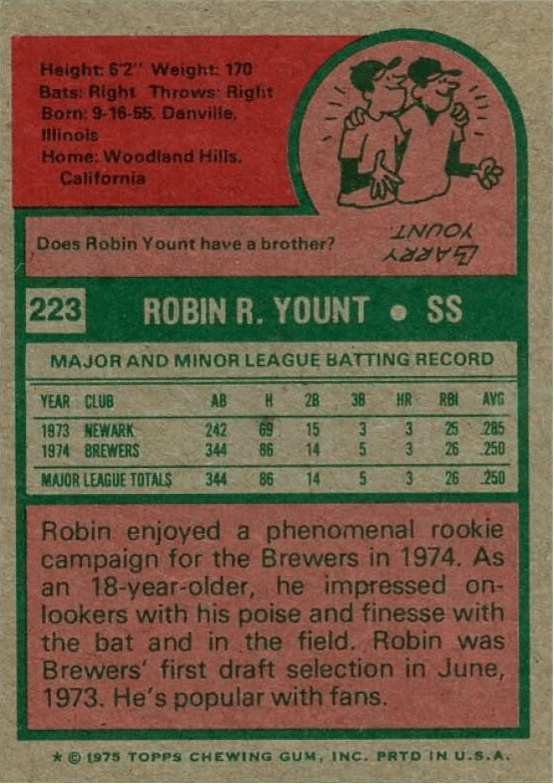
Eleven multi-player rookie cards (four players per card, grouped by position) were also included in the set. Top rookies appearing on these cards include: Jim Rice (#616), Gary Carter (#620), Fred Lynn (#622) and Keith Hernandez (#623).
Traditional subsets of League Leaders are included (#306-313). Additionally, A.L./N.L. Playoff cards (#459-460) and World Series cards (#461-466) appear.
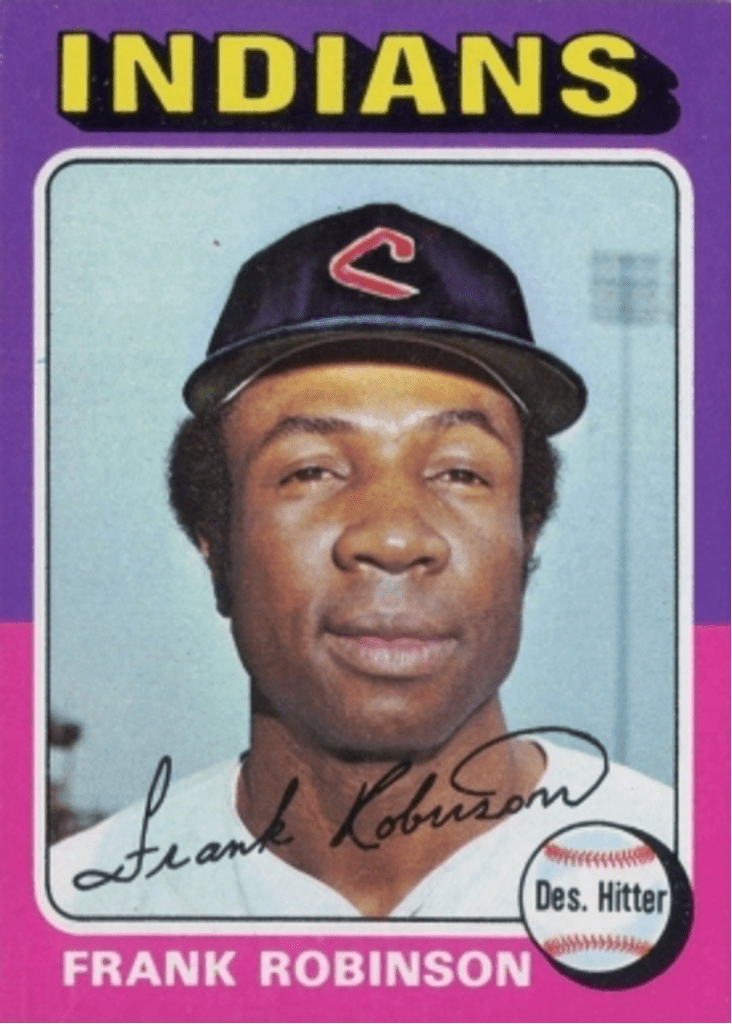
The last regular Topps cards of three prominent players are part of the ’75 set: Hall-of-Famers Frank Robinson (#580) and Harmon Killebrew (#640), and Yankees pitcher Mel Stottlemyre (#183).
Robinson is fourth on the all-time home run list with 586 round-trippers. He also hit .294 lifetime, won the Triple Crown in 1966 and missed the 3,000 hit plateau by only 57 safeties.

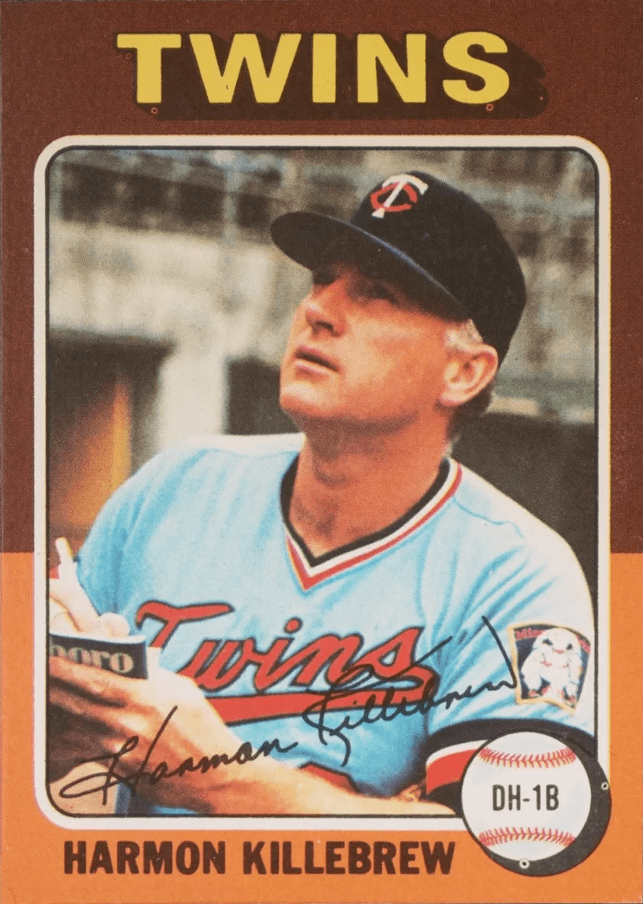
Killebrew is right behind Robinson on the homer list with 573 blasts. He belted 40 or more home runs eight times during his career and topped the 100-RBI level in nine seasons. Although not a Hall-of-Famer, Stottlemyre put together some good years for some lousy Yankees teams. During his 11-year career, he posted a 164-139 record, with a lifetime ERA of 2.97. He was a 20-game winner in 1965, 1968 and 1969.
One of the more interesting oddities of any Topps baseball card set is card #407 in the 1975 issue. It features Herb Washington and lists his position on the front as “Pinch Runner.”
Washington was hired by Oakland’s flamboyant owner Charlie Finley to strictly be a baserunner. Washington held the world indoor records for the 50- and 60-yard dash, so Finley figured he could be a valuable pinch runner.
Washington appeared in 91 games for the A’s the previous year. He stole 28 bases in 44 attempts and scored 29 runs. The back of his card doesn’t show the traditional batting statistics (they would read: 0-0-0-0-0-0-0-.000), it lists only games, runs, stolen bases and caught stealing. It was the only regular card in the set to feature base-running stats. Washington appeared in only 13 games in 1975 and slipped off into obscurity.
No discussion of Topps’ 1975 baseball cards would be complete without mentioning the “mini” set. Early in the spring of 1975, Topps issued a “test” set of 1975 cards that were 20 percent smaller in size than usual.
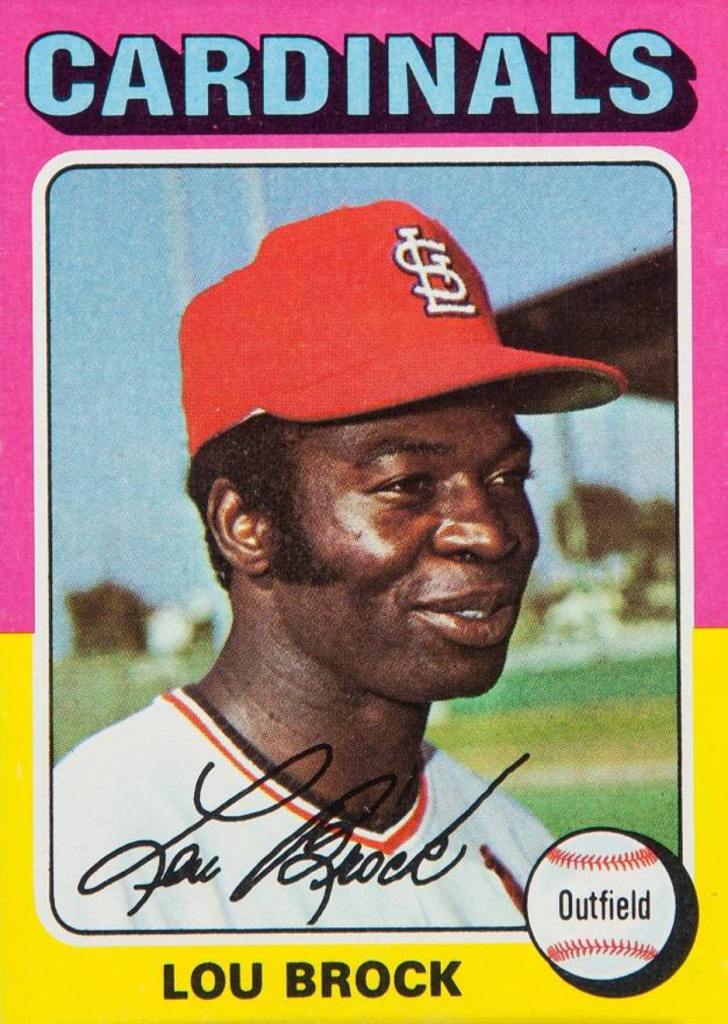
Apparently, the company wanted to see what the reaction would be to smaller (“mini”) cards. They were only issued in limited geographic areas around the country, among them the San Francisco Bay Area and parts of Michigan.
Kids in these regions were flabbergasted to find Topps had shrunk their cards and felt cheated – not knowing that soon the regular-size set would be issued and minis would leave the scene. (I know, because I was one of them in northern California.)
Because the minis were produced in much smaller quantities than the regular set, they immediately became a desirable collectible. Traditionally, the complete mini set has been valued at twice the regular set, although in the past couple of years that gap seems to be narrowing a bit.
To sum up, if you want to add some color to your collection, you’ll get more than you ever bargained for with the 1975 Topps set.

• • • • • •
See related article on BaseballCardFun.com entitled:
“BASEBALL HOBBY NEWS — Memories of 1975 and the Topps Minis”
Click Link Here
• Originally Published in Dec. 1992 “Baseball Hobby News” •
THIS ARTICLE FROM “BASEBALL HOBBY NEWS” MAGAZINE IS REPRINTED WITH THE PERMISSION OF BOTH THE EDITOR/PUBLISHER AND THE AUTHOR. IT HAS BEEN RETYPED, BUT NO CONTENT HAS BEEN CHANGED (EXCEPT FOR VERY MINOR ADJUSTMENTS, CORRECTIONS TO TYPOGRAPHICAL ERRORS AND CHANGES TO GRAPHICS). COMMENTS OR INFORMATION IN THE ARTICLE MAY BE OUT-OF-DATE.
To keep up-to-date on additions to BaseballCardFun.com, subscribe below*
* Your email address will never be shared and is only used to announce new articles
 BaseballCardFun.com