
BY MARK A. LARSON
Let’s get serious about series.
From 1952-73 Topps issued its regular baseball card set in series. The 1st series might contain cards numbered 1-88 and would normally be issued around the end of spring training.
The 2nd series usually included about the same number of cards, but these would begin with #89. This second group of cards was released approximately a month after the first. This pattern of distribution would continue throughout the summer into September.
Once a retailer sold out of one series, chances are the next batch of cards on sale at his store would be from a subsequent series. In most cases, that meant by mid-summer cards from the early series would be gone from store shelves, having been sold out in April and May.
Most Topps sets from the 1960s and early ’70s were issued in six or seven series. And in most years, cards from later series are scarcer than the earlier ones. The typical explanation for this is that by late summer baseball card sales had slowed down for many retailers. (Kids had their fill of cards or were concentrating on getting ready for school, etc.) Therefore, store owners either reduced their late series orders or didn’t get any at all.
Topps always anticipated this late season lull in demand and cut back production on the final two series or so each year. This reduction in orders and lower production resulted in much lesser quantities of the so-called “high numbers”. (The nickname resulted from the fact the 6th and 7th series contained the highest card numbers in the set – usually cards with numbers above about 450.)
The scarcer high numbers command premium prices today due to that limited production. In fact, in some years, many areas of the country didn’t even receive shipments of late series cards. Price variations exist with almost every series in a set due to different quantities being printed from series to series.
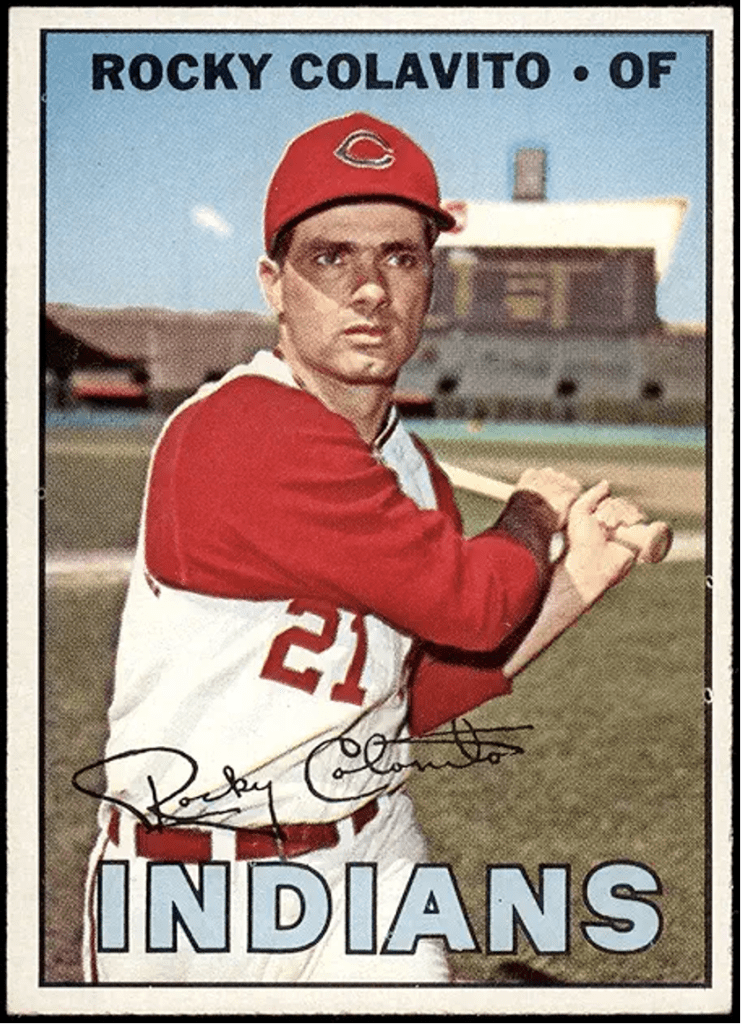
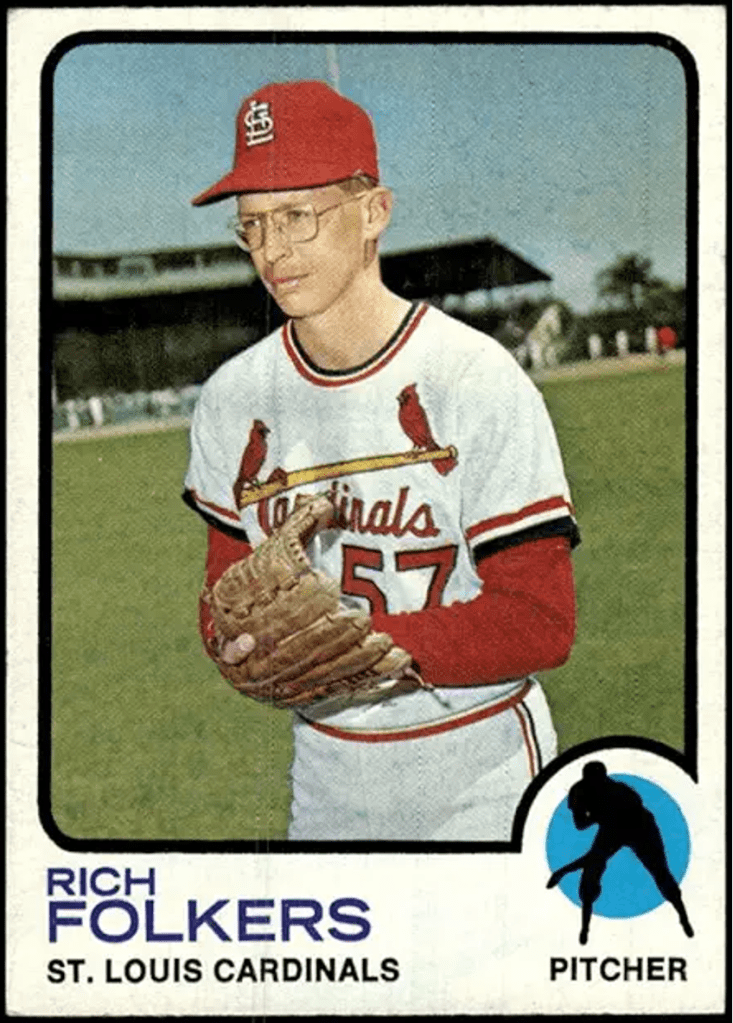
Two Topps “High Numbers” from 1967 and 1973
As an eight-year old collector in 1967, it was several months before I learned how the series concept worked. Once I was educated – by a local store-owner – I realized the reason I got so many duplicates from packs I purchased at certain stores. (A particular retail outlet might have loads of cards from one series to sell before a new series would be put on the shelf.)
In 1973, the challenge of completing a Topps set series-by-series ended. From 1974-92, all regular Topps sets have been issued as a whole – all cards at once.
By the end of Topps series era in ’73, the company had whittled the number down to five 132-card series. Topps printed 132 cards on its standard press sheet. Looking back over the previous dozen years, most series were not nearly as uniform as the 1973 issue.
For instance, from 1961-66, Topps’ first four series in each of those years contained 88 different cards apiece. The 5th and 6th series from 1961-66 always included 77 cards. Yet, the 7th series varied widely, making for sets of different lengths. The 1961 and 1964 sets contain 587 cards each, with the 7th series made up of 81 cards. In 1962, 1965 and 1966, the 7th series included 92 cards … making the sets 598 cards each. Meanwhile, the ’63 set’s 7th series was issued in 70 cards (for a 576-card set).
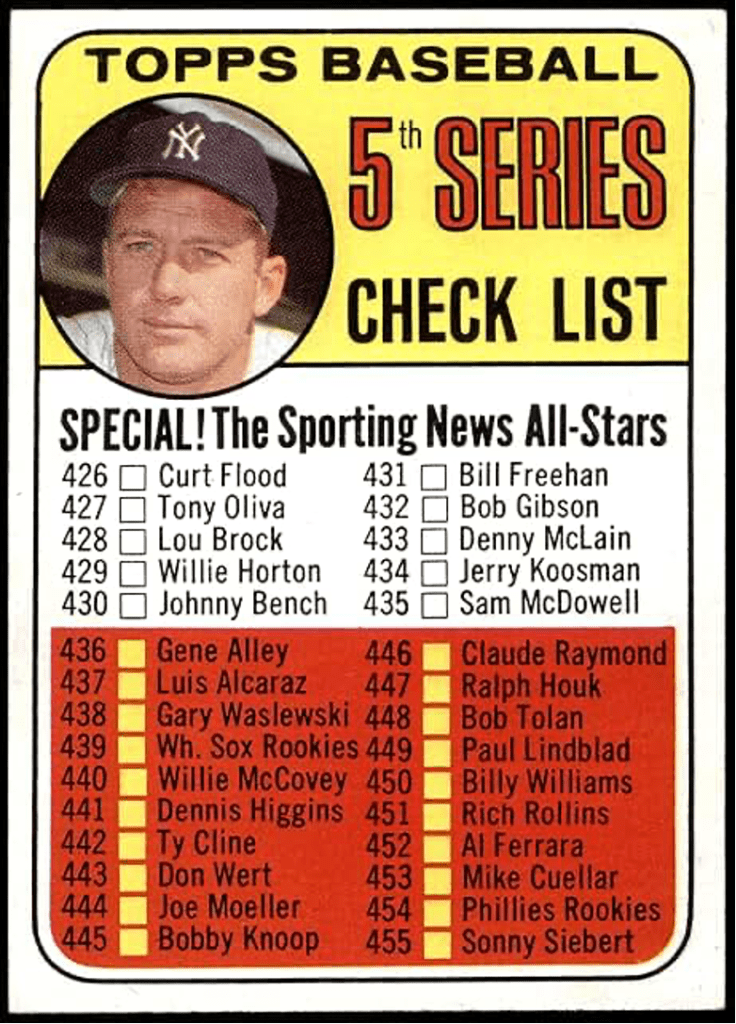
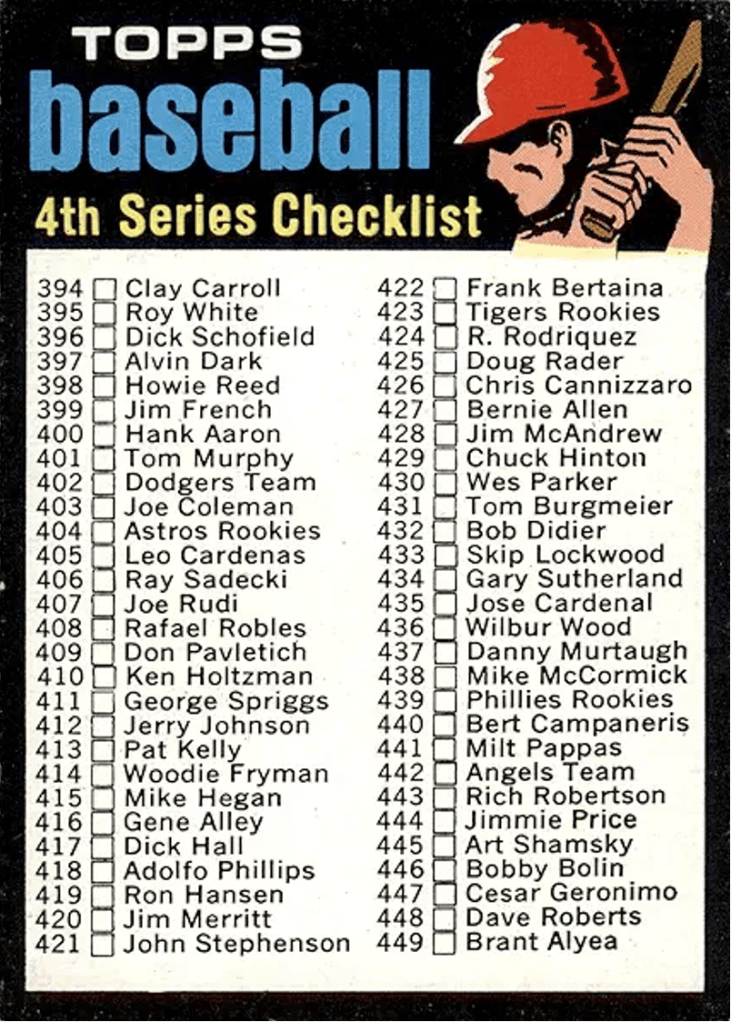
The 1st series from 1967-69 each contain 109 cards. But from the 2nd through 7th series, the numbers change. In 1967-68, the 2nd through 5th series are identical at 87 cards each. The 6th series in each year is 76 cards, but the 7th series differs by 11 cards. Among the 1969-70 sets, four different series quantities are used each year and only two of those are the same. The ’69 set has 664 cards total, while the ’70 set checks in at 720.
In 1971 and 1972, the number of series was reduced from seven to six. The makeup of the number of cards per series in 1971-72 is peculiar. In 1971, from the 1st to the 6th series, card quantities are 132, 131, 130, 130, 120 and 109. In 1972, the 1st series is 132 cards long, while the rest are 131 each.
Depending on printing press sheet sizes, the variance in the number of cards per series over the years would indicate not all cards – even within a series – were printed in the same quantity. Many of these are noted in the various price guides as being “single-printed” or “double-printed”.
In other words, to fill out a full sheet of cards, Topps may have put a card on twice (a double-print). Conversely, when most cards appeared on a sheet twice, but a few did not, those would be considered single-prints.
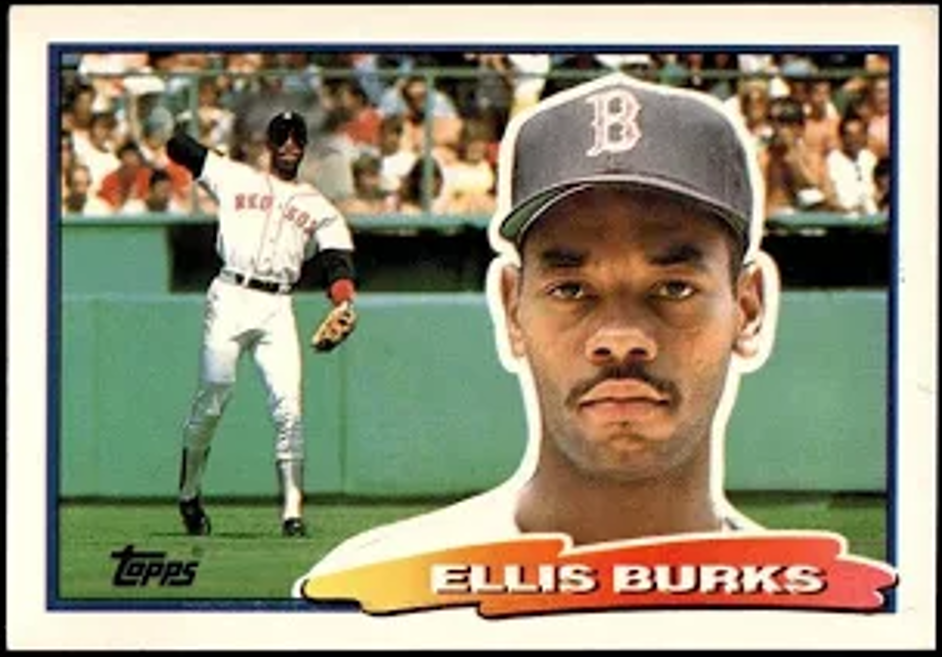
Even though it has been nearly 20 years since the five, six or seven series set, the series concept is not entirely dead. Topps revived the practice in 1988 with its “Big Baseball” card issue. The 1990 Leaf set was distributed in two series. Then in 1991, both Donruss and Score began to issue two-series sets. Now, most of the “upscale” sets – Leaf, Fleer Ultra, Topps Stadium Club, Score Pinnacle – are issued in two or three series.
Collecting multi-series sets was a challenging task. But back in the 1950s, ’60s and early ’70s when card collectors were primarily eight to 12-year olds, it was the type of project that helped fill the summer days of our youth. (Not to mention the obstacles series would present years later when as adults we would go back to fill out those old sets.)
• • • • • •
See related article on BaseballCardFun.com entitled:
“7th Series Man”
Click Link Here
• Originally Published in Oct. 1992 “Baseball Hobby News” •
THIS ARTICLE FROM “BASEBALL HOBBY NEWS” MAGAZINE IS REPRINTED WITH THE PERMISSION OF BOTH THE EDITOR/PUBLISHER AND THE AUTHOR. IT HAS BEEN RETYPED, BUT NO CONTENT HAS BEEN CHANGED (EXCEPT FOR VERY MINOR ADJUSTMENTS, CORRECTIONS TO TYPOGRAPHICAL ERRORS AND CHANGES TO GRAPHICS). COMMENTS OR INFORMATION IN THE ARTICLE MAY BE OUT-OF-DATE.
To keep up-to-date on additions to this
website, subscribe at bottom of this page*
* Your email address will never be shared and is only used to announce new articles
 BaseballCardFun.com