
The history of Topps baseball card sets
BY MARK A. LARSON
Hooked.
From 1973 on, I was permanently hooked on baseball card collecting.
I began collecting cards in the spring of 1967 at age eight and like many boys I continued until about age 12. I bought only a few packs in 1972 and figured that was that, my collecting days were over.
owHoHowever, after my family moved from Minneapolis to the San Francisco Bay Area, I met a guy about my age who was really into baseball cards. His interest in cards rekindled my own. And the 1973 Topps set was my reintroduction to collecting.
Along with another friend, we attended the first card show ever held in northern California in November of that year. The show solidified my interest in baseball cards and I’ve never looked back. (By the way, that new card collecting friend was Troy Kirk – now a fellow BHN staff writer and author of “Collector’s Guide to Baseball Cards”.)
⚾️ 1973 ⚾️
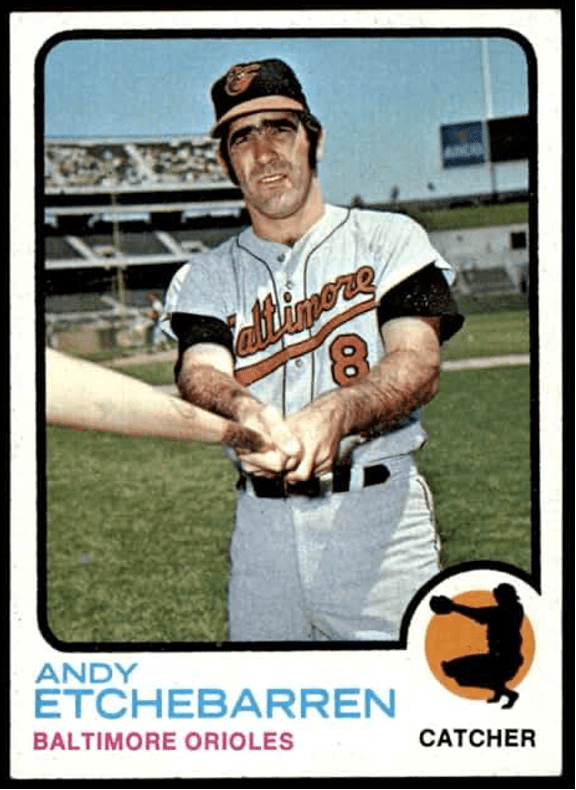
The relatively plain design of the 660-card 1973 set is a far cry from the previous year’s exotic use of color on the card fronts. The 1973s feature very small lettering for the player’s name, team and position on the front. The only new feature was a small, generic silhouette of a player designed to depict his position.
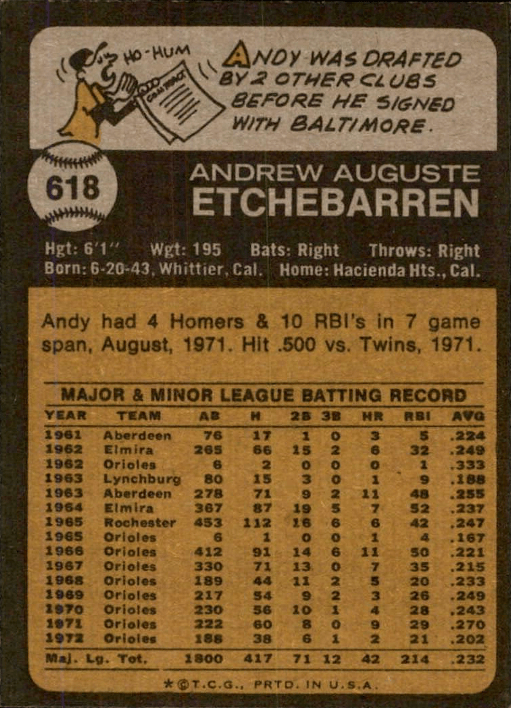
Backs of the ’73s are in a vertical format, reminiscent of the 1967 and 1968 Topps issues. A yellowish-brown and black color scheme on gray cardboard make for a darker look.
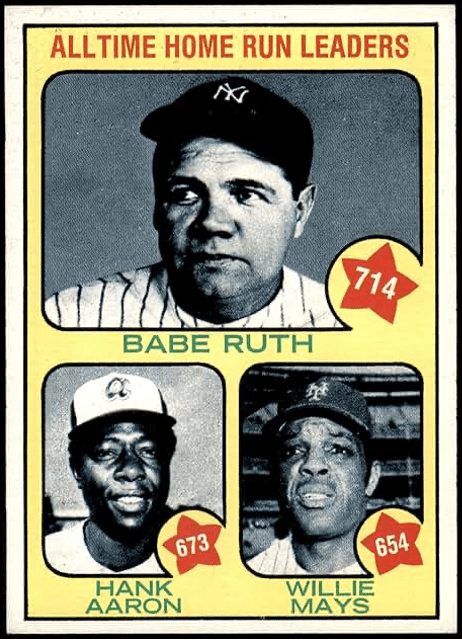
The set leads off with “All Time Home Run Leaders,” a card featuring black-and-white photos of Babe Ruth, Hank Aaron and Willie Mays. It was done in a typical League Leader card format. At the time, Ruth was still the home run champ with 714, followed by Aaron with 673 and Mays with 654.

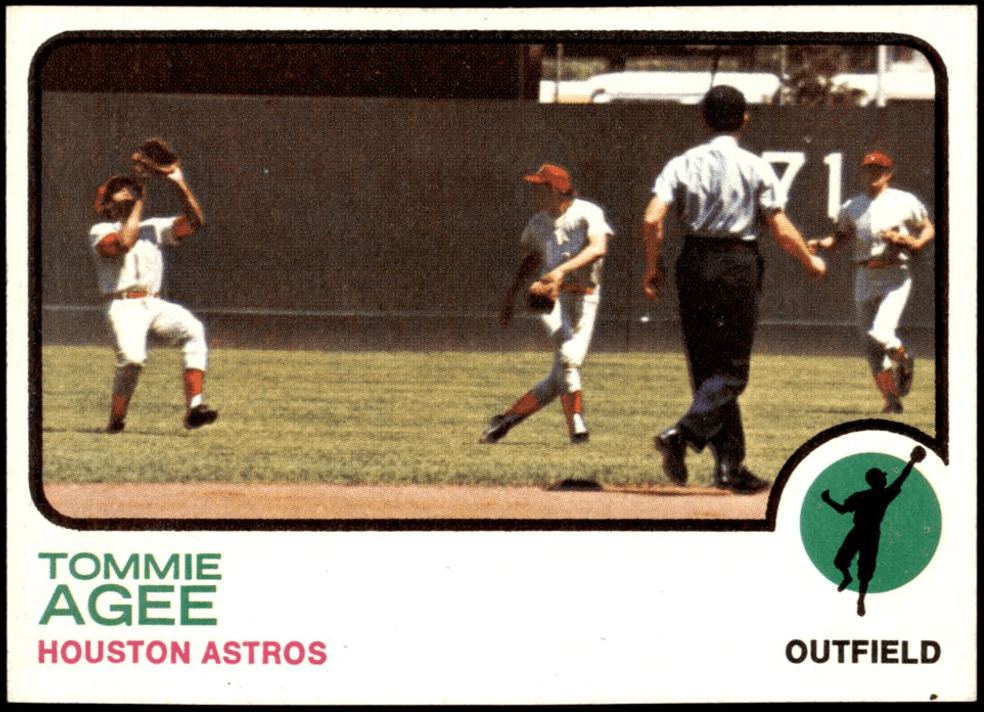
Cleveland first-baseman Chris Chambliss’ card (#11) is the first of 90 featuring actual game-action photos. As in the previous two years, it’s hard to tell who’s who on many of the cards. Sometimes as many as three players appear in a wide-angle shot. (Card #420 of Tommie Agee is perhaps the best example of this.)
It is interesting to try to spot famous players in the background on actions photos. In Chambliss’ case, he is holding Twins pitcher Jim Kaat near first base.
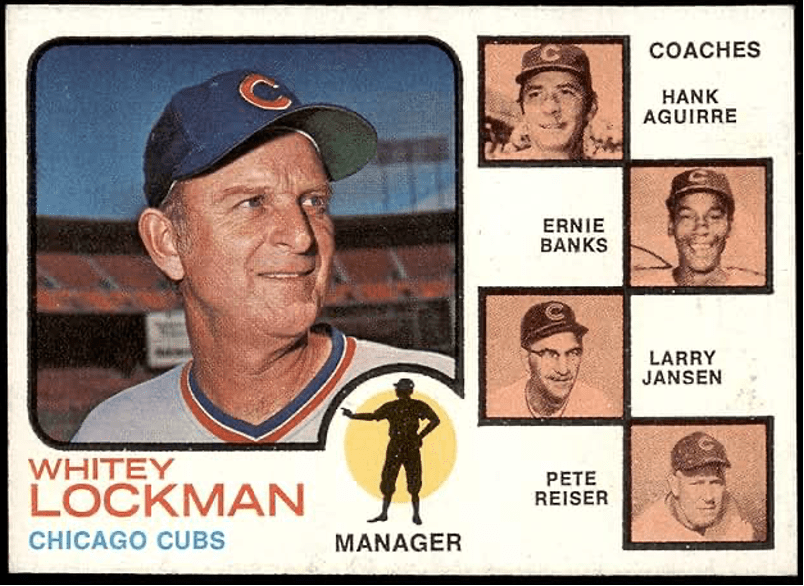
Manager cards are presented in a unique style in 1973. The first of these is Don Zimmer of the Padres (#12). The horizontal front shows Zimmer on the left half of the card, while the right half is occupied by four tiny photos of his coaches. This is the first time coaches appeared since the 1960 Topps set.
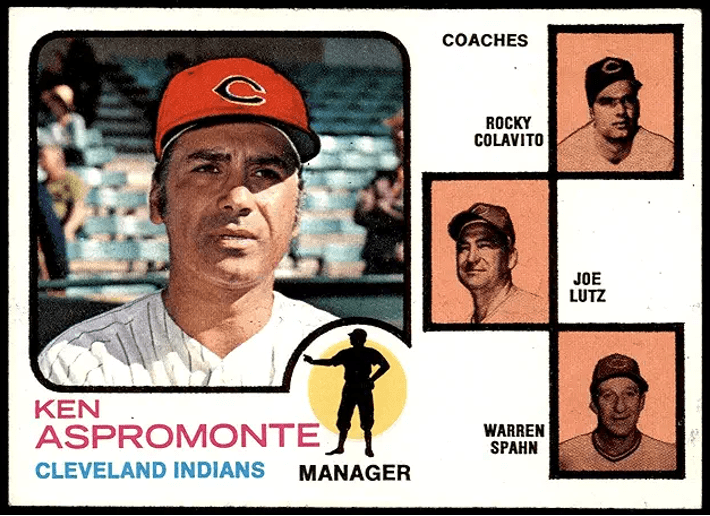
If you look closely, many of the manager/coaches cards include photos of prominent former big leaguers. For instance, Cubs’ manager Whitey Lockman’s card (#81) includes Hall-of-Fame slugger Ernie Banks as a coach. The Indians’ Ken Aspromonte’s card (#449) also features coaches Rocky Colavito and Warren Spahn.

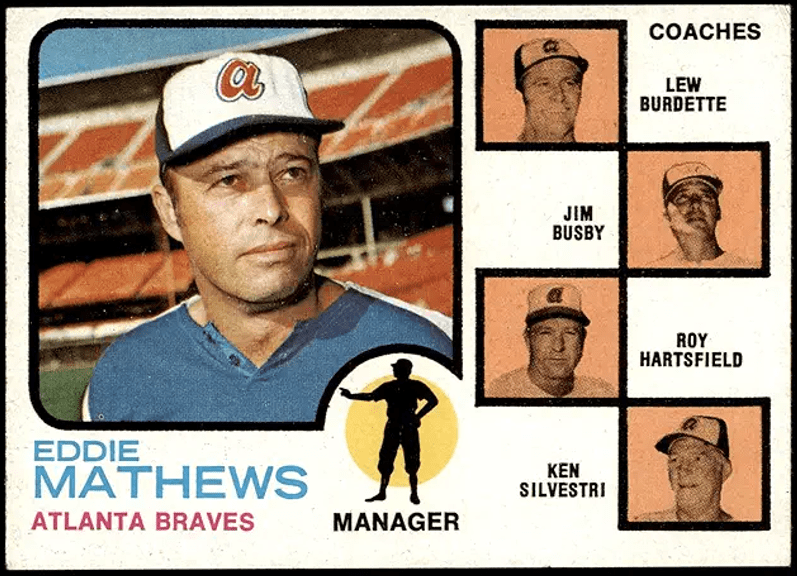
Speaking of managers, Eddie Mathews appears on his first Topps card (#237) since 1968, as skipper of the Braves. Yogi Berra returns to a Topps set for the first time in eight years (#257) as Mets’ manager.
League Leader cards (#61-68) are included in 1973, but with some changes from previous sets. This time, the top statistical leader in each category from both the American and National Leagues appear on the same card. In years past, the top three leaders in each league were featured on their own card. (The only exception in 1973 was card #66 where there was a tie and two American Leaguers and one player from the N.L. appear.)
In addition, the statistical categories of Stolen Base Leaders and Leading Fireman were featured on cards for the first time.
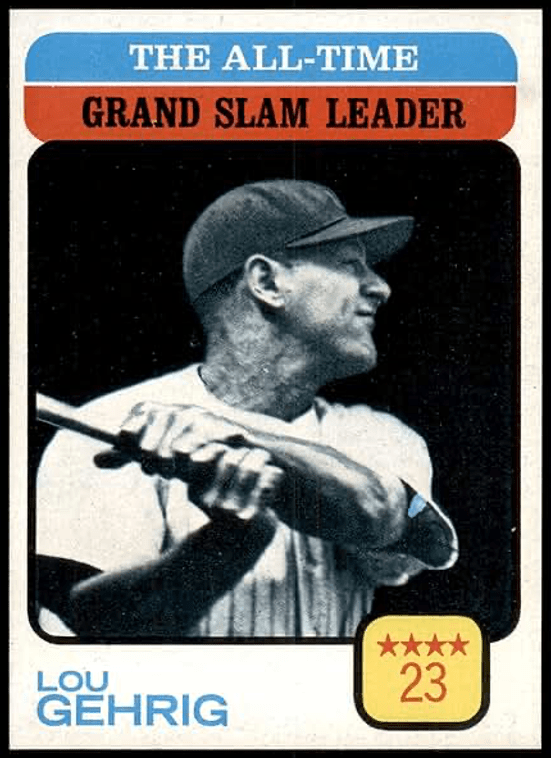
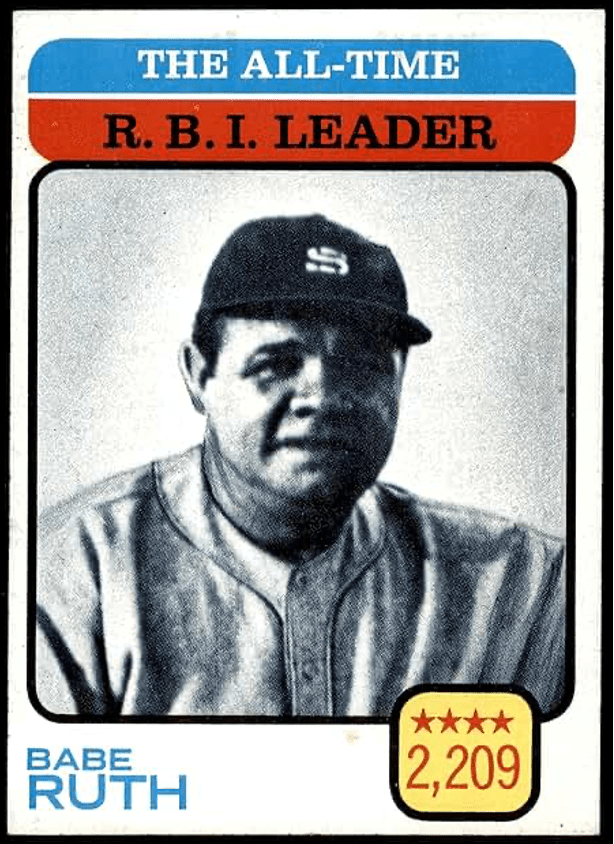
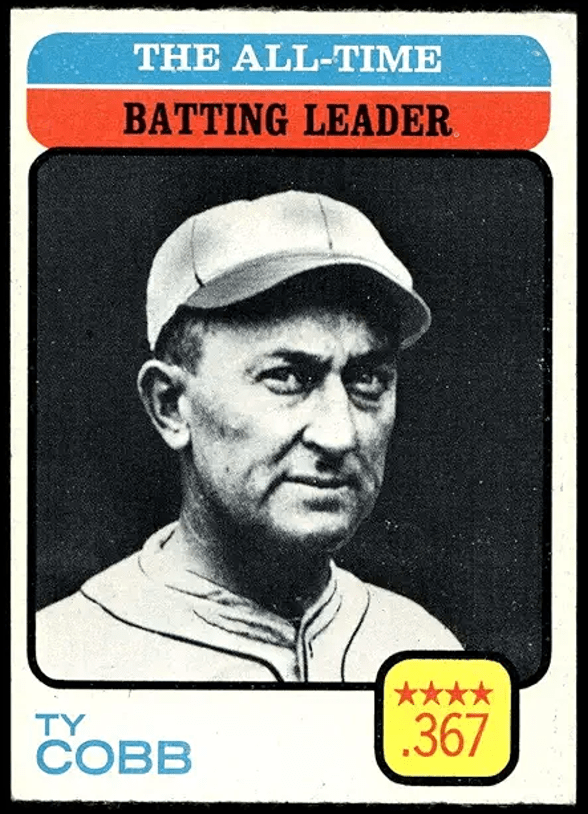
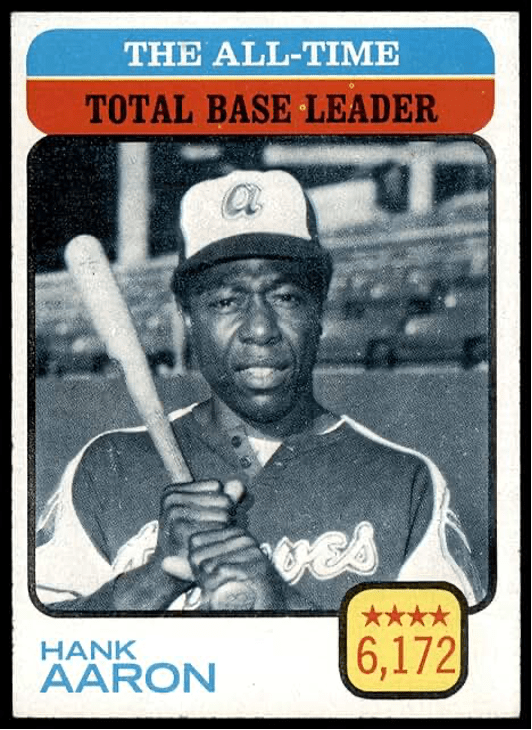
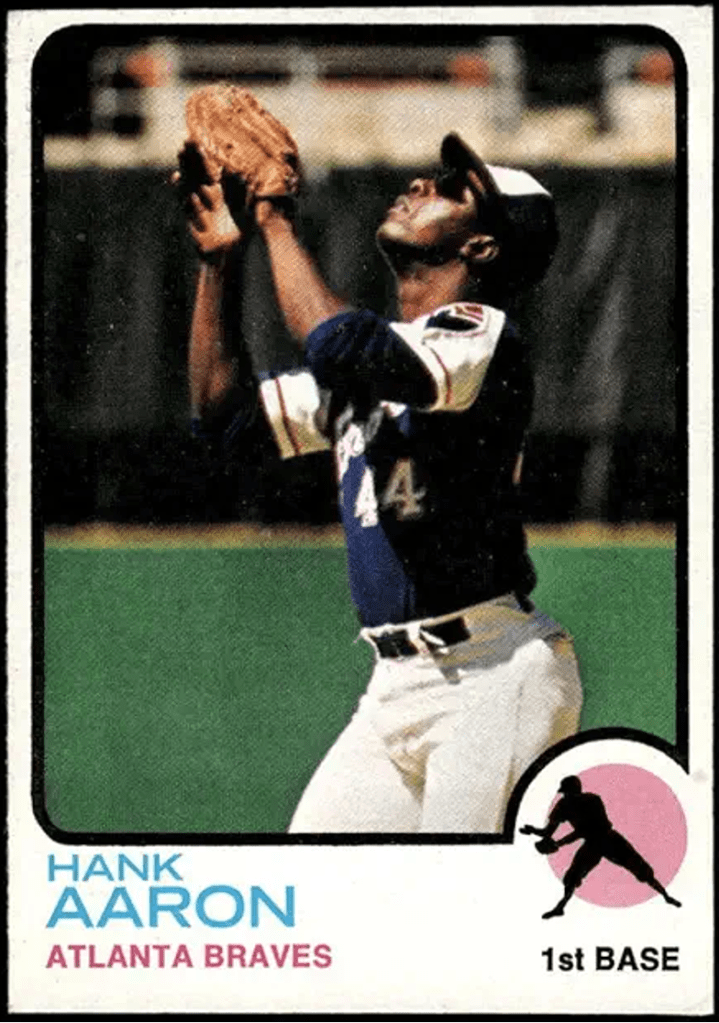
An eight-card series of black-and-white “All-Time Leaders” is also included in the ’73 set. Cards #471-478 spotlight the likes of Ty Cobb, Babe Ruth, Lou Gehrig and Hank Aaron among others.
“Boyhood Photos,” which were prevalent in the 1972 set, make a brief six-card appearance in 1973 (#341-346). Three of the six are Hall-of-Fame hurlers … Jim Palmer, Jim Hunter and Gaylord Perry.
Willie Mays appears on his final regular Topps card in 1973 (#305). It is also the only regular card in which the Say-Hey Kid is shown in a Mets uniform. (Mays is featured on a World Series card in the 1974 Topps set.)
The first cards of four top players show up in the ’73 set. These include relief pitcher Goose Gossage (#174), catcher Bob Boone (#613), outfielder Dwight Evans (#614) and future Hall of Fame third baseman Mike Schmidt (#615). The latter three appear on three-player rookie cards.

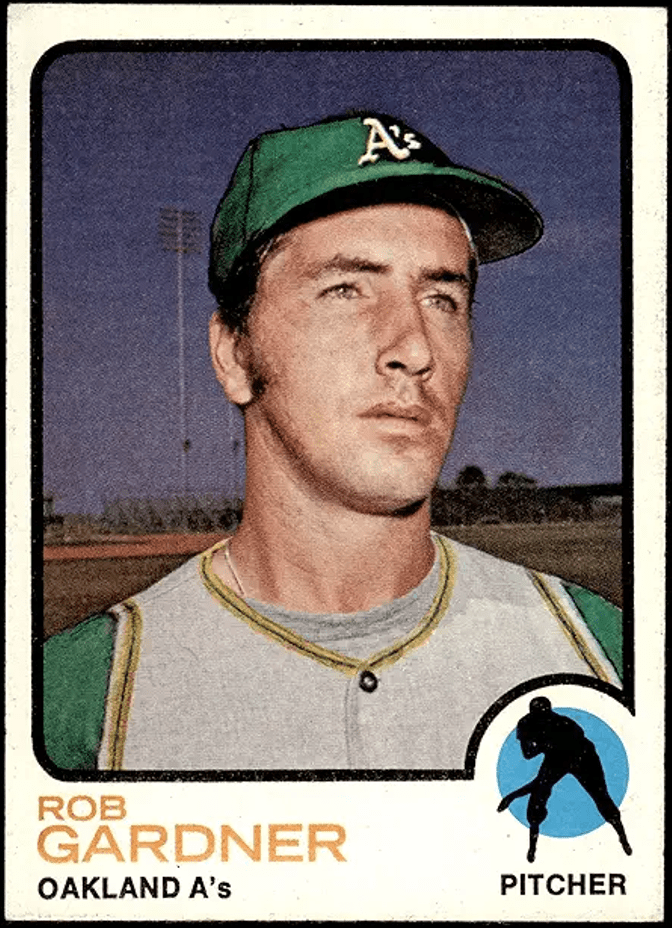

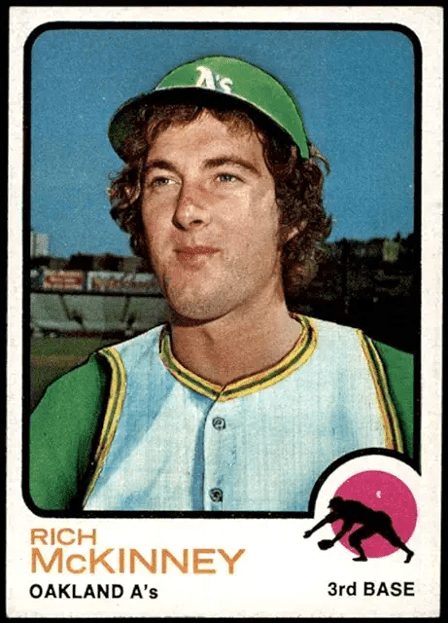
Three examples air-brushed uniforms and caps
Topps’ air-brush artists worked overtime in 1973. About 70 cards – more than 10 percent – in the set have painted over caps and uniforms. Rich McKinney (#587) is one of many players whose entire uniform was touched up to portray his new team. Most of these look amateurish. Many are silly and some are downright insulting to the intelligence. Even youngsters weren’t fooled by their bogus appearance. It should be remembered that Topps didn’t have any competition in those days.
Finally, it seems Topps changed card stock with its ’73 set. Many cards were issued with fuzzy borders, as if the cutting blades on the printing presses weren’t sharp. The cards also seem to wear more easily than previous sets. Additionally, many ’73s are off-center in a crooked way, giving them a cockeyed look.
In any case, back in 1973 I didn’t care too much about airbrushing, card stock or off-centeredness. After all, I was having fun again. I was hooked.

• • • • • •
• Originally Published in Oct. 1992 “Baseball Hobby News” •
THIS ARTICLE FROM “BASEBALL HOBBY NEWS” MAGAZINE IS REPRINTED WITH THE PERMISSION OF BOTH THE EDITOR/PUBLISHER AND THE AUTHOR. IT HAS BEEN RETYPED, BUT NO CONTENT HAS BEEN CHANGED (EXCEPT FOR VERY MINOR ADJUSTMENTS, CORRECTIONS TO TYPOGRAPHICAL ERRORS AND CHANGES TO GRAPHICS). COMMENTS OR INFORMATION IN THE ARTICLE MAY BE OUT-OF-DATE.
To keep up-to-date on additions to BaseballCardFun.com, subscribe below*
* Your email address will never be shared and is only used to announce new articles
 BaseballCardFun.com