
The history of Topps baseball card sets
BY MARK A. LARSON
Good-looking … exasperating … challenging … yet likeable …
Sounds like a member of the opposite sex. It could be, but those words also describe the 1971 Topps baseball card set – the black beauties that are darn near impossible to find in mint condition because of border wear.
The 1971s were the first (and only) black-bordered baseball card set to be issued by Topps, with the exception of the Greatest Moments test set of the same year. In fact, black borders are rarely used by card manufacturers. In 1962, the company released a black-bordered football card set. Topps’ 1985 football set also utilized them and the ’86 Topps baseball set made partial use of them, covering about the top one-fourth of card fronts.
Donruss resurrected the concept in 1985, adding small red stripes to enhance the look. And it worked. The ’85 Donruss baseball cards are one of the best-designed sets of the 1980s. Two years later, black borders returned on the ’87 Donruss cards. This time a small baseball design was added, but they were not as nice as the ’85s.
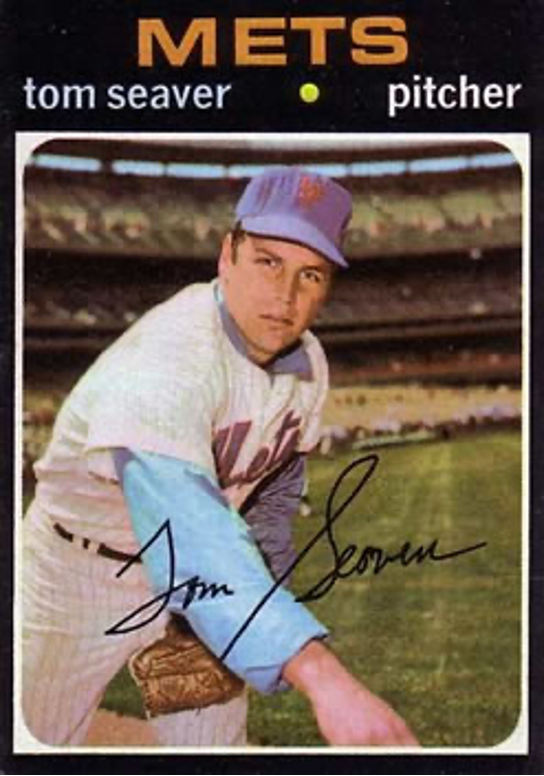
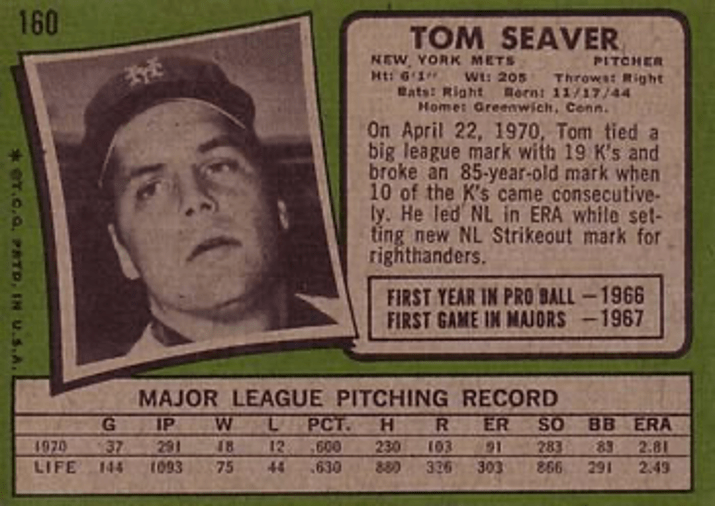
Simply put, the 1971 Topps cards are a pain-in-the-you-know-what for high-grade collectors. Sometimes it almost seems as if only minor handling of the cards can cause major headaches – wear that shows up on the borders. Yet, this can add to the fun of collecting by providing a dual challenge to completing the set. First, finding the needed cards and second, finding them without excessive wear.
Unfortunately, one other point should be made. Unscrupulous persons have been known to use black felt pens to touch up cards from the ’71 set, fooling some unknowing collectors into thinking the cards they are purchasing are in top shape. Beware of these ink-jobs. They render the cards virtually worthless. (To avoid being taken, carefully study all four borders of the 1971s … front, back and sideways looking for evidence of black ink markings.) Trying to deceive buyers in this way is tantamount to fraud.
The year 1971 now seems so long ago. Nobody had yet heard of Watergate. Ronald Reagan was just entering his second term as governor of California. And Washington still had a baseball team. Clint Eastwood fans got a glimpse of “Dirty Harry” and his .44 Magnum for the first time, and Gene Hackman was tracking down drug dealers in the Academy Award-winning flick “The French Connection.”
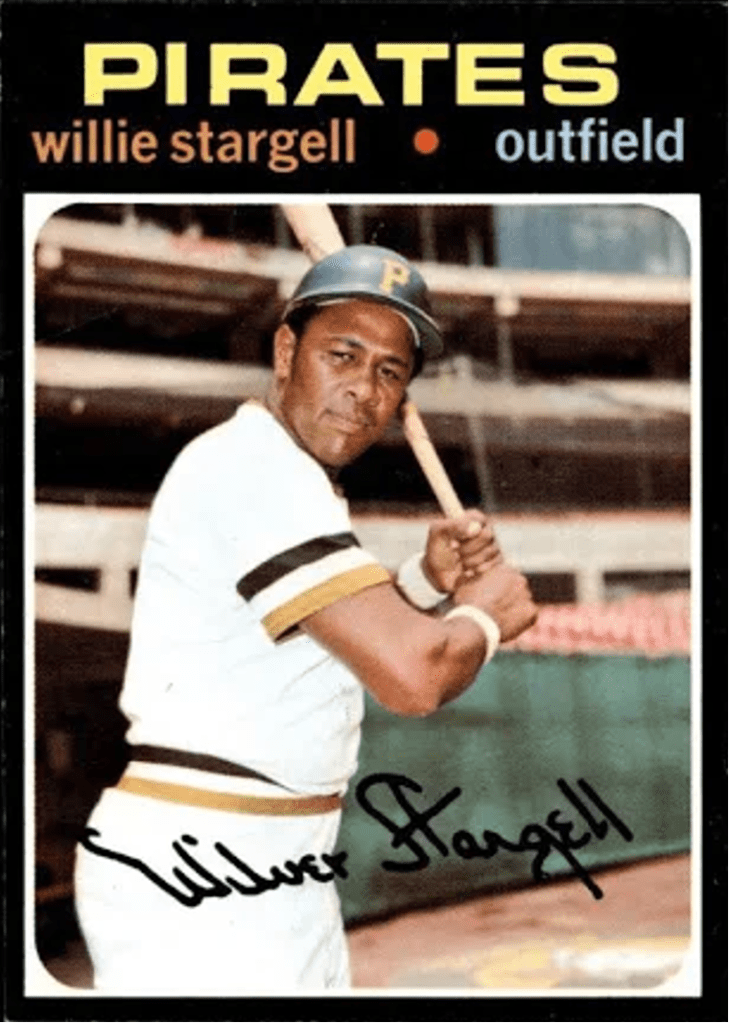
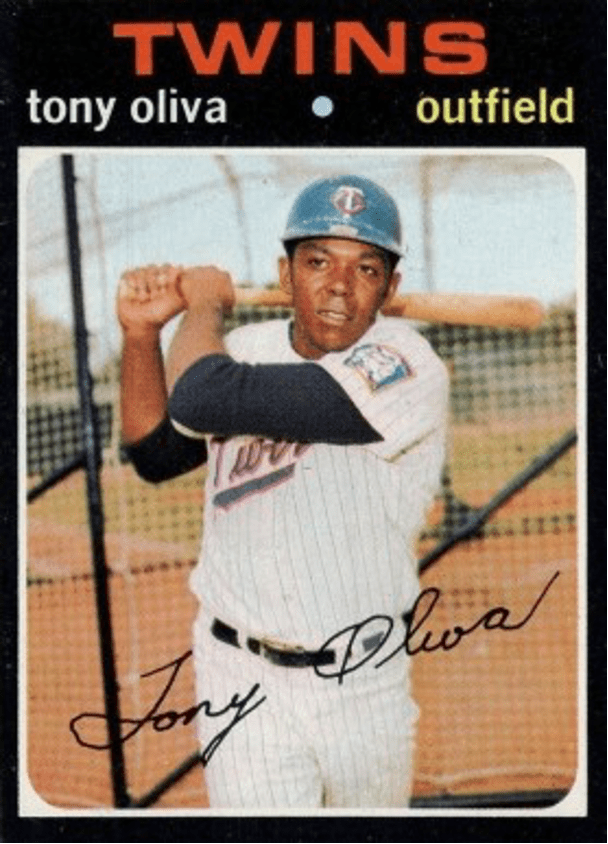

Harmon Killebrew and Frank Robinson both slugged their 500th home run during the ’71 season, while Hank Aaron sent No. 600 over the outfield fence. Willie Stargell edged out Hammerin’ Hank for the National League home run title 48-47 … career highs for both. Tony Oliva won his third American League batting title, hitting .337. Roberto Clemente was named World Series MVP as the Pirates bested the Orioles in seven games that October.
To cap off the year in baseball, a trade on Dec. 10, 1971 goes down in history as one of the most lopsided ever. The New York Mets dealt Nolan Ryan and three others to the California Angels in exchange for shortstop Jim Fregosi. Ryan went on to win an additional 285 games (through the end of 1991) and fan another 5,000-plus batters, while Fregosi never played another full season. He hit just .245 in seven partial seasons between 1972-78.
At 752 cards, the ’71 set was the largest up until that time. It was the first time Topps used a second photo on the card back and the first time the “Brewers” team designation was used (Seattle having moved to Milwaukee a year earlier). It would be the last time we would see the “Senators” team name on a card.
Not since 1962 was gray cardboard used. The 1971 set would turn out to be the first of 20 consecutive years Topps utilized drab gray card stock on the back. Also, for the first time since 1962, Topps listed only the previous year and lifetime stats on card backs.
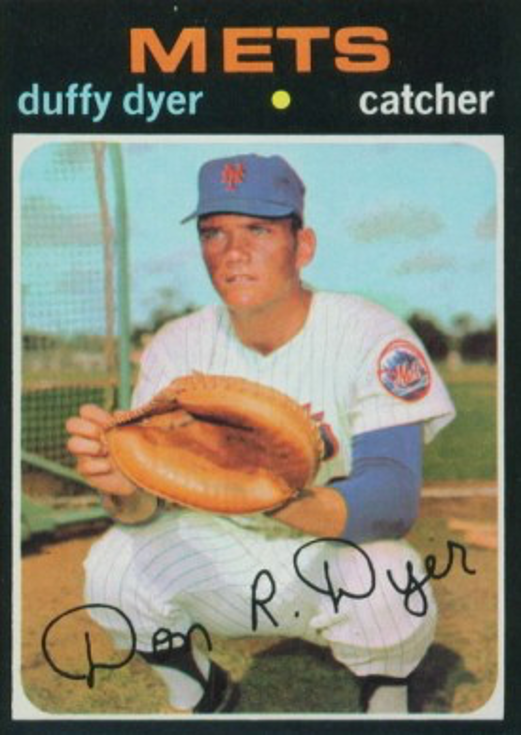
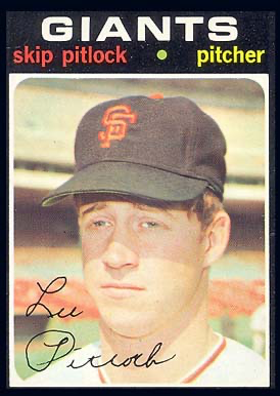
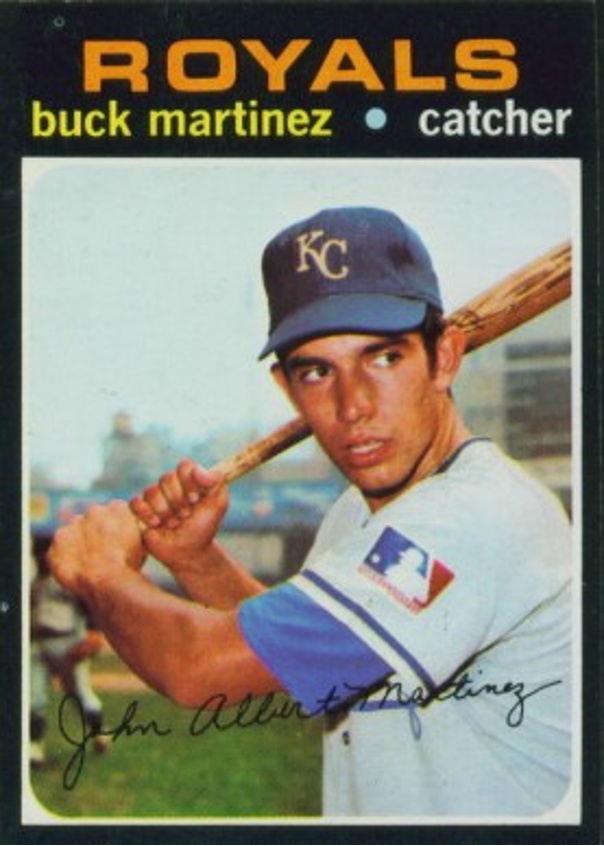
After a three-year hiatus, the facsimile autograph would return to card fronts in 1971. Topps used this additional feature six times prior to 1971 in 1952, 1954, 1955, 1956, 1959 and 1967. But unlike the ’67 cards, no facsimile autographs appear on rookie cards where more than one player is shown.
Some collectors don’t like the printed autographs, but if you look closely you could get an education from them. Many times the player’s printed name near the top of the card (on front and back) featured his nickname, while his autograph revealed his true identity.
For instance, Skip Pitlock’s card (#19) is signed “Lee Pitlock,” his real name. This is also true for: Boots Day (#42), real name Charles Day; Duffy Dyer (#136), real name Don R. Dyer; Buck Martinez (#163), real name John Albert Martinez; and Lefty Phillips (#279), real name Harold R. Phillips.
For only the second time in Topps’ first 20 years, all lower-case letters were used for the player’s name on the card front. The first time this style was employed was in 1959.
Once again, large block letters appeared on the front of the card for team names. Green ink was used on card backs, leaving a very dull impression.
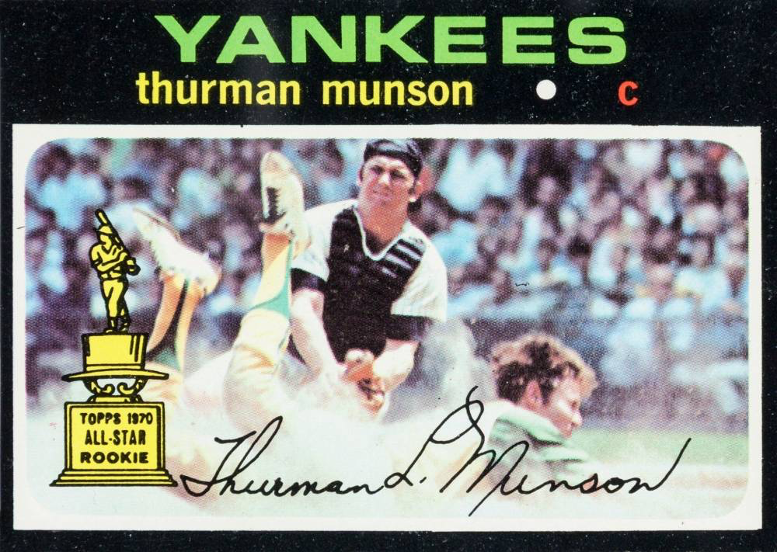
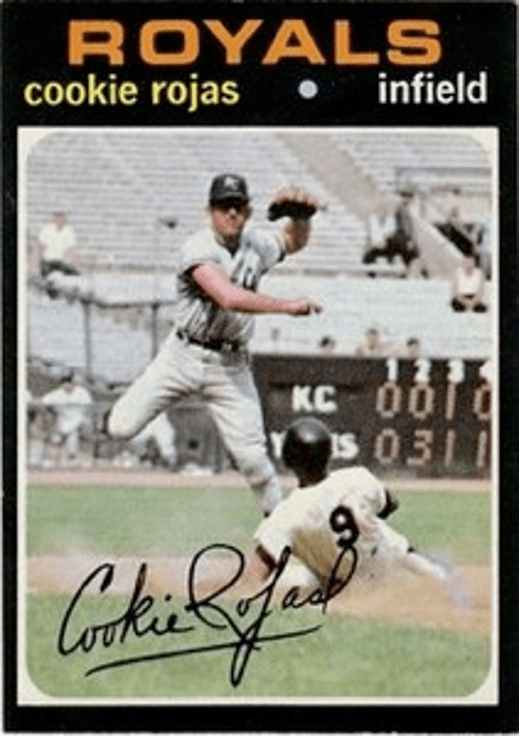
Photography in the 1971 set saw the advent of many action shots from actual games, as opposed to the traditional stale posed photos. Some of the better action shots include: Thurman Munson (#5) amid a cloud of dust at home plate as an Oakland player slides in head-first; Cookie Rojas (#118) in mid-air over second base making the double-play pivot as a Yankee slides in; and Tommie Agee (#310) sliding into second, with the wide-angle view also showing the umpire and two players, one of whom may be Joe Morgan of the Astros.
The price of the 1971 set in top grade is now way over $2,000. The most expensive card in the set is Nolan Ryan’s at $200-plus. Other cards in the $50 and up range include: Reggie Jackson, Tom Seaver, Rod Carew, Johnny Bench, Steve Garvey (rookie card), Hank Aaron, Willie Mays and Roberto Clemente.
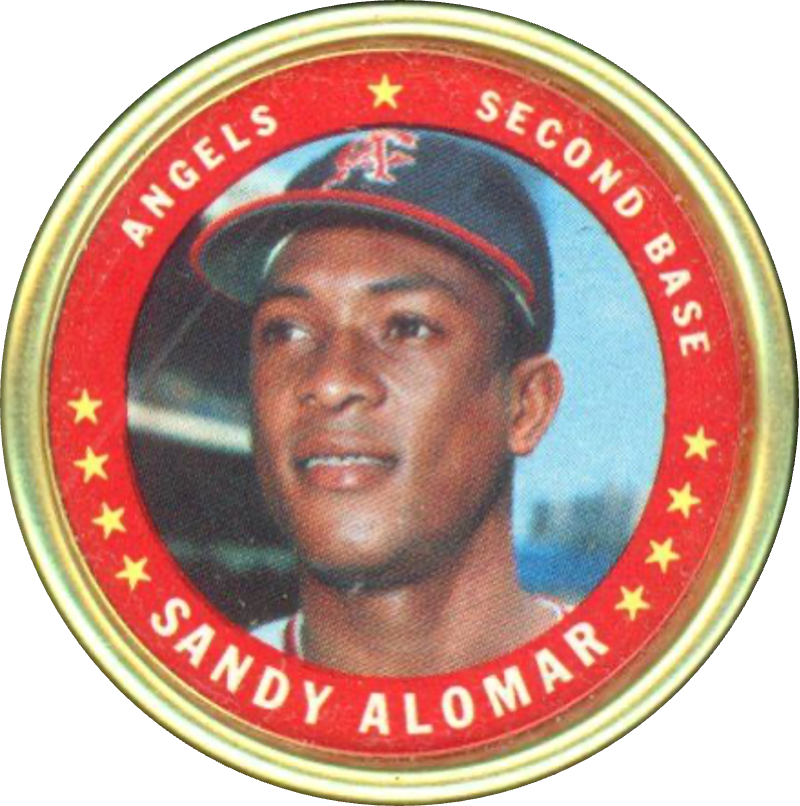
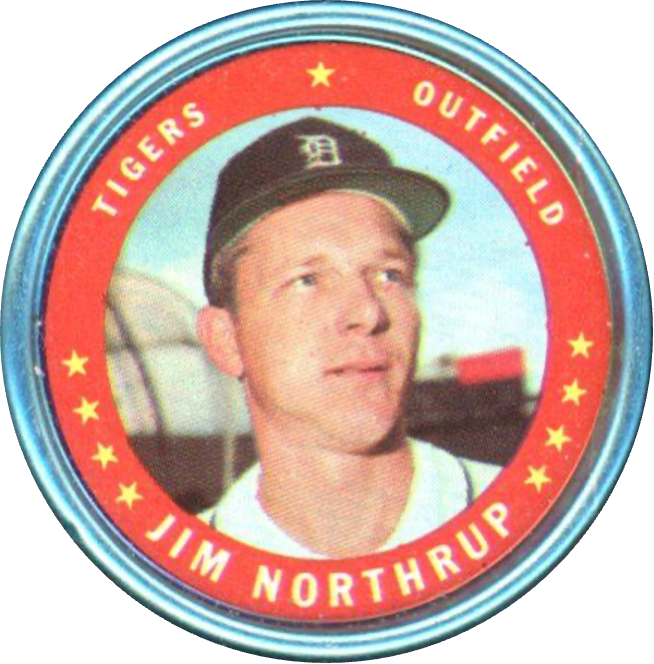
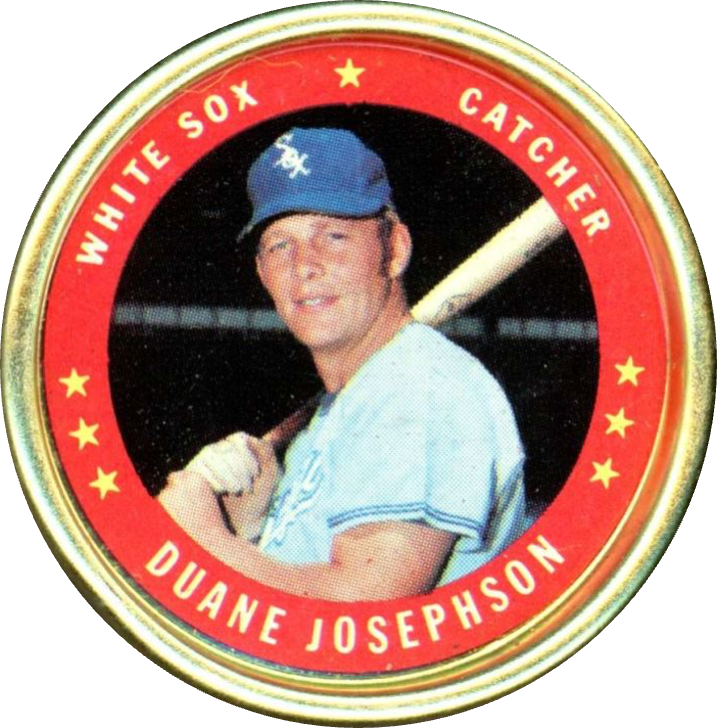
Two notable inserts were included with Topps cards in 1971. The first was a popular coin set issued one per pack in the early series. (Card #161 in the set is a coin checklist.) The 153-coin set had three distinct color styles. Coins #1-51 had brass backs, #52-102 were chrome, and #103-153 were blue. This was the second major coin set issued by Topps. In 1964, a 164-coin set was issued. Topps issued coins in the late 1980s, but not as an insert with their regular card set.
The 1971 coin set is valued at approximately $400. Star players generally fall within the $10-20 range, while commons are about $1 each.
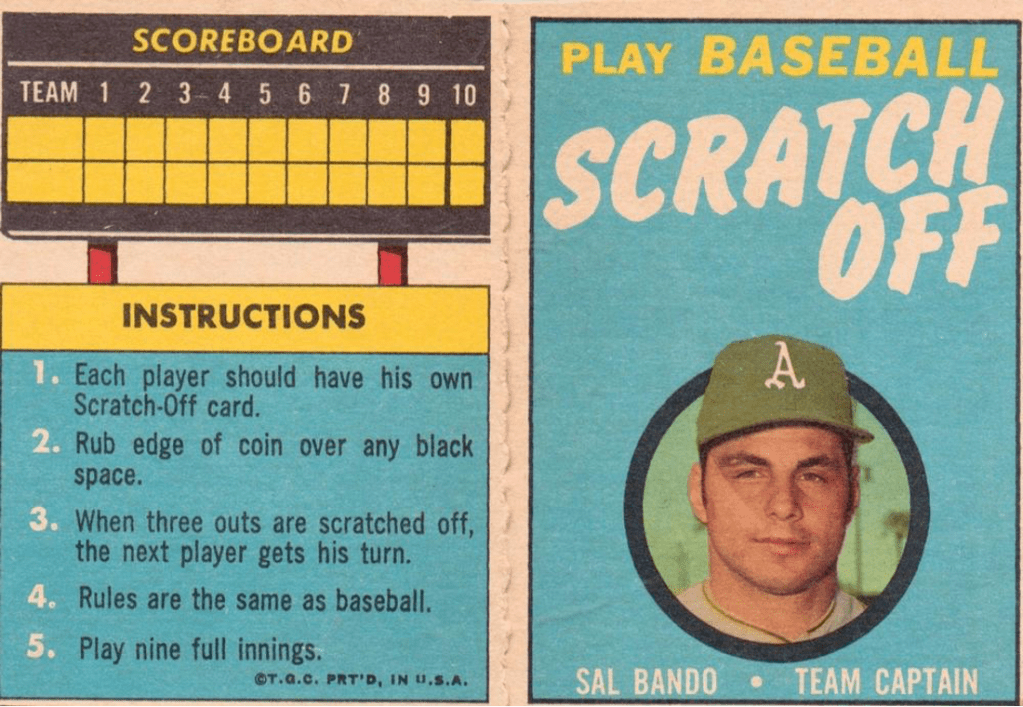
Another insert used by Topps in 1971 for the second time was a folded cardboard “scratch-off” game. Each card featured a head shot of a popular player and a game board featuring 44 black squares that could be scratched off to play a simulated nine-inning game of baseball. A year earlier, an almost identical insert was issued. (Inserts with white centers are from 1970, while red-centered cards were distributed with the 1971 set.) Most scratch-offs are valued at only a buck or two, depending on the player depicted.
If you’re into card collecting challenges, take a shot at putting together a mint set of 1971 Topps cards. It can be frustrating, even excruciating, but it will also be fun to see those commons and stars from 21 years ago within that familiar – and dreaded – black border.
• • • • • •
• Originally Published in Apr. 1992 “Baseball Hobby News” •
THIS ARTICLE FROM “BASEBALL HOBBY NEWS” MAGAZINE IS REPRINTED WITH THE PERMISSION OF BOTH THE EDITOR/PUBLISHER AND THE AUTHOR. IT HAS BEEN RETYPED, BUT NO CONTENT HAS BEEN CHANGED (EXCEPT FOR VERY MINOR ADJUSTMENTS, CORRECTIONS TO TYPOGRAPHICAL ERRORS AND CHANGES TO GRAPHICS). COMMENTS OR INFORMATION IN THE ARTICLE MAY BE OUT-OF-DATE.
To keep up-to-date on additions to BaseballCardFun.com, subscribe below*
* Your email address will never be shared and is only used to announce new articles
 BaseballCardFun.com