
BY TROY KIRK
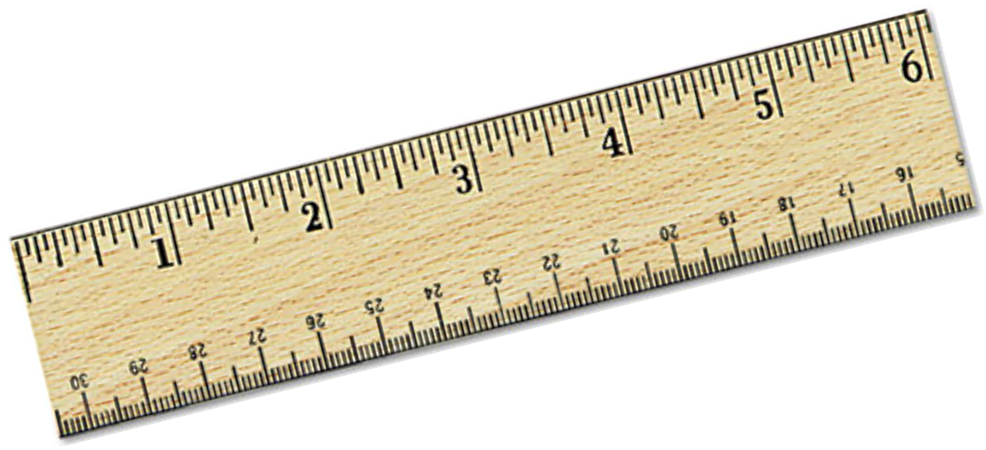
The standard size for baseball cards these days is 2 1/2 by 3 1/2 inches. Donruss, Fleer, Score, Topps and Upper Deck cards are all issued in this size.
Plastic pages, corrugated storage boxes and various other card holders are mass produced to hold cards of this size. Conformity to this standard is seen by many to be necessary for the success of a new card issue. Questions that come to mind include the following:
• Why is 2 1/2 by 3 1/2 inches the standard size for baseball cards?
• Is this the best size for baseball cards?
The 2 1/2 by 3 1/2-inch size that is used today for most baseball card issues is an arbitrary size that was introduced by Topps in 1957. It is interesting to note that although there were a few card issues that were close to this size, there were none in this exact size until 1957. Therefore, if you collected cards before 1957, the 2 1/2 by 3 1/2-inch size for a card would have seemed very different and probably undesirable, because it wouldn’t have conformed to the size of any of your other cards.
The reason Topps issued their 1957 cards in a brand new size wasn’t because they were trying to be trailblazers, but was probably just to cut costs. Their cards from 1952 through 1956 had been larger in size than those issued in 1957.
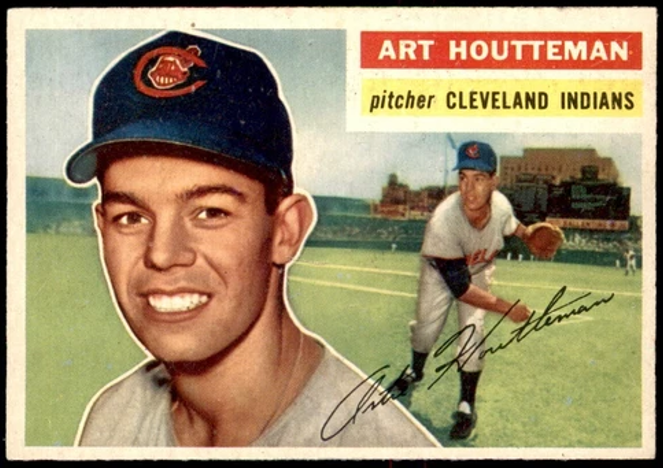
(2 5/8 by 3 3/4 inches)

(2 1/2 by 3 1/2 inches)
When Topps issued its first major set of baseball cards in 1952, the company was in competition for the baseball card market with Bowman. Bowman had been issuing cards in sizes smaller than the current standard from 1948 through 1951 and Topps probably assumed Bowman would continue to produce small cards in 1952.
When Topps issued its 1952 cards, a big deal was made about how large they were. This was supposed to be a desirable thing for kids of the early 1950s. It’s highly debatable whether kids really wanted larger cards or whether they preferred a smaller size. Nevertheless, Bowman was impressed with the larger Topps cards and subsequently issued their 1953 through 1955 sets in sizes similar to the Topps cards of the era, and larger than the standard cards of today.
After Topps bought out Bowman after the 1955 baseball card season was over, it no longer had any real competition. At that point, Topps probably already had its 1956 cards designed, so the company continued to issue cards in the large size. For 1957, though, Topps could make their cards however they wanted, since kids who wanted baseball cards had to buy them from Topps.
As companies that have gotten rid of their competition usually do, Topps decided to cut some of the costs associated with the competition and reduced the size of its cards. Topps was saving money by reducing the amount of material used.
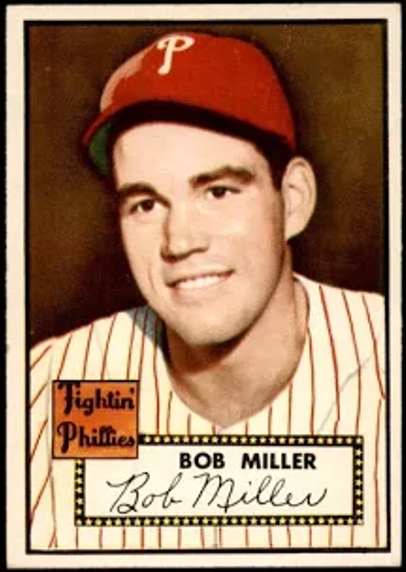
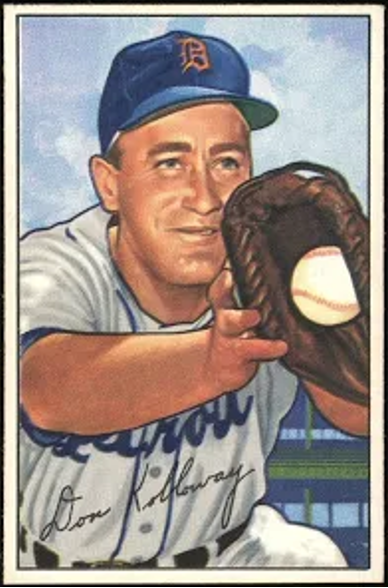
1952 Topps (left) – 2 5/8 by 3 3/4 inches …… 1952 Bowman (right) – 2 1/16 by 3 1/8 inches
In the years that followed, Topps continued to make cards in the new standard size. As other card-producing companies began to make various sports and non-sport cards, they used the size created by Topps, reinforcing the notion that this size was now an industry standard. This standard has lasted to the present day and shows no signs of changing.
This explains how the size standard got started, but it doesn’t explain why it continues or whether or not collectors really prefer this size to other sizes.
I suspect that autograph collectors would vote for bigger cards, as this would leave more room on the card for the player photo and the autograph. Some other collectors might prefer larger cards to make them more appealing to hang on the wall, or to hold more statistics. In their ads, Fleer proudly announced that it was putting four player photos on one card for its 1991 Fleer Ultra set. A larger card size would let Fleer put even more photos on the card.
My personal preference would be for baseball cards to be smaller. I really like the size of the 1991 Cracker Jack cards (1 1/4 by 1 3/4 inches) as well as the size of T-206 and other early tobacco cards (1 1/2 by 2 1/2 inches).
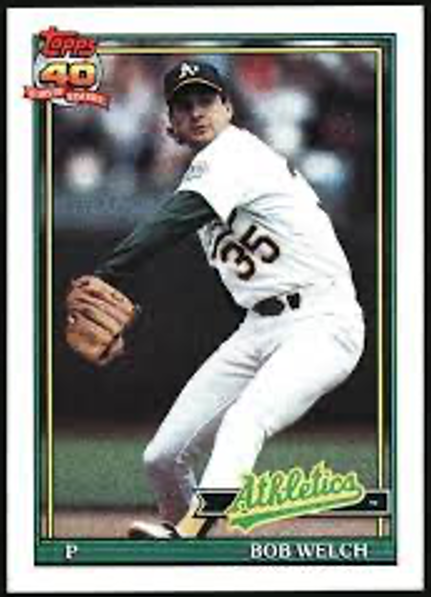
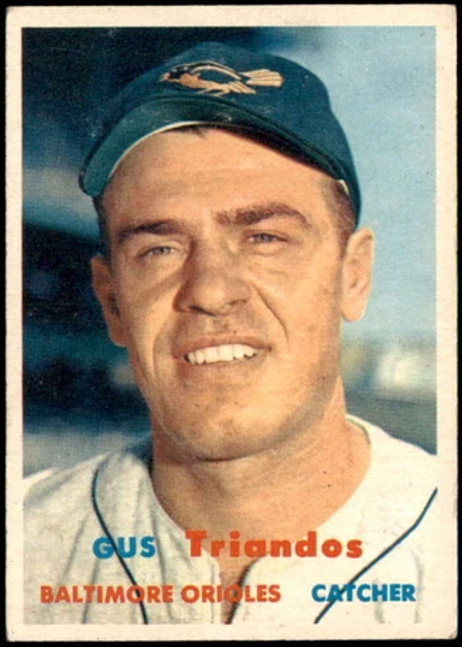
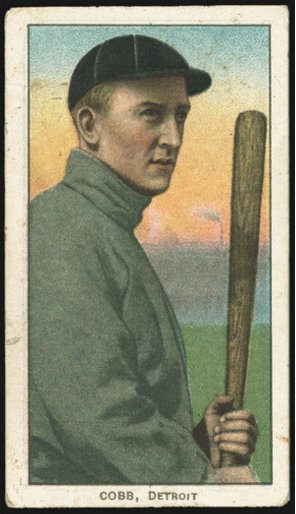
To give a size perspective, a standard-size 1957 Topps (center) is
flanked by a 1991 Cracker Jack card (left) and 1909-11 T-206 card (right)
Smaller size cards offer many advantages over larger cards. Small cards take up much less space than larger cards. You can fit more small cards in a box or in a card binder. In time, collectors might even be able to reclaim some of their lost closet space by specializing in smaller cards.
Since not as much cardboard is used, smaller cards should be less expensive to produce and cheaper for collectors to buy. Shipping costs would also drop as the weight of a set of small cards would be significantly less than standard size cards.
Another advantage of small cards is that they have a longer history than today’s standard size cards, going back to the earliest cards from the late 1880s. Most cards issued from 1887 through 1951 were issued in smaller sizes than those of today.
Smaller cards are even more of an international standard, as hundreds of card sets from around the world have been issued in a smaller size format. For example, collectors in England consider the standard card size to be 1 1/2 by 2 1/2 inches.
But perhaps the best reason for smaller cards was given by a Cracker Jack baseball card collector when she said she likes them because “they’re cute.”
• • • • • •
• Originally Published in May 1992 “Baseball Hobby News” •
THIS ARTICLE FROM “BASEBALL HOBBY NEWS” MAGAZINE IS REPRINTED WITH THE PERMISSION OF BOTH THE EDITOR/PUBLISHER AND THE AUTHOR. IT HAS BEEN RETYPED, BUT NO CONTENT HAS BEEN CHANGED (EXCEPT FOR VERY MINOR ADJUSTMENTS, CORRECTIONS TO TYPOGRAPHICAL ERRORS AND CHANGES TO GRAPHICS). COMMENTS OR INFORMATION IN THE ARTICLE MAY BE OUT-OF-DATE.
To keep up-to-date on additions to BaseballCardFun.com, subscribe below*
* Your email address will never be shared and is only used to announce new articles
 BaseballCardFun.com