
The history of Topps baseball card sets
BY MARK A. LARSON
“December 7, 1941 … A date which will live in infamy.” (President Franklin D. Roosevelt speaking of the sneak attack on Pearl Harbor.)
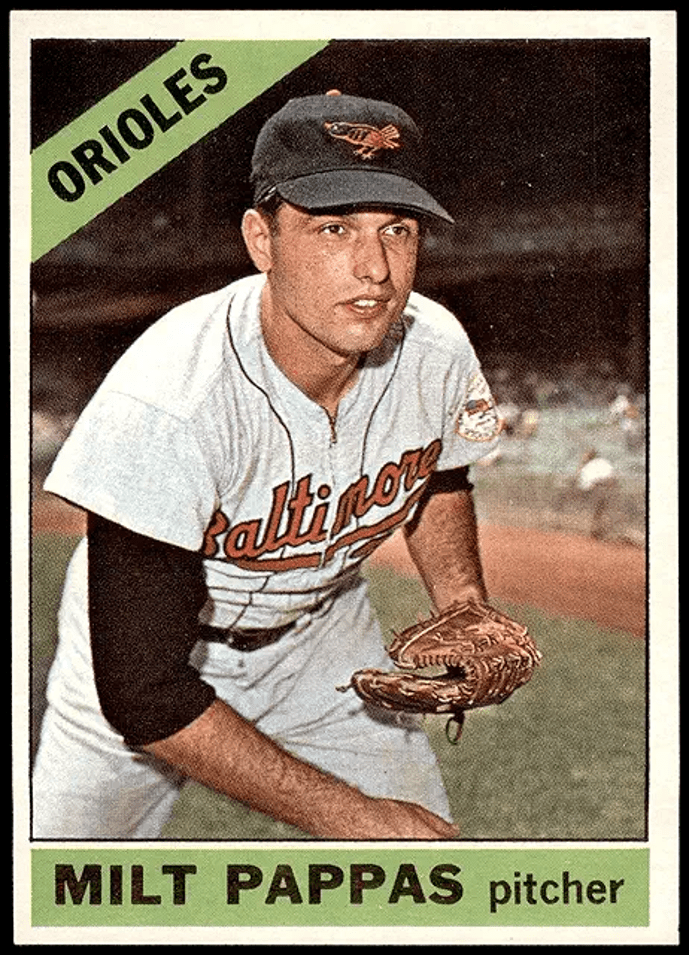
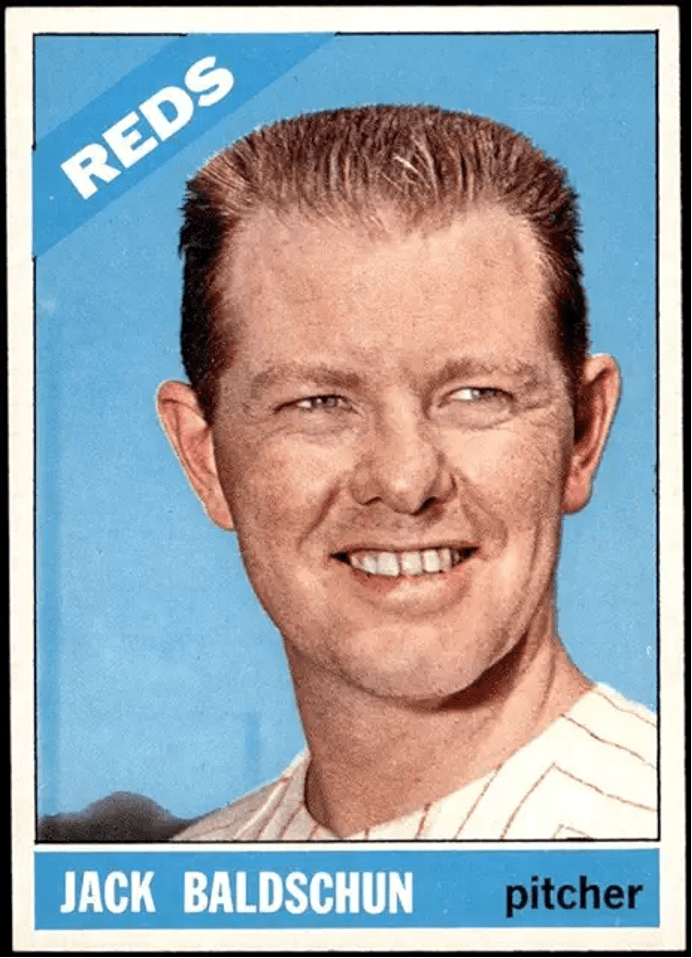
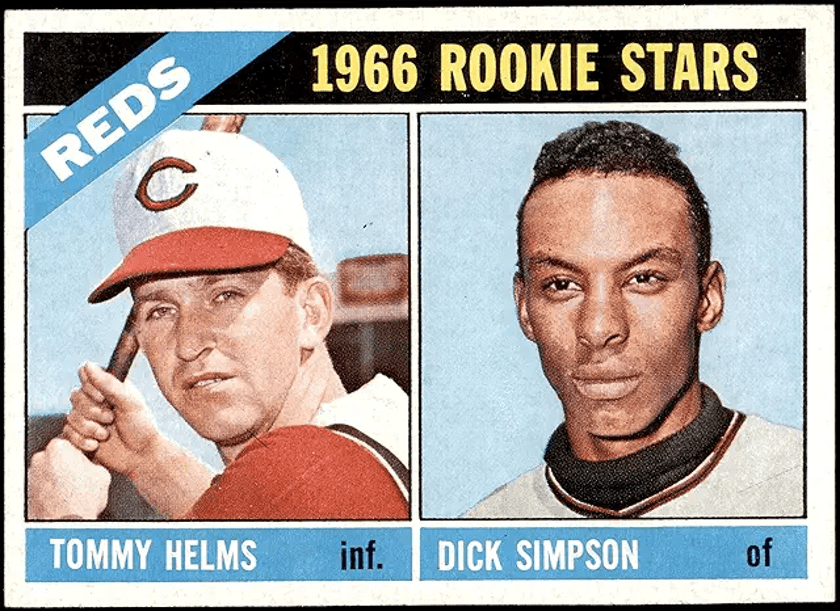
“December 9, 1965 … A date which will live in infamy.” (Cincinnati Reds fans when thinking about the trade that sent slugger Frank Robinson to the Orioles in exchange for pitchers Milt Pappas and Jack Baldschun and outfielder Dick Simpson.) The Pappas-for-Robinson swap will go down as one of the best or worst of all-time, depending on whether you’re a Baltimore or Cincinnati fan. Robinson was the talk of baseball world in 1966 as he led the Birds to their first World Championship.
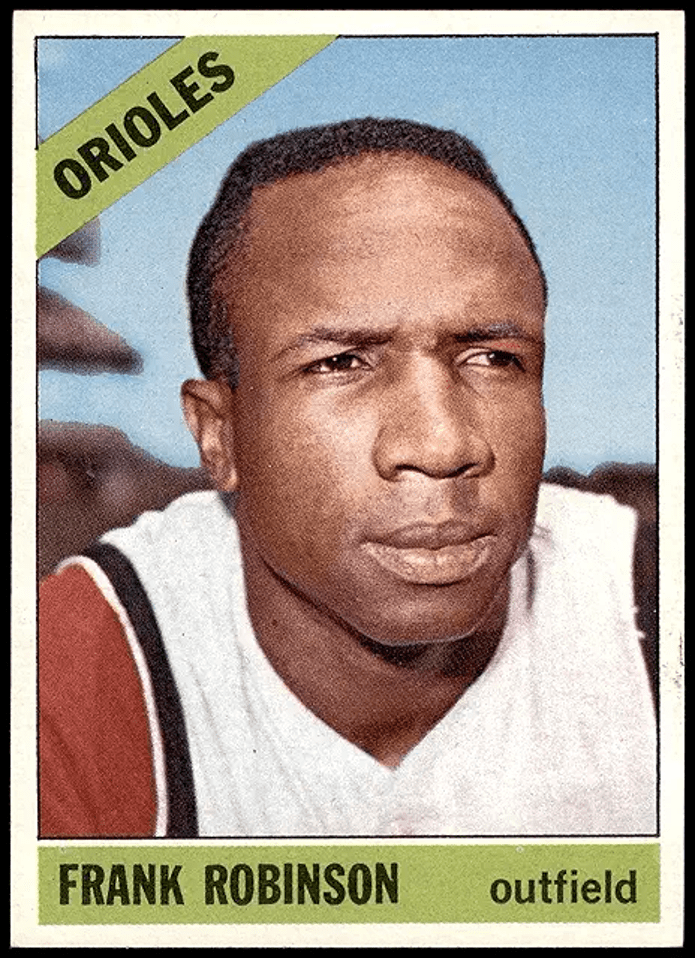



En route to that World Series victory, Robinson won the Triple Crown, leading the American League in home runs (49), RBIs (122) and batting (.316). It was the first Triple Crown since Mickey Mantle led the A.L. in all three categories 10 years earlier. In 1966, Robinson also became the first player to win an MVP Award in each league … previously being named MVP in the National League in 1961.
Robinson continued to produce for Baltimore in years to come. On the other hand, Pappas stayed with the Reds for just 2 1/2 years, compiling a 30-29 record. In Baldschun’s two years in Cincinnati, he was a dismal 1-5, while Simpson hit only .246 with five homers in 136 games over two seasons. By mid-1968, all three were no longer with the Reds.
Robinson’s awesome season made his 1966 Topps card (#310) highly sought-after by collectors in the summer of ’66.
Other cards in great demand during the year were Sandy Koufax (#100), Hank Aaron (#500) and Roberto Clemente (#300). The 1966 season turned out to be Koufax’s last, as arthritis was wreaking havoc with his throwing arm. However, you couldn’t detect the pain he was in by his statistics: He was tops in the majors in victories (27), ERA (1.73) and strikeouts (317). Koufax won his third Cy Young Award that year.
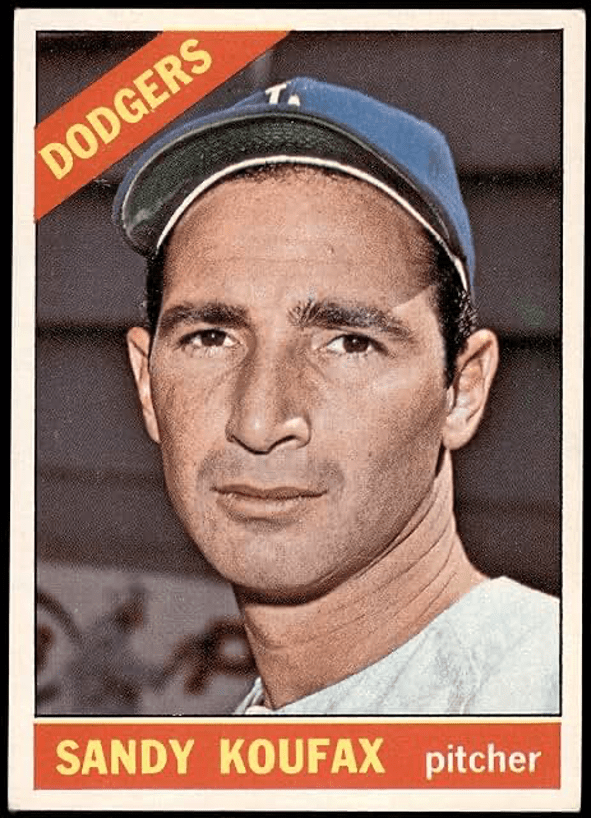
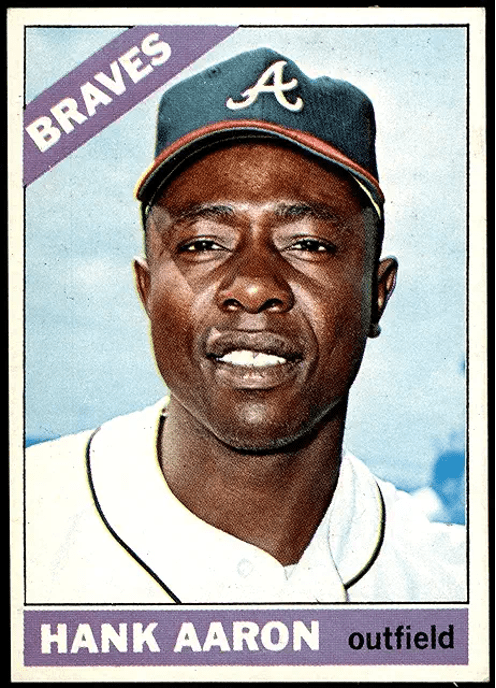
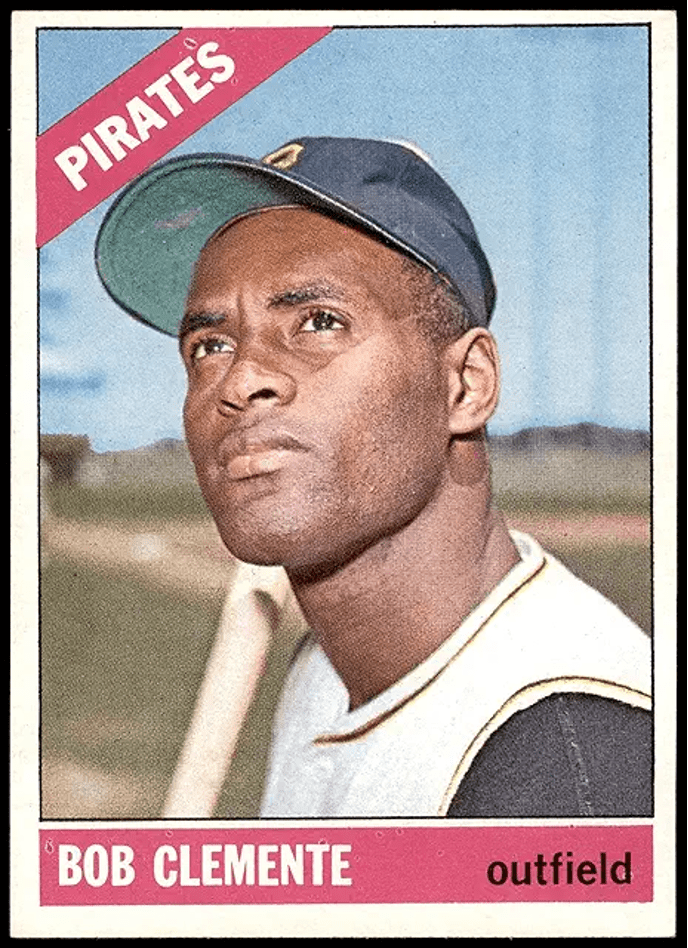
Aaron, meanwhile, led the N.L. in home runs and RBIs with 44 and 127 respectively. However, Pittsburgh’s Roberto Clemente was named MVP in the N.L. as the Pirates finished just three games behind the league-leading Dodgers. Clemente had career highs in home runs (29) and RBIs (119) and hit .317.
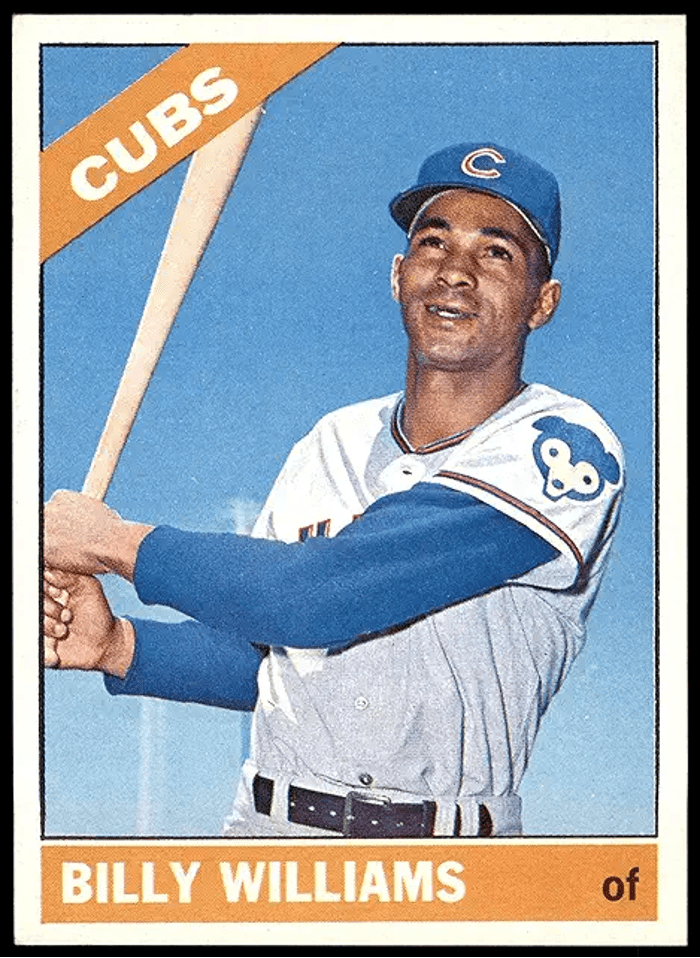
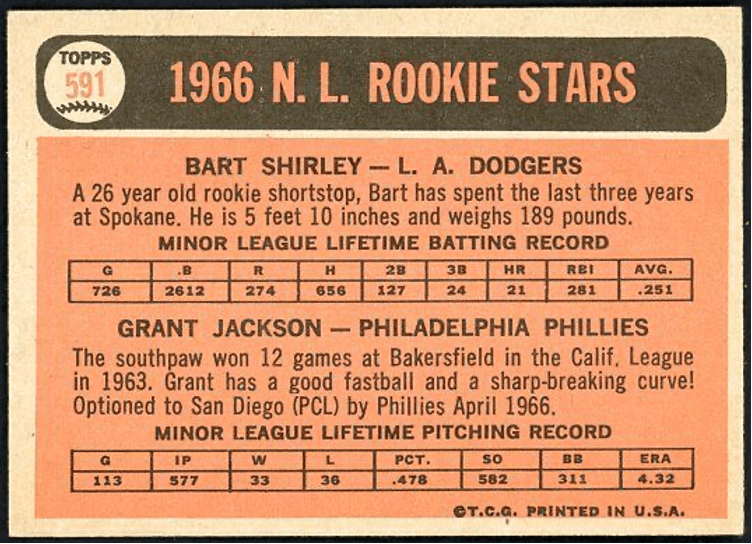
Topps’ 1966 set was probably the blandest in design since the 1961 cards. The color band across the upper left-hand corner with the team name is the primary design factor distinguishing the ’66 set from all others. The color band idea was used again on the lower right-hand corner of the 1988 Topps. Backs had basically the same overall appearance as Topps’ three previous sets, except the color was a pinkish-red on white cardboard stock.
The 1966 Topps set did not include a World Series subset, the only year these cards were missing between 1960-78. This was unfortunate for Minnesota Twins fans, as their team would have been featured along with the Dodgers. It was the Twins only World Series appearance during the 1960s and ’70s.
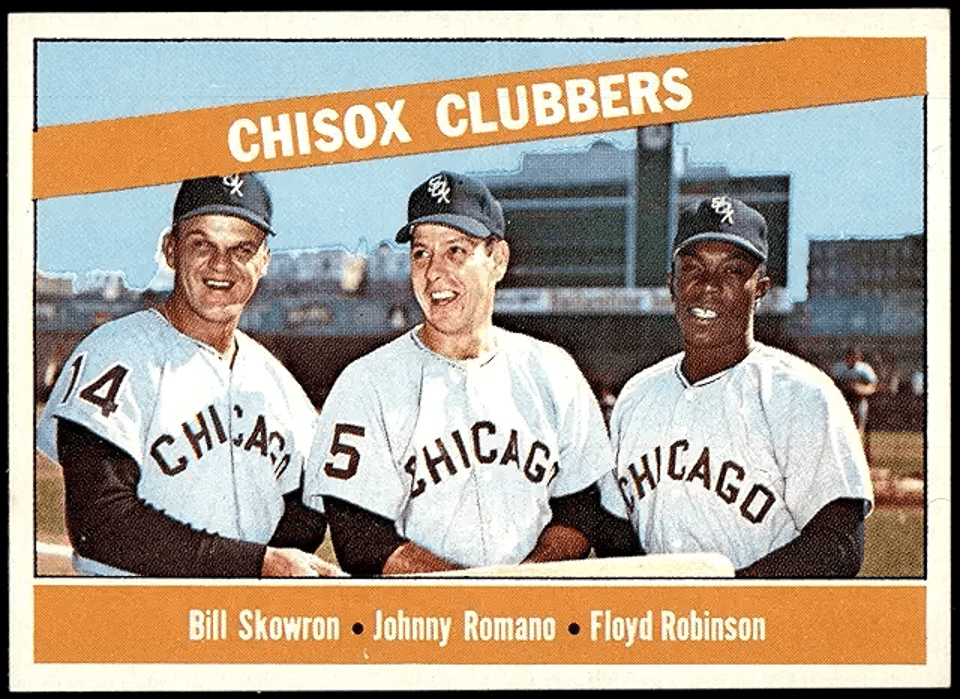
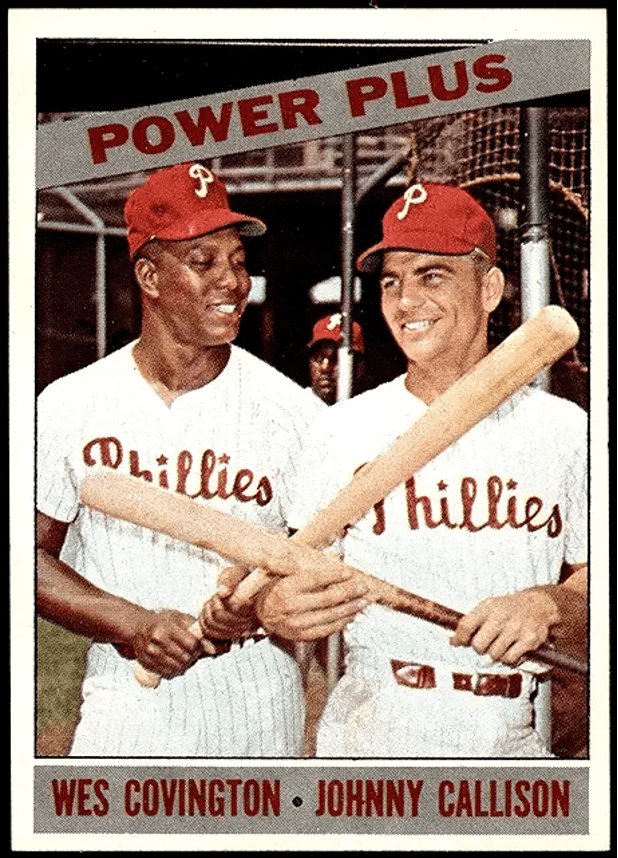
Returning to the ’66 set after a one-year absence were multi-player cards. The five appearing in the set were: “Power Plus” (#52) with Wes Covington and Johnny Callison of the Phillies; “Buc Belters” (#99) with Willie Stargell and Donn Clendenon of the Pirates; “D.P. Combo” (#156) with Dick Schofield and Hal Lanier of the Giants; “Chisox Clubbers” (#199) featuring the trio of Bill Skowron, Johnny Romano and Floyd Robinson; and “Astro Aces” (#273) with Bob Aspromonte and Rusty Staub.
League Leaders cards made their annual appearance (#215-226). And three key rookie cards were included in the set: pitchers Jim Palmer (#126) of the Orioles, Fergie Jenkins (#254) of the Phillies and Don Sutton (#288) of the Dodgers.
Along with the 1961 Topps and 1967 Topps, the last series of the 1966 set (#523-598) is one of the toughest to complete in the past 30 years. Forty-three of the 76 cards in the 7th series were short-printed, making them much harder to find than the others.
Some of the more interesting cards in the tough 7th series include:
• Twins Team (#526): For the third time in six years the Twins team card appeared in the final Topps series. It lists for $65, but as with most single-printed high numbers, collectors usually have to pay over book for it.
• Robin Roberts (#530): This was Roberts’ last card appearance (shown with the Astros). It’s not a single-print, but still commands a $36 price-tag.
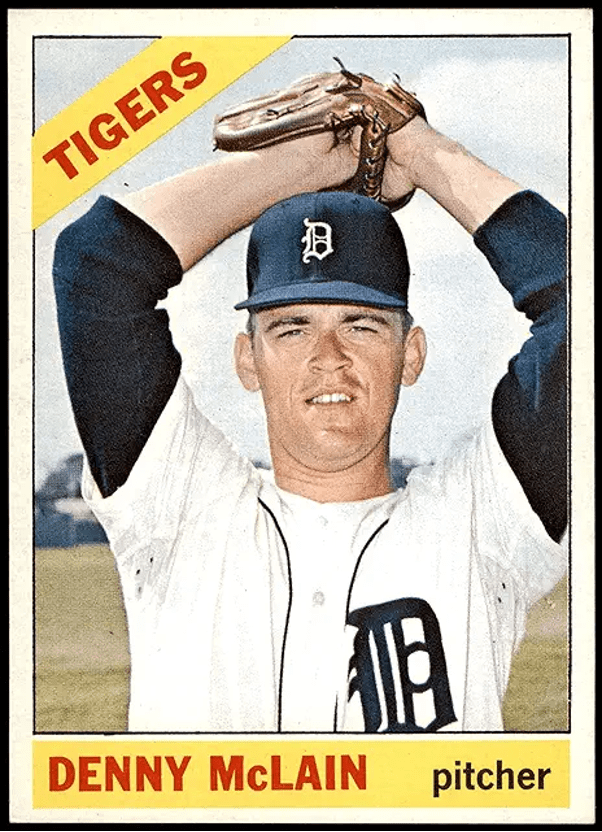
• Denny McLain (#540): This is a single-print and goes for at least $50 in top grade. McLain’s early cards continue to be popular with collectors.


• Roger Craig (#543): This was Craig’s final appearance on a card as a player. Later, he’s on many managers cards. A single-print, it goes for $35.
• Willie McCovey (#550): “Stretch’s” single-print could stretch some budgets. It’s $110.
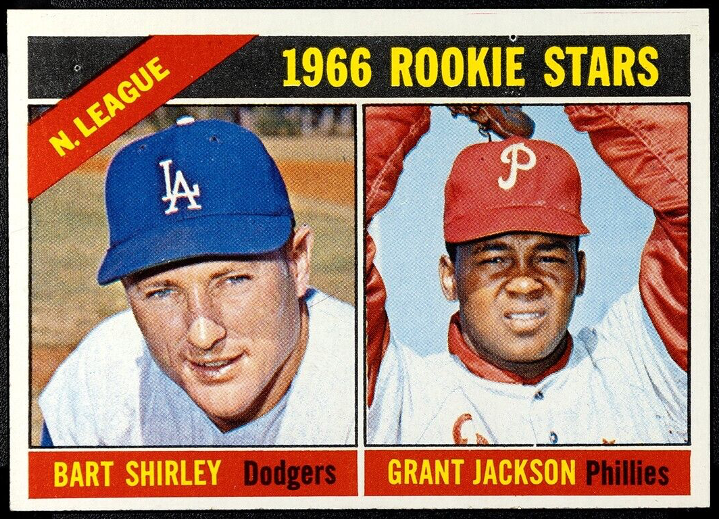
• 1966 Rookie Stars (#553): It’s not a single-print and features two obscure players, Pat Garrett (Braves) and Jackie Warner (Angels). The unique thing about this $14 card is the color band at the top of the card is just plain red, with no team designation or any words at all. It looks out of place.
Topps was at a loss as to what to put on the band since the players came from different teams and different leagues. In a somewhat similar situation later in the series, the two players on this card (#591) came from different teams, but both were in the National League so Topps put “N. League” in the color band. The situation came up again in 1968 (#539) and Topps solved it by listing “Major League” as the team designation.
• Choo Choo Coleman (#561): Coleman, given name Clarence, possessed one of the more popular nicknames of the ’60s. Playing for the inept Mets added to his appeal. This was his last card and it goes for $42 (single-print). Mets team collectors will tell you that it is extremely difficult to locate.
• Billy Williams (#580): Another single-print, Williams was just coming into his own in ’66. His card lists at $85.
• Tigers Team (#583): A very popular single-printed card and tough to find. Its popularity and scarcity is reflected in the $125 price.
• Gaylord Perry (#598): He’s a Hall-of-Famer. It’s a single-print. And it’s the last card in the set, which theoretically makes it harder to find in mint condition. Scrape up $275 and you can own one, too.


• • • • • •
See related article on BaseballCardFun.com entitled:
“BASEBALL HOBBY NEWS — Chi Chi Olivo: Perhaps the Second Oldest Player on a Topps Rookie Card”
Click Link Here
• Originally Published in Mar. 1992 “Baseball Hobby News” •
THIS ARTICLE FROM “BASEBALL HOBBY NEWS” MAGAZINE IS REPRINTED WITH THE PERMISSION OF BOTH THE EDITOR/PUBLISHER AND THE AUTHOR. IT HAS BEEN RETYPED, BUT NO CONTENT HAS BEEN CHANGED (EXCEPT FOR VERY MINOR ADJUSTMENTS, CORRECTIONS TO TYPOGRAPHICAL ERRORS AND CHANGES TO GRAPHICS). COMMENTS OR INFORMATION IN THE ARTICLE MAY BE OUT-OF-DATE.
To keep up-to-date on additions to BaseballCardFun.com, subscribe below*
* Your email address will never be shared and is only used to announce new articles
 BaseballCardFun.com