
The history of Topps baseball card sets
BY MARK A. LARSON
With its woodgrain border and curling-up-corner design, it’s perhaps the most distinctive and most instantly-recognizable Topps baseball card set … Go back 29 years to 1962.
The 1962 Topps set remains one of the most popular – and challenging – to collect. The design is a favorite, and that same design makes it extremely difficult to collect in top condition. The brown, woodgrain borders show every speck of wear. The ’62s rank right up there with the 1971 Topps as the hardest to find in mint condition.
One other factor adds to the appeal of the “woodies.” This set is a variation collector’s dream – or nightmare – come true. All 87 cards in the 2nd series have at least one variation. For many, the real challenge lies not in just collecting one of each card, but in obtaining the entire set, plus every variation (over 90 cards) … all in mint condition.
At 598 cards, the 1962 Topps set was the largest up to that time. It included the now-standard subsets of League Leaders (#51-60), World Series cards (#232-237) and All-Stars (#390-399 and #466-475). Three new subset innovations appeared for the first time: Babe Ruth Specials, In-Action cards, and multi-player rookie cards.
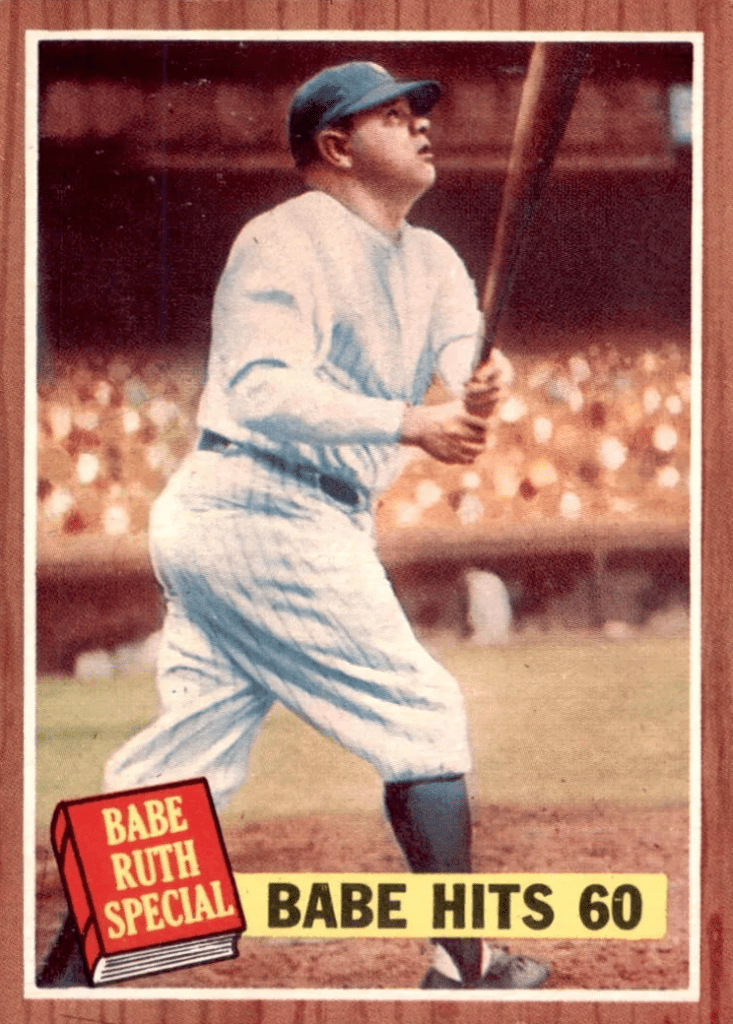
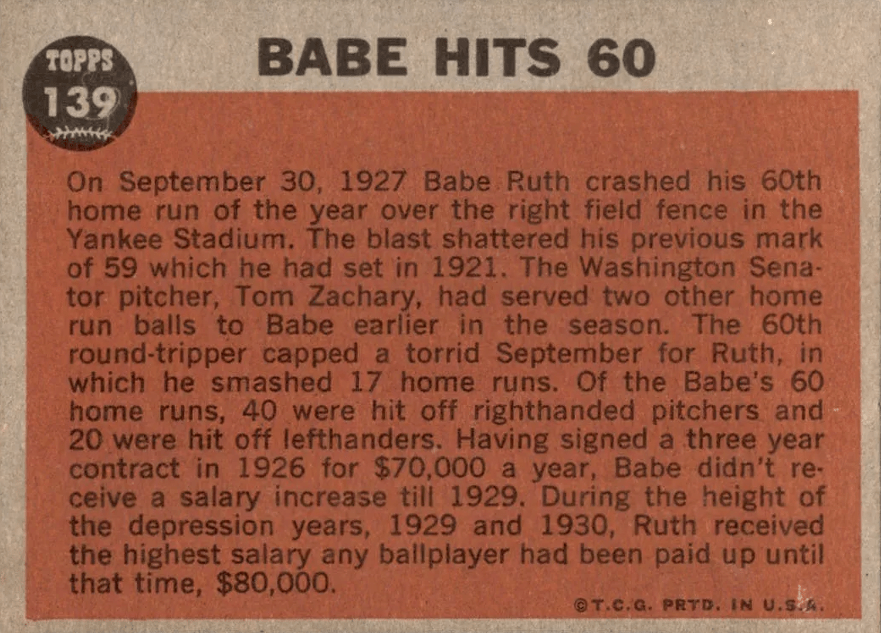
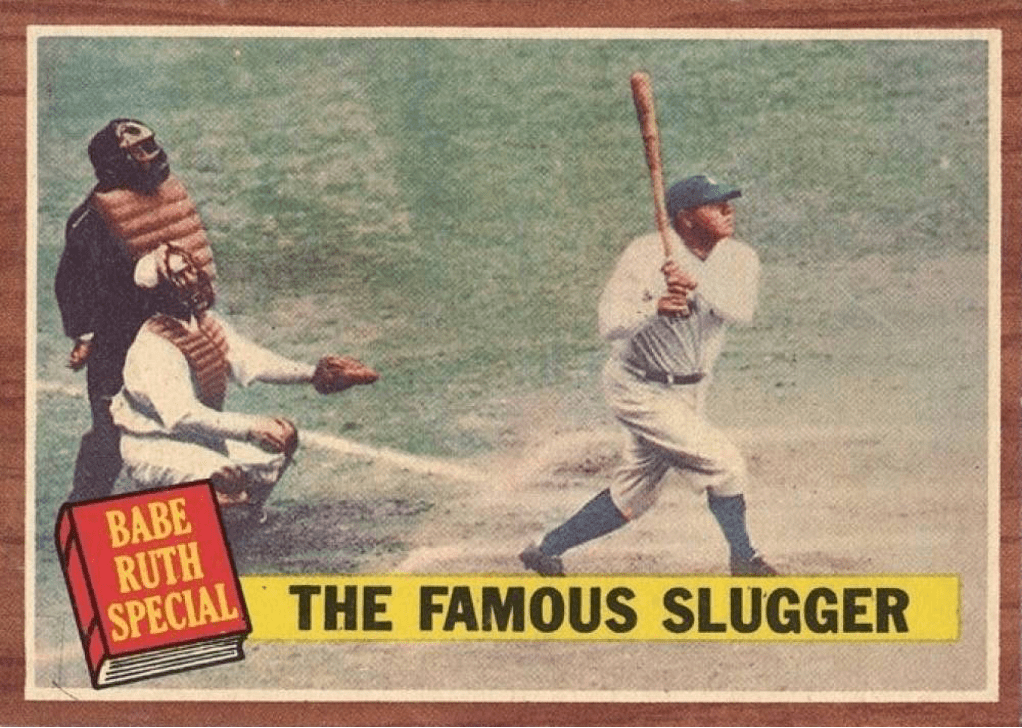
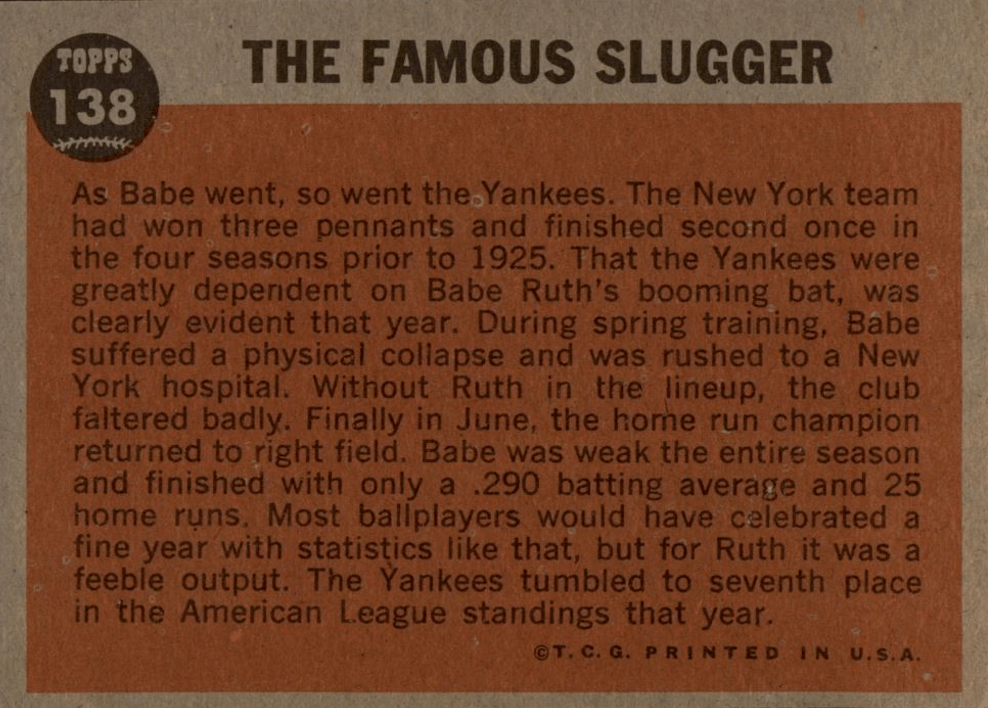
Most likely prompted by Roger Maris’ pursuit of Ruth’s single season home run record the previous year, Topps’ 10-card “Babe Ruth Special” subset (#135-144) covered Ruth’s life from boyhood to his farewell speech shortly before his death. Cards include “Babe As Boy,” “Babe Joins Yanks,” and “Gehrig and Ruth.”
Topps wouldn’t repeat the subset focus on a single player until 1974 when Hank Aaron was chasing Ruth’s all-time home run record. Aaron was featured on the first six cards of the ’74 set.
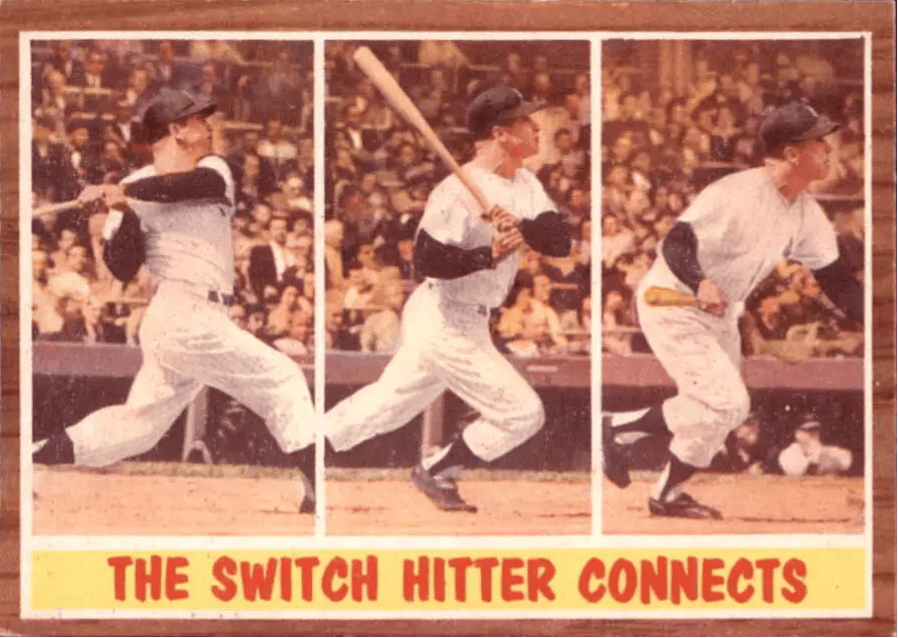
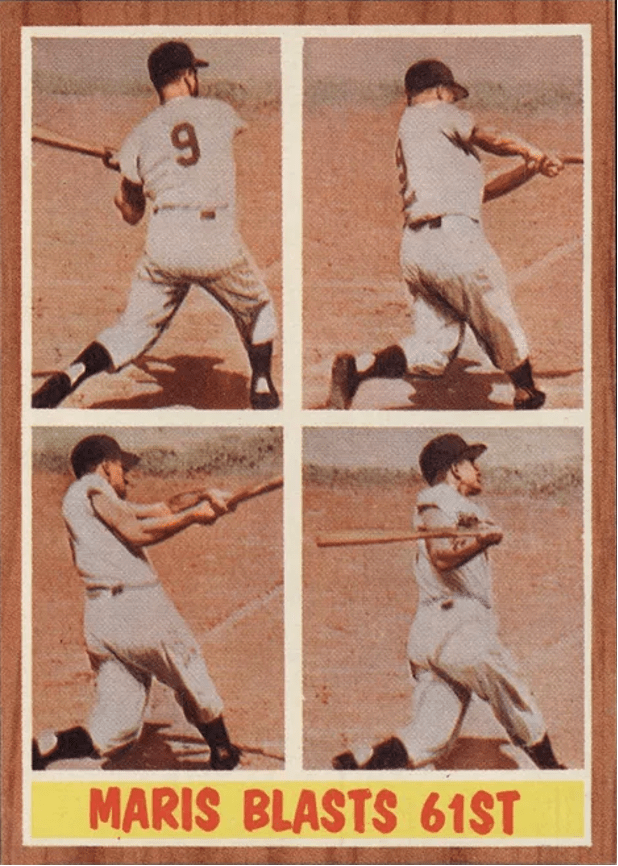
The nine In-Action cards (#311-319) included top stars of the game such as Roger Maris, Stan Musial, Mickey Mantle and Harmon Killebrew. Each card featured three or four successive action photos, with a catchy headline such as, “Killebrew Sends One Into Orbit” or “The Switch Hitter Connects.”
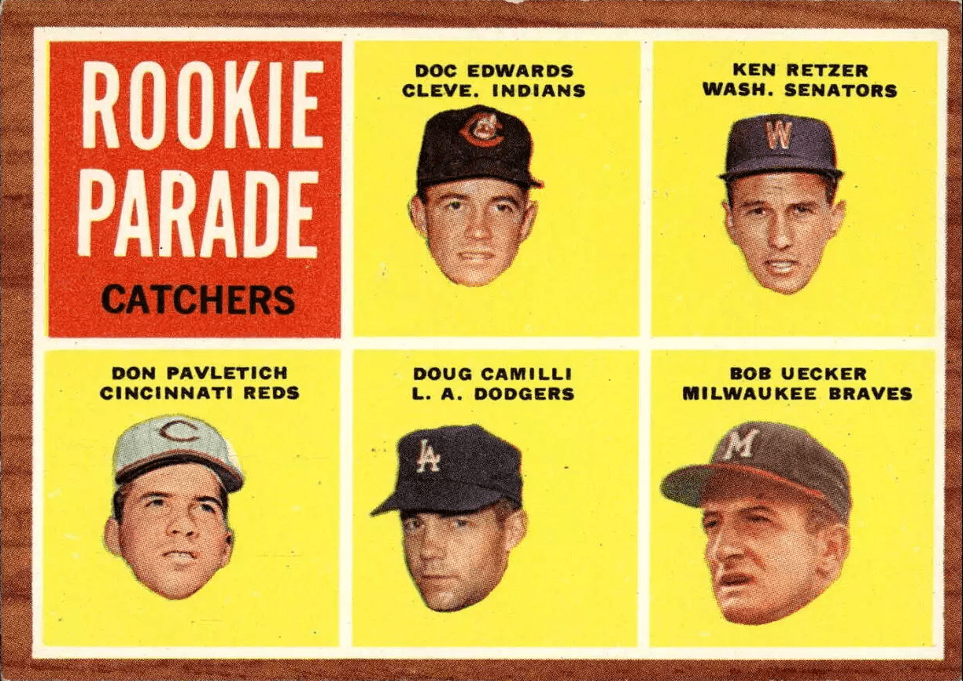
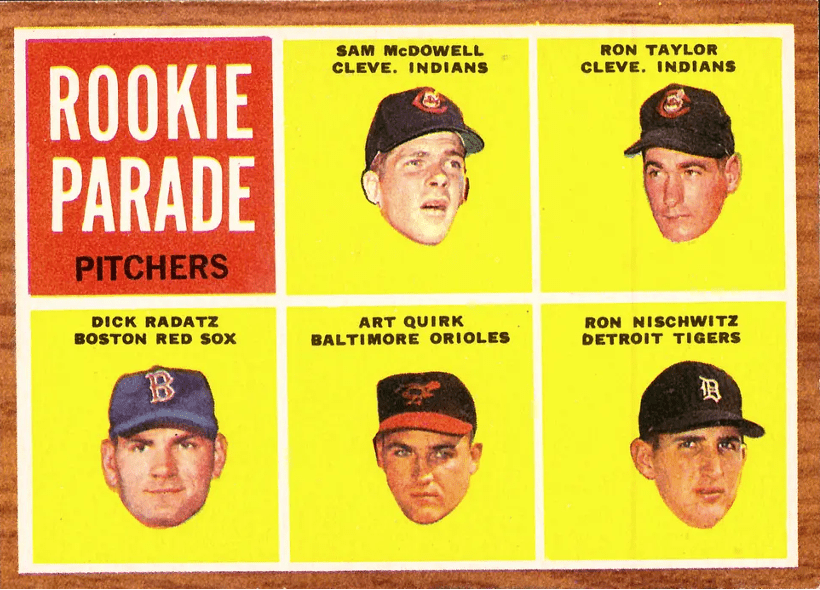
Cards #591-598 in the ’62 set are multi-player rookie cards. Prior to 1962, rookies did not share a card with other first-year players. The four or five players on each card in ’62 were grouped by position. For instance, card #594 includes five catchers: Ken Retzer, Doug Camilli, Don Pavletich, Doc Edwards and some obscure guy named Bob Uecker.
Most of the variations in the 1962 Topps set occur in the 2nd series (#110-196). Color problems plague the entire series. It was initially printed with a green tint. This greenish hue is most easily distinguishable on cards with the sky in the background – green instead of blue – and is also noticeable on Caucasian skin tones. These green tint variations are valued at about twice the price of the regular-colored cards in the series.
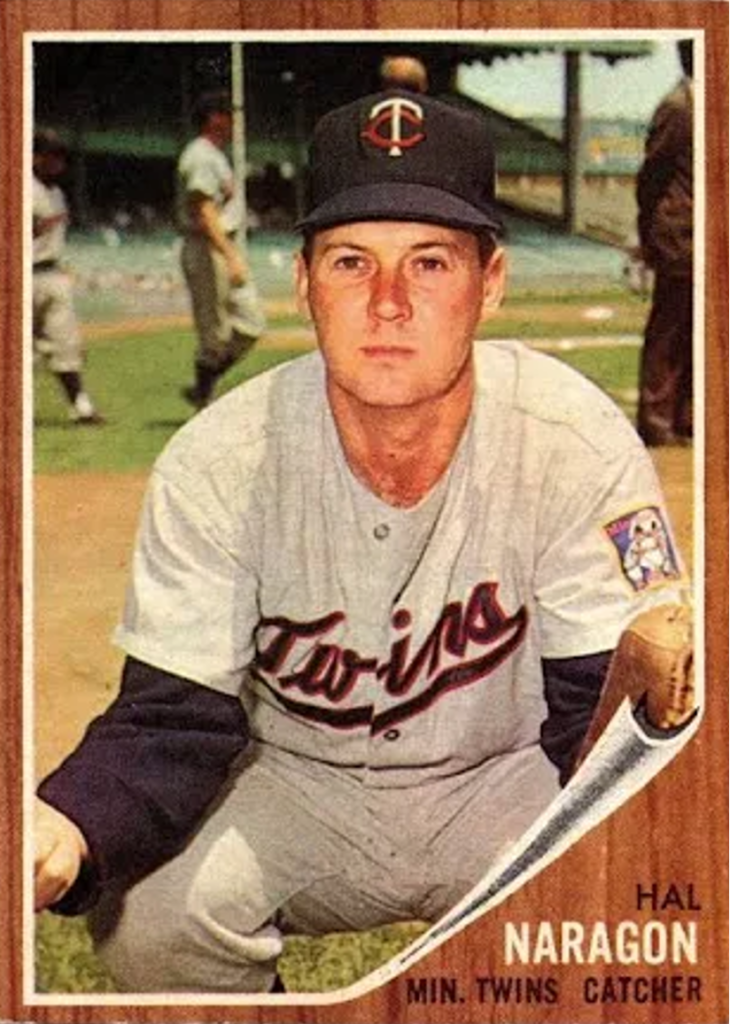
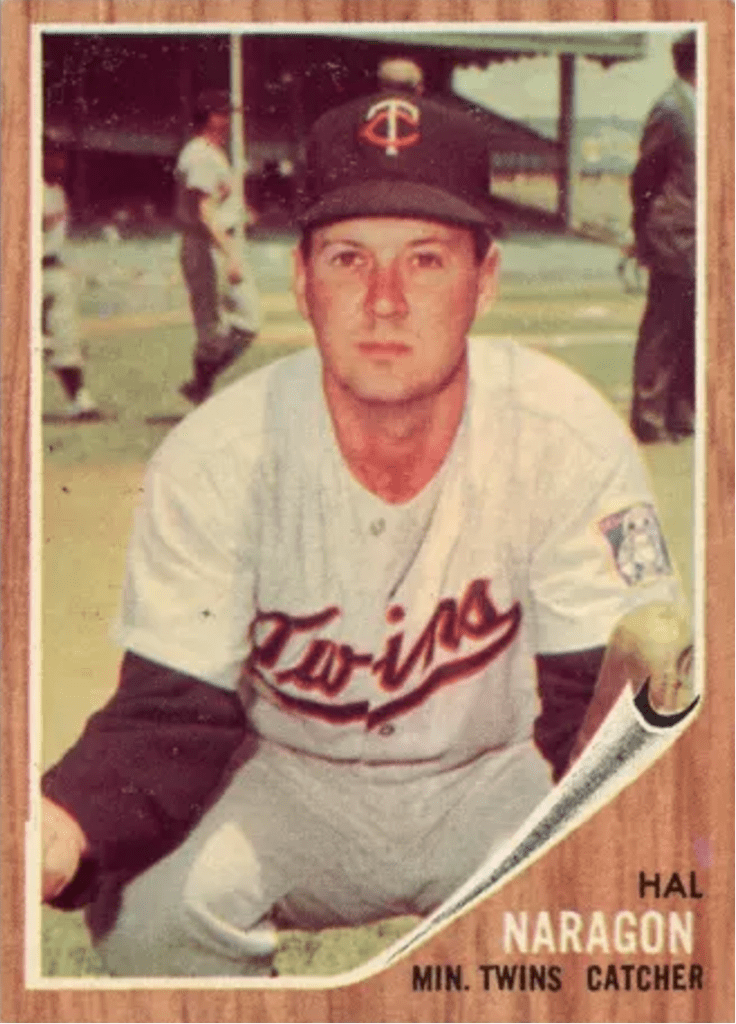
Regular Card and Green Tint Variation (Right)
In addition, major variations appear on about 10 other cards. Cards of Lee Walls (#129), Billy Hoeft (#134), Bill Kunkel (#147), Card Willey (#174), Eddie Yost (#176) and Wally Moon (#190) all come in two varieties. Each player had cards issued with different poses. For example, Willey is shown with a cap on one card, and without a cap on the other. While Yost is shown in a close-up portrait pose, and also in a batting stance. Backs and card numbers were the same on both variations.
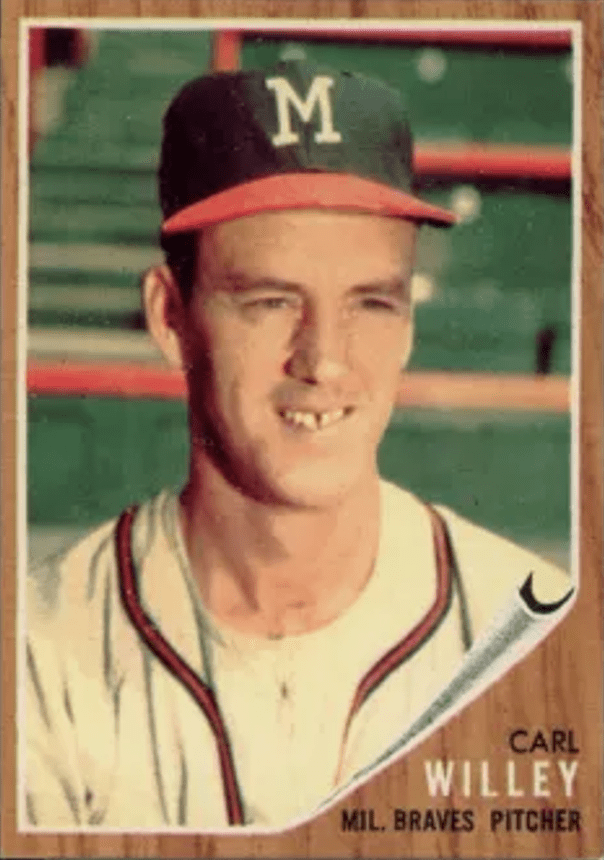
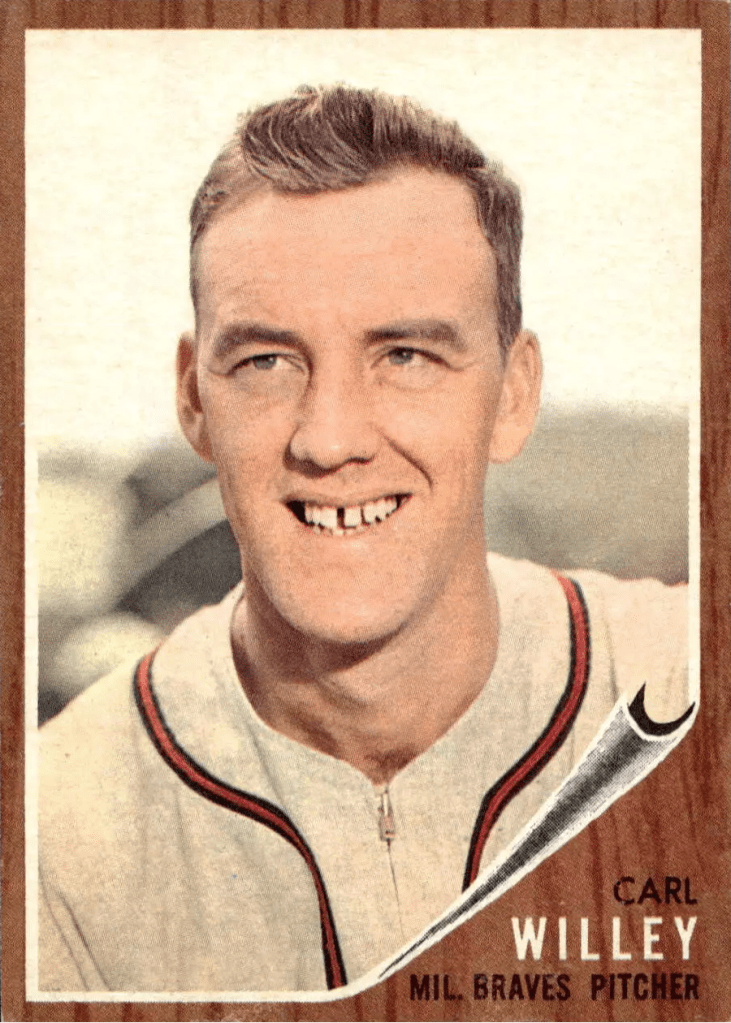
Pose Variations
The Angels team card (#132) has one variety with small extra photos in the upper corners. The other card shows just the team. The annual price guide books on the market can help collectors distinguish between the more valuable and the more common of the variations. The rarer ones are valued at approximately 10 times the price of the common variety. Why Topps created these varieties remains one of the major mysteries of the card collecting universe.
The case of Hal Reniff’s variations gets a bit more complicated … and ridiculous. Card #159 shows Reniff in a pitching pose. So far, so good. Reniff also has a card with the same photo, except it is numbered 139. In addition, Reniff has a card #139 which shows him in a portrait photo (headshot). Since #139 is right smack in the middle of the Babe Ruth Special subset, it is obvious Topps really goofed with Reniff’s two #139 cards.
The two extra #139 Reniffs, plus the #139 Ruth card make for three different varieties of #139. The Reniff #139 in the pitching pose is worth the most at about $50. (In case you’re wondering, Reniff was a Yankee relief pitcher for seven seasons … going 21-23, with a 3.27 ERA in 276 games.)
However, we’re still not through with major variations quite yet. Further down the line, in the 6th series, are two other valuable varieties.
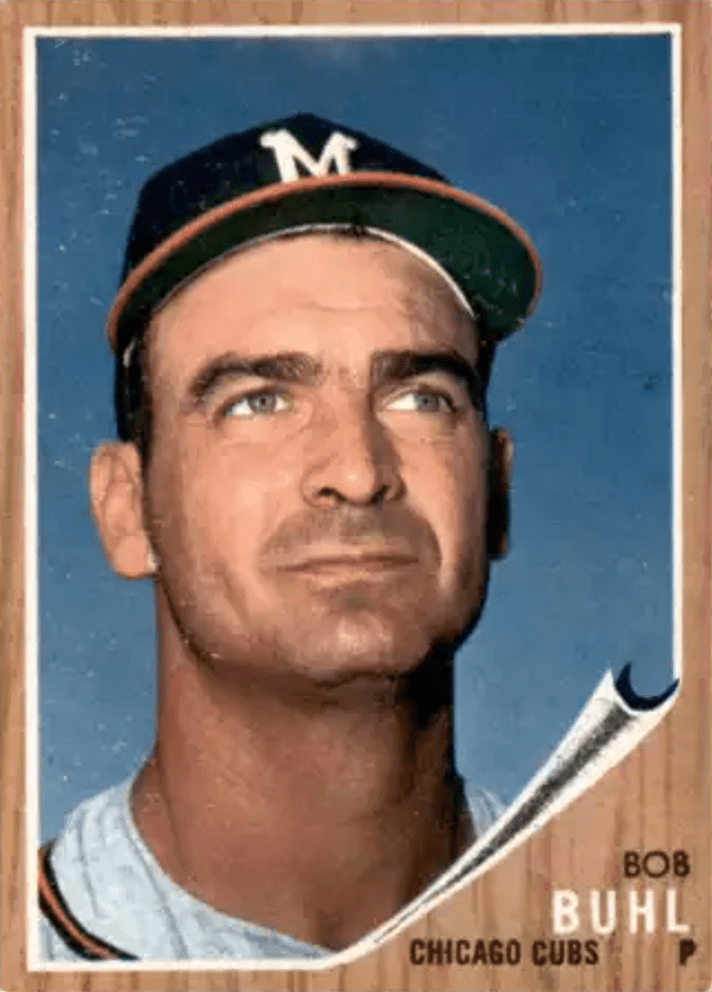
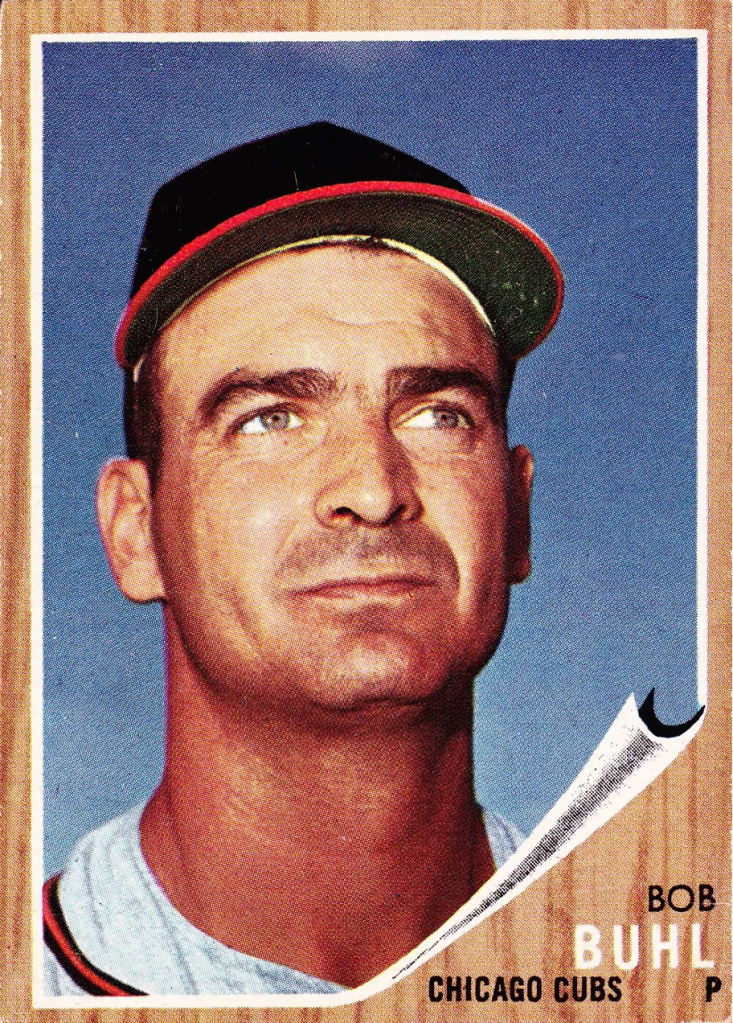
“M” on Cap and Airbushed Card
Bob Buhl (#458) was traded from Milwaukee to the Chicago Cubs on April 30, 1962. Initially, his card showed him with a Braves emblem on his cap. Later cards show the same photo, but the emblem has been airbrushed off leaving it plain black. The same goes for Willie Tasby (#462) who was traded from the Senators to the Indians on May 3, 1962. On later cards the Washington “W” has been blacked out.
The emblemless variations are worth $60 … about 12 times the price of a common from the 6th series.
The 1962 Topps set is valued at roughly $4,700 and features at least 13 cards worth $100 and up. These include Roger Maris, Sandy Koufax, Manager’s Dream (Mantle and Mays), Hank Aaron, Carl Yastrzemski, Bob Gibson, Willie McCovey, Willie Mays, Mickey Mantle, Mantle’s All-Star card, and rookie cards of Gaylord Perry, Lou Brock and Bob Uecker.
Common cards in the ’62 set can be grouped in three general levels, based on scarcity and price. Mint commons from series 1-4 (#1-370) range in value from about $2.00-2.50. Commons from the 5th and 6th series (#371-522) are $4, and commons from the 7th series (#523-598) are $13. However, 43 of the 76 cards in the last series were single-printed – printed in lesser quantities than others in the series. These harder-to-find single-print commons are $21 each.
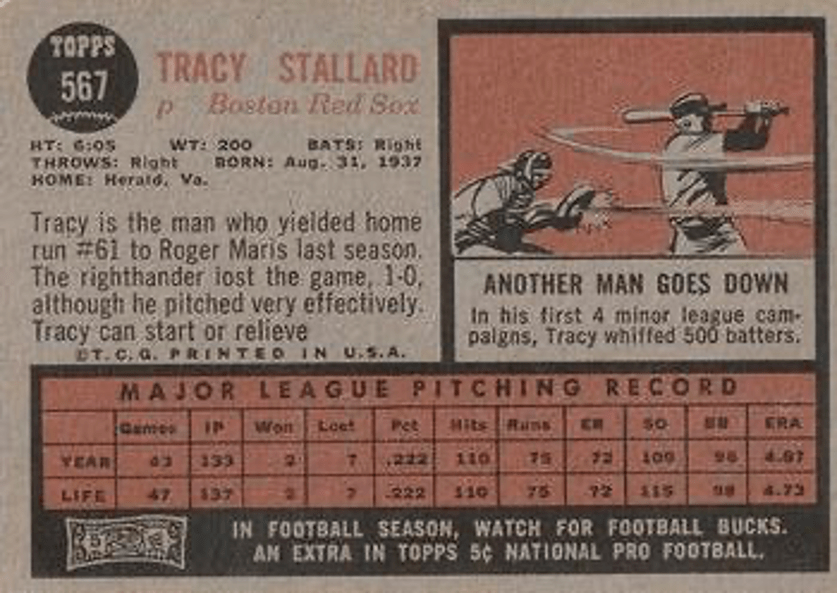
One other point about the last series of the 1962 Topps set. Many of the cards in this series carry advertisements on the back for the 1962 Topps football set.
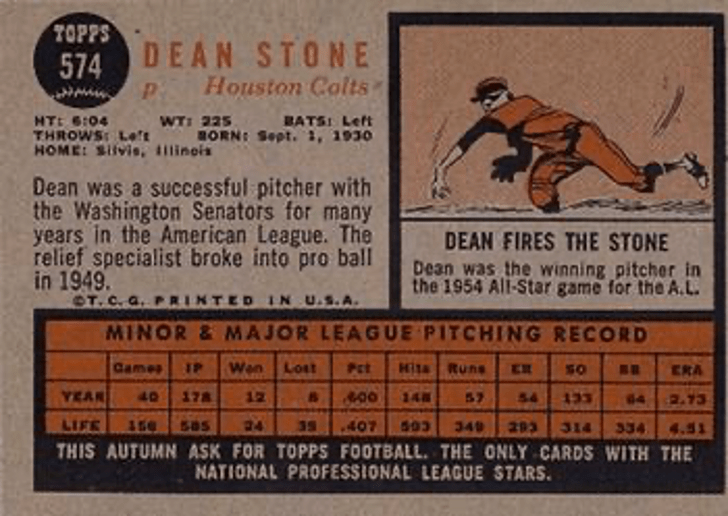


For instance, on the back of Dean Stone’s (#574) it states: “This autumn ask for Topps Football. The only cards with the National Professional League stars.” This was obviously a swipe at Fleer because that company’s 1962 football set only included players from the American Football League.
A similar ad on the back of Tracy Stallard’s card (#567) reads: “In football season, watch for Football Bucks. An extra in Topps 5¢ National Pro Football.”
Thank goodness, this was the only time Topps wasted a portion of its baseball cards to promote another product. Yet, it is one more thing, along with the woodgrain border and mega-variations, that makes Topps’ 1962 baseball card set unique.


• • • • • •
• Originally Published in Sep. 1991 “Baseball Hobby News” •
THIS ARTICLE FROM “BASEBALL HOBBY NEWS” MAGAZINE IS REPRINTED WITH THE PERMISSION OF BOTH THE EDITOR/PUBLISHER AND THE AUTHOR. IT HAS BEEN RETYPED, BUT NO CONTENT HAS BEEN CHANGED (EXCEPT FOR VERY MINOR ADJUSTMENTS, CORRECTIONS TO TYPOGRAPHICAL ERRORS AND CHANGES TO GRAPHICS). COMMENTS OR INFORMATION IN THE ARTICLE MAY BE OUT-OF-DATE.
To keep up-to-date on additions to BaseballCardFun.com, subscribe below*
* Your email address will never be shared and is only used to announce new articles
 BaseballCardFun.com