
BY TROY KIRK
One of the more interesting features of many Topps baseball card sets is the small cartoon artwork found on the card backs. Topps began placing cartoons on card backs with their 1953 issue, and they can be found on most of their sets from 1953 through 1982.
Though these cartoons made their last appearance on Topps regular issue baseball cards in 1982, they can still be found on the Topps Big Baseball sets from 1988 to 1990.
The Topps cartoons can be classified into two major categories – those that contain facts about the player on the card, and those that contain general baseball trivia information and trivia quizzes.
Between 1953 and 1982, Topps used the facts-about-the-player format for their cartoons in 17 different years, and the general baseball trivia information and quizzes format in 10 different years.
The general trivia cartoons are not as interesting as the player cartoons, as they don’t add to the information about the player on the card. They seem better suited for a book on baseball trivia than for the back of a baseball card.
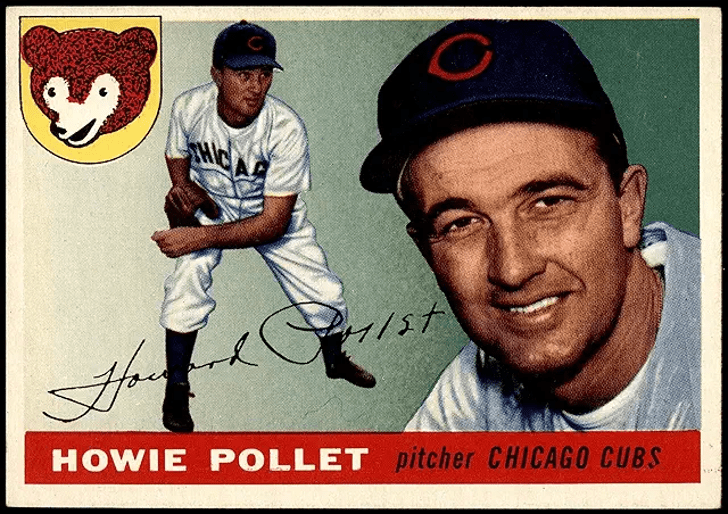
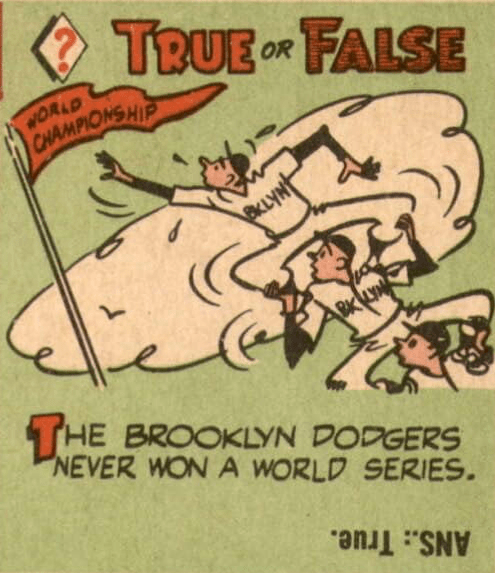
They also have a tendency to become quickly outdated. For example, on the 1955 Topps card of Howie Pollett, the trivia quiz asks “True or False. The Brooklyn Dodgers never won a World Series.” The cartoon shows three Brooklyn players stacked on each other’s shoulders reaching up in the sky for a World Championship flag. The answer of the quiz was “True.”
While this answer was correct at the time the card was issued, it was outdated later that same year because Brooklyn won the World Series in 1955. This trivia quiz adds very little to the card now, except to date it. One card I saw had the True answer crossed out in ink. Maybe the card was once owned by an insulted Brooklyn fan. As time has passed, many other trivia quiz questions have become inaccurate, especially when discussing records.
The cartoons about the players are more interesting because they add to the personality of the player on the card. They may give some personal data or information about achievements in the minors or in school or just about anything dealing with the player.
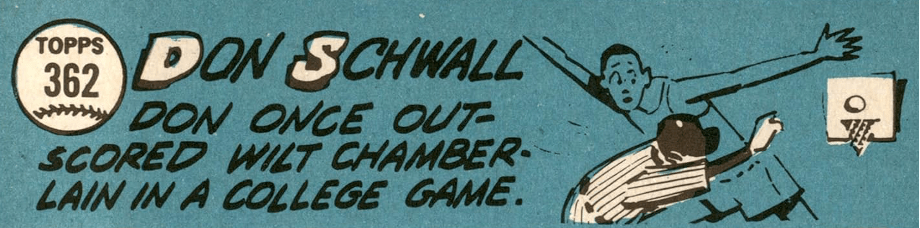
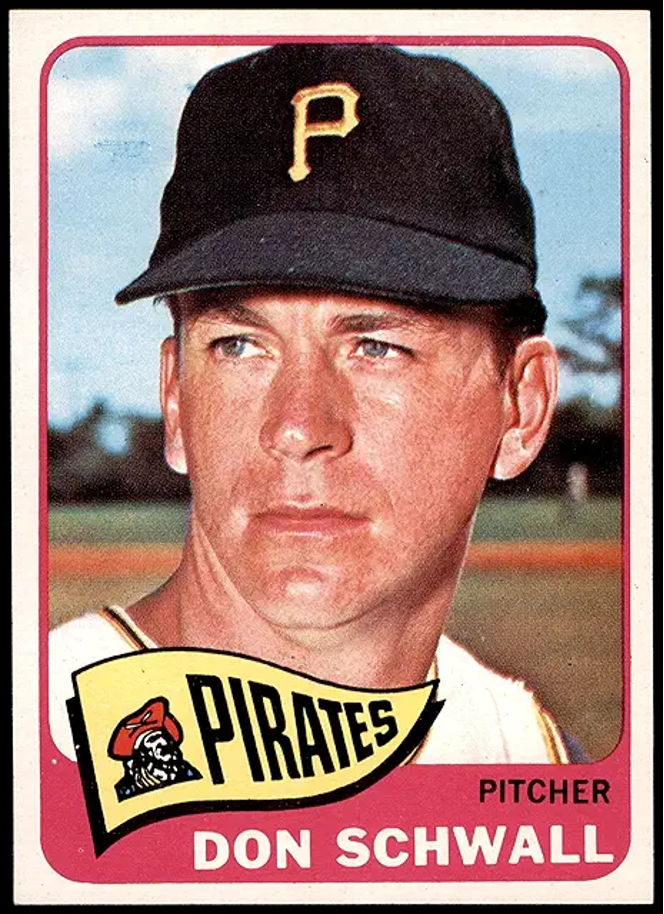
For example, the 1965 card for Don Schwall tells us that “Don once out-scored Wilt Chamberlain in a college game.” The cartoon shows Schwall in a baseball uniform on a basketball court being guarded by a towering Chamberlain and still throwing in a basket. This is the type of information not found in the normal statistics on card backs.
The cartoons for lesser players are often more interesting than for superstars. The big-name players usually have cartoons about them winning batting titles or other major awards that may be common knowledge.
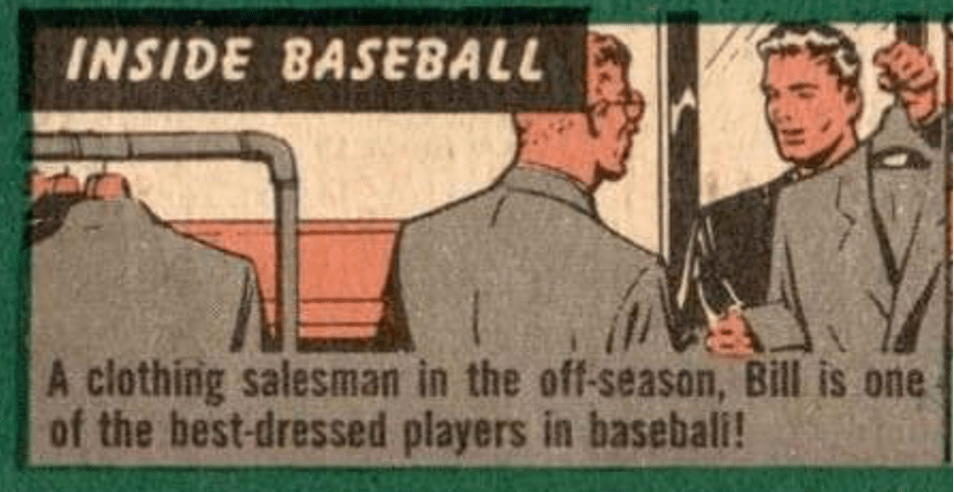
The cartoons for lesser players had to be a bit more imaginative, as many of them had not performed any great feats. For example, the cartoon on Bill Werle’s 1954 Topps card states “A clothing salesman in the off-season, Bill is one of the best-dressed players in baseball.”
This cartoon shows that the players of the 1950s were not paid as well as their millionaire counterparts of today.
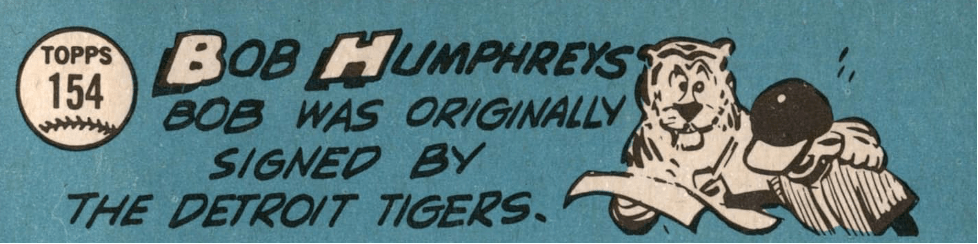
Many of the cartoons mentioning teams with animals as their mascots show the actual animals in the cartoons. For example, the cartoon of Bob Humphreys in 1965 tells us that “Bob was originally signed by the Detroit Tigers.” The cartoon shows Bob signing a contract that a tiger is holding. The tiger has a paw around Bob’s shoulder.
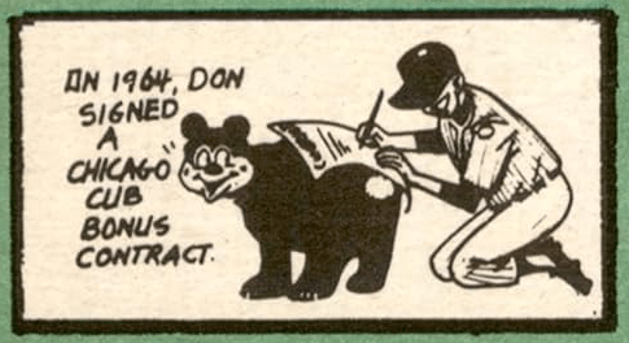
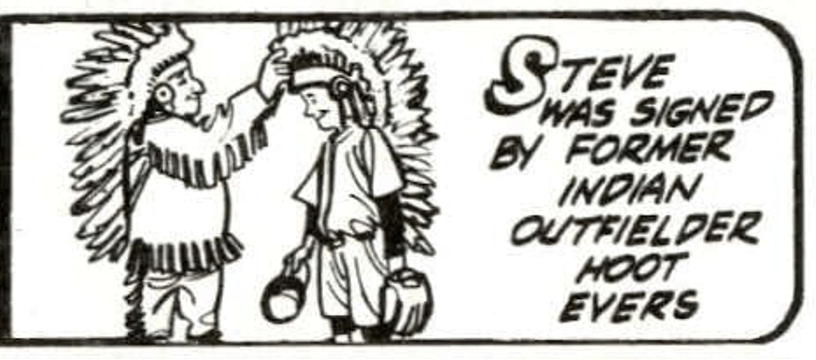
Tigers, bear cubs, cardinals and orioles were frequently used. Other team symbols also appeared often, such as players wearing Indian headdresses or dressed as swashbuckling pirates. Players on the Giants always seemed to tower over everyone else in the cartoons.
Some of the players in the sets had to do without their own cartoons, usually the older veterans and rookie players. The cartoons were omitted for cards of older players with long careers because they had too many lines of statistics on the backs of their cards, leaving no room for the cartoons. None of the multiple-player rookie cards that Topps produced contained cartoons for the players, probably because of a lack of space, since two to four players were crammed on one card.
The Topps cartoons were meant to be a fun way to present additional information about the player. They were seldom hilariously funny, but were often clever and usually entertaining and informative.
A Wally Moon cartoon shows a moon in the sky, a cartoon for a wild pitcher shows a batter in a suit of armor, and a cartoon about a pitcher’s no-hitter in the Texas League shows him wearing a cowboy outfit including a 10-gallon hat and a six shooter.
Willie Kirkland’s 1965 cartoon tells us that “Willie tied a big-league mark by hitting 4 straight homers in ’61.” The cartoon shows the heads of four fans, each with lump on his head and a grimace on his face.
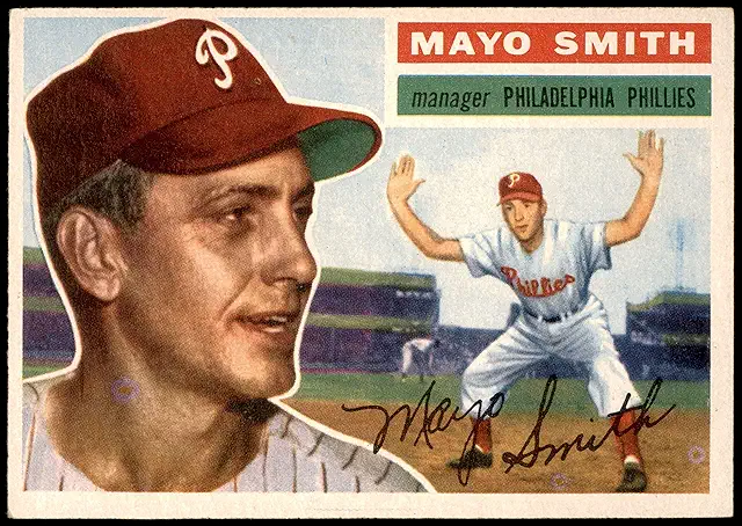
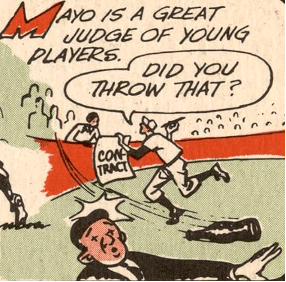
The umpires’ union probably wouldn’t think Mayo Smith’s 1956 cartoon was very funny. It states that “Mayo is a great judge of young players,” with the cartoon showing an umpire getting hit in the head with a bottle thrown from the stands and Mayo running up to the stands with a contract in his hands asking, “Did you throw that?”
Topps expanded the role of the cartoons on couple of occasions. In 1970, they created player story booklets for a star player on each team and used them as inserts with their regular baseball cards. These booklets consisted of eight pages of cartoons about the player and his career.
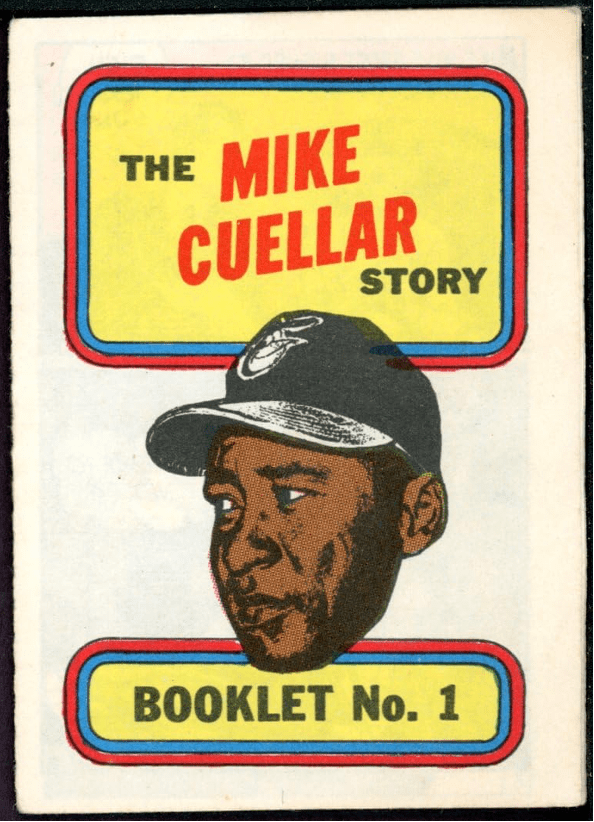
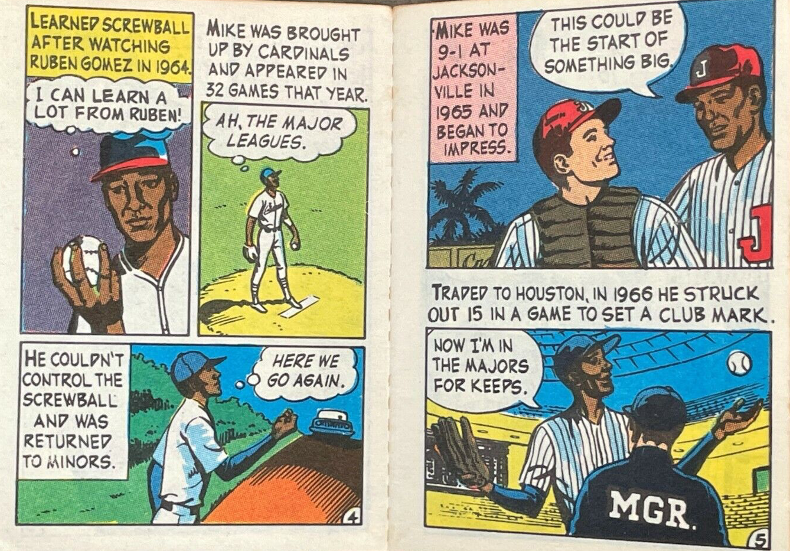
• 1970 TOPPS BOOKLET •
In 1979, Topps produced small gum wrappers that contained several cartoons about a player and his achievements and sold them as a separate product from their regular baseball cards. The regular cards of 1979 did not contain cartoons, so these wrappers were the only cartoons issued that year.
Topps has not used cartoon artwork for any of its regular baseball card sets since 1982, but they have not retired the cartoons completely. They have appeared on the Topps Big Baseball cards from 1988 through 1990, and they also made an appearance on the Topps U.K. baseball cards of 1988.
Interesting facts about Topps cartoons:
• Topps placed cartoons on baseball card backs for 27 out of the 30 years from 1953 through 1982, skipping only 1971, 1978, and 1979.
• In the first three years of the Topps cartoons, from 1953 to 1955, the company used titles for their cartoon features on the backs. In 1953, they were called “Dugout Quiz,” in 1954 they were “Inside Base Ball,” and in 1955 they went by one of five names “Puzzlers,” “Daffy-Nitions,” “You’re the Ump,” “True or False,” or “Record Busters.” After 1955, Topps apparently decided the titles were unneeded, and they’ve never appeared since.
• For a few years in the 1960s, Topps baseball cards were sold in Venezuela in slightly altered versions from their United States counterparts. The 1962 Venezuelan Topps baseball cards are particularly interesting, as the cartoons contain Spanish text. Venezuelan cards from other years have either English text for the cartoons, or the cartoons are removed.
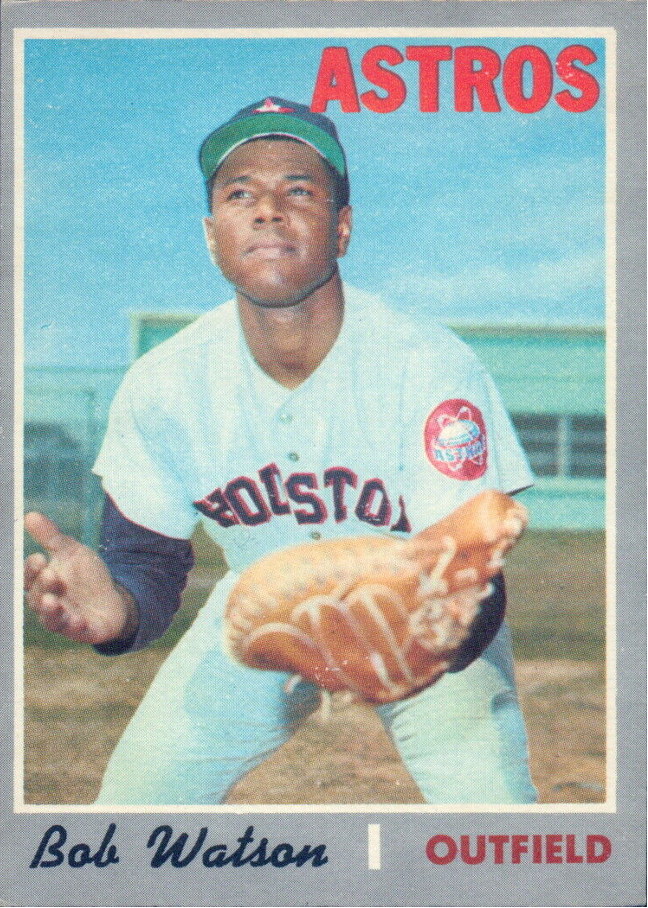

• 1970 O-PEE-CHEE •
• Beginning in 1965, Topps baseball cards have been sold under license in Canada by the O-Pee-Chee Company. For every year since 1970, the text on the cards, including the cartoons, has been printed in both English and French.
• The 1964 Topps baseball cards featured a trivia quiz on the backs, with the answer hidden in a white box. To find out the answer to the trivia question, you were supposed to rub a coin in the box to expose the answer along with a cartoon. In a recent test, I tried rubbing a coin on an unexposed white box to try to expose the trivia answer and cartoon. The answer and cartoon did not appear, leading me to believe that the effectiveness of the coin to expose the image diminishes over time.
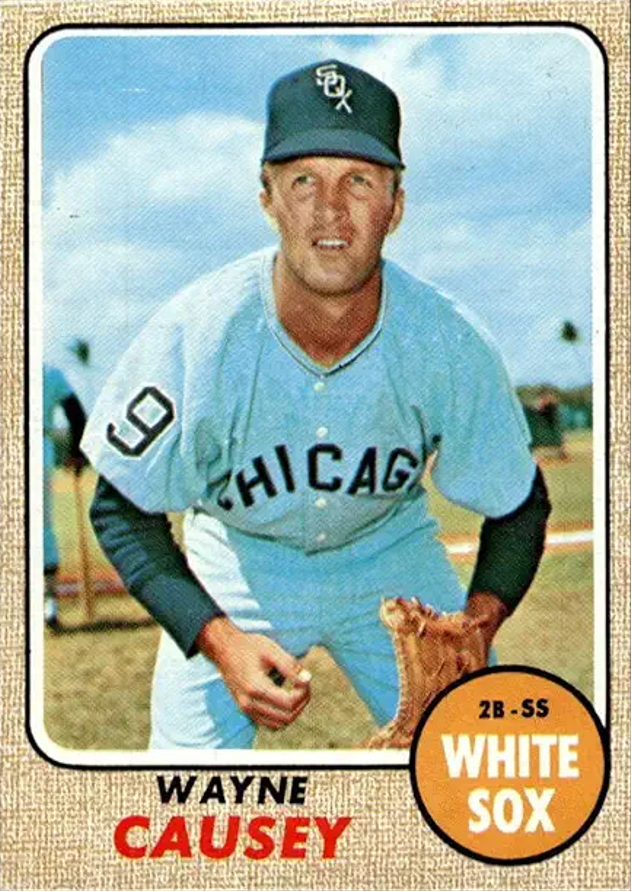
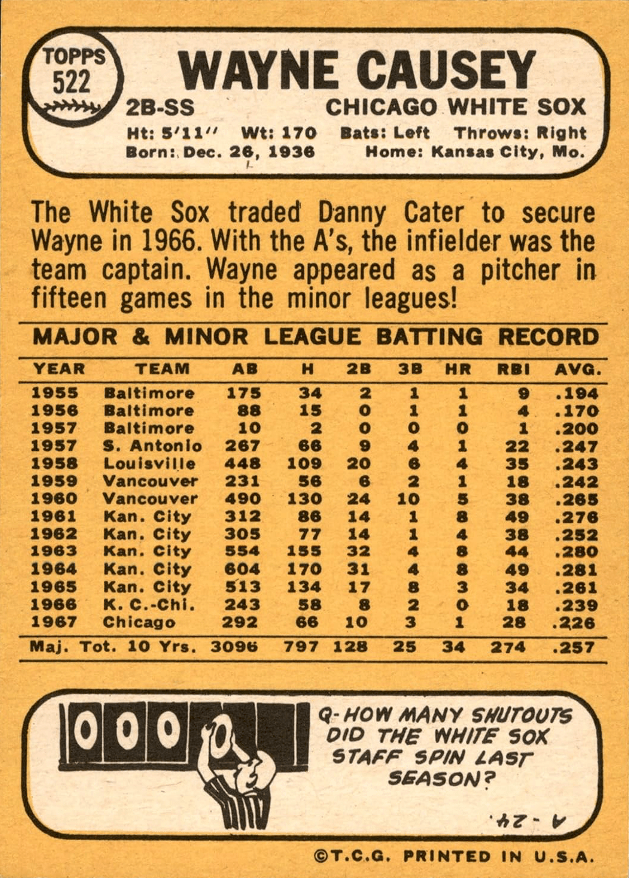
• 1968 TOPPS •
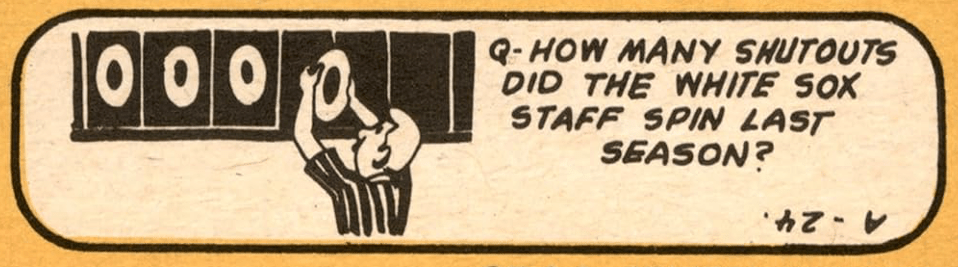
• There was a twist to the cartoon trivia quiz found on the backs of 1968 Topps baseball cards, because the trivia question always related to the team of the player featured on the card. In the cartoon trivia quizzes for all other years, the trivia questions had no relationship to the player or team featured on the card.
• In 1971, Topps ended a string of 18 straight years with cartoons on the backs of their cards when they decided to put another photograph of the player on the back instead of the cartoon. This was the first time a baseball card set featured player photos on the backs, a practice that is common today with sets from other baseball card companies. Apparently the idea was ahead of its time or was not appreciated by collectors in 1971, as Topps went back to the cartoons in 1972, and has never used the 1971 photo-on- the-back format since.
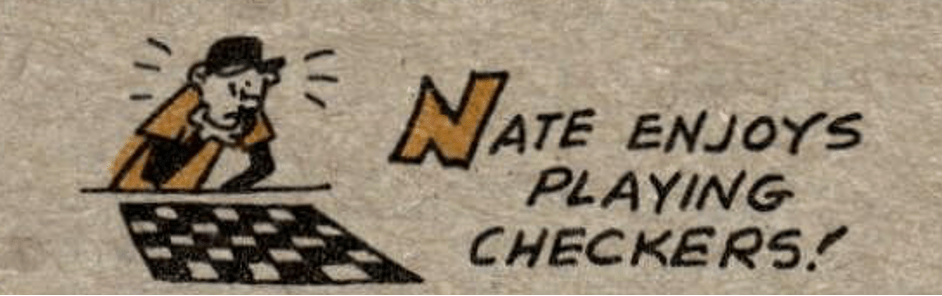
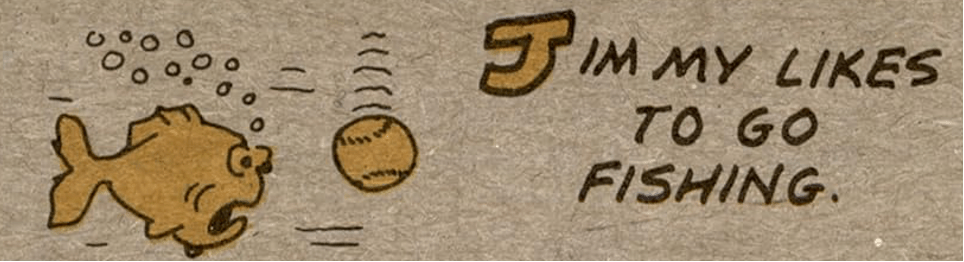
• 1973 TOPPS • (Above and Below) •
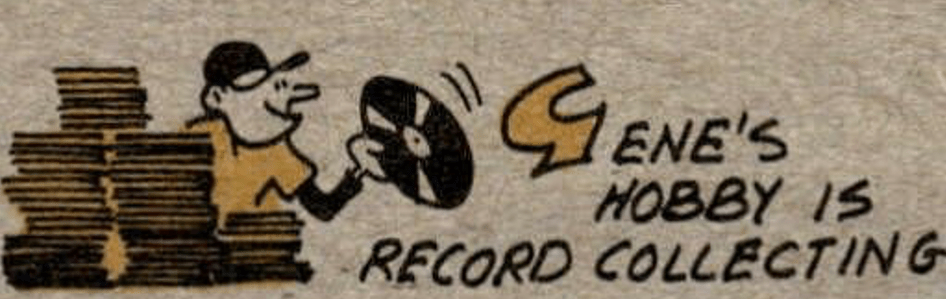
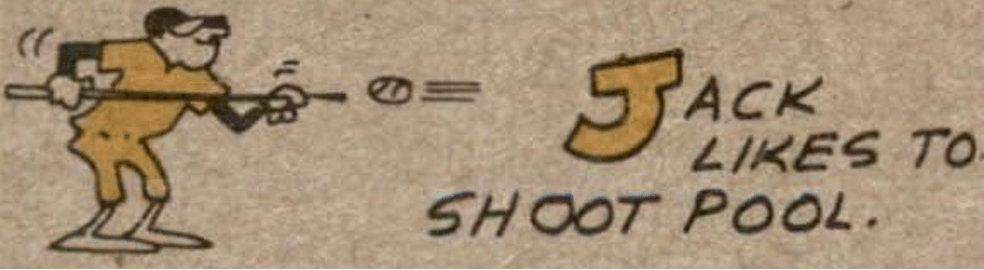
• The 1973 Topps cartoons favored reporting on the hobbies of the players. Examples include “Nate enjoys playing checkers” for Nate Colbert, “Jim likes to go fishing” for Jimmy Stewart, “Gene’s hobby is record collecting” for Gene Clines, and “Jack likes to shoot pool” for Jack Heidemann.
• In 1981, Topps seemed to be tiring of the cartoons as they are found far less frequently on the cards than in other years. I would estimate that only 25 percent of the players had cartoons on their cards that year, as opposed to probably about 90 percent or more in other years. The cartoons seemed to be used mainly as a space-filler in 1981 instead of as a featured item.
• • • • • •
• Originally Published in Nov-Dec 1990 “Baseball Hobby News” •
THIS ARTICLE FROM “BASEBALL HOBBY NEWS” MAGAZINE IS REPRINTED WITH THE PERMISSION OF BOTH THE EDITOR/PUBLISHER AND THE AUTHOR. IT HAS BEEN RETYPED, BUT NO CONTENT HAS BEEN CHANGED (EXCEPT FOR VERY MINOR ADJUSTMENTS, CORRECTIONS TO TYPOGRAPHICAL ERRORS AND CHANGES TO GRAPHICS). COMMENTS OR INFORMATION IN THE ARTICLE MAY BE OUT-OF-DATE.
To keep up-to-date on additions to BaseballCardFun.com, subscribe below*
* Your email address will never be shared and is only used to announce new articles
 BaseballCardFun.com