
BY MARK A. LARSON
“Batting third, centerfielder, Kirbeeeeeeeeeeeeeeeeeeeee Puckett.”
The long, drawn out “ee” sound of Kirby Puckett’s name by Twins’ public address announcer Bob Casey is a familiar echo to Minnesota fans at the Metrodome. It immediately draws louder applause than any other player in either team’s lineup. And for good reason.
Kirby Puckett is simply the most popular member of the Minnesota Twins. It’s safe to say his popularity rivals even that of all-time Twins’ stars Harmon Killebrew and Tony Olivia. It may even surpass the older Twins’ popularity.
Why is Kirby Puckett such a fan favorite? Is it his smile? Is it his friendly manner? Is it his name? Is it his fire-plug-type-appearance? Is it his superb hitting and fielding? Yes, yes, yes, yes, and yes.
First, Kirby Puckett is genuinely a nice guy. He’s got a classic baseball name, plus a fairly uncharacteristic baseball appearance (short, round – but with a rock-hard physique – head shaved and a goatee). But there are a lot of nice guys in baseball. And some other odd-shaped ones, too. How many of them, though, have averaged 215 hits per season over the past five years and possess a .323 lifetime batting average?
It’s that rare combination of a positive personality and honest-to-goodness superstar talent that sets Kirby Puckett above the rest.
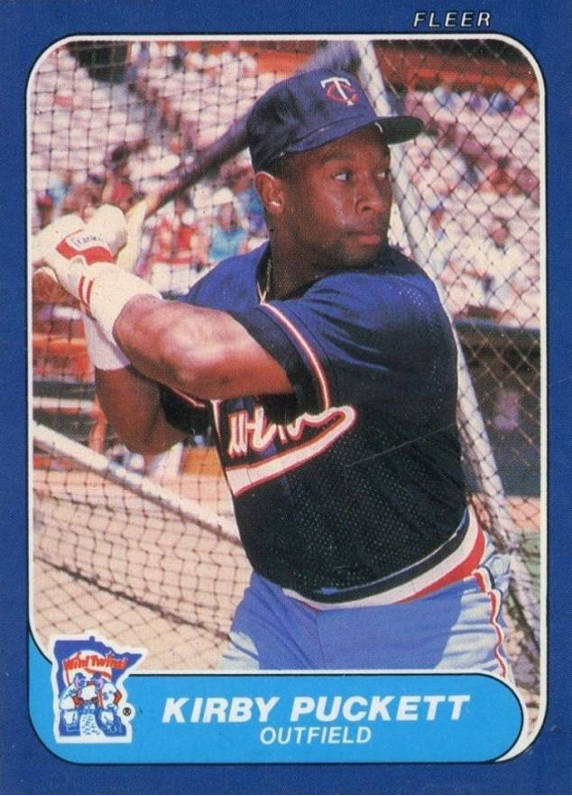
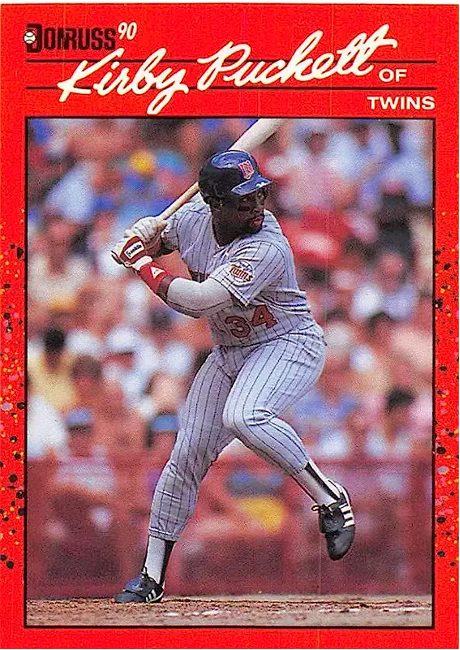
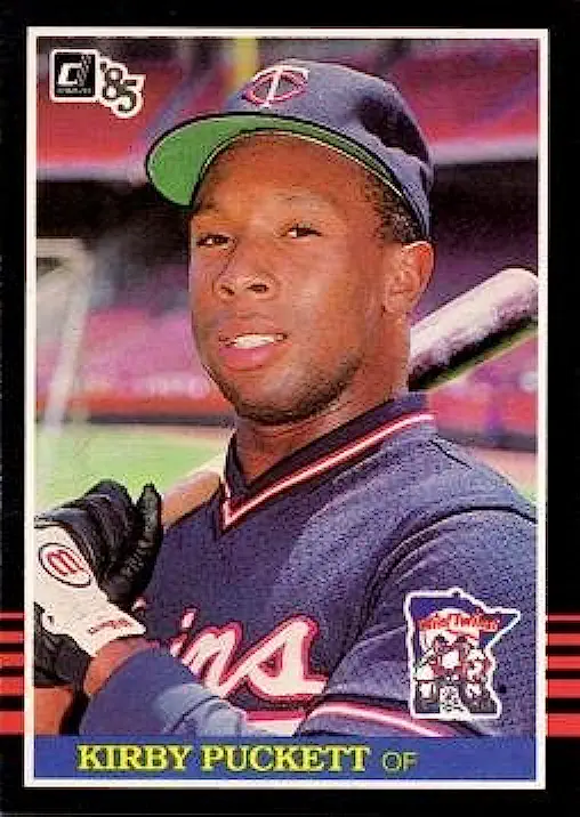
Puckett, the youngest of nine children, was raised in the tough project neighborhoods on the south side of Chicago. Instead of getting involved with local gangs as a youth, which was easy to do, he began focusing on baseball early in life. Smaller than most other kids his age, Puckett had to make up for it by working out and adding muscle.
After graduating from Calumet High School in Chicago, he attended Bradley University in Peoria, Ill., then transferred to Triton College in River Grove, Ill.
In the summer of 1980, Kirby attended a Kansas City Royals tryout camp, but the Royals apparently weren’t interested and didn’t make him an offer. Kansas City’s loss was Minnesota’s gain, however.
The Twins discovered Puckett by chance, a year later, in the summer of 1981. The major league baseball strike was in full swing. At the time, Jim Rantz was Minnesota’s assistant farm director. He was in Illinois to watch his son play ball in a summer collegiate league. Puckett was on the opposing team.
He left such a good impression on Rantz that the Twins made Kirby their number one choice in the amateur draft in January 1982.
He played 65 games in 1982 with the Twins affiliate, Elizabethon (Tennessee) in the Class A Appalachian League. He promptly led the league in at-bats, runs, hits and won the batting title with a .382 average.
In 1983, he moved to the more competitive Class A California League, playing with Visalia. In 138 games, Kirby hit .314, with nine homers and 97 RBIs.
In the spring of 1984, many felt Puckett was fully capable of making the big jump from Class A to the majors. But then Twins owner, Calvin Griffith, said he didn’t want to rush Puckett to the majors, so he began the year with the Toledo Mud Hens of the Class AAA International League.
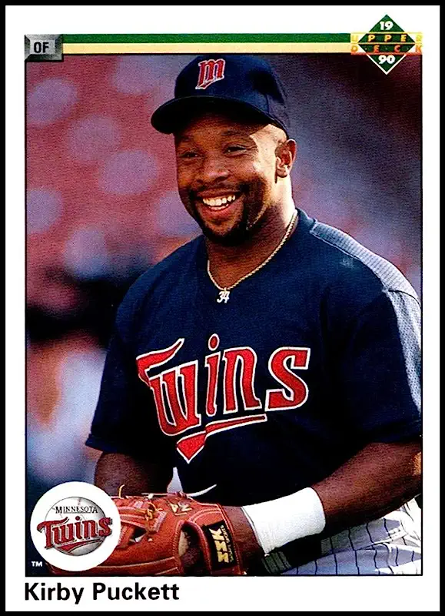
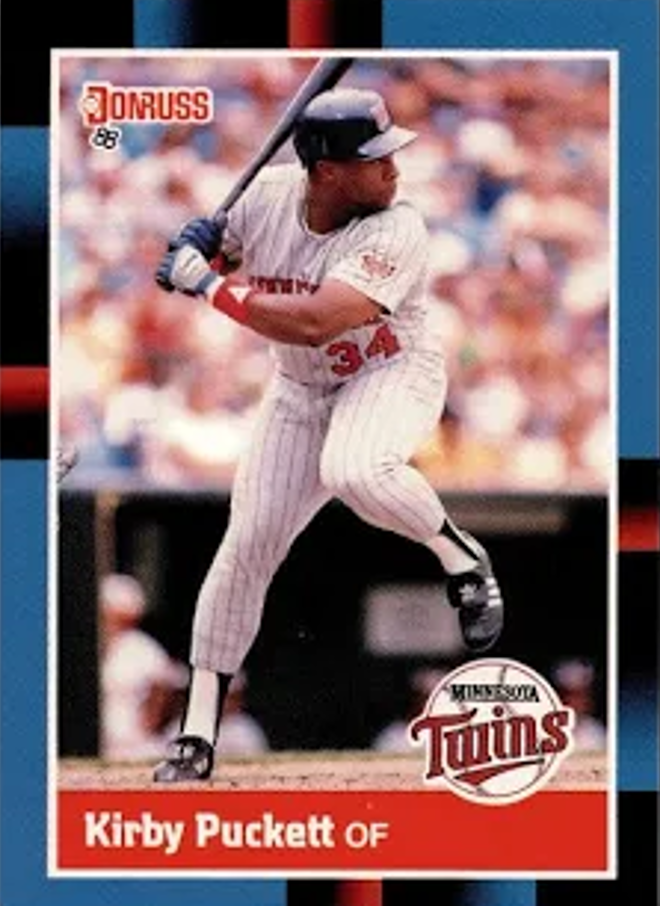
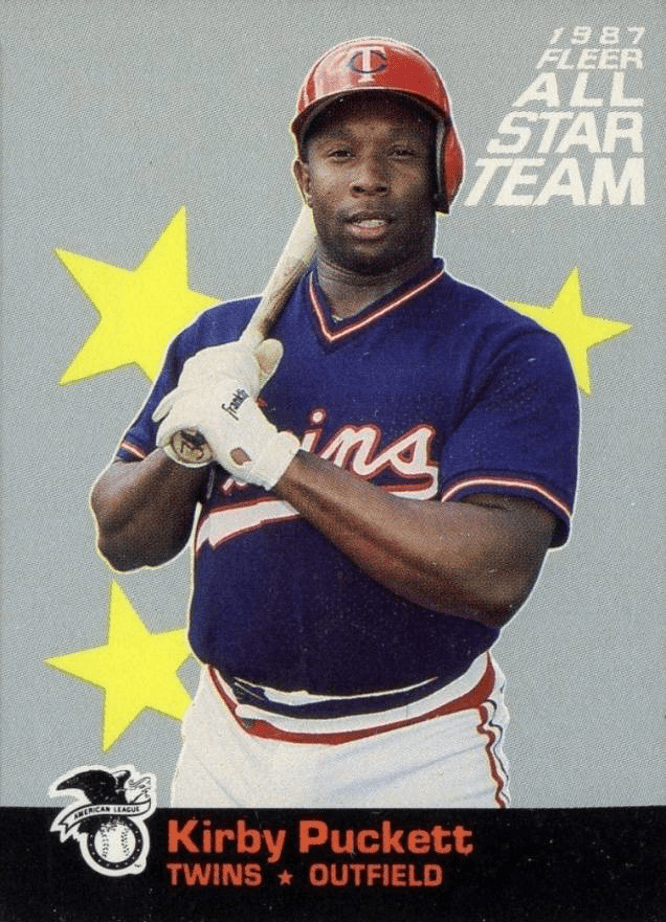
Some cynics point out that by starting Puckett in the minor leagues in ’84, the team deliberately cost Puckett a year of eligibility for arbitration. In any case, his tenure with the Mud Hens lasted only 21 games. Kirby got the call to the majors in early May 1984 at the age of 23.
He was supposed to make his big league debut on Monday night, May 8, in Anaheim against the Angels. However, his plane was delayed and he arrived at the “Big A” Stadium, only an hour before game time. Twins manager Billy Gardner decided his newest player was too tired to play that night. (Kirby left the Mud Hens in Portland, Maine, at 2:30 a.m. – California time – caught a plane to Atlanta, was delayed, and didn’t arrive at the stadium until after 6:00 p.m.)
He had to take a cab from the airport to Anaheim Stadium and arrived owing the cabbie $85. Puckett rushed into the clubhouse, equipment in hand, found Twins traveling secretary Mike Robertson and said, “Hey, I need some money for the cab.” He had no idea it would be that much.
Welcome to the major leagues, Kirby Puckett.
The next night the Twins new number 34 started in centerfield, replacing Darrell Brown. Kirby led off the game. He faced Angels pitcher Jim Slaton. Before 23,678 fans, Puckett grounded out to shortstop Dick Schofield in his first at-bat. But better things were to come … real fast.
Puckett ended that first game going 4-for-5, scoring one run and stealing a base. The Twins won 5-0 on a Frank Viola four-hit shutout. Kirby’s four hits made him only the 10th player in modern history to get four hits in his first nine-inning major league game.
After a week in the big leagues, Puckett was 16-for-33, hitting .485.
Upon Puckett’s arrival, the Twins and the state of Minnesota were in a state of turmoil. At the time, Calvin Griffith still owned the team and was threatening to move it to the Tampa-St. Petersburg area. Later that summer, Griffith agreed to sell the team to local interests, which ensured the club would not become the Tampa-St. Pete Twins.
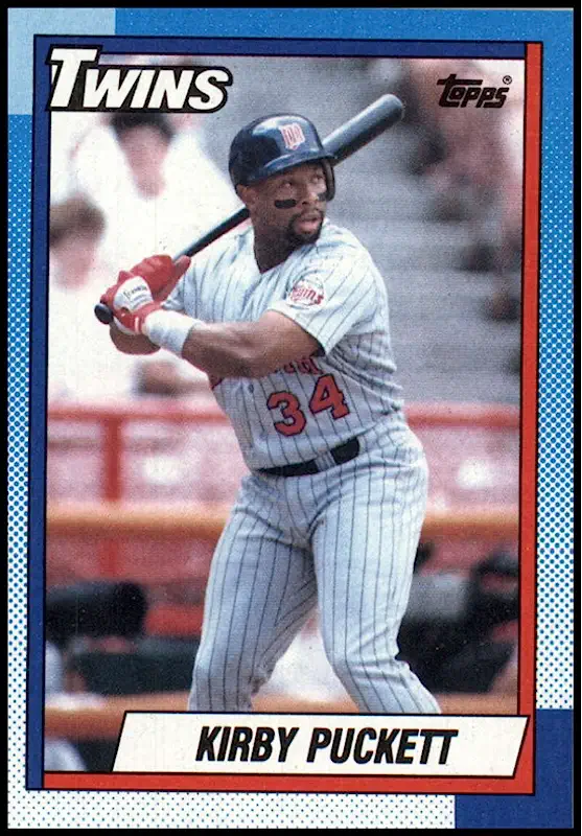
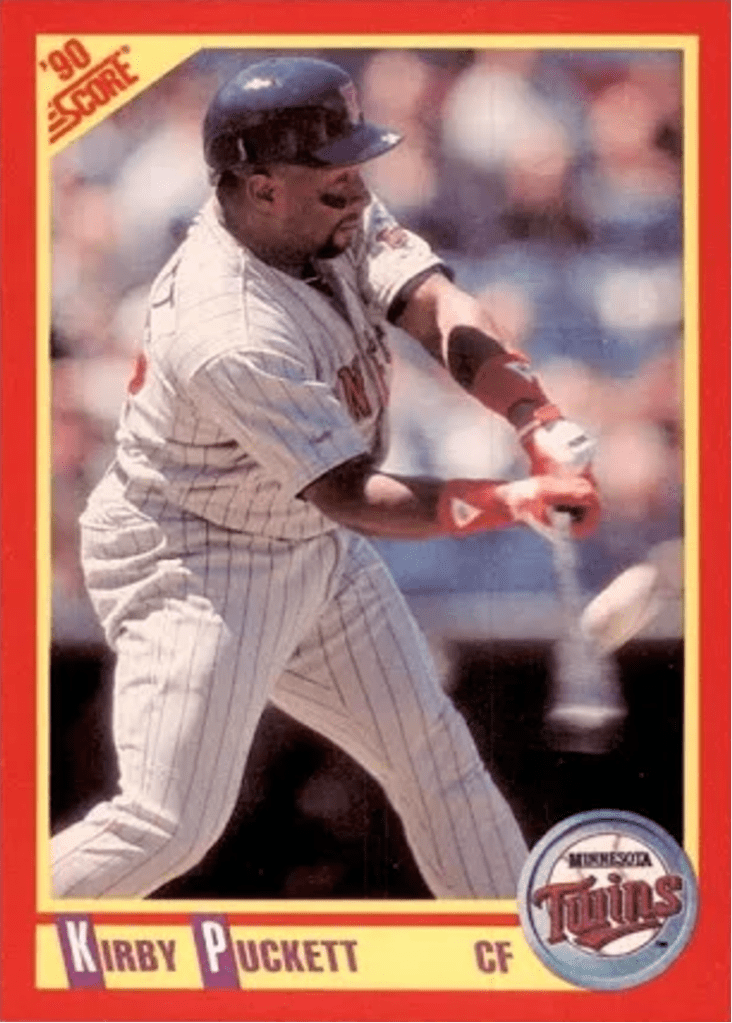
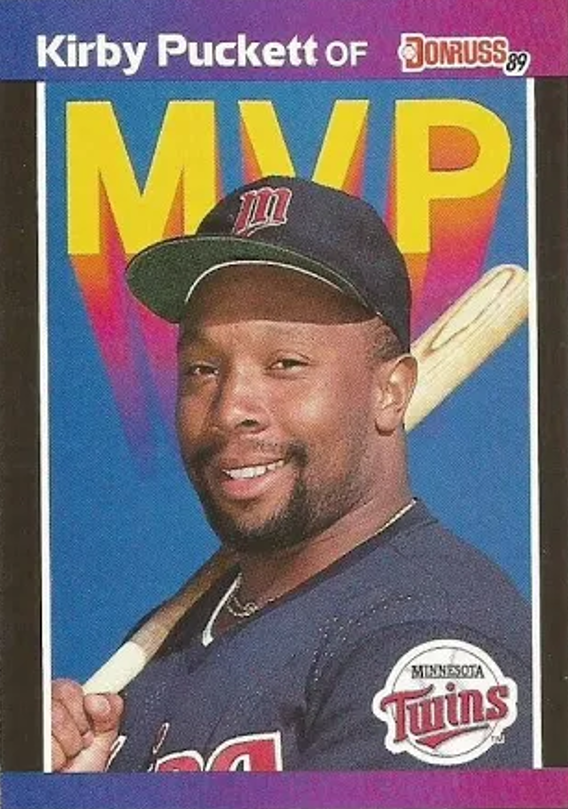
The ownership/relocation controversy apparently didn’t affect Puckett or the other Twins too much. In 128 games, Kirby got 165 hits for a .296 average, with 14 stolen bases. The Twins even made a surprising run at the A.L. West Flag, finishing in a tie for second-place, only three games behind the Royals. The year before, Minnesota finished in a tie for fifth place, 29 games out. It’s safe to say, Kirby was one of the big reasons for the team’s rising fortunes.
In 1985, the team slipped in the standings, but the chunky outfielder compiled a .288 average with 199 hits. A year later, with the help of Twins batting instructor Tony Oliva, Kirby altered his swing a bit and became a power hitter. In 1986, he blasted 31 homers, with 96 RBIs, while batting .328. Puckett had hit just four round-trippers in his previous two seasons.
It was also in 1986 that Kirby started his first of four consecutive All-Star games. And he didn’t waste any time convincing the worldwide audience he was for real. He bounced the first pitch of the game from Dwight Gooden into centerfield at Houston’s Astrodome for a single. He ended up going 1-for-3, with a walk and stolen base. The American League won, 3-2.
Even better things were to come.
Puckett was quoted in The Sporting News as saying: “The best time of my playing career was when I went 6-for-6 in Milwaukee” (on August 30, 1987). Those six hits brought his two-day total to 10, which is an American League record for two consecutive nine-inning games.
Seven weeks later, Puckett and his teammates would astound the baseball world by seemingly coming out of nowhere to win the World Series. Kirby hit safely in six of the seven Series games against the Cardinals. But it wasn’t until the sixth game that he let loose. In game 6, Puckett went 4-for-4, scored four runs, plus one RBI, with a stolen base. He followed it up in game 7 by going 2-for-4, with a double and an RBI.

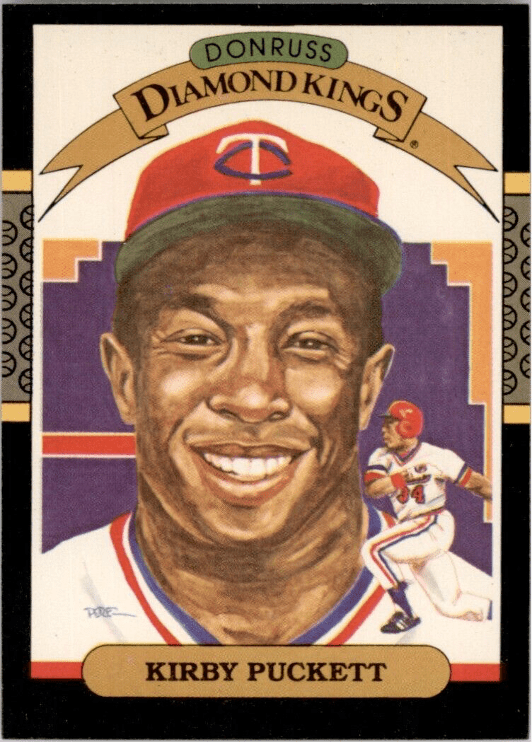
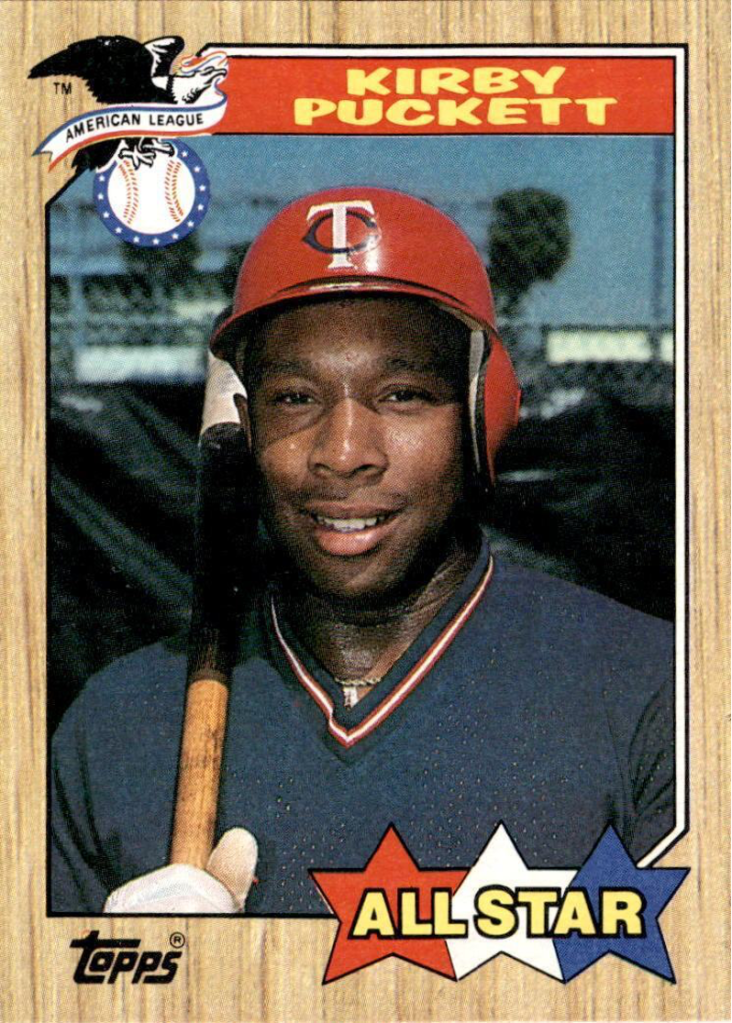
His World Series totals were 10 hits in 28 at-bats for a .357 average, five runs scored, three RBIs, one double, one triple, and one stolen base. The Twins, and Kirby, were on the top of the world.
The following year, 1988 was undoubtedly Puckett’s best so far. He hit .356, but still finished 10 points behind Boston’s Wade Boggs. He had 234 hits, 109 runs scored, 24 homers, 121 RBIs and a .994 fielding average. Puckett is among the top centerfielders in the majors. Famous among Twins fans for his over-the-fence catches, he has won four straight Gold Glove Awards.
Last year brought Kirby his first batting title as he hit .339, edging out Oakland’s Carney Lansford. His power dipped a bit, only nine homers and 85 RBIs. Still, he led the league in hits (215) for the third straight year.
Puckett has twice finished third in MVP voting and has been named to the “Silver Slugger Team” the last four years.
Growing up, he says his baseball idols were Willie Mays, Ernie Banks and Billy Williams. And in many ways, he’s as good as any of those three Hall-of-Famers. Puckett can hit for average and power. He can steal bases, although his stolen base totals have dropped since he moved down in the batting order. He can field with the best of them and plays almost every day, missing only 17 games since coming up six years ago.
Most importantly, he’s got that magic personality trait called charisma. In his case, a quiet charm. Kirby’s playing philosophy is simple, but sound: play one game at a time; tomorrow’s another day; hit it, if you can reach it; and have fun.
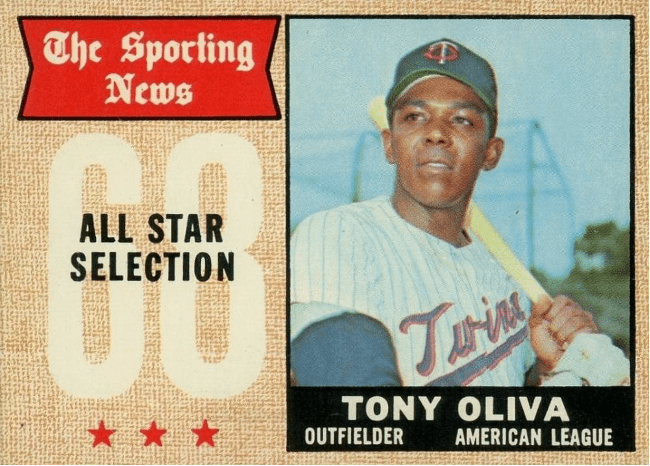
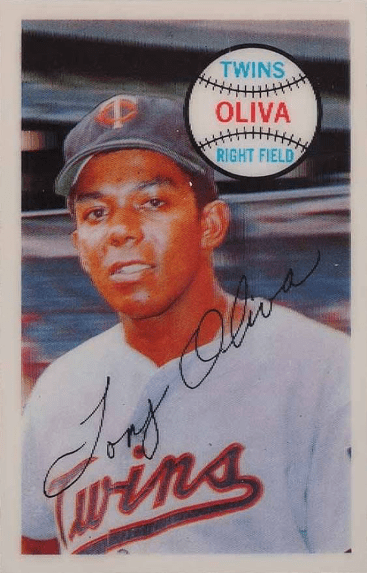
Puckett’s hitting mentor is three-time batting champ Tony Oliva. Oliva has worked closely with him for several years now. In many ways, Puckett is the new Oliva. Tony could hit for power and average and could be counted on to spark a rally. In addition, like Puckett, Oliva’s friendly personality was an immediate hit with fans in the upper Midwest when he arrived in 1964.
Kirby turned 29 in March. He will definitely be one of baseball’s biggest stars in the 1990s. And perhaps best of all, in addition to all his hits and home runs and excellent fielding, Kirby is a nice guy. A likeable guy. A guy who is not only a treat to watch, but someone you wouldn’t mind your kid looking up to. And how common is that today?
“Batting third, Kirbeeeeeeeeee Puckett.”
The very sound of his name can produce an instant smile.
• • • • • •
See related article on BaseballCardFun.com entitled:
“BASEBALL HOBBY NEWS — What Does Kirby Puckett Mean to the Minnesota Twins?”
Click Link Here
• Originally Published in June 1990 “Baseball Hobby News” •
THIS ARTICLE FROM “BASEBALL HOBBY NEWS” MAGAZINE IS REPRINTED WITH THE PERMISSION OF BOTH THE EDITOR/PUBLISHER AND THE AUTHOR. IT HAS BEEN RETYPED, BUT NO CONTENT HAS BEEN CHANGED (EXCEPT FOR VERY MINOR ADJUSTMENTS, CORRECTIONS TO TYPOGRAPHICAL ERRORS AND CHANGES TO GRAPHICS). COMMENTS OR INFORMATION IN THE ARTICLE MAY BE OUT-OF-DATE.
To keep up-to-date on additions to BaseballCardFun.com, subscribe below*
* Your email address will never be shared and is only used to announce new articles
 BaseballCardFun.com