
BY MARK A. LARSON
A lot of people in the hobby moan and groan that it’s not fun anymore. Prices are too high, they say. There are too many card companies, too many sets to collect. Blah, blah, blah.
Forget about all that senseless, negative babble. Let’s have some fun.
O.K., here’s what you do. Pull out your 1968 and 1969 Topps Luis Aparicios and lay them side-by-side. Now do the same with your 1968 and 1969 Hank Aarons, your 1967 and 1969 George Brunets, and your 1967 and 1969 Jim Davenports.
Notice anything peculiar?
You may think you’re seeing double – and in a sense, you are. The 1969 Topps set is filled with photographs that had been used on other cards.
I first noticed this on a few cards, like the Aarons and Aparicios, several years ago, but never gave it much thought. After all, Topps had been known to repeat photos before.
The best examples were in the mid-1950s. The same photo was used on Willie Mays’ cards in 1954-55-56 and ditto Ted Williams. Another example is the 1963 and 1964 cards of Carl Yastrzemski.
I suspected the 1969 set contained 15 or maybe, at most, two dozen repeat photos. So, I decided to compare the 1969 set with Topps’ previous two efforts – the strikingly beautiful 1967 set and the rather dull 1968 set. What I found astonished me.
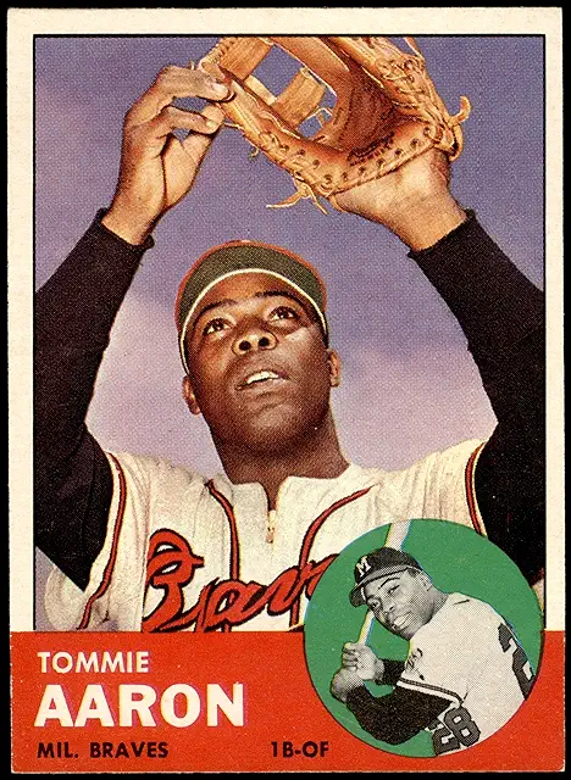
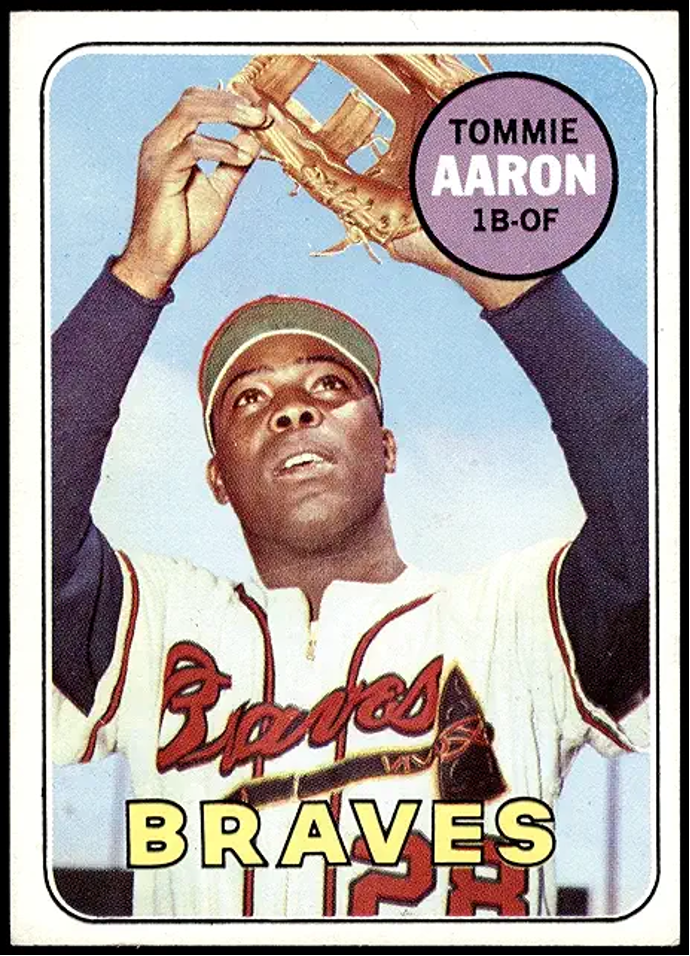
1963 Topps & 1969 Topps
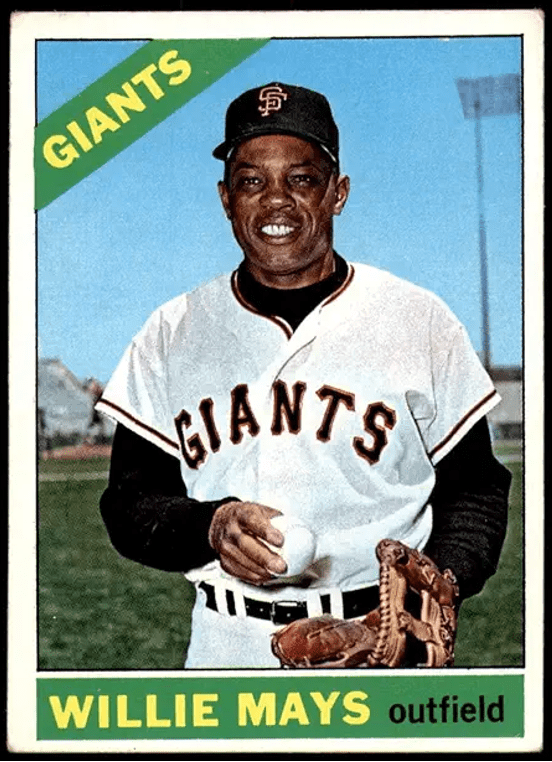
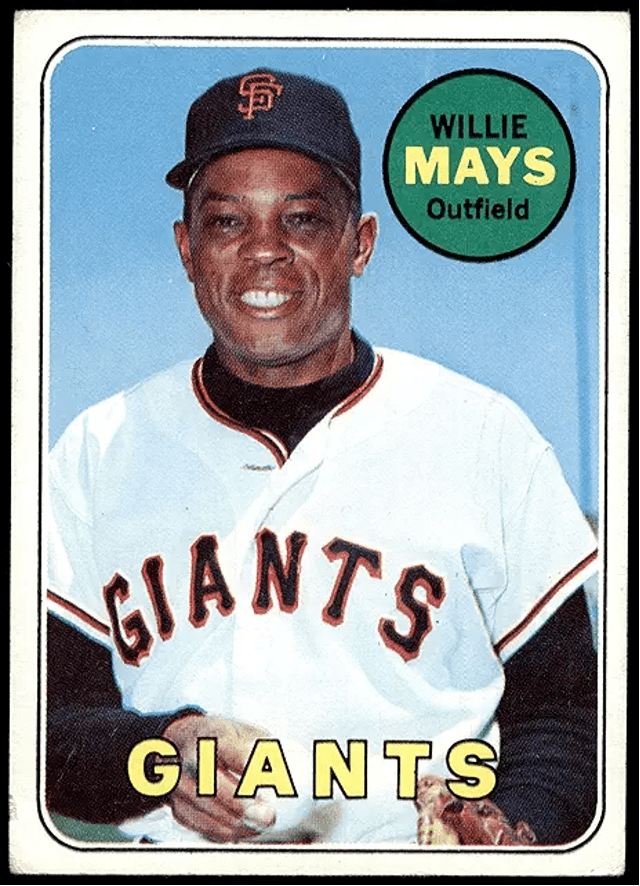
1966 Topps & 1969 Topps
Eighty cards, 12 percent of the 1969’s 664-card set, featured photos already used on either the 1967 or 1968 cards. That’s about one out of every eight cards.
(As a sidenote, in the case of Tommie Aaron, Topps repeated the same photo as used in the 1963 set, six years earlier. The Willie Mays photo was first used in the 1966 set. But I was concentrating on 1967-68.)
The 1969 set starts with the League Leaders subset. Ten out of those 12 cards used recycled photos. In one case, card #10 “N.L. Pitching Leaders” all three photos are repeats. And two of those three photos were used twice in both the 1967 and 1968 sets.
The first series (#1-109) includes 25 repeaters, by far the most of any of the seven series in the 1969 set. Most, but not all, of the big stars whose cards included reused photos were in the first series. This included:
Boog Powell, Ernie Banks, Joe Morgan, Aparicio and Aaron.
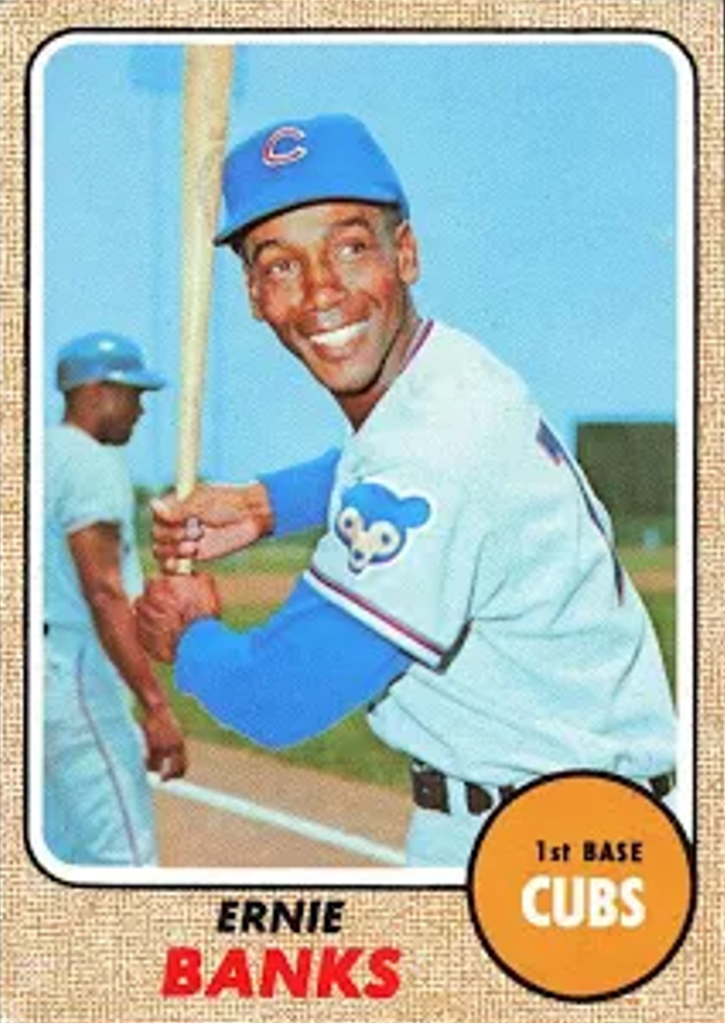
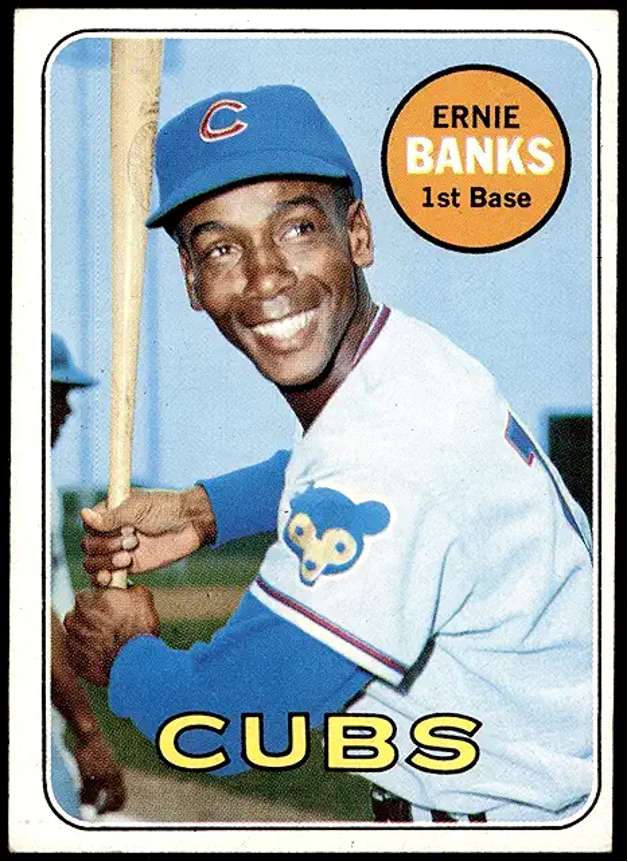
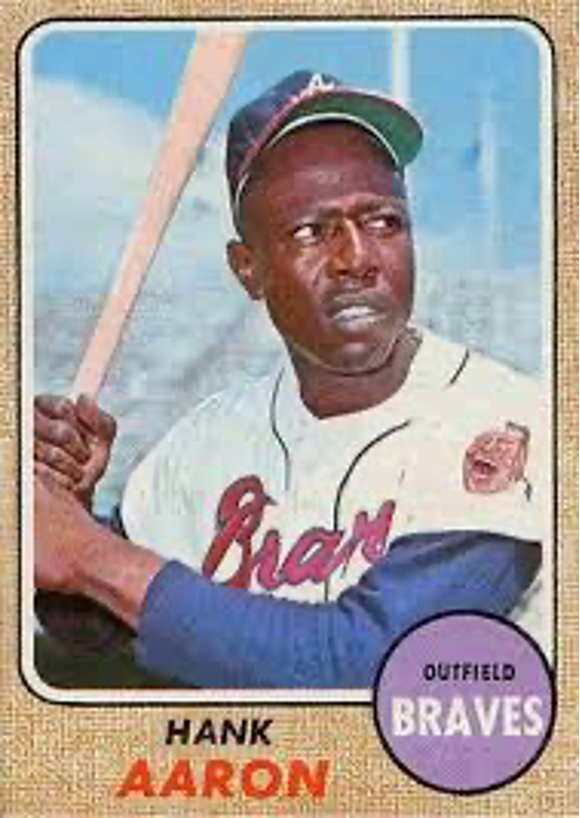
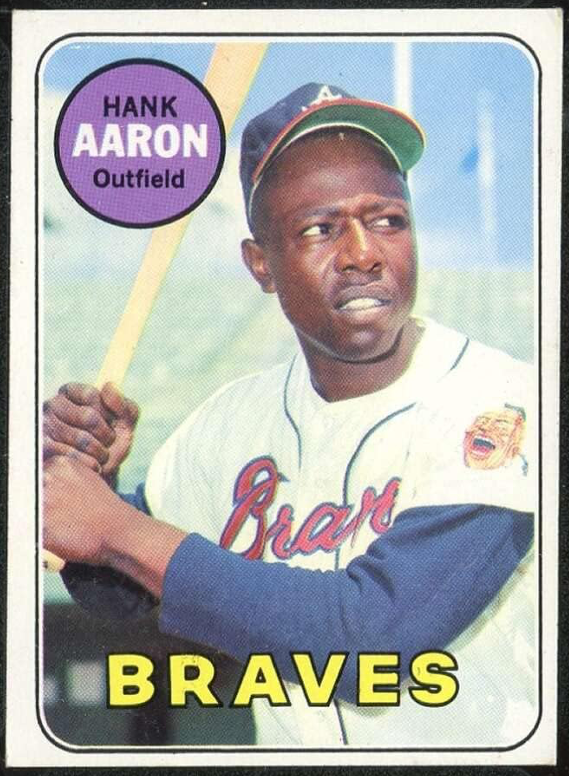
Later series would include recycled photos of Yastrzemski, Denny McLain, Jim Kaat, Ken Boyer, Tom Seaver, Rod Carew and Brooks Robinson.
It should be noted that Topps didn’t just always use the same photo exactly as it previously appeared. Often, the photo would be “cropped” (framed) a little differently. In the case of Ernie Banks, for instance, his 1969 card is a tighter shot – less background showing – than the 1968 card. Nevertheless, it is the same photo.
The second, third and fourth series each contain between 11-17 repeat photographs. The fifth and sixth series contain five and six respectively. And by the seventh series, Topps was down to just one recycled photo. The first four series contain 85 percent of the cards employing previously used photos in the 1969 set.
One possible explanation for the slowdown in the use of old photos beginning with the fifth series is that players for the four new expansion teams (Montreal, San Diego, Seattle, Kansas City) began appearing in their new uniforms in that series. This indicates Topps’ photographers took some new photos in the spring of 1969. Many of those were used in the fifth, sixth and seventh series, thus eliminating the overriding urge to used recycled photos.
As mentioned earlier, sometimes Topps would alter the repeat photos slightly to possibly make collectors think they were new. Yet Topps could sometimes be even more cagey.
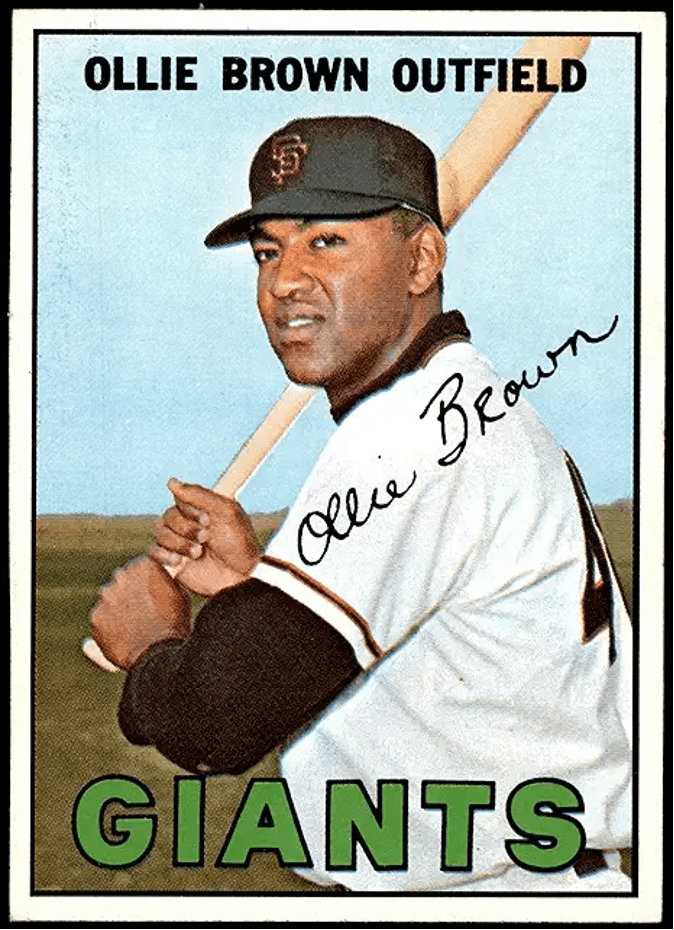
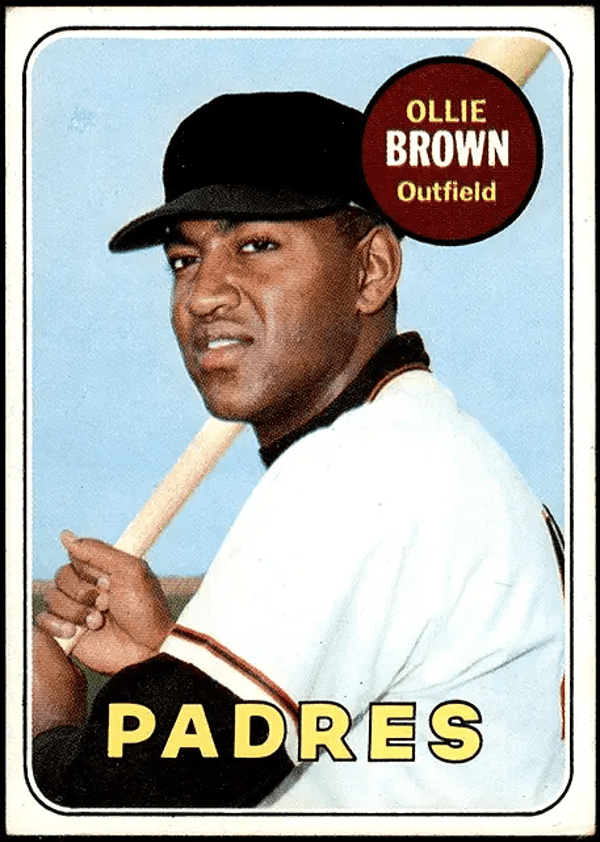
Ollie Brown’s 1969 photo (originally used in the 1967 set) was not only cropped differently, but his hat was airbrushed. He had moved from the San Francisco Giants to the San Diego Padres in the meantime.

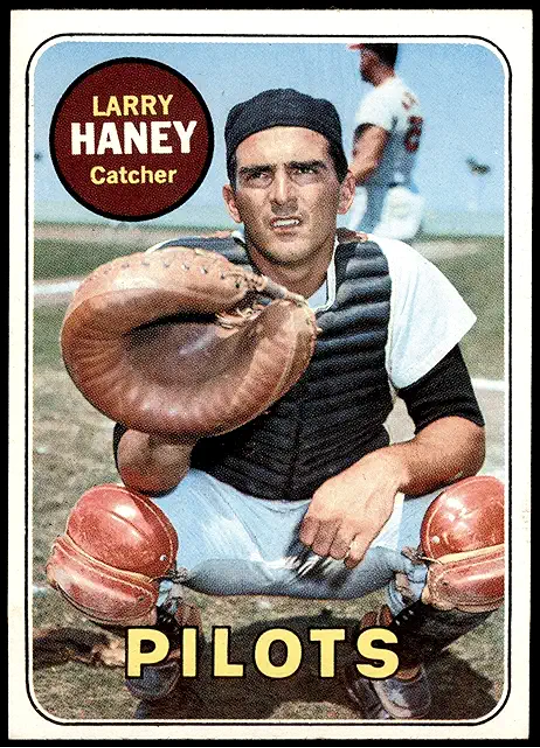
And, of course, as had been mentioned in previous BHN articles, catcher Larry Haney’s recycled photo from the 1968 set had the negative reversed in 1969 … making him a left-handed catcher.
Comparing the 1969 set with both the 1967 and 1968 sets requires a close, detail-oriented eye at times. Two cases in point.
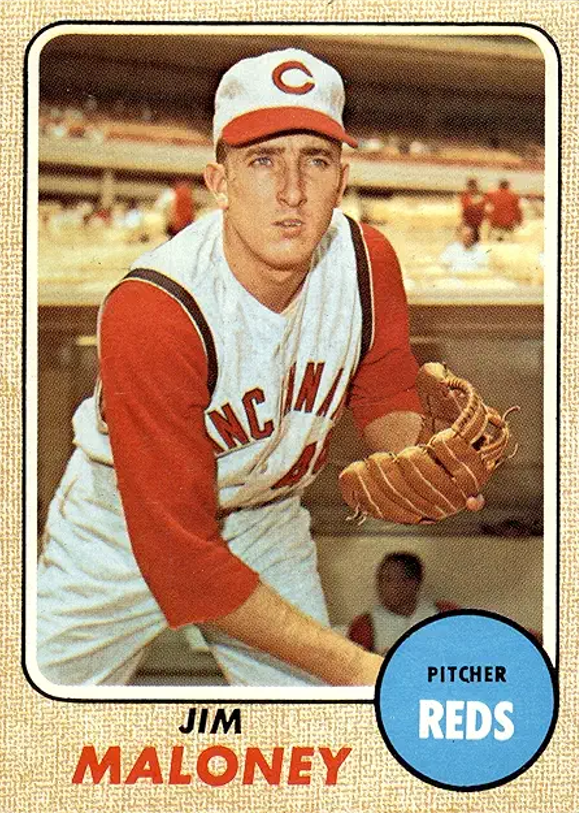
Reds’ pitcher Jim Maloney’s 1969 card, at first glance, seems like an obvious repeat of 1968. But look closer. Small details in the background indicate the photos were actually taken a few seconds apart. We know this because a fan in the stands in a red jacket behind Maloney has moved slightly between clicks of the camera.
Another similar case involves Mets’ manager Gil Hodges. Again, his 1969 card looks like a cropped version of the one in the 1968 set. However, if you compare the trees in the background and the relationship between his cap and the infield dirt behind him, it’s another case of “close, but no cigar.”
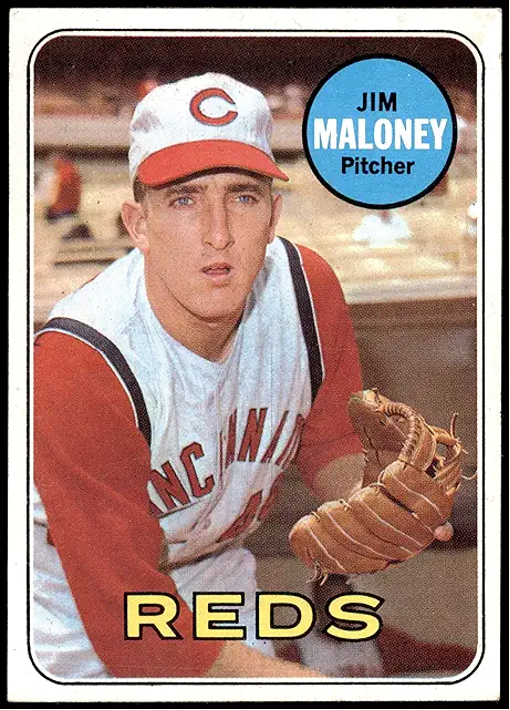

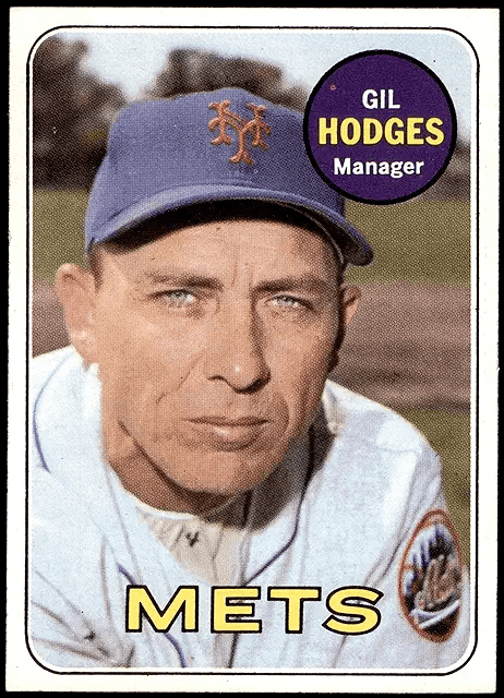
Other players’ photos were probably snapped at the same session too, but aren’t quite as close in similarity as Maloney and Hodges.
For instance, Bob “Buck” Rodgers’ 1967 and 1969 photos are much alike, same background, he’s wearing a batting helmet, but just a slightly different batting pose. The same goes for Senators’ pitcher Jim Hannan’s 1967 and 1969 cards. Almost the same pitching pose and background. Finally, Ralph Houk’s 1968 and 1969 cards picture him next to a batting cage. Both photos were obviously snapped within seconds of each other.
Two other card photos in the 1969 set stand out, although neither is a repeat photo.
The 1969 Topps card of Jim “Mudcat” Grant (#306) lists him with the Expos. But the uniform (with airbrushed cap) obviously belongs to the Indians. Grant last pitched for Cleveland in June 1964. He was then traded to Minnesota which, in turn, eventually traded him to the Dodgers. So his 1969 card featured a photo that was at least five years old.
The same can be said for Al Jackson (#649) except that in the Mets’ pitcher’s case, the photo is with the correct team. It was taken four or five years earlier too. The clue is the “World’s Fair” shoulder patch on Jackson’s sleeve. The World’s Fair was held in New York in 1964-65.
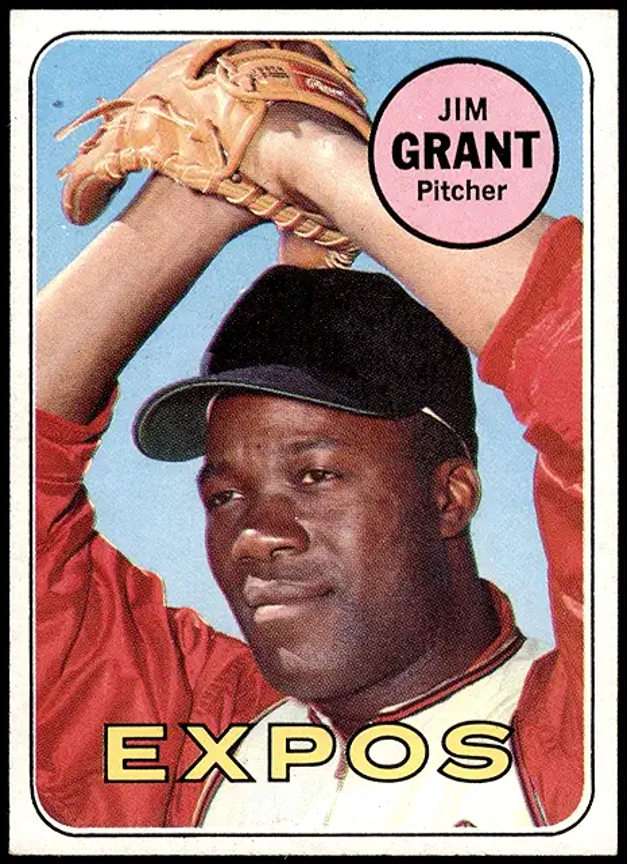
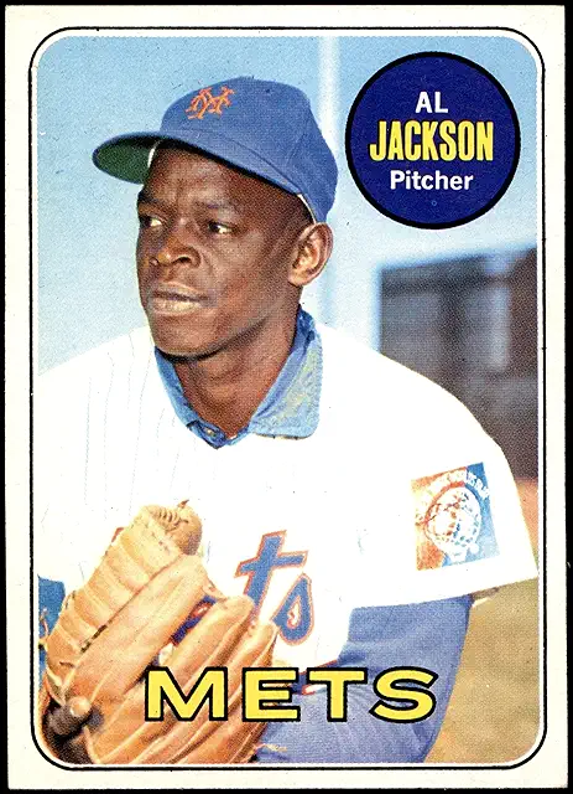
Photos that were several years old in 1969
Why did Topps rerun so many old photos in 1969? Was the company lazy? Cheap? Was there a photo-grapher’s strike? A film shortage?
The answer is probably a combination of trying to save money, apathy and figuring no one would notice. Topps had no viable competition in 1969. Why should it exert great effort to obtain new photos? After all, they’d recycled photos before … who would notice?
Remember, Topps sets in the 1950s and 1960s and 1970s were meant for six- to 12-year old kids (like myself, then), not 30-year old adults (like me, now) who spend hours scrutinizing their sets.
Comparing photos from year-to-year is one way to have fun with your baseball cards. You might be surprised, like I was, at what you find. I’d like to hear from collectors who have compared sets and found several recycled photos.
• • • • • •
See related articles on BaseballCardFun.com entitled:
“BASEBALL HOBBY NEWS — 1969 Topps Repeat Photos Checklist” Click Link Here
“BASEBALL HOBBY NEWS – Rookie Bill Davis: A Tale of Two Photos” Click Link Here
“BASEBALL HOBBY NEWS — 1969: Year Was Memorable, But Not Cards” Click Link Here
• Originally Published in Apr. 1989 “Baseball Hobby News” •
THIS ARTICLE FROM “BASEBALL HOBBY NEWS” MAGAZINE IS REPRINTED WITH THE PERMISSION OF BOTH THE EDITOR/PUBLISHER AND THE AUTHOR. IT HAS BEEN RETYPED, BUT NO CONTENT HAS BEEN CHANGED (EXCEPT FOR VERY MINOR ADJUSTMENTS, CORRECTIONS TO TYPOGRAPHICAL ERRORS AND CHANGES TO GRAPHICS). COMMENTS OR INFORMATION IN THE ARTICLE MAY BE OUT-OF-DATE.
To keep up-to-date on additions to BaseballCardFun.com, subscribe below*
* Your email address will never be shared and is only used to announce new articles
 BaseballCardFun.com