
BY MARK A. LARSON
It’s been at least a dozen years since I first read Jim Bouton’s famous (or infamous – depending on your opinion) “Ball Four.” About four years ago the book was reissued with a few additional chapters covering Bouton’s life since the original came out in 1970. Hence, the title “Ball Four Plus Ball Five.” For those who haven’t read the book recently, it’s worth another look.
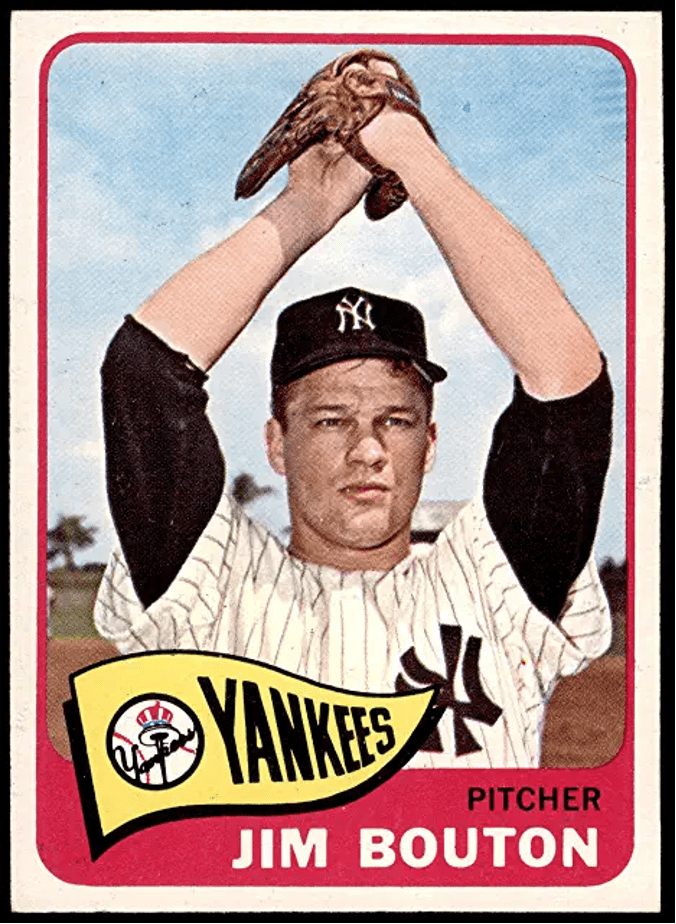
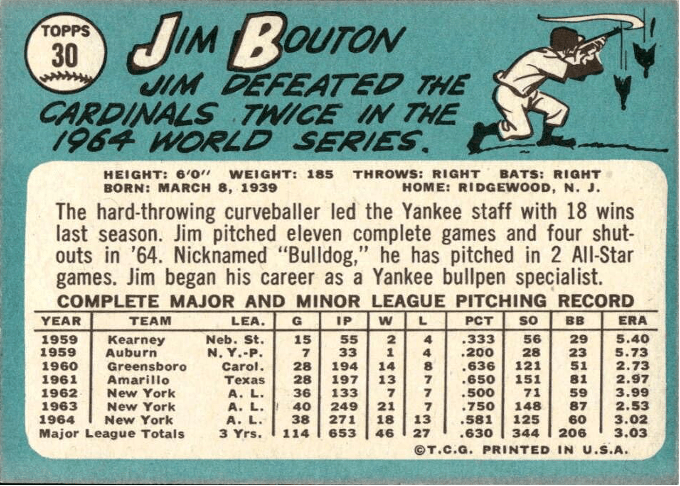
Baseball in 1969 was very different. But the world as a whole was quite different then too. Bouton was in a unique set of circumstances, which all contributed to making Ball Four successful. He was a sore-armed former 20-game winner for the Yankees who hadn’t won more than nine games during the previous four years. In fact, he’d been sent back to the minors to try and replace a once blistering fastball with a questionable knuckleball. By 1969, Bouton was struggling just to make the roster of the expansion team Seattle Pilots.
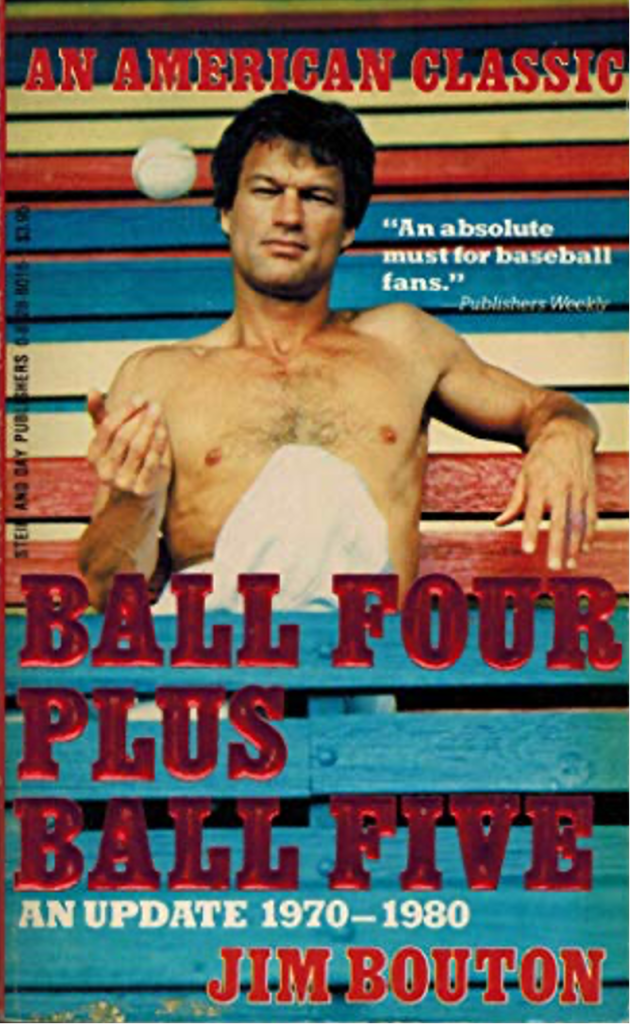

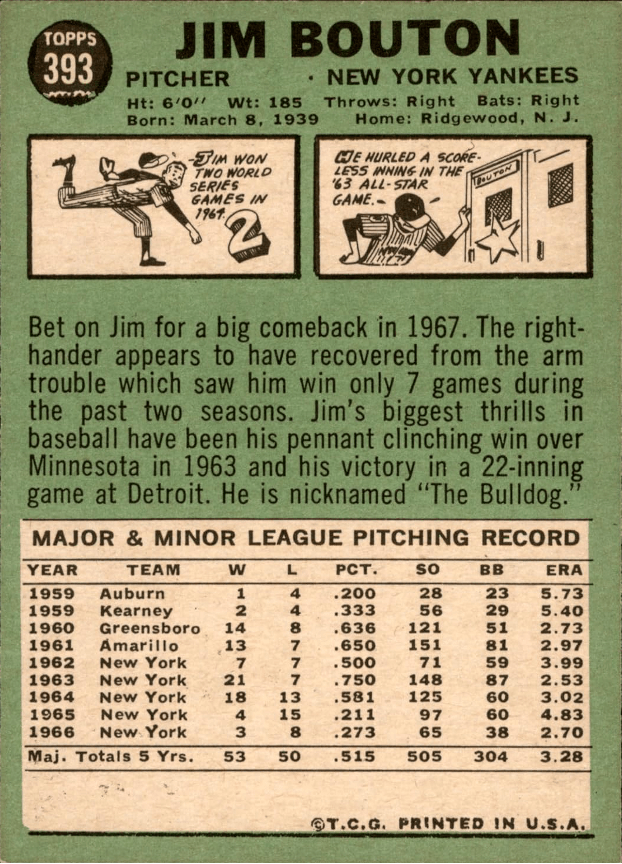
He started the season with the Pilots, was sent to their Vancouver farm club for two weeks in mid-April, was brought back up to the Pilots, traded to the Houston Astros in August – all the while appearing in 73 games (71 as a relief pitcher) and having a credible, if not really spectacular season. Ball Four was the first book that exposed baseball for what it was: a business, a hard life for many players, a big joke to others. It described players taking uppers, pulling pranks and acting 12 years old, using four-letter words, performing four-letter acts, fighting with management, and it focused on many characters – exposing all their idiosyncrasies. People like manager Joe Schultz, pitching coach Sal Maglie, general manager Marvin Milkes, Steve Brabender, Steve Hovley, Mike Marshall and Fred Talbot.
Baseball through the eyes of Jim Bouton was far different from the all-American, apple pie version that the sports’ hierarchy wanted fans to know. Bouton was considered by many in baseball to be a kook and a bad influence. Being different in baseball was rocking the boat, upsetting the applecart, making unnecessary waves. Being your own man was frowned upon by baseball management because it could possibly upset THEIR applecart.
Back in the ’60s, free agency and huge salaries had not yet come on the scene. The players union was just getting off the ground. As Bouton states in the chapters in Ball Five, the only reason players are making so much today is that they were treated so badly by management in the past. (Bouton was making $22,000 in 1969 – slightly more than double the minimum. Today’s minimum is somewhere over $40,000, just 16 years later.)

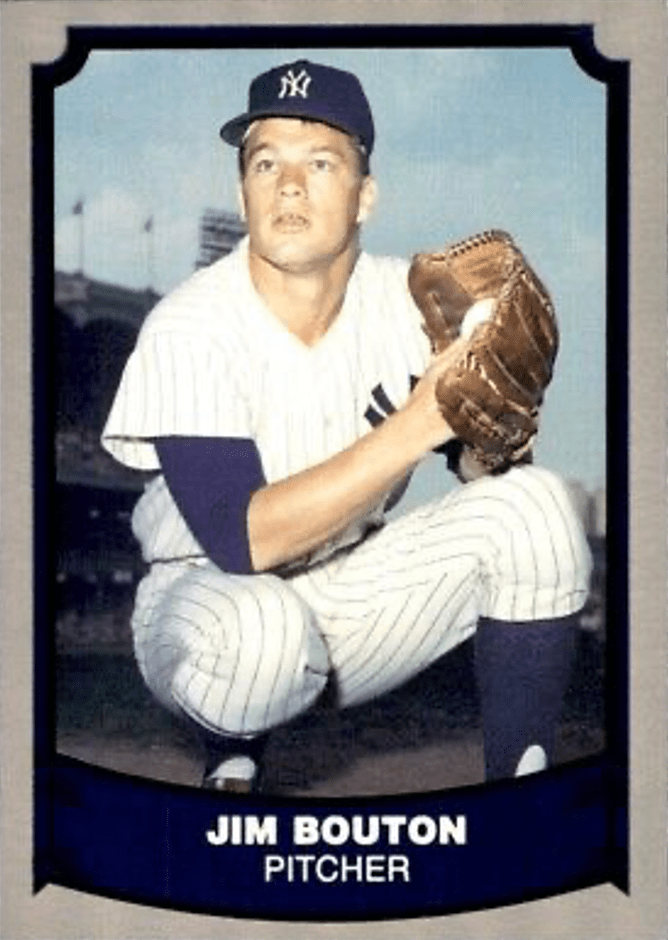
Looking back, the reaction to Ball Four was nothing short of hysterical. Bowie Kuhn wanted Bouton to sign a statement that said his book was really all lies and his editor made most of it up. However, not only the big-wigs of the game, but also many players and coaches objected to it, probably, Bouton speculates, because he wrote about things in the lives of the players that normally wouldn’t have been made public.
Of course, since Ball Four, there has been a deluge of baseball books telling all. Yet Bouton was the pioneer. He knocked baseball off its pedestal and brought it back down to human terms. And he’s right. Heroes, organizations, and sports are all just people – not gods. That doesn’t mean you can’t have heroes or look up to and admire sports figures, but it helps us to understand people’s (management and players) motivations better. I don’t think it takes anything away from the game. I think it adds to it.
Bouton, however, should not be placed on a pedestal either. Yet his contributions to baseball have extended far beyond his 62 wins and 63 losses. He helped open our eyes. Reading Ball Four again (with the additional chapters) was even more satisfying than the first time. Baseball in 1969 was very different, and the Seattle Pilots are but a very distant memory. Fortunately, Bouton’s book lets us relive those times and gives us a better perspective on why the game is the way it is in 1985.


• • • • • •
See related article on BaseballCardFun.com entitled:
“Over 50 Years Since Ball Four”
Click Link Here
• Originally Published in Nov-Dec 1985 “Twin Times” •
THIS ARTICLE FROM THE “TWIN TIMES” NEWSLETTER – OFFICIAL PUBLICATION OF THE TWIN CITIES SPORTS COLLECTORS CLUB – IS REPRINTED WITH THE PERMISSION OF THE AUTHOR. IT HAS BEEN RETYPED, BUT NO CONTENT HAS BEEN CHANGED (EXCEPT FOR VERY MINOR ADJUSTMENTS, CORRECTIONS TO ANY TYPOGRAPHICAL ERRORS AND THE ADDITION OF GRAPHICS). COMMENTS OR INFORMATION IN THE ARTICLE MAY BE OUT-OF-DATE.
To keep up-to-date on additions to BaseballCardFun.com, subscribe below*
* Your email address will never be shared and is only used to announce new articles
 BaseballCardFun.com